
Südfranzösische Landschaft mit Kornpuppen — History & Facts
What lies beneath the surface of a serene landscape, painted with vibrant colors and gentle strokes? In this world, harmony and hidden turmoil coexist, sparking a reflection on the nature of beauty itself. Look to the left at the rolling hills, where golden wheat stands in fragile glory, rippling under the weight of a warm sun. Notice how the artist’s brushwork creates a texture so rich, it invites you to touch it. The play of light across the field captures an idyllic scene, yet the darker hues in the shadows hint at the complexities lurking beneath this pristine façade.
The gentle gradient in the sky suggests a fleeting moment, caught between dusk and dawn, further emphasizing the delicate balance within this pastoral setting. As you explore the details, contrasting emotions emerge—joy juxtaposed with a sense of loss. The vibrant color palette evokes a sense of nostalgia, perhaps a yearning for a simpler time, yet it is undercut by the awareness of societal upheaval during the late 1920s. The idyllic landscape, emblematic of peace, also serves as a reminder of the looming revolution and the transformation of rural life in a rapidly changing world. In 1929, Cariot found himself in a France grappling with the consequences of World War I and the onset of modernity.
Creating Südfranzösische Landschaft mit Kornpuppen during this turbulent period, he channeled both the optimism of the countryside and the anxiety of an evolving society, reflecting the dualities that marked his life and the broader artistic movements of the time.
More Artworks by Gustave Cariot
Browse all →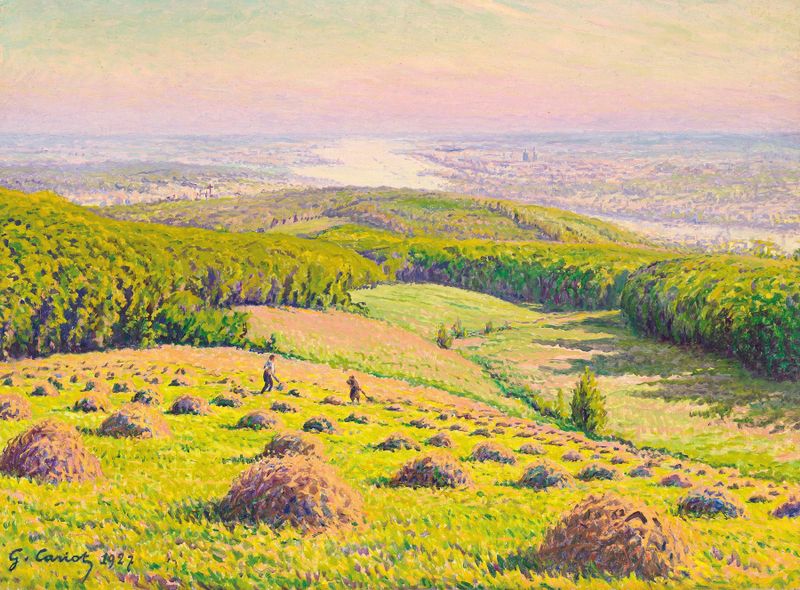
La vallée
Gustave Cariot

Le Jardin
Gustave Cariot

Les meules
Gustave Cariot
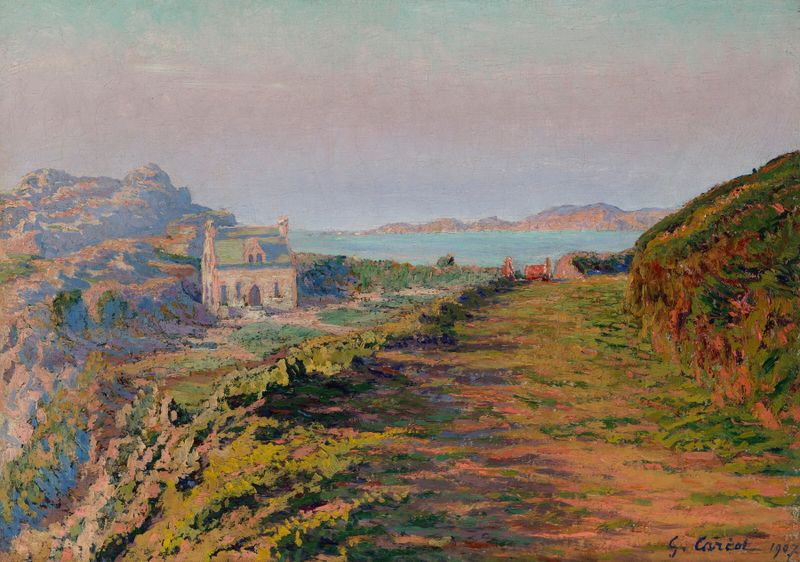
Maison Pen ar C’hastel à la pointe du Château, Perros-Guirrec
Gustave Cariot
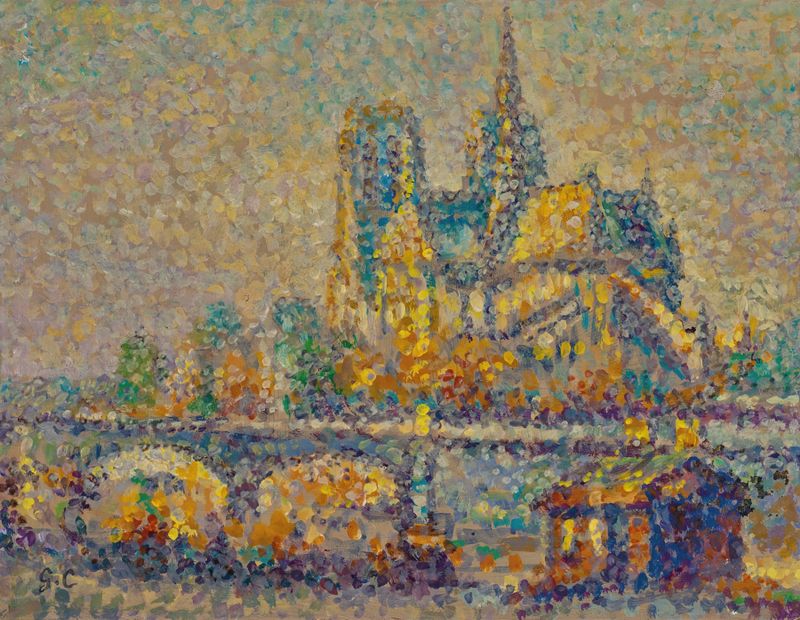
Notre-Dame de Paris
Gustave Cariot
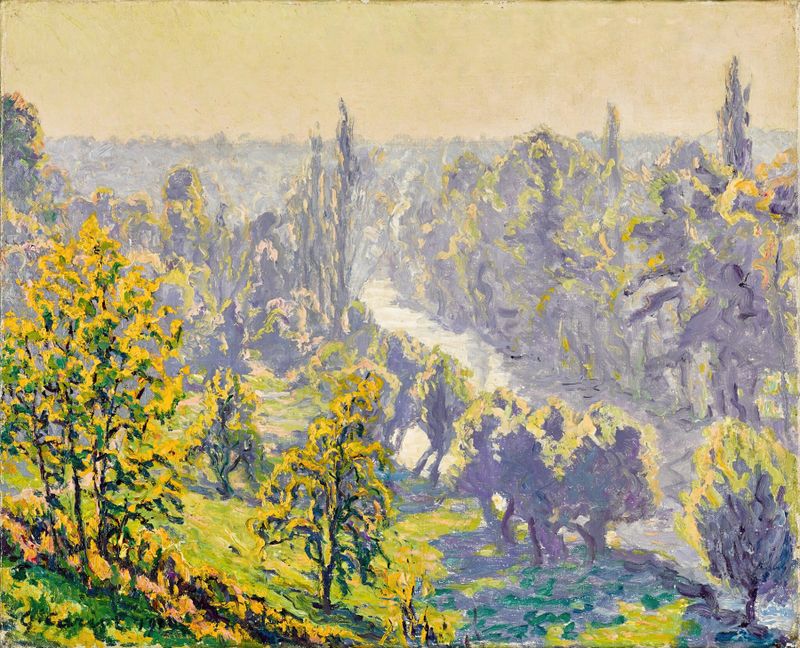
Périgny, automne, matinée sur l’Yerres
Gustave Cariot
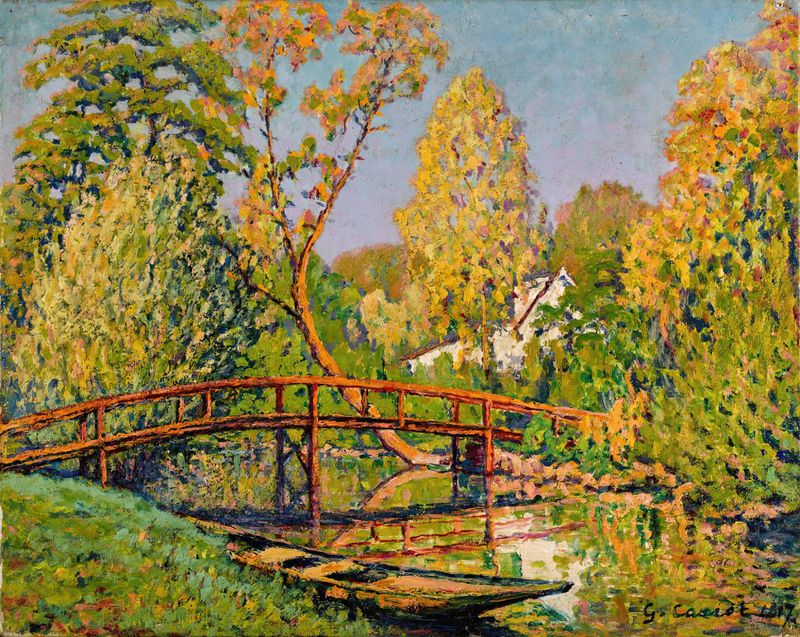
Périgny, pont sur l’Yerres
Gustave Cariot
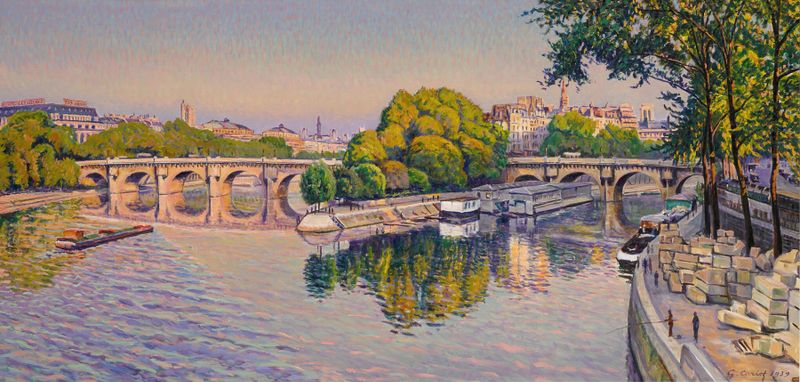
Le Pont-Neuf, eté, 20 heures
Gustave Cariot

Moulin de Périgny
Gustave Cariot

Le chemin à Mandres
Gustave Cariot





