
Südl. Kriegsschauplatz. Wirkung einer Mine in einer feindl. Artil. stellung — History & Facts
What secret hides in the quiet of the canvas? Beneath the surface of *Südl. Kriegsschauplatz. Wirkung einer Mine in einer feindl.
Artil. stellung*, an overwhelming emptiness pulses with unseen tension, a stark reminder of conflict’s aftermath. In capturing the hush that follows destruction, the artwork invites contemplation of loss and the void left behind. Look to the left at the scattered remnants of war—a twisted piece of metal lies among the rubble, half-submerged in shadows.
Notice how the muted palette of grays and browns creates an atmosphere thick with foreboding. The artist’s brushwork juxtaposes sharp, angular forms against softer edges, suggesting the violence of an explosion while simultaneously alluding to the chaos that once existed in this space. Light filters through the debris, illuminating fragments that bear witness to life once thriving here. Delve deeper into the subtle contrasts: the starkness of the destroyed environment against the promise of life that once was.
Each detail, from the jagged edges to the almost ethereal quality of the light, portrays a haunting duality—between the impending quiet and the echoes of conflict. The emptiness becomes a potent character, representing lost futures and shattered dreams, and invites the viewer to reflect on the nature of destruction and its aftermath. Created between 1914 and 1918, this piece emerged during a tumultuous period for Oskar Laske, who experienced the harsh realities of World War I firsthand. As he painted in Germany, the art world grappled with the trauma of warfare, leading artists like him to explore themes of desolation and loss.
The painting stands as a poignant testimony to a time when silence spoke louder than words, capturing the weary yet resilient spirit of humanity amidst devastation.
More Artworks by Oskar Laske
Browse all →
Faschingsumzug am Stock im Eisen Platz
Oskar Laske

Schönbrunn (Winter)
Oskar Laske
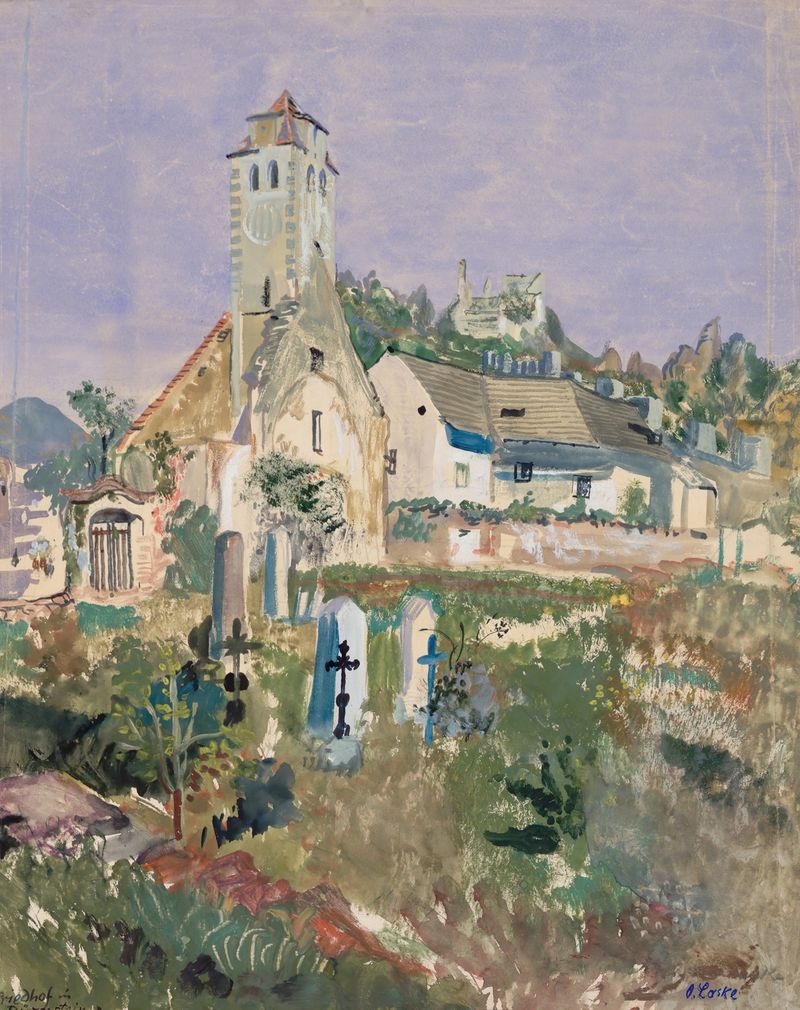
Friedhof in Dürnstein
Oskar Laske

Pratermotiv an der alten Donau
Oskar Laske

Frühjahrsnebel in Niederösterreich
Oskar Laske

Begräbnis des Wiener Bürgermeisters Dr. Karl Lueger
Oskar Laske

Maria Theresien-Denkmal mit Blick gegen das Burgtor
Oskar Laske
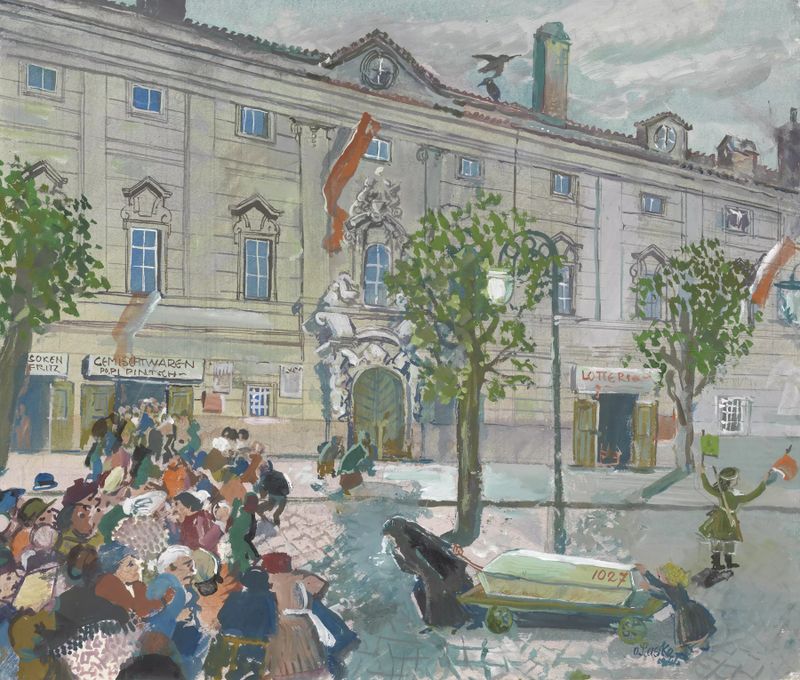
Wiener Straßenbild vom Mai 1945
Oskar Laske

Winterlandschaft in Pressbaum
Oskar Laske

Ansicht von Positano
Oskar Laske
More Historical Art
Browse all →
The Night Watch Militia Company of District II under the Command of Captain Frans Banninck Cocq
Rembrandt van Rijn

Lincoln Memorial
Henry Bacon

The Third of May 1808
Francisco de Goya

Isaac and Rebecca, Known as ‘The Jewish Bride’
Rembrandt van Rijn

The Charge of the Mamelukes (1814)
Francisco de Goya

De vier ruiters van de apocalyps
Albrecht Dürer