
Sea with a solitary rock — History & Facts
Is this a mirror — or a memory? The canvas invites us into a liminal space where the vastness of the sea meets the stillness of a solitary rock, embodying the essence of hope amidst solitude. Focus on the horizon, where deep blues and soft grays merge, illustrating the sea's endlessness while evoking a sense of calm. The rock, grounded in the foreground, commands attention with its textured surface, contrasting sharply against the smoothness of the water. Notice how light dances across the waves, reflecting hues of gold and silver, creating a shimmering path that leads the eye toward the horizon, suggesting a journey yet to come. Within this tranquil scene, the rock stands as a symbol of resilience, a steadfast presence against the ebb and flow of life.
The interplay between the serene sea and the solid rock captures a profound emotional tension: the longing for connection and the inevitable solitude that accompanies it. These elements reflect the artist's nuanced understanding of human experience, where moments of peace can coexist with feelings of isolation. Władysław Ślewiński created this work in 1907, during a period marked by a search for identity in Polish art and culture. At that time, the artist was exploring the interplay of light, landscape, and emotion, influenced by the Post-Impressionist movement.
Living in France, he absorbed the stylistic innovations around him while also yearning to express the Polish spirit, thus imbuing his landscapes with both personal and national significance.
More Artworks by Władysław Ślewiński
Browse all →
Rough sea
Władysław Ślewiński
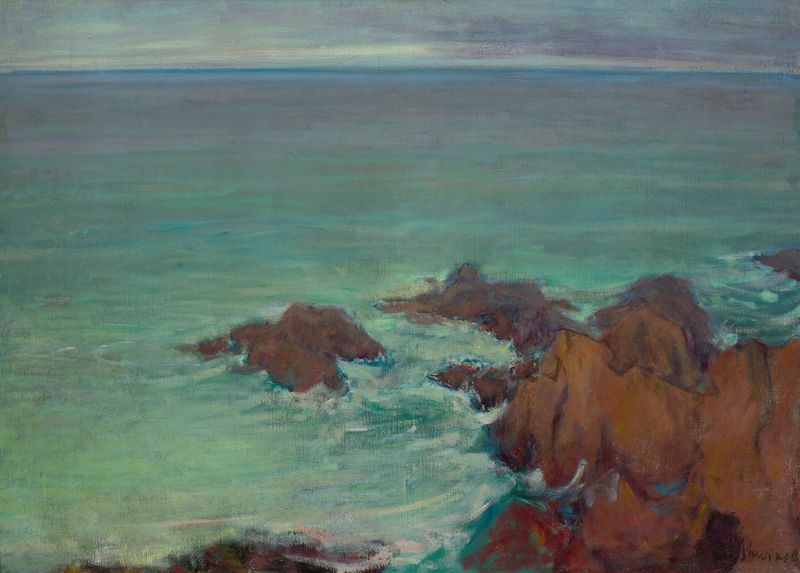
Sea in Brittany
Władysław Ślewiński
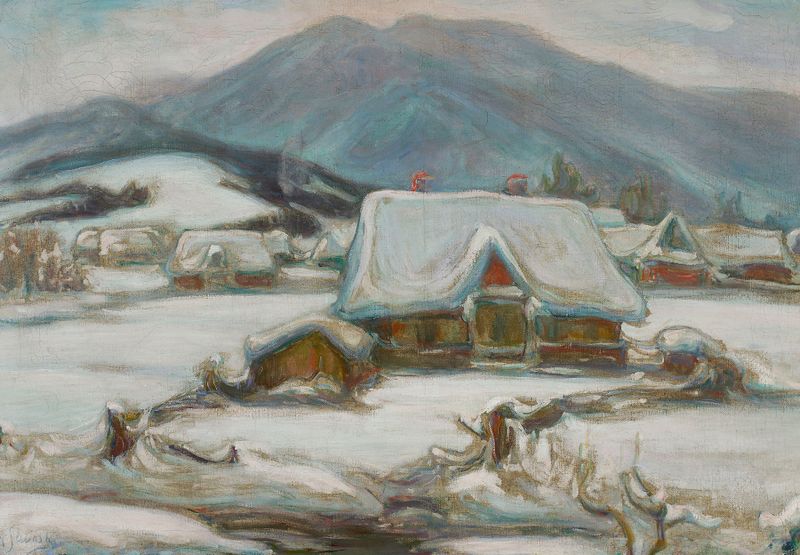
Cottages in the snow
Władysław Ślewiński

Sea
Władysław Ślewiński

Waves in a rocky bay
Władysław Ślewiński

Sea with white waves
Władysław Ślewiński
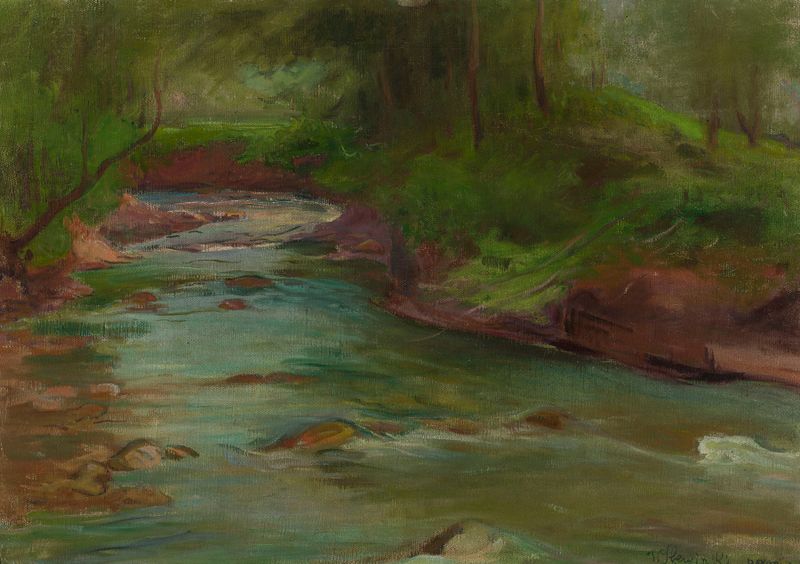
Mountain stream – in the Tatra Mountains below Mt Nosal
Władysław Ślewiński
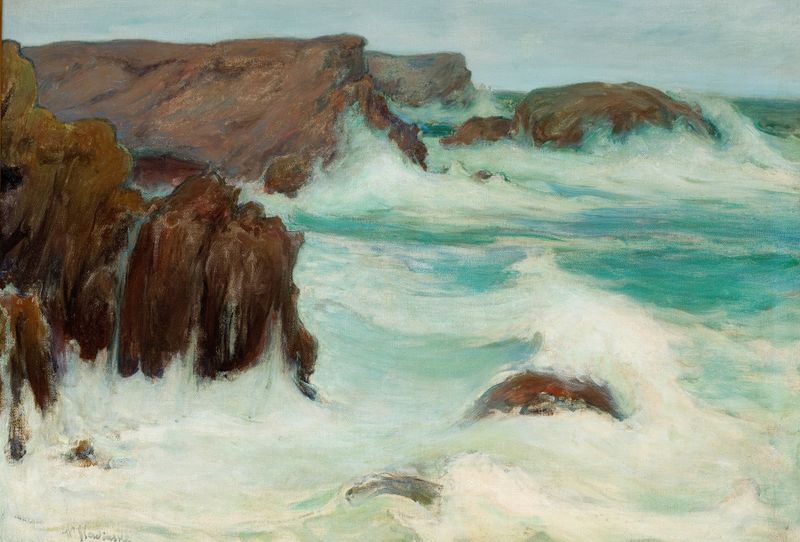
The Sea in Brittany
Władysław Ślewiński

A Coastal Landscape
Władysław Ślewiński

Sea at night
Władysław Ślewiński





