
Seascape — History & Facts
Could beauty survive in a century of chaos? Frederic Edwin Church invites us to contemplate that question in the tranquil embrace of Seascape, a profound meditation on nature’s sublime power and its capacity for transcendence. Look to the horizon, where the sun's golden rays pour over the gently rippling waves, casting a warm glow across the canvas. The interplay of light and color draws the eye, with deep blues and shimmering whites mirroring the ocean's depths and the fluidity of time. Notice how the brushstrokes impart movement to the sea and sky, creating a sense of immediacy that feels almost alive, captivating viewers as they become part of this serene yet dynamic panorama. Beneath the surface of this idyllic representation lies a poignant contrast between the serenity of the seascape and the turmoil that was surrounding Church's world.
The calm waters symbolize hope, while the distant storm clouds hint at the chaos and uncertainty of the era. This juxtaposition reveals an emotional tension, encouraging contemplation on humanity's relationship with nature—both awe-inspiring and humbling. The painting evokes a search for transcendence amidst life's turmoil, inviting viewers to find solace in beauty even when faced with uncertainty. Frederic Edwin Church painted Seascape in 1859 during a period marked by great change and upheaval in America, just before the Civil War.
Renowned for his large-scale landscapes, Church was a central figure in the Hudson River School movement, which emphasized the grandeur of nature. At this time, he was exploring themes of light, atmosphere, and the emotional responses they invoke, demonstrating his mastery of the landscape genre and contributing to the dialogue surrounding the romanticism of the natural world.
More Artworks by Frederic Edwin Church
Browse all →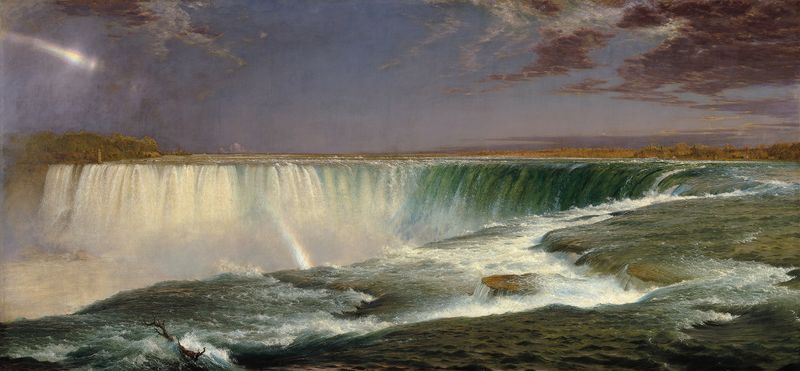
Niagara
Frederic Edwin Church
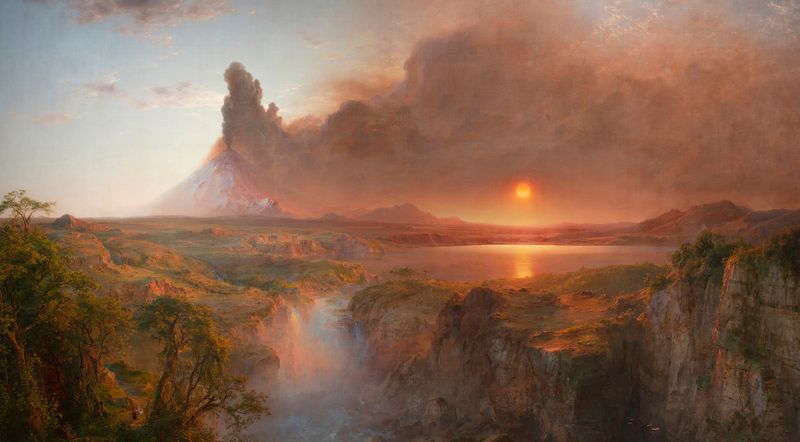
Cotopaxi
Frederic Edwin Church
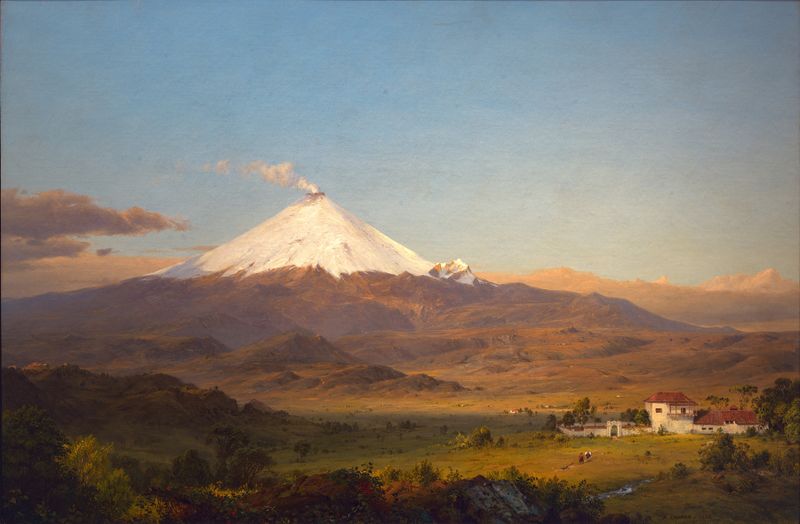
Cotopaxi
Frederic Edwin Church
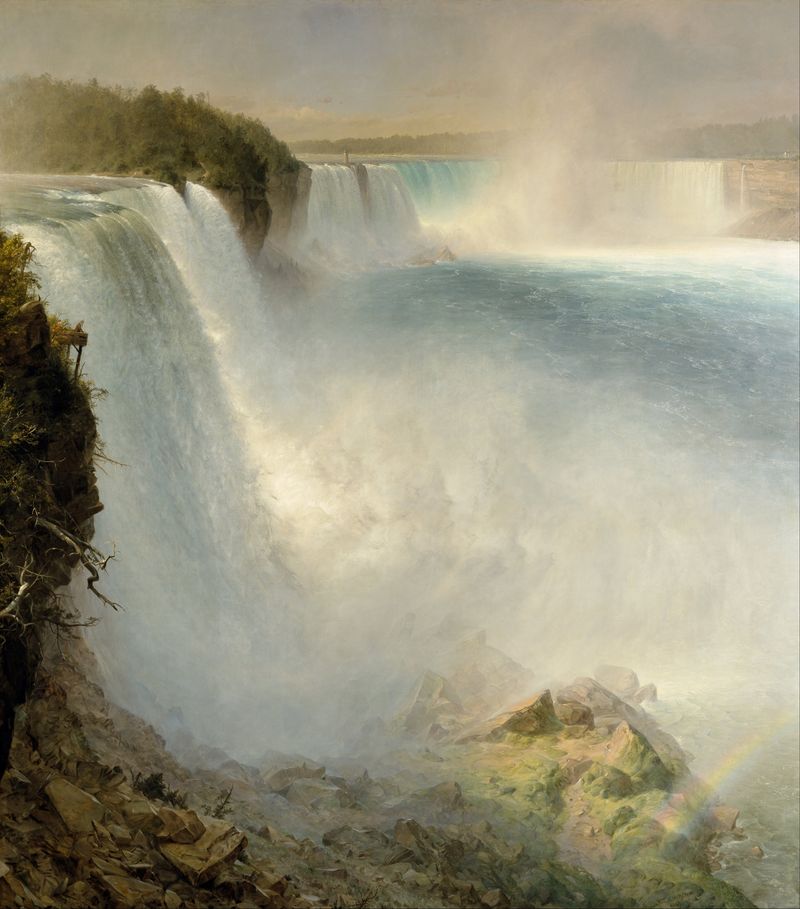
Niagara Falls, from the American Side
Frederic Edwin Church
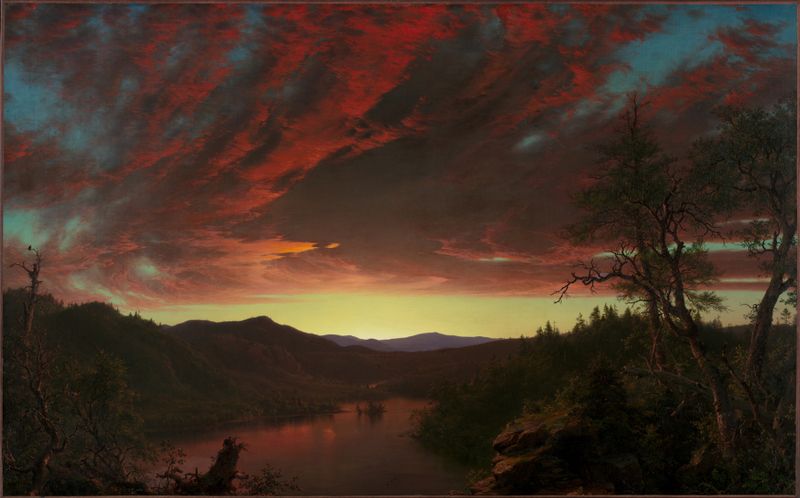
Twilight in the Wilderness
Frederic Edwin Church
Hudson Valley at Sunset
Frederic Edwin Church
The Hintersee, near Berchtesgaden, Bavaria
Frederic Edwin Church
Mountains near Baalbec
Frederic Edwin Church
Aurora Borealis
Frederic Edwin Church
Cotopaxi
Frederic Edwin Church





