
Seascape with Shipping — History & Facts
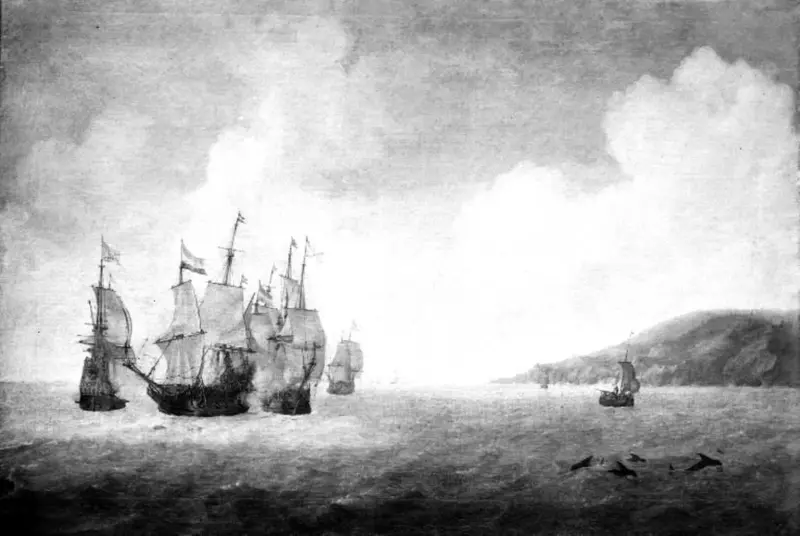
What first draws the eye in Seascape with Shipping by Abraham de Verwer is the sweep of pale, wind-filled sails against a sky that seems to stretch forever. The sea is restless but not wild, its surface broken by the purposeful movement of ships and small boats, each vessel animated by figures intent on their work. The low horizon gives the sky a commanding presence, its cool, silvery light setting a mood of quiet industry rather than drama.
Flags flutter at the sterns, signaling national identity and perhaps the nature of each voyage, while the careful detailing of rigging and hulls invites the viewer closer, as if to overhear the conversations of sailors or the creak of timbers. The composition draws the eye in a gentle arc from the clustered figures in the rowing boat at left, past the stately merchantman, to the sharply angled sloop in the foreground, its red sail catching both wind and attention. This kind of marine painting flourished in the Dutch Republic during the seventeenth century, when maritime trade was the engine of national prosperity and artists like Abraham de Verwer responded to the appetite for images celebrating seafaring life. Such works were commissioned by merchants, shipowners, and sometimes by civic bodies eager to commemorate the might and reach of their fleets.
Seascape with Shipping, now in the Art UK collection, stands as a testament to that era’s fascination with the sea—not as a stage for storms or heroics, but as a space of daily labor, navigation, and exchange. History has kept few traces of this particular painting’s journey, but its quiet confidence speaks to a world where the horizon always promised more: more trade, more travel, more stories to be told.
More Artworks by Abraham de Verwer

An Amsterdam East Indiaman
Abraham de Verwer
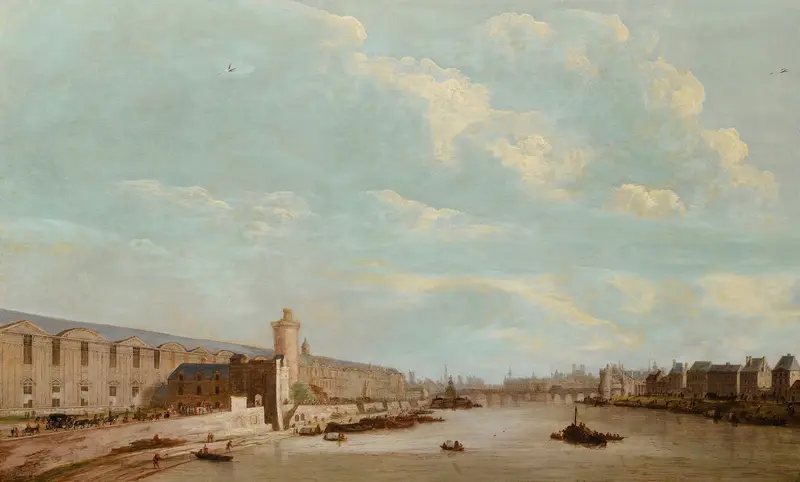
View of Paris from the Pont-royal with the Grande galerie du Louvre, the Pont-Neuf and the Nesle tower
Abraham de Verwer
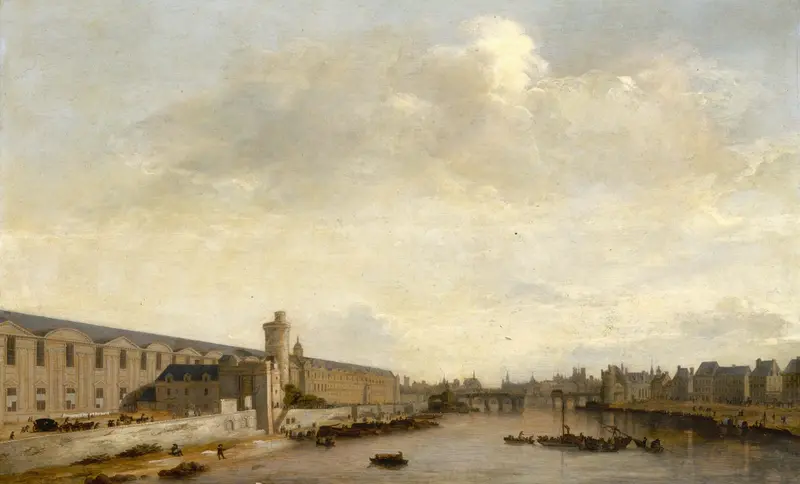
La Grande Galerie du Louvre, avec la porte Neuve et la tour de Bois
Abraham de Verwer
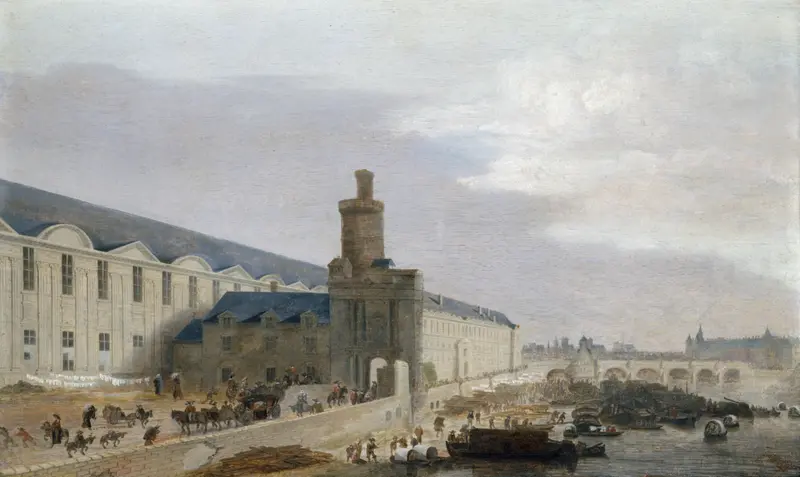
La Grande Galerie du Louvre avec la porte Neuve et la tour de Bois
Abraham de Verwer
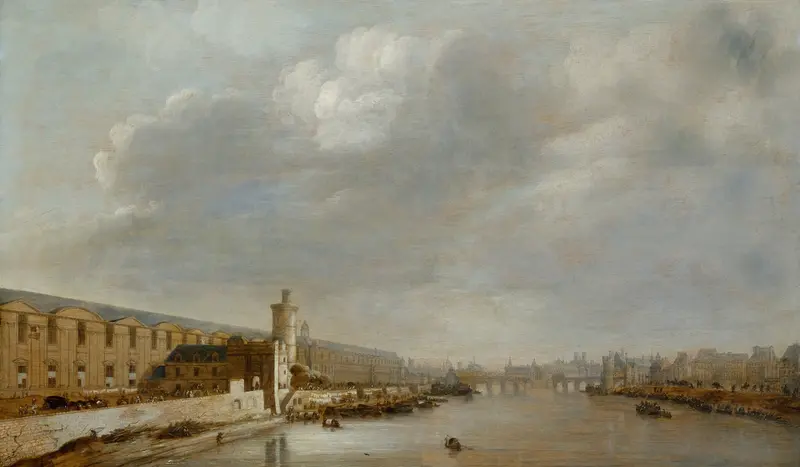
La Grande Galerie du Louvre avec la porte Neuve et la tour de Bois
Abraham de Verwer
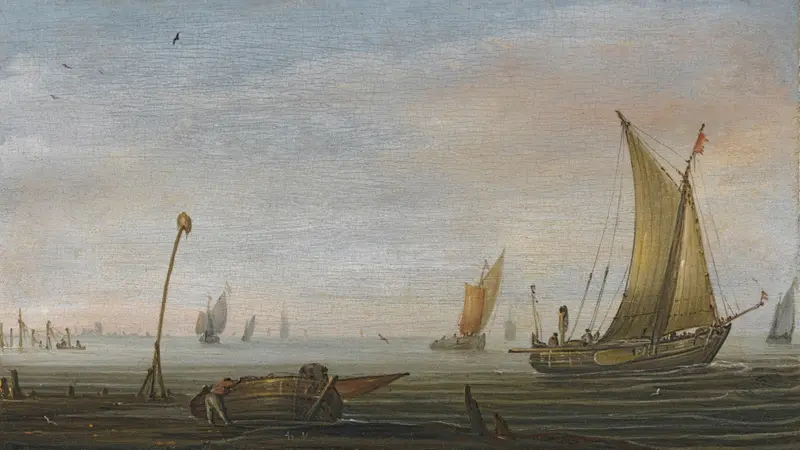
Small Vessels On The Zuider Zee
Abraham de Verwer
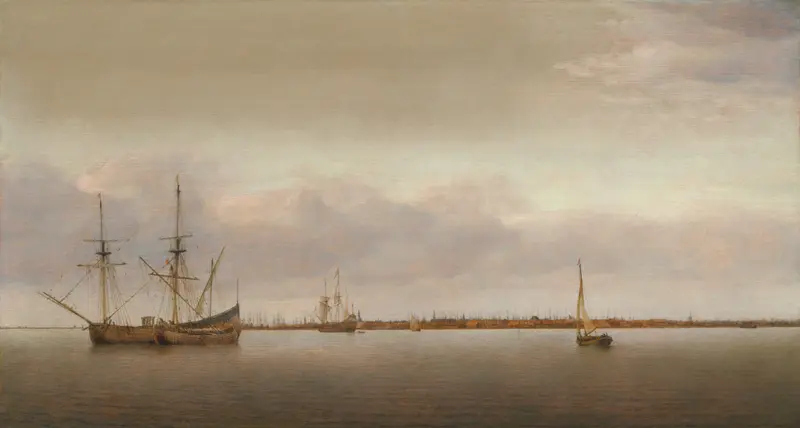
View of Hoorn
Abraham de Verwer
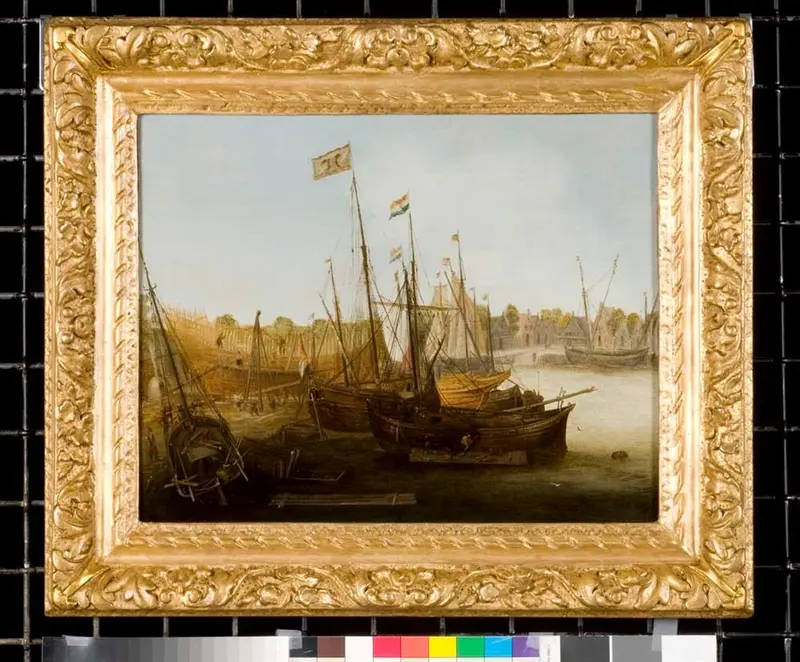
A shipyard with vessels being built
Abraham de Verwer
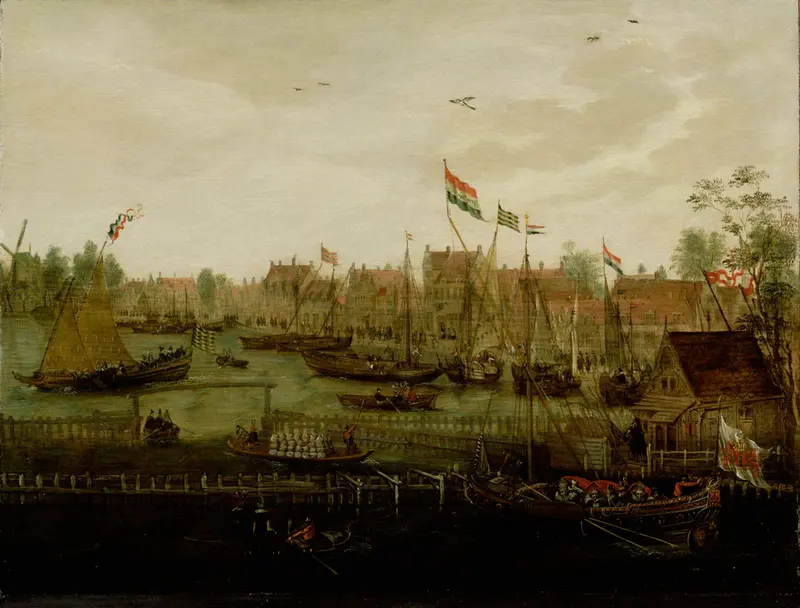
Gezicht vanaf de Blauwbrug over de Amstel-Schepen op de Amstel-View across the river Amstel from the Blauw Bridge
Abraham de Verwer
Naval Battle between Dutch and Spanish Ships of the Line
Abraham de Verwer





