
Selbstporträt — History & Facts
When Jan Matejko painted Selbstporträt in 1887, he was already hailed as the chronicler of Poland’s dramatic history, yet here he turned his searching gaze upon himself. The work stands out as one of the rare moments when the artist, so often immersed in grand historical canvases, paused to confront his own image. Painted just a year before his death, this self-portrait has often been read as a summation of a life spent in the service of art and national memory.
Unlike his famous depictions of kings and battles, this canvas offers no armor or pageantry—only the artist, face to face with his own legacy. Matejko captures himself at a moment of introspection, seated against a dark, undefined background that throws his features into sharp relief. The artist’s eyes, deeply set and intense, meet the viewer’s with a mixture of fatigue and unyielding determination. His unruly hair and beard, rendered with quick, expressive strokes, suggest both the turbulence of his times and the inner restlessness that drove his work.
The absence of props or elaborate costume, so common in his historical scenes, signals a deliberate stripping away of artifice. In this, Matejko’s approach recalls Rembrandt’s late self-portraits, where the artist’s face becomes a map of experience and self-questioning. The exact journey of Selbstporträt after its creation is not fully documented, but it is known to have remained in Poland, passing through private collections before entering a major museum. Today, it is recognized as a key work from the final years of Matejko’s career, marking a personal coda to decades spent painting the nation’s past.
While his monumental canvases hang in Kraków’s National Museum, this self-portrait offers a quieter, more intimate counterpoint. It serves as a reminder that behind every grand historical narrative lies the solitary figure of the artist, wrestling with his own place in history.
More Artworks by Jan Matejko
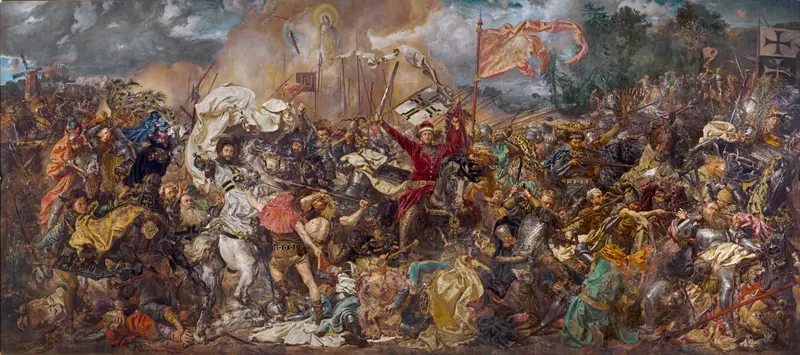
Battle of Grunwald
Jan Matejko

Stańczyk
Jan Matejko

Battle of Raclawice
Jan Matejko
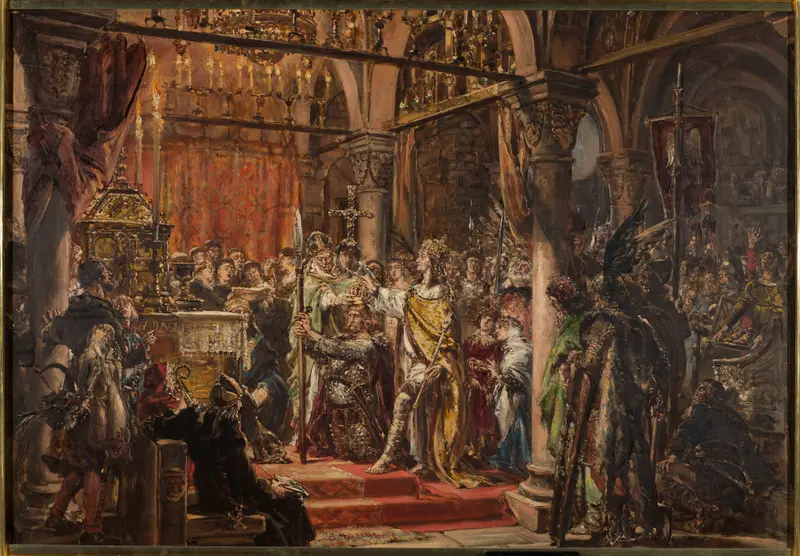
Coronation of the First King, 1001 AD, from the series “History of Civilization in Poland”
Jan Matejko
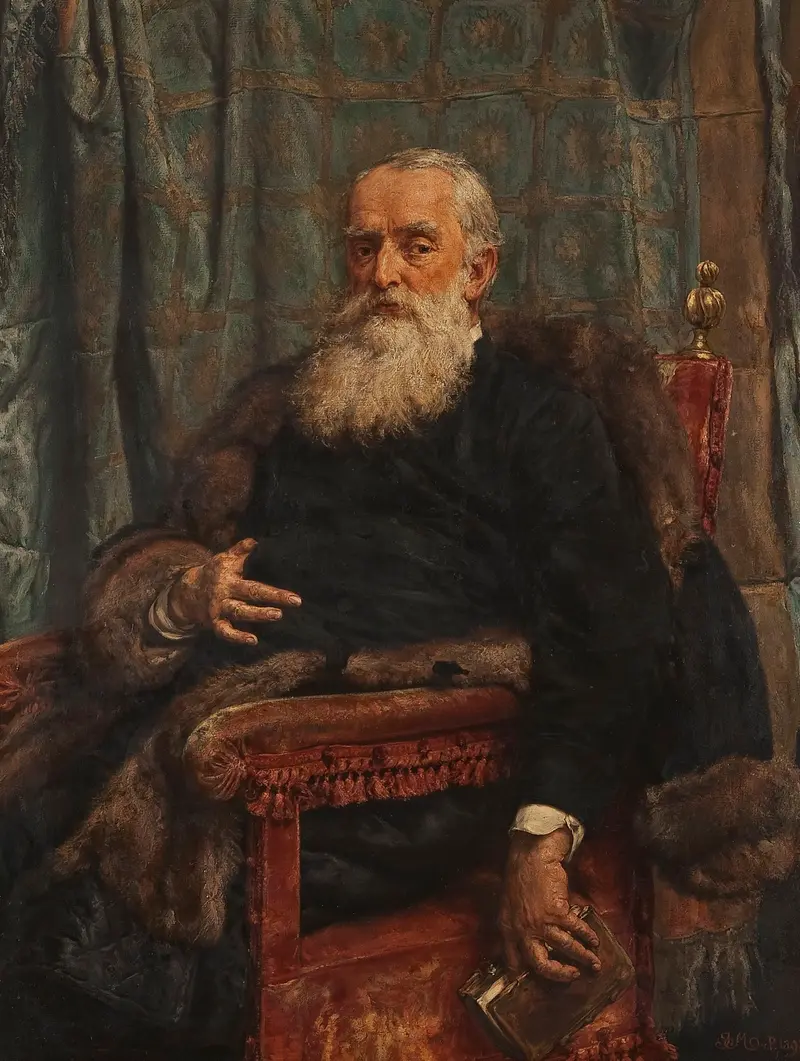
Portrait of Henryk Krajewski
Jan Matejko
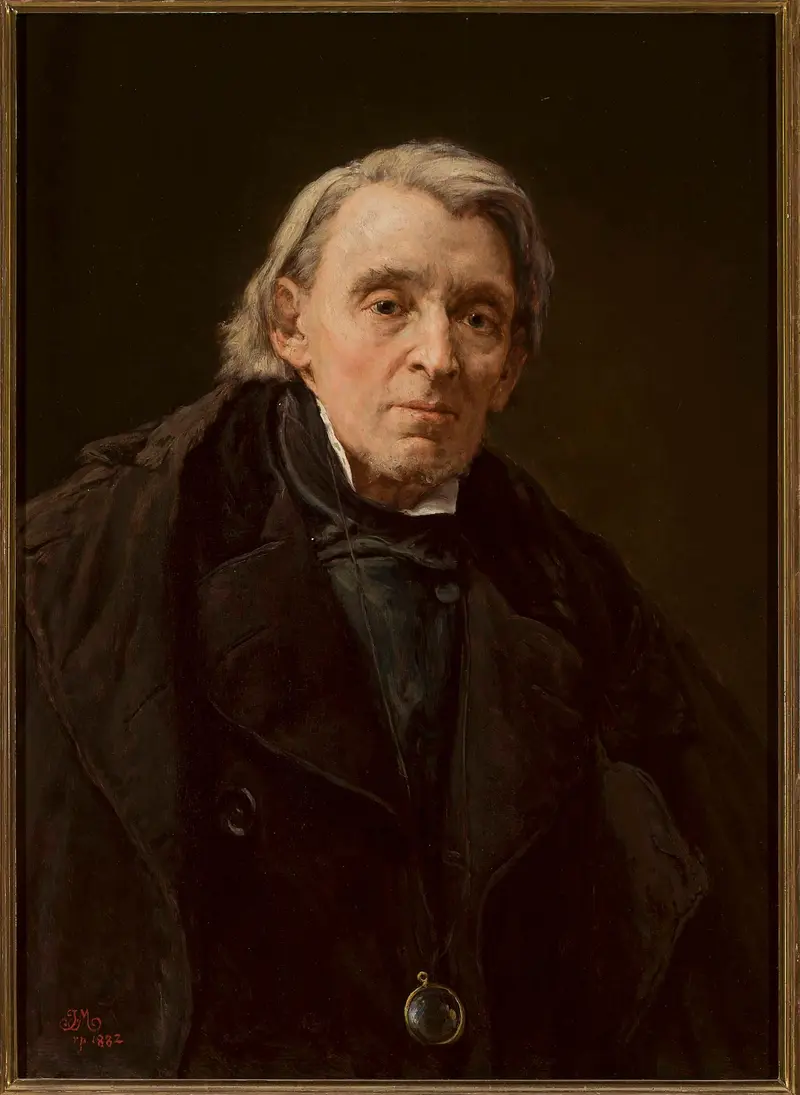
Portrait of Karol Podlewski
Jan Matejko
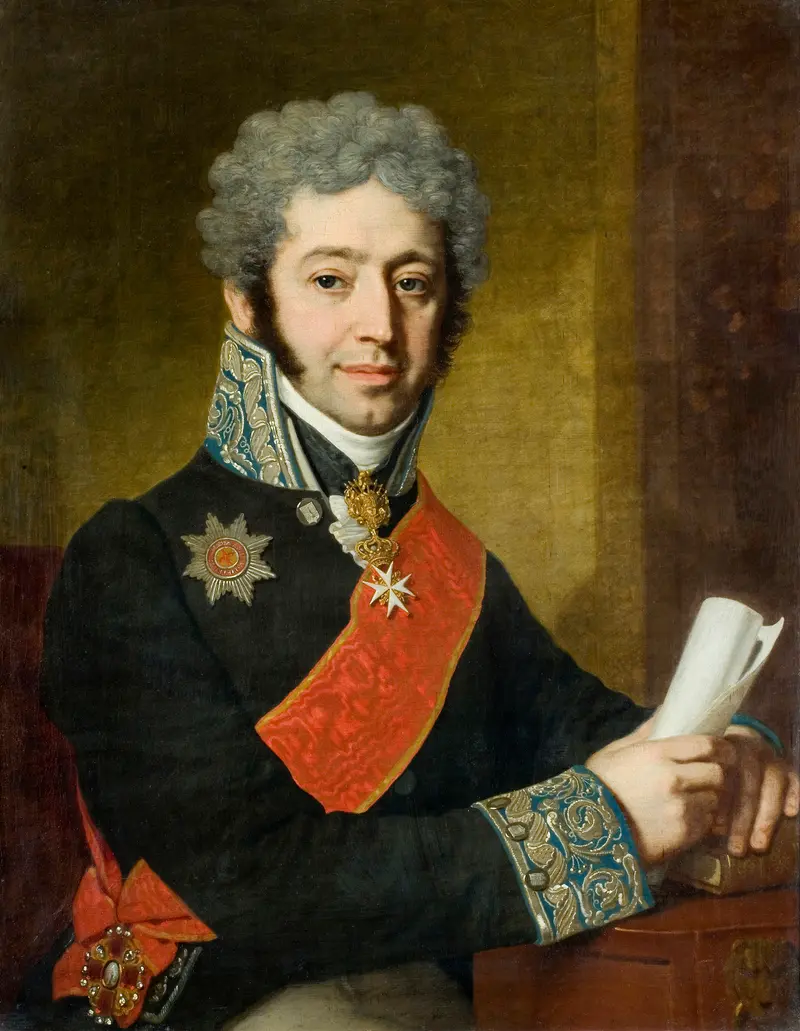
Portrait of Potocki and Poninski
Jan Matejko
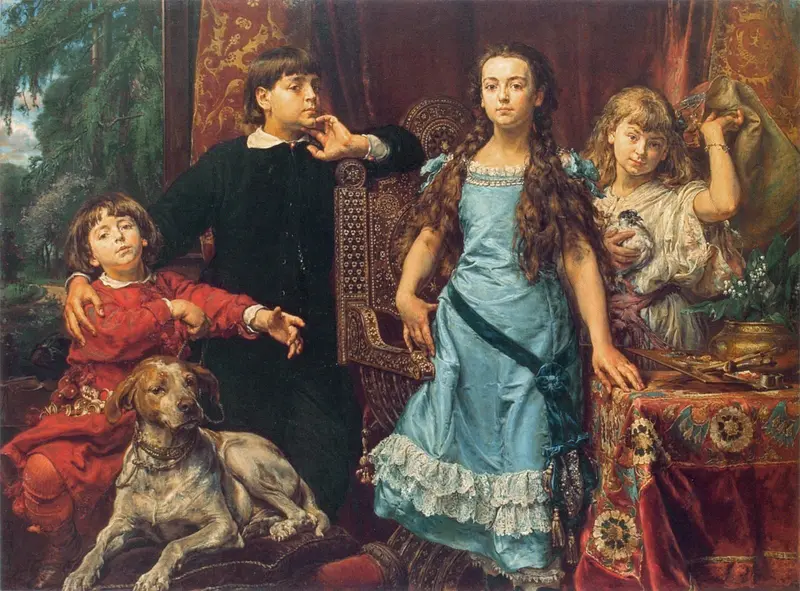
Portrait of the artist's four children
Jan Matejko
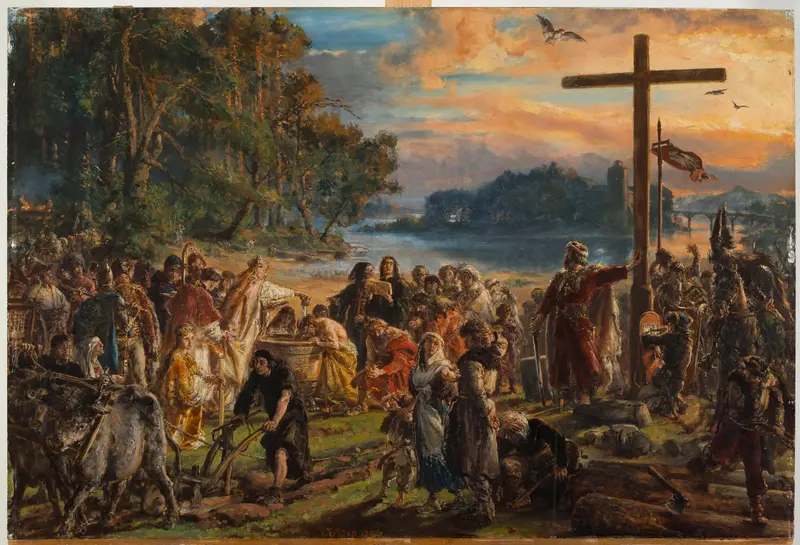
Introduction of Christianity in Poland
Jan Matejko
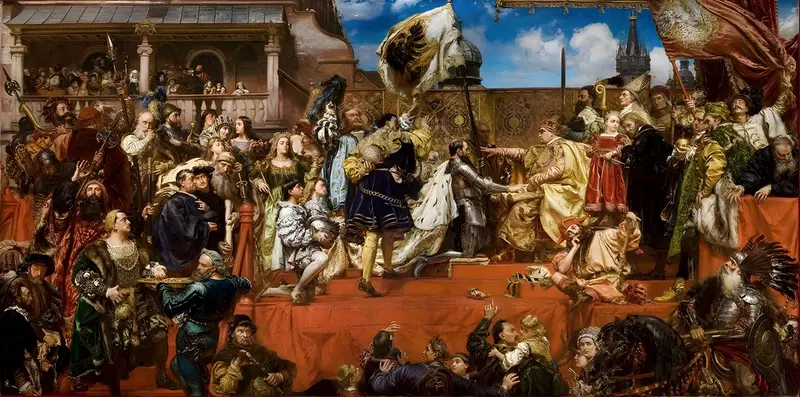
Prussian Homage
Jan Matejko





