
Self-Portrait as a Sick Man — History & Facts
Few portraits grip the viewer so immediately with their rawness as this one. The figure’s face, streaked with unnatural greens and purples, seems to hover between worlds—half alive, half spectral. The hand pressed to the cheek is more claw than comfort, while the other hand, limp and pale, drapes over a vivid red blanket.
The bed’s yellow headboard and the jagged, almost childlike window behind are rendered in the same harsh, broken brushstrokes as the figure’s haunted face. Every color is chosen for its jarring effect rather than harmony: the blue robe, the acid green skin, the red that threatens to swallow the sitter whole. The candle on the nightstand, barely more than a suggestion, hints at a world beyond the bed, but the real drama is locked in the eyes—wide, glassy, and searching for something just out of reach. Painted in 1918, this work stands at the crossroads of a Europe shattered by war and an artist grappling with his own inner turmoil.
The style belongs unmistakably to Expressionism, a movement that sought not to imitate the visible world, but to project the artist’s inner reality onto the canvas. In Germany, where Ernst Ludwig Kirchner and his contemporaries worked, such paintings were rarely commissioned; they were acts of personal necessity, created in studios rather than salons. The year 1918 marked both the end of World War I and a period of crisis for many artists, who turned to self-portraiture as a means of survival and confession.
History has kept few traces of the private lives behind such images, but the urgency of this painting’s brushwork and the feverish palette speak volumes. Stand before it, and let your eyes adjust to its strange, electric world.
More Artworks by Ernst Ludwig Kirchner
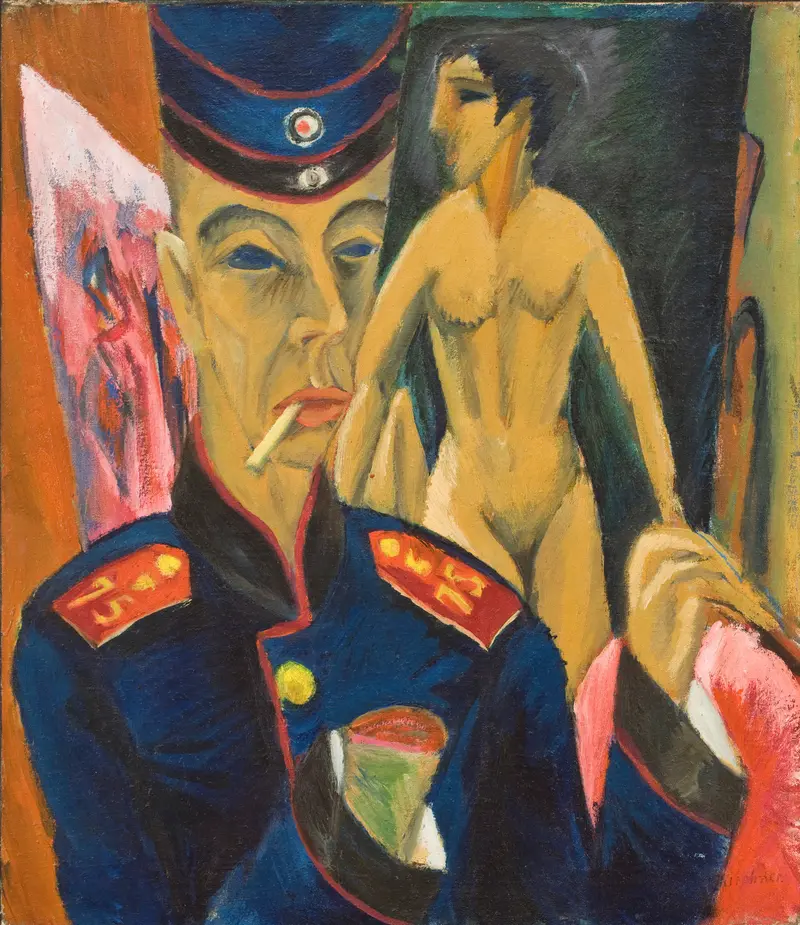
Self-Portrait as a Soldier
Ernst Ludwig Kirchner
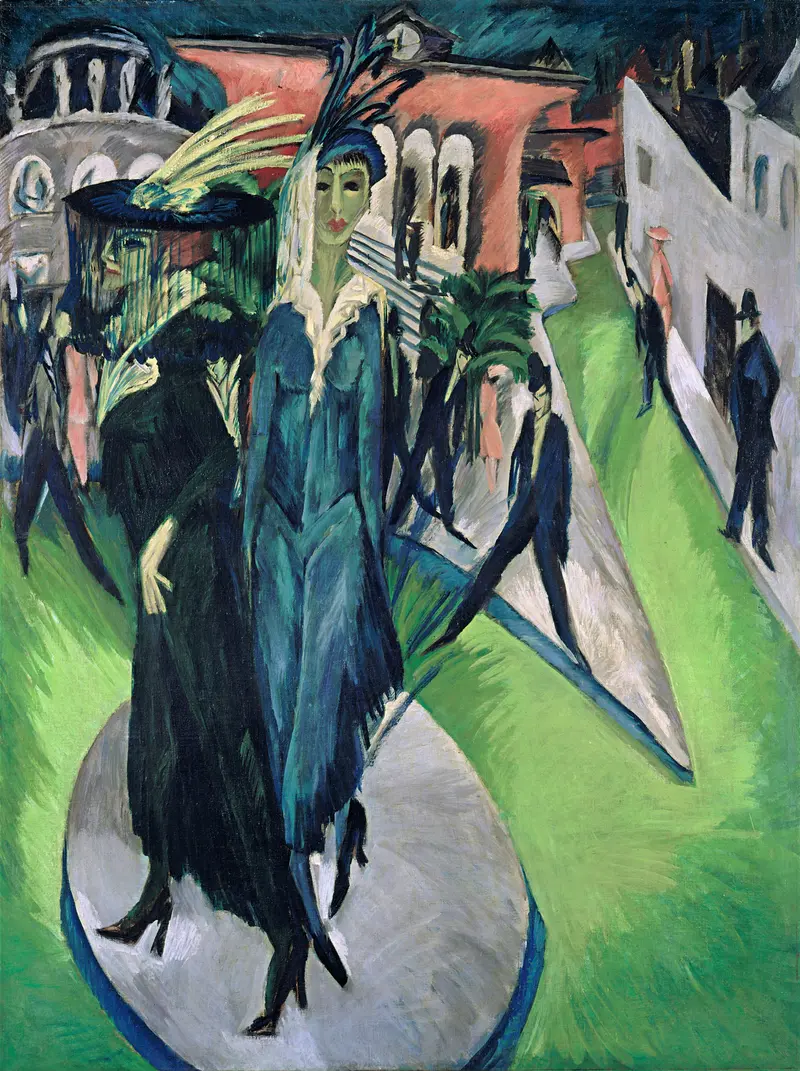
Potsdamer Platz
Ernst Ludwig Kirchner

Alphütten und Tinzenhorn
Ernst Ludwig Kirchner
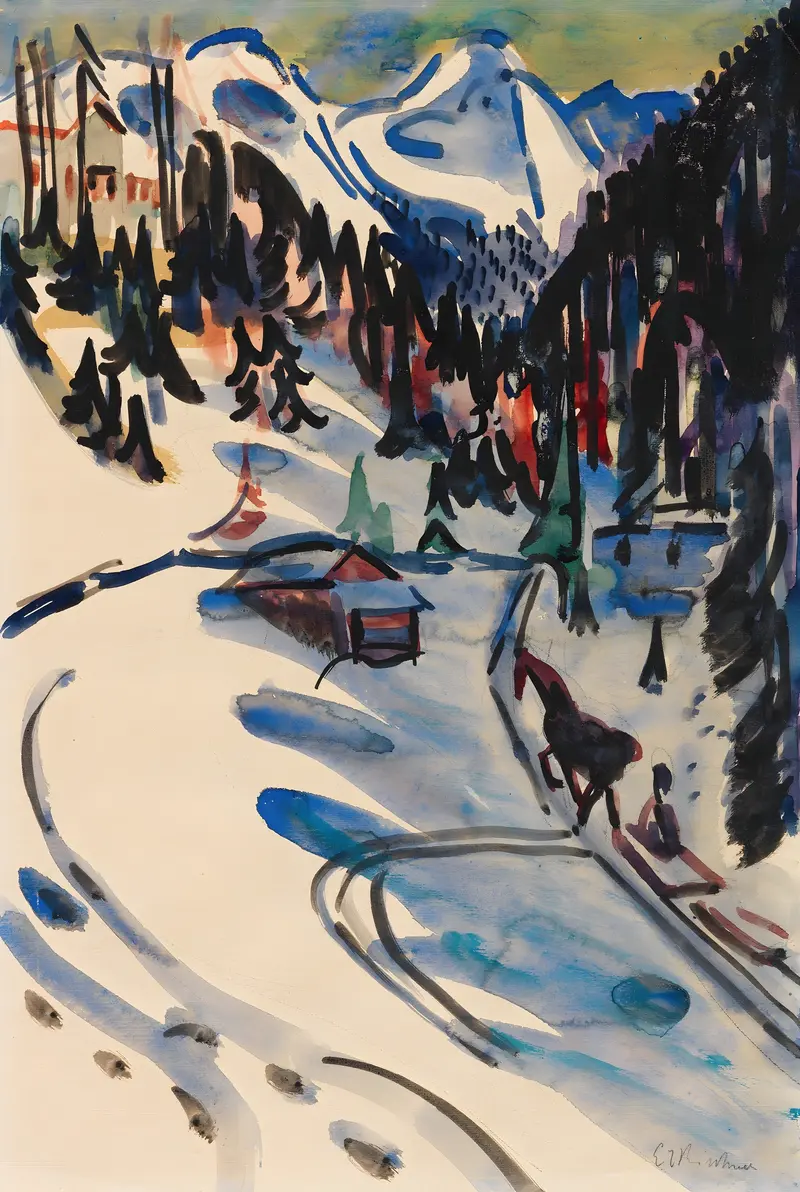
Sertigtal im Winter
Ernst Ludwig Kirchner
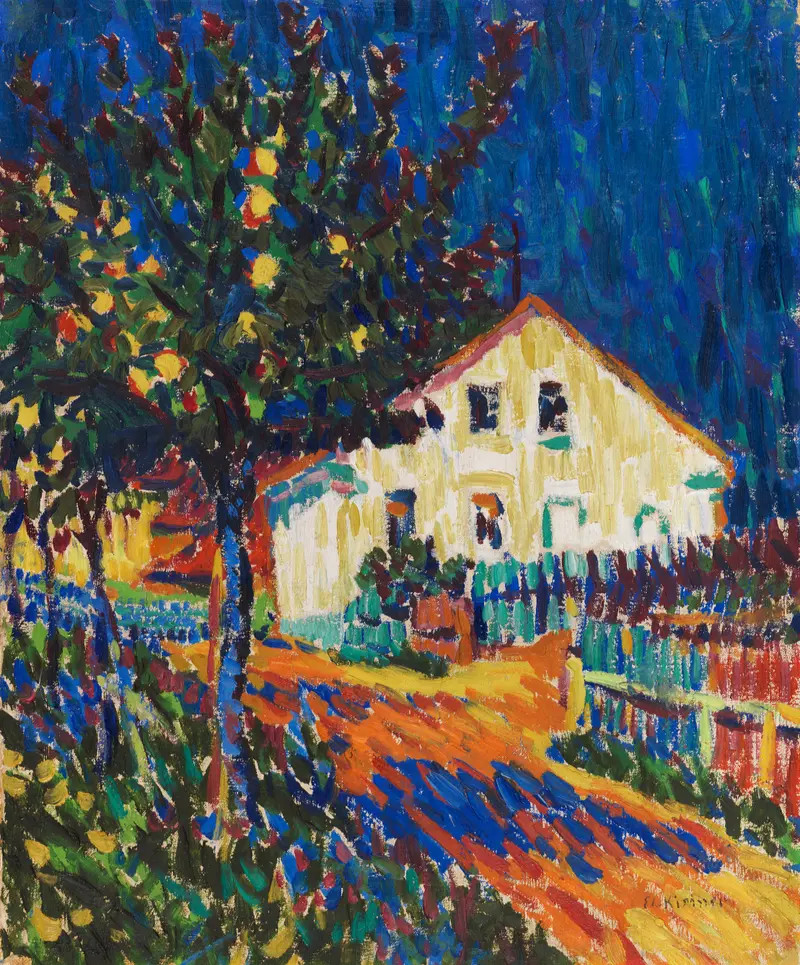
Dorfstraße mit Apfelbäumen
Ernst Ludwig Kirchner
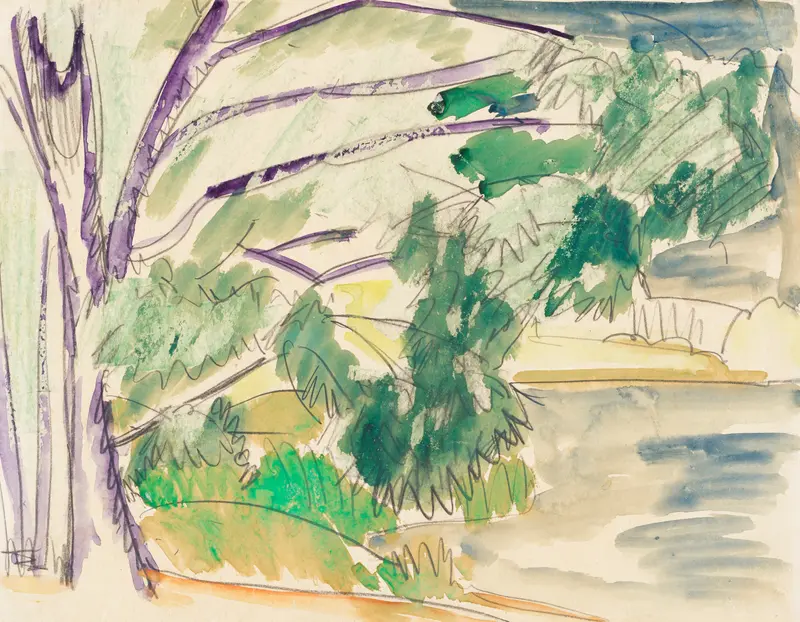
Unter Bäumen am See
Ernst Ludwig Kirchner
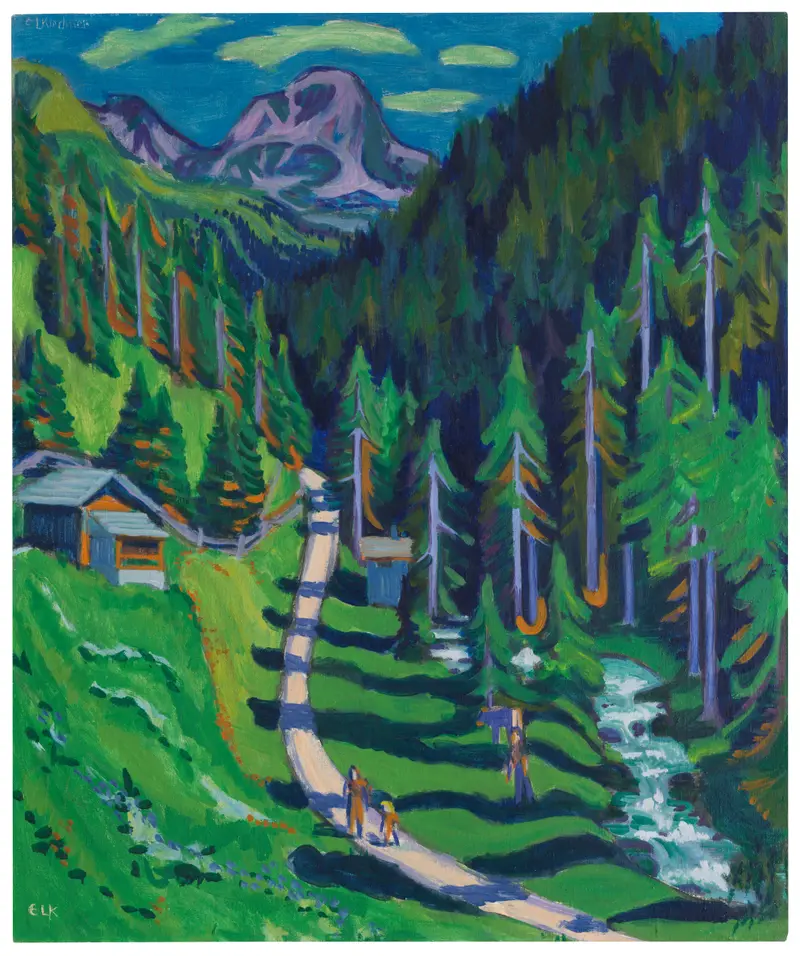
Sertigweg
Ernst Ludwig Kirchner
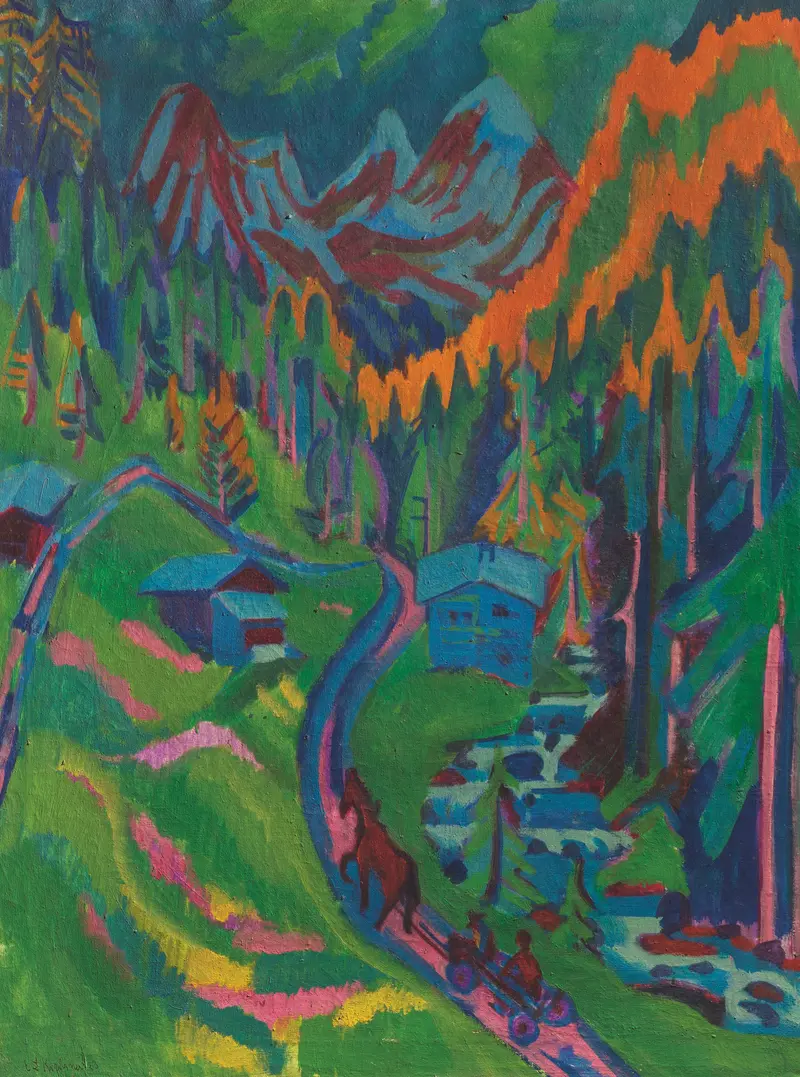
Sertigweg im Sommer
Ernst Ludwig Kirchner
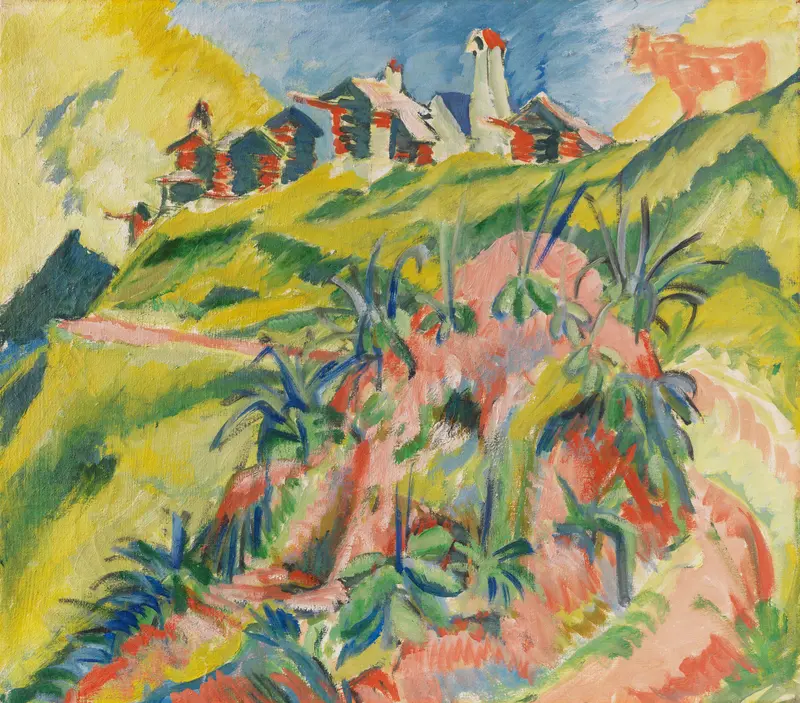
Bergdorf mit rosa Kuh
Ernst Ludwig Kirchner
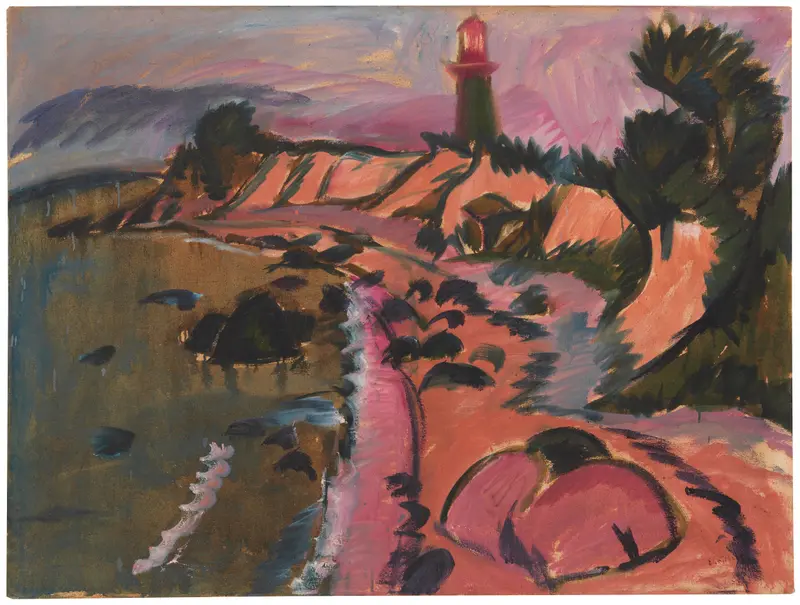
Fehmarnküste mit Leuchtturm
Ernst Ludwig Kirchner





