
Self-portrait of Shevchenko (winter 1840/1841) — History & Facts
When Taras Shevchenko painted Self-portrait of Shevchenko (winter 1840/1841), he was a newly freed serf, just two years after buying his liberty with the help of Russian intellectuals. The portrait captures a moment of transformation: a man who, having gained his freedom, was beginning to forge his identity as both an artist and a national poet. This image stands as one of the earliest known self-portraits by Shevchenko, created during his studies at the Imperial Academy of Arts in Saint Petersburg.
Its date places it at the very threshold of his fame, just before his first collection of poetry, Kobzar, appeared in 1840 and began to circulate quietly among Ukrainian readers. The painting presents Shevchenko in winter dress, his gaze direct and searching, framed by the soft, muted tones of the season. His heavy overcoat and fur hat speak to the harsh Russian winter, but also to the isolation and introspection of a young man far from his homeland. The artist’s features are rendered with unflinching honesty: the broad forehead, the intense eyes, the determined set of the mouth.
Unlike the idealized self-portraits of Rembrandt or the theatricality of Delacroix, Shevchenko offers no embellishment, only a quiet assertion of presence. The light falls gently across his face, highlighting the tension between vulnerability and resolve—a visual echo of his dual identity as both a survivor and a creator. The precise medium of this work remains uncertain, as does its early provenance, but it is widely believed to have remained in private hands for much of the nineteenth century, passing quietly among admirers of Shevchenko. Today, it is recognized as a key document of his artistic beginnings, often reproduced in Ukrainian cultural histories and museum collections.
This self-portrait stands at the crossroads of Shevchenko’s career, marking the moment before exile and persecution would shape his life and legend. Its survival is a testament to the enduring fascination with the man who became a symbol of Ukrainian national identity.
More Artworks by Taras Shevchenko
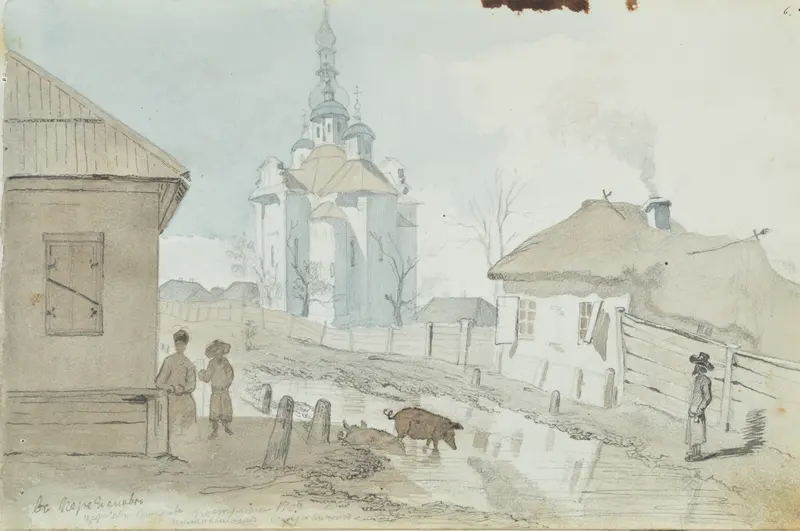
1845 Sh Sketchbook f.06r
Taras Shevchenko

1845 Sh Sketchbook f.04r
Taras Shevchenko

1848 Bilia vohnu
Taras Shevchenko
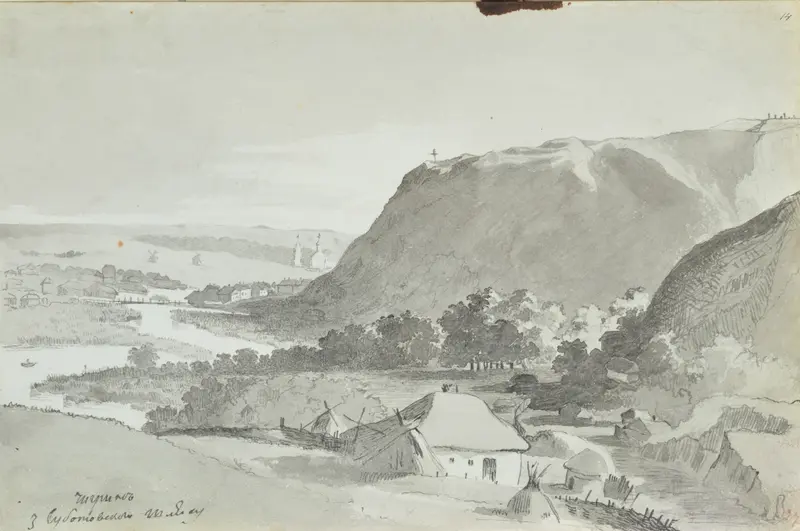
1845 Sh Sketchbook f.14r
Taras Shevchenko
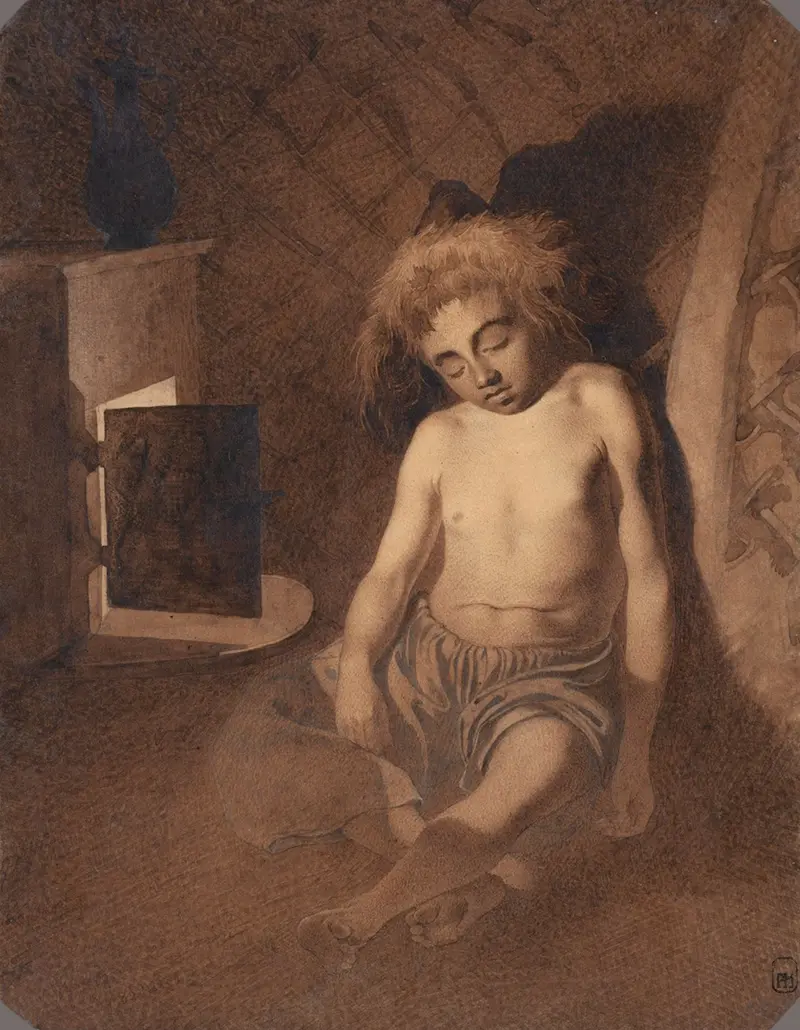
1848 Hlopcyk zasnuv
Taras Shevchenko
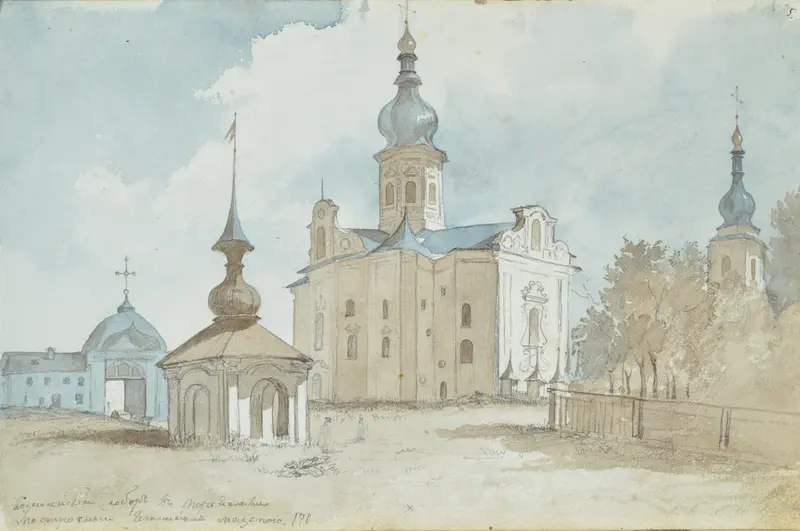
1845 Sh Sketchbook f.05r
Taras Shevchenko
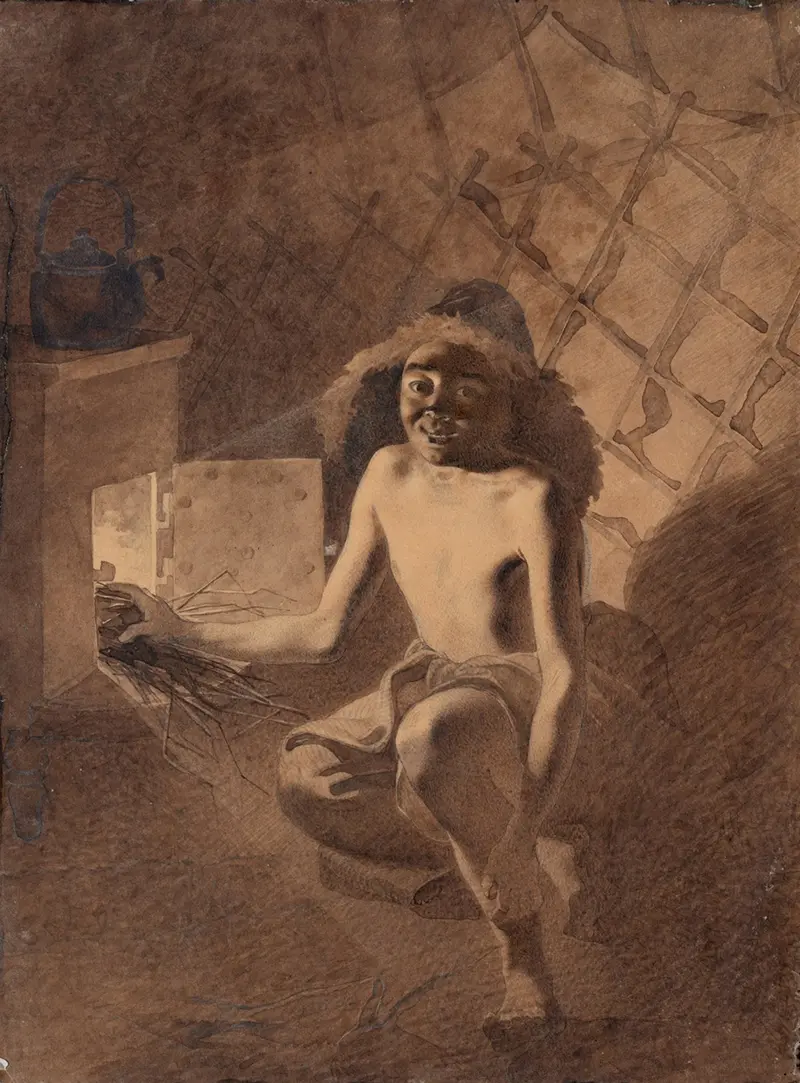
1848 Hlopcyk rozpalije
Taras Shevchenko
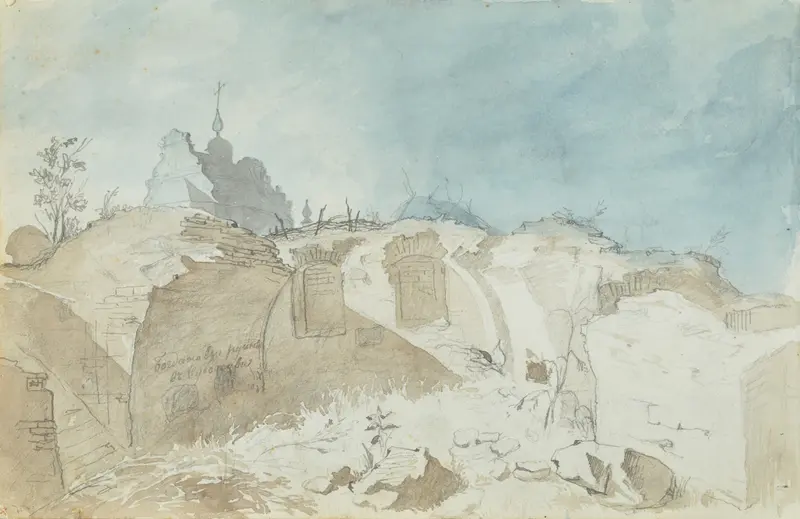
1845 Sh Sketchbook f.12v
Taras Shevchenko
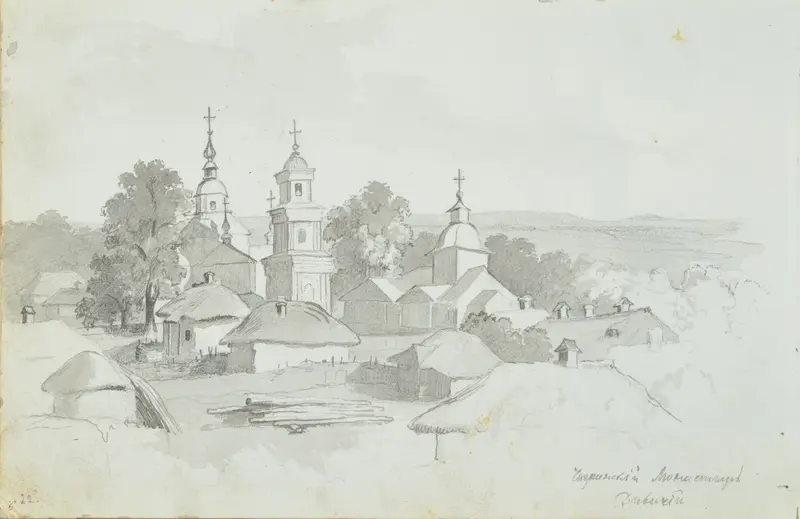
1845 Sh Sketchbook zz f.11v
Taras Shevchenko
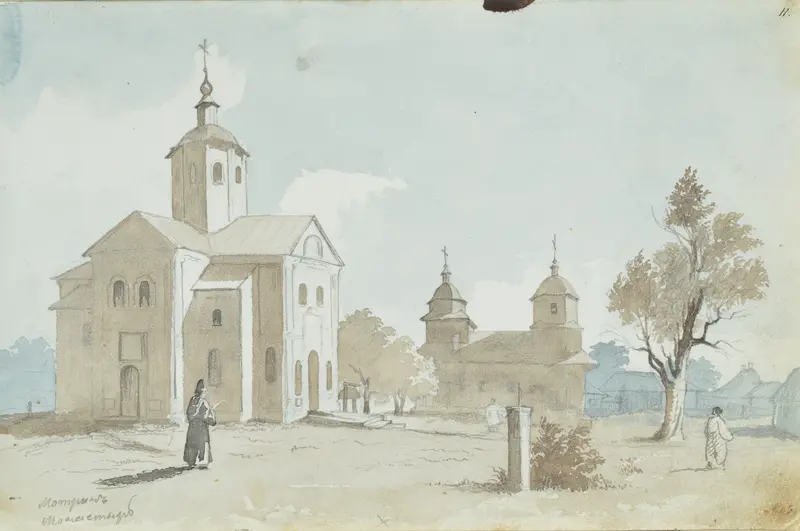
1845 Sh Sketchbook f.11r
Taras Shevchenko





