Self-Portrait with a Black Dog — History & Facts
A young man sits at the edge of a sunlit hillside, his gaze as direct as his posture is relaxed, a black dog pressed close at his side. The wide-brimmed hat and the artist’s tools at his feet hint at a life lived outdoors, searching for subjects and meaning in the open air. Light falls across his face, picking out the sharp line of his jaw and the steady confidence in his eyes, while his companion’s dark coat almost merges with the folds of his cloak.
The landscape behind him stretches out in pale greens and blues, a world waiting to be explored, but the painter holds our attention in the present moment—self-assured, watchful, and entirely at ease in his own company. Painted around 1842, this self-portrait by Gustave Courbet belongs to a moment when artists were beginning to turn away from the conventions of academic portraiture and embrace the freedom of the Romantic spirit. The loose, painterly sky and the casual sprawl of the figure speak to a new kind of artistic independence, one that would soon define Courbet’s Realism. The work now resides in the Petit Palais, Paris, a reminder of the era when young painters claimed their place in the world not just through skill, but through the force of their own personalities.
Look again at the black dog—loyal, alert, a silent witness to ambition and solitude—and consider what it means to paint oneself into the landscape of one’s own time.
More Artworks by Gustave Courbet
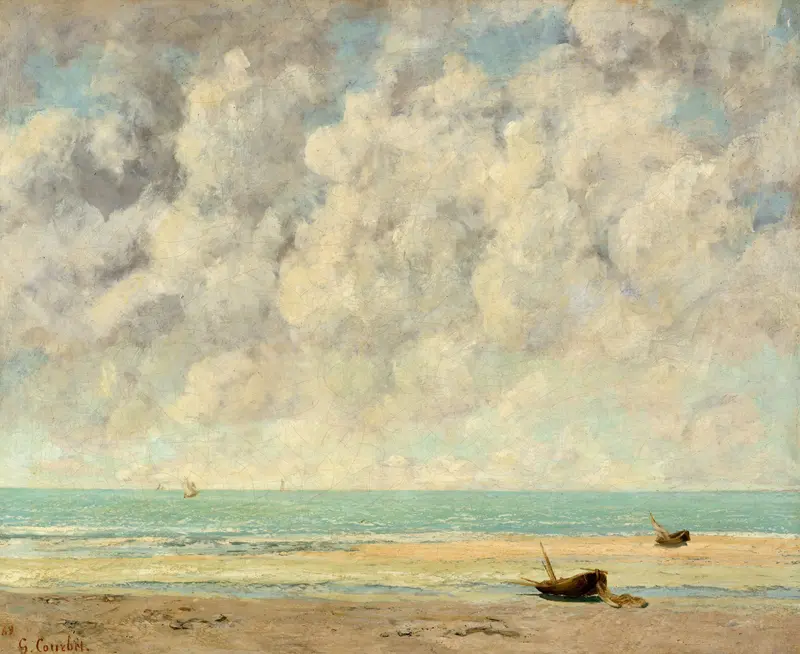
The Calm Sea
Gustave Courbet

A Burial at Ornans
Gustave Courbet
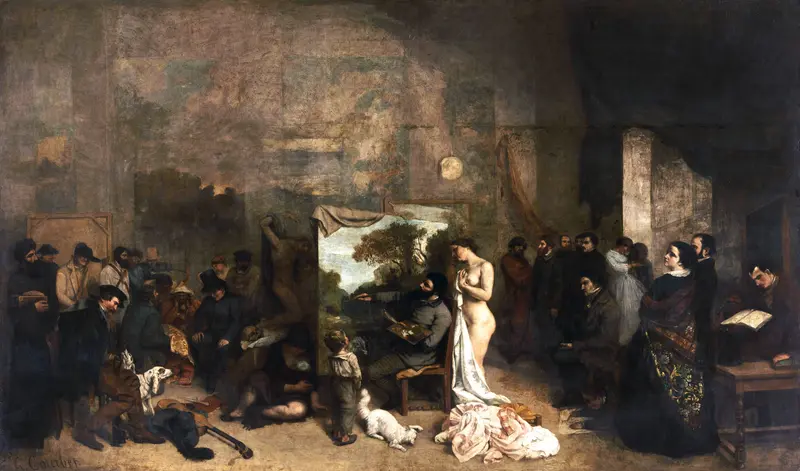
The Painter's Studio
Gustave Courbet
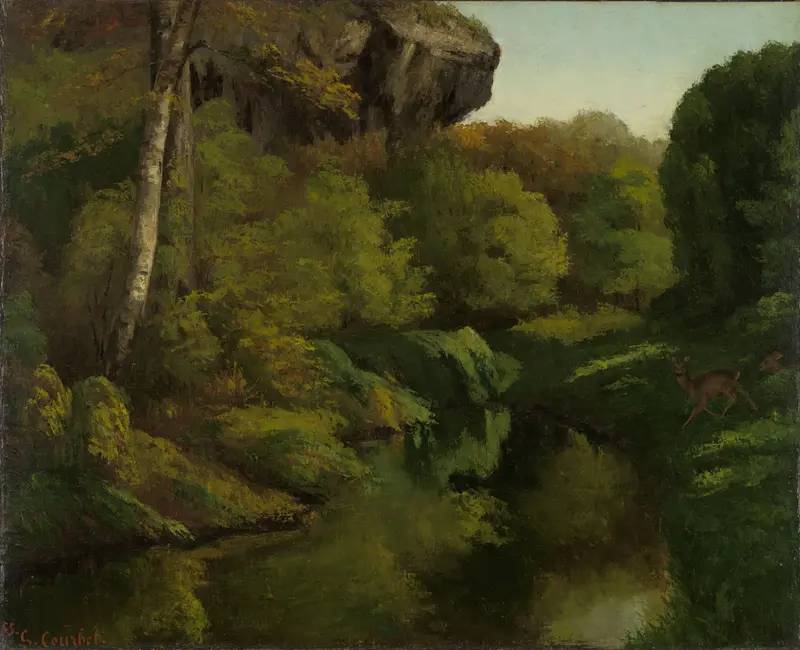
View in the Forest of Fontainebleau
Gustave Courbet
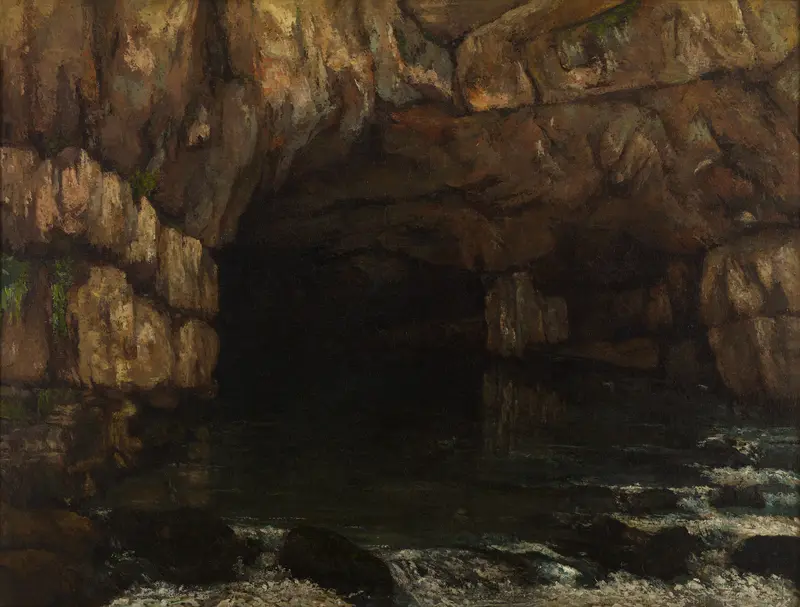
La source de la Loue (The Source of the Loue)
Gustave Courbet
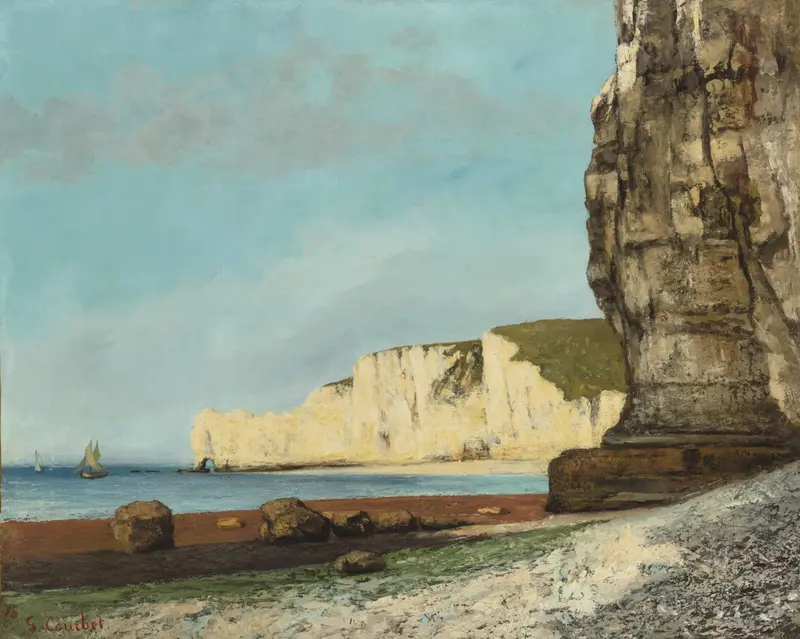
Étretat; Les Falaises
Gustave Courbet
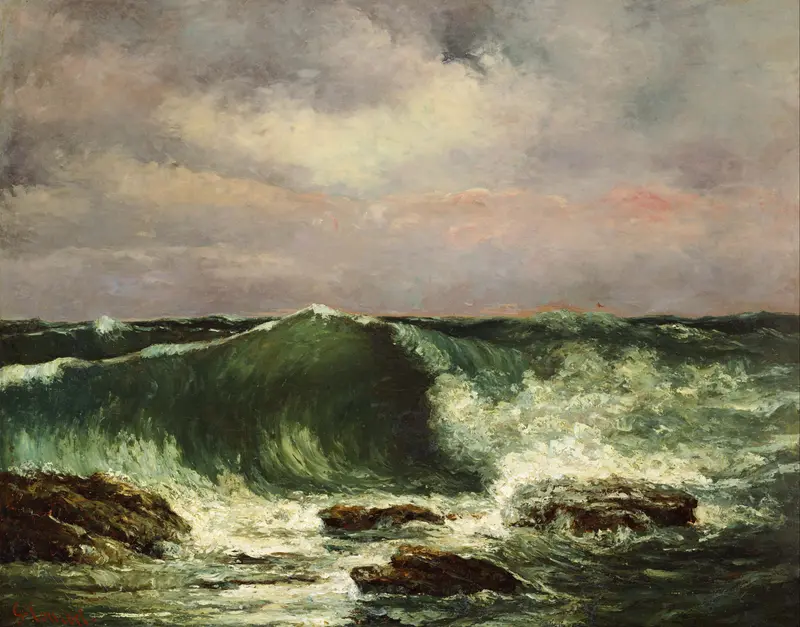
Waves
Gustave Courbet
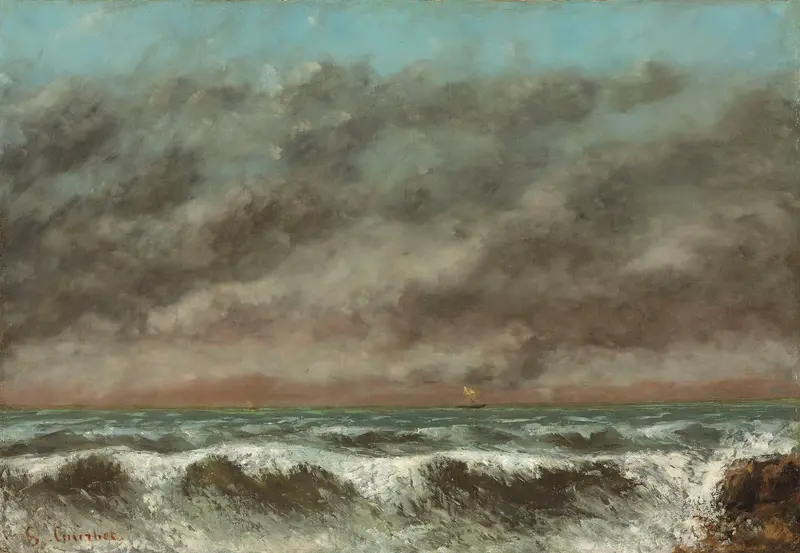
Marine
Gustave Courbet
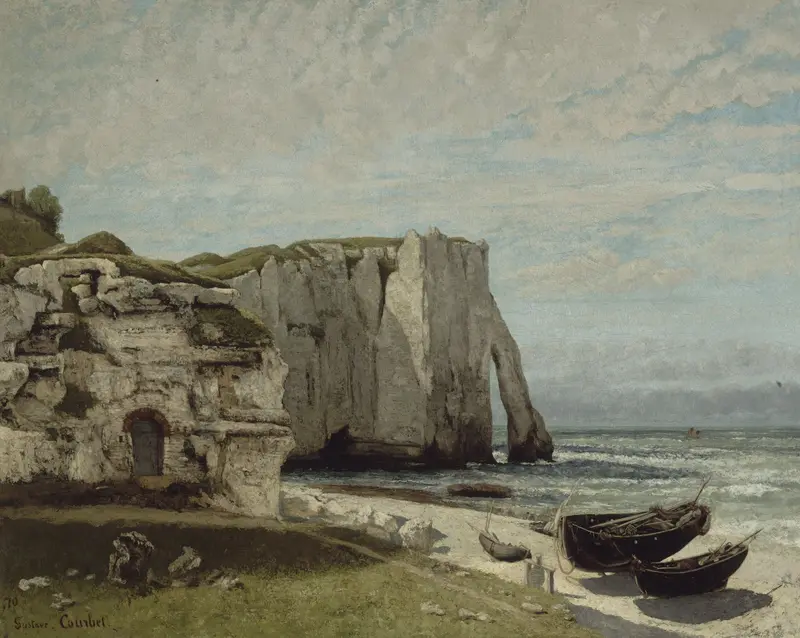
The Etretat Cliffs after the Storm
Gustave Courbet
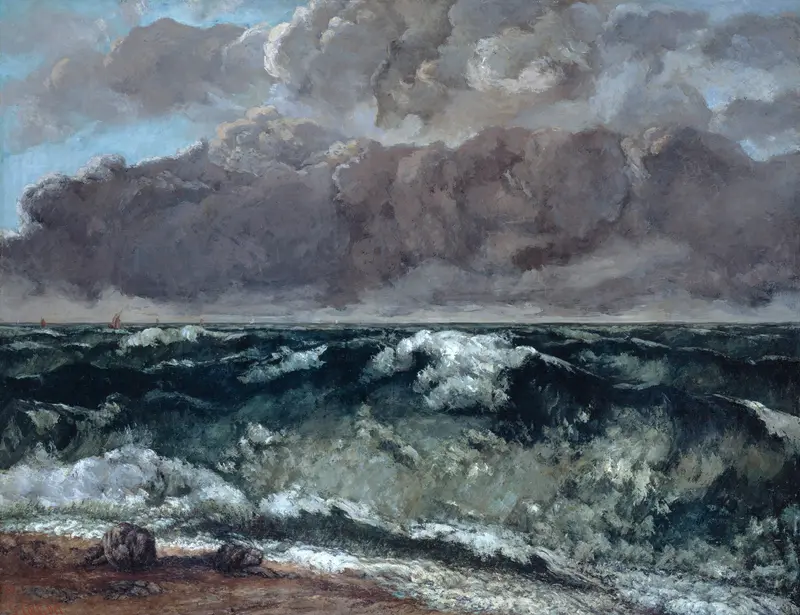
The Wave
Gustave Courbet