
The Painter's Studio — History & Facts
The Painter's Studio by Gustave Courbet was painted between 1854 and 1855 in oil on canvas. This large-scale work is a key piece in Courbet's career, created during a period when he was developing and asserting the principles of Realism. The painting brings together a variety of figures and motifs to represent the artist's view of society and his place within it. The composition centers on the artist himself, seated at an easel, working on a landscape.
To his left, a nude female model stands, while a young boy observes nearby. The right side of the canvas is filled with a variety of figures, including a man in black, a woman with a child, and other individuals from different walks of life. The left side includes people in humble clothing, a hunter, and a dog, suggesting a cross-section of contemporary society.
The use of naturalistic light and a subdued palette emphasizes the realism of the scene, while the detailed rendering of faces and objects reflects Courbet's technical skill. The Painter's Studio was first exhibited in 1855 at the Pavillon du Réalisme, a temporary exhibition space established by Courbet himself after the painting was rejected by the Exposition Universelle in Paris. The work was not commissioned but created as a manifesto of Courbet's artistic philosophy. Over time, it has become recognized as one of the most important paintings of the Realist movement.
The current location of the painting is not documented in the provided information.
More Artworks by Gustave Courbet
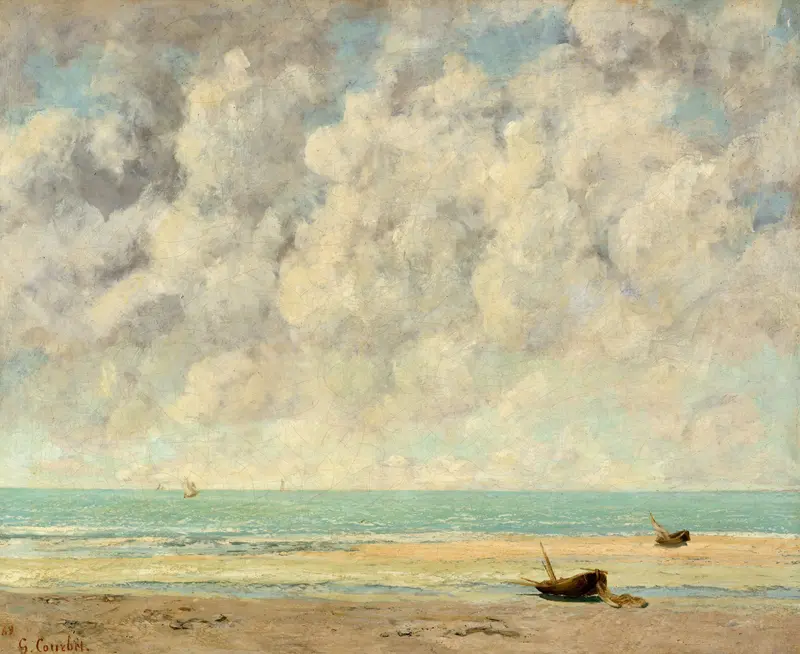
The Calm Sea
Gustave Courbet

A Burial at Ornans
Gustave Courbet
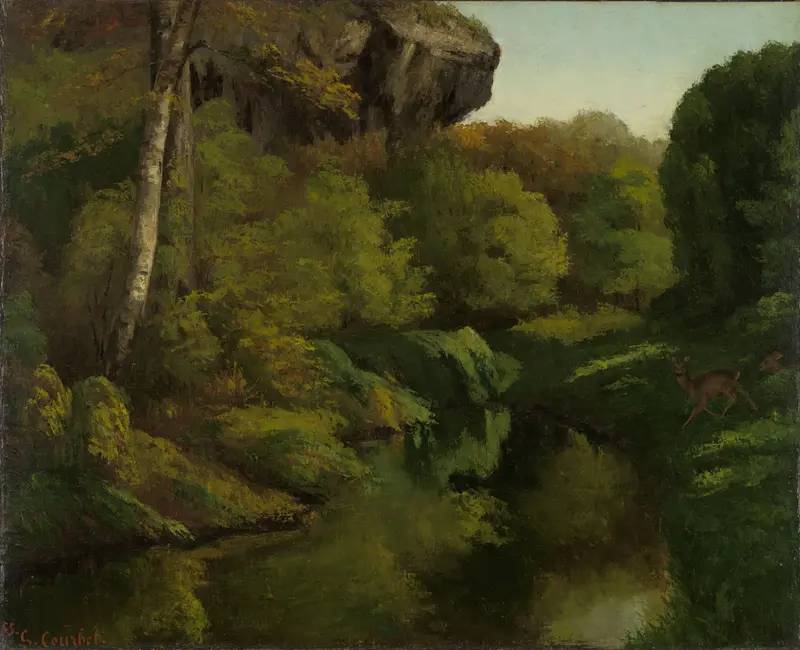
View in the Forest of Fontainebleau
Gustave Courbet
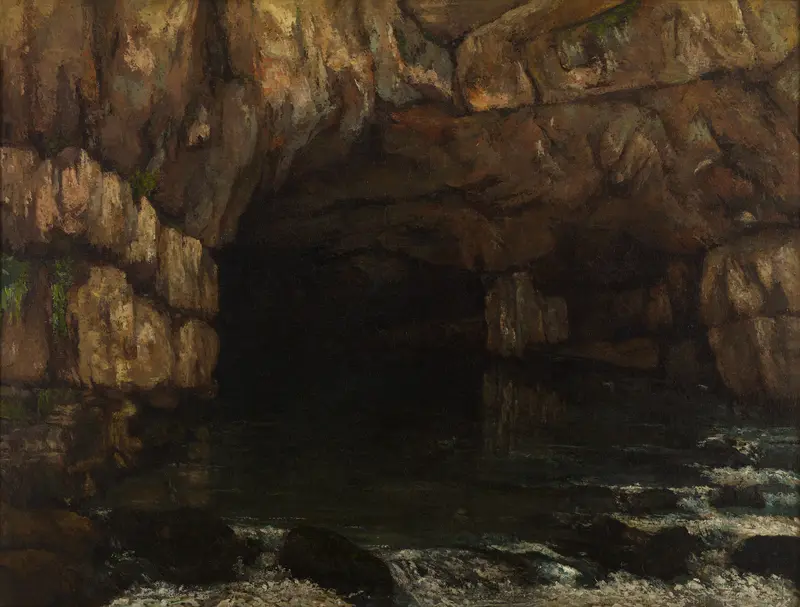
La source de la Loue (The Source of the Loue)
Gustave Courbet
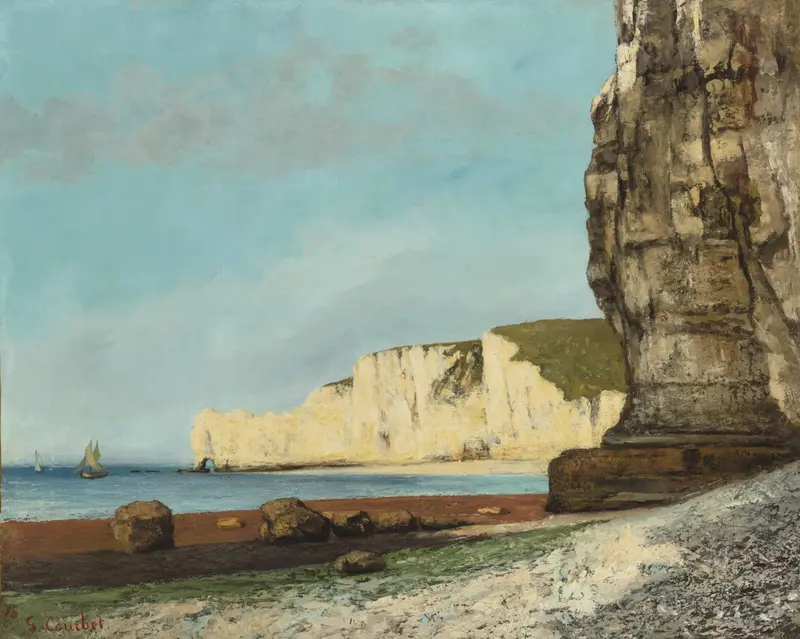
Étretat; Les Falaises
Gustave Courbet
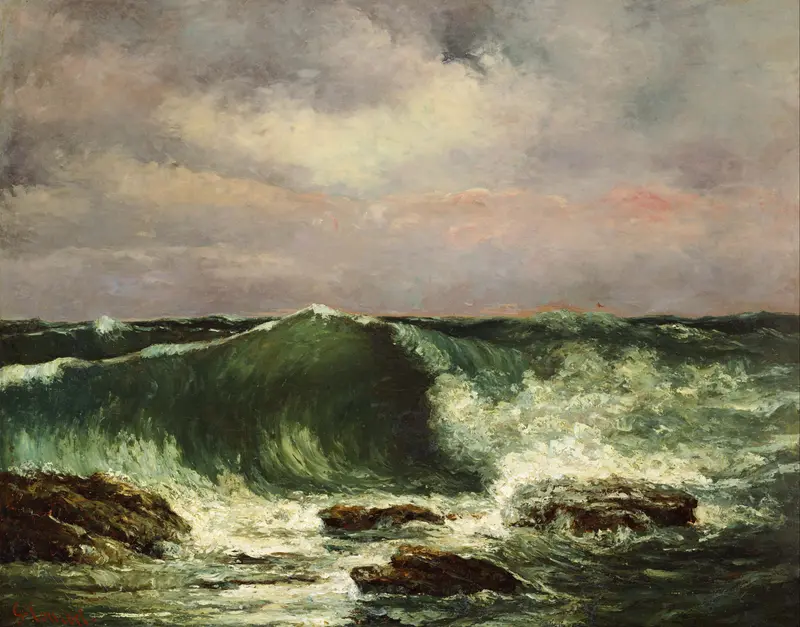
Waves
Gustave Courbet
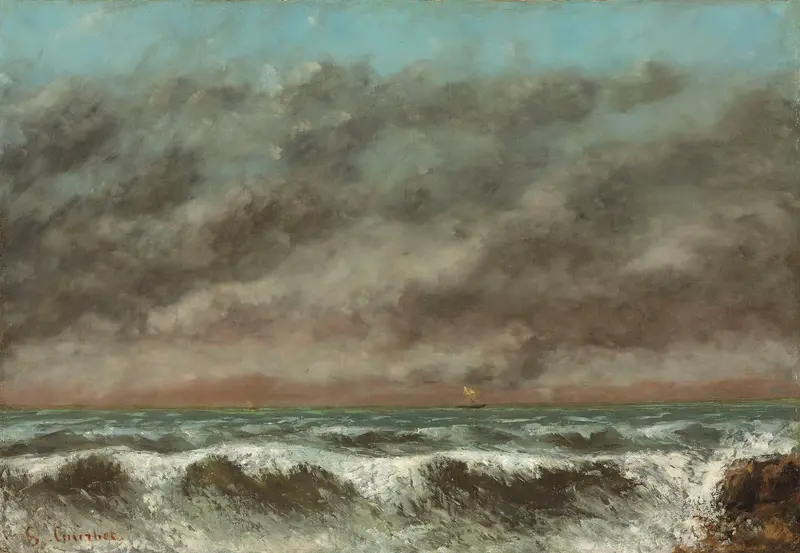
Marine
Gustave Courbet
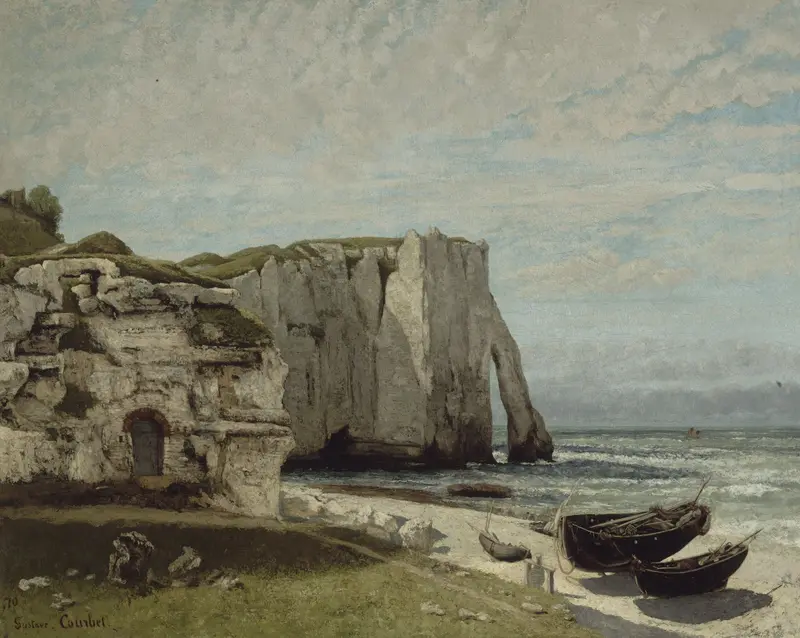
The Etretat Cliffs after the Storm
Gustave Courbet
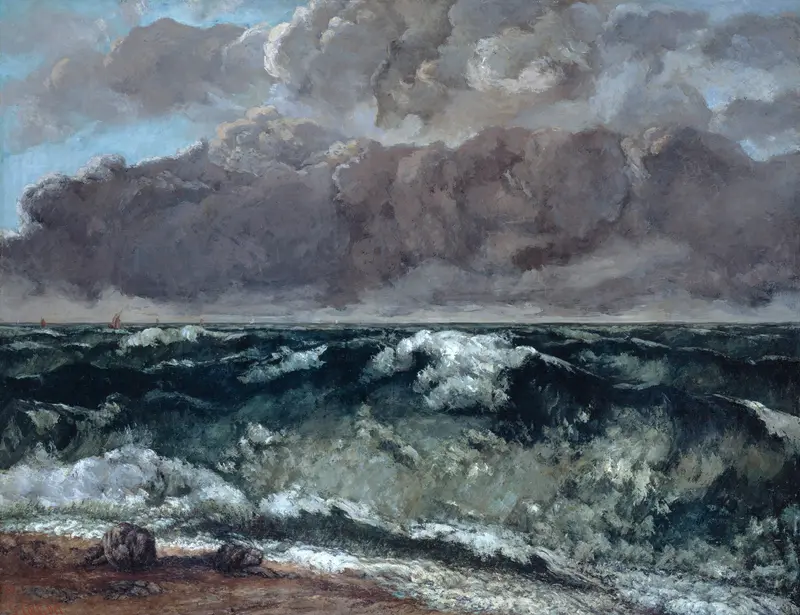
The Wave
Gustave Courbet
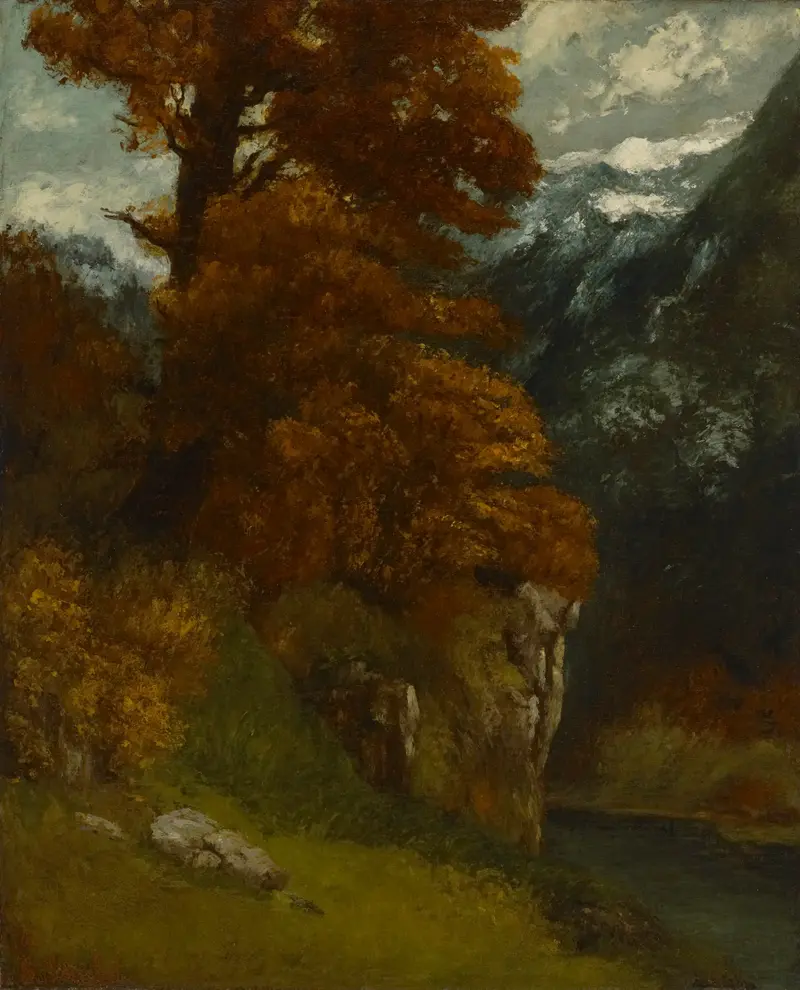
The Glen at Ornans (Bords du Doubs; Effet d’Automne)
Gustave Courbet
More Genre Scene Art

Banquet of the Officers of the St George Civic Guard
Frans Hals

Rembrandt and Saskia in the Scene of the Prodigal Son
Rembrandt van Rijn

Bal du moulin de la Galette
Pierre-Auguste Renoir

Quadrille at the Moulin Rouge
Henri de Toulouse-Lautrec
A Burial at Ornans
Gustave Courbet

When Will You Marry?
Paul Gauguin