Shelter for the Poor, Vendee (Le nid de pauvres, Vendee) — History & Facts
A thatched cottage crouches at the heart of Shelter for the Poor, Vendee, its roof heavy with the weight of the world, yet offering a fragile sanctuary. The eye is drawn first to the huddled figures in the foreground—women and children gathered close to the earth, their bodies shaped by necessity rather than comfort. The sparse lines and gentle shading carve out a world of quiet endurance, where every gesture is a negotiation with hardship: a mother cradling her child, another figure bent low, perhaps at work or in rest.
The composition leads us from these intimate moments outward, past the cottage’s humble doorway and into a landscape dotted with trees and distant rooftops, suggesting a rural community bound together by circumstance. Created in 1909, this work belongs to a period when artists like Auguste Lepère turned their attention to the rural poor, recording the realities of everyday life with both sympathy and restraint. The image is neither sentimental nor accusatory; instead, it invites us to look closely at the textures of poverty—the rough thatch, the simple furniture, the worn clothing. Such scenes were often intended for urban audiences, a reminder of the persistence of rural hardship in a rapidly modernizing France.
Though history has kept few traces of this particular print, its presence in the National Gallery of Art’s collection today allows us to linger over the quiet dignity of its subjects, and to wonder what stories unfolded beneath that sheltering roof.
More Artworks by Auguste Lepère

Le Pont-Neuf (Paris)
Auguste Lepère
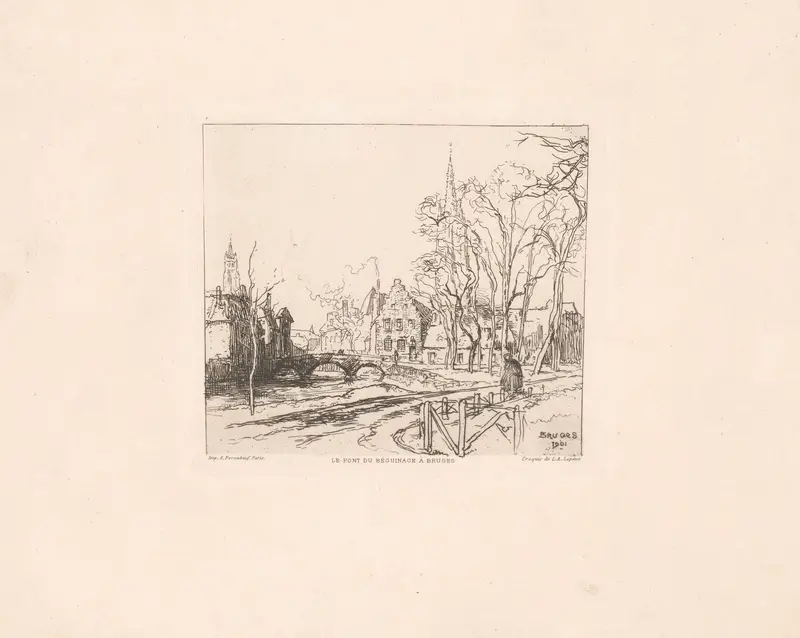
Le pont du Beguinage à Bruges
Auguste Lepère
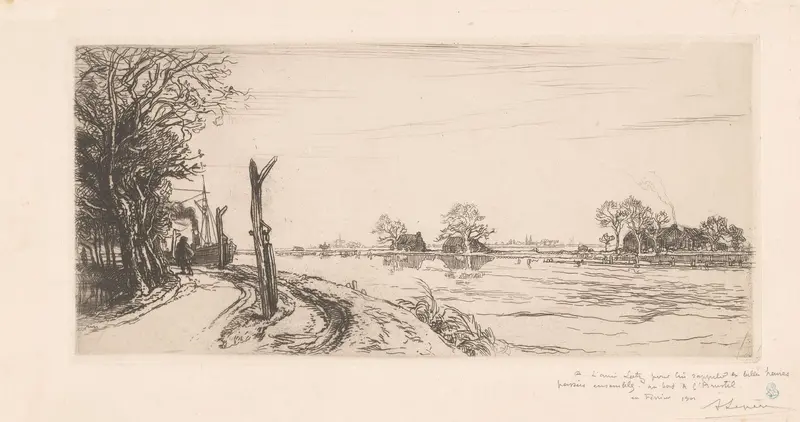
Au bord de l’Amstel
Auguste Lepère
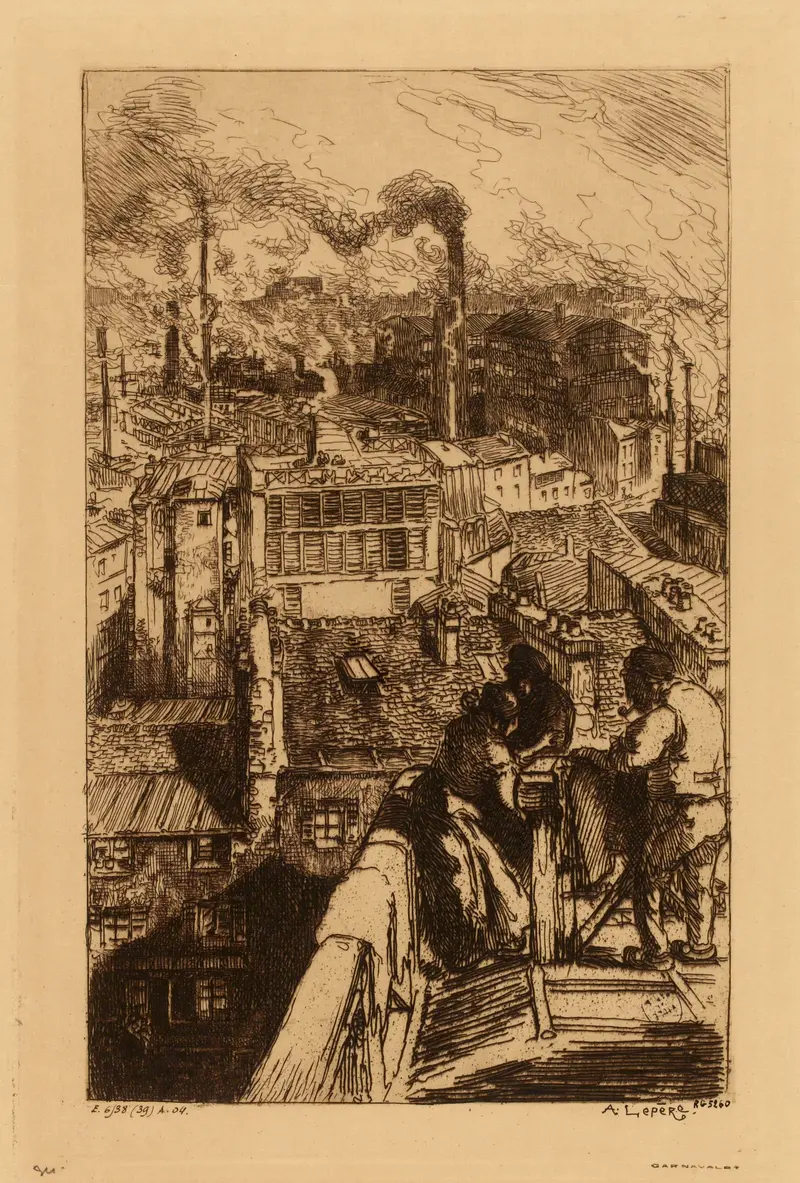
Le quartier des Gobelins
Auguste Lepère
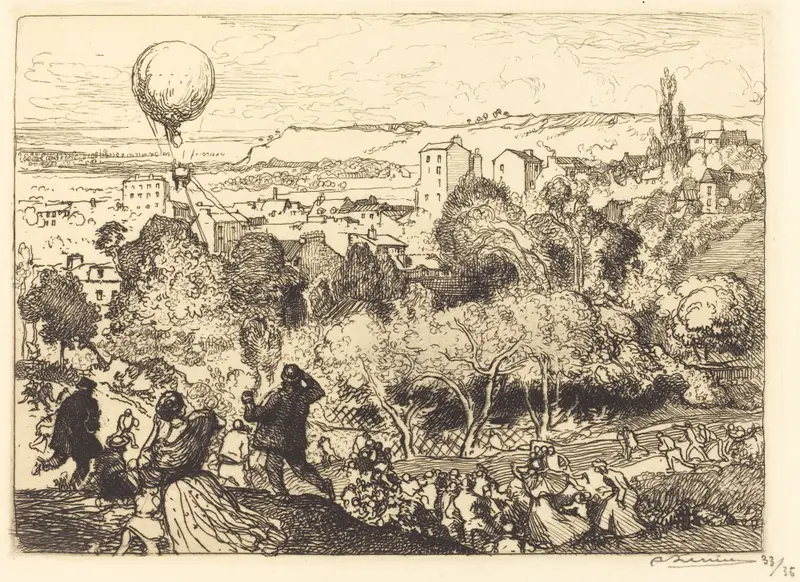
The Falling Balloon, in Pre-Saint-Gervais (Lebaloon qui tombe, au Pre-Saint-Gervais)
Auguste Lepère
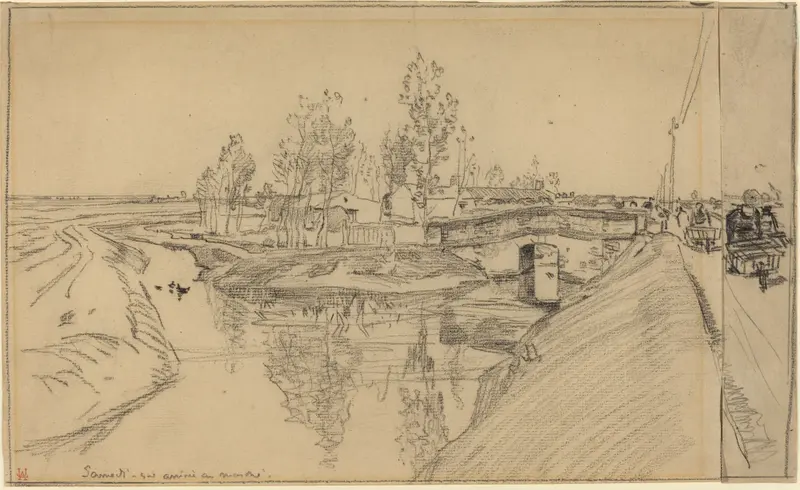
Arrivee au Marche
Auguste Lepère
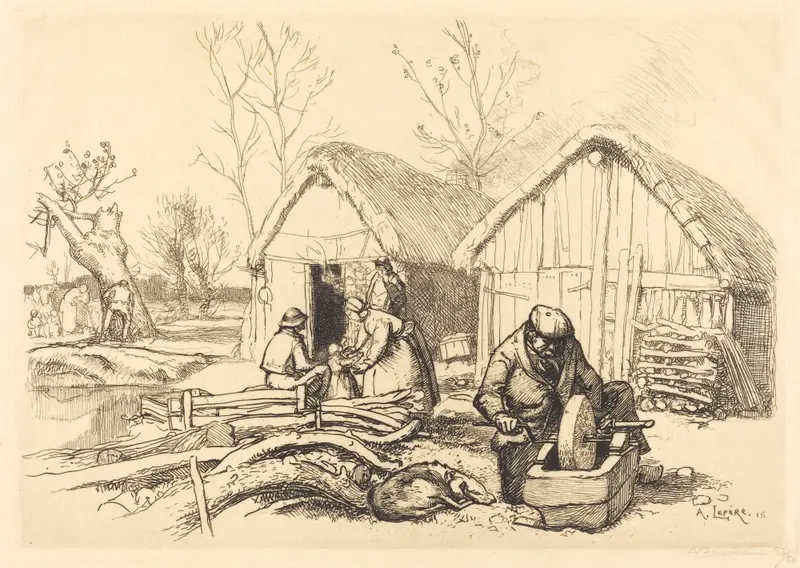
The House of the Woodcutter, Vendee (La maison du bucheron, Vendee)
Auguste Lepère
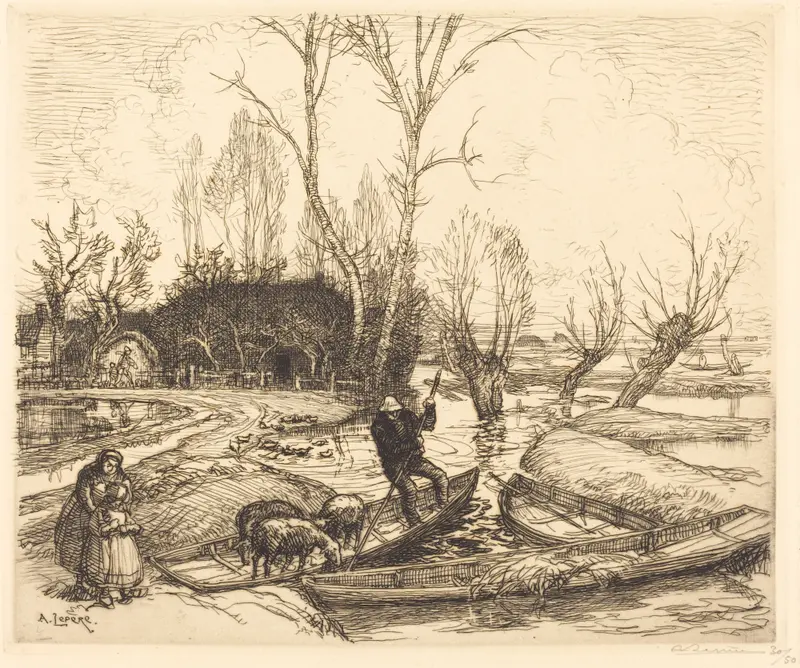
In the Deluged Marsh - The Shepherd (Au marais inonde - Le berger)
Auguste Lepère
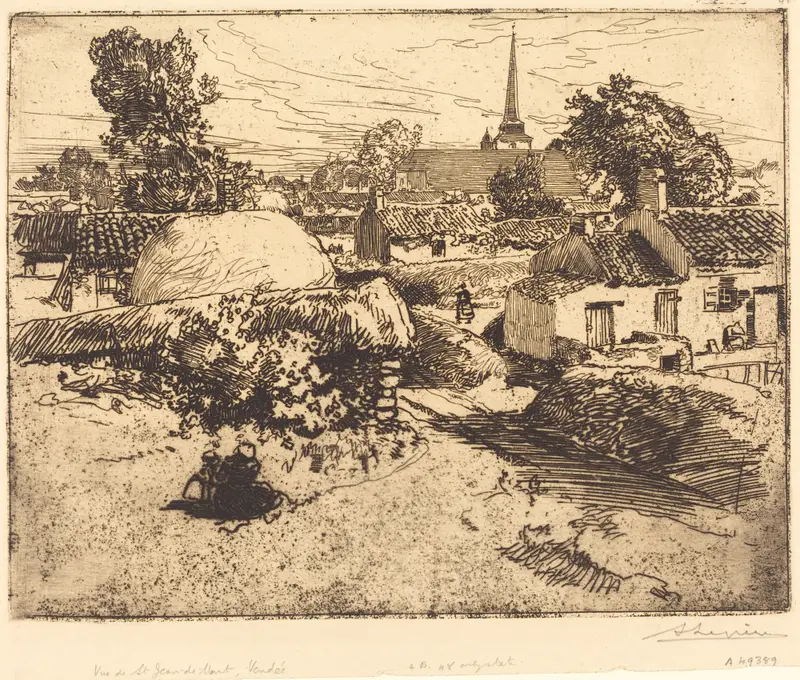
View of St.-Jean-de-Mont, Vendee (Vue de St.-Jean-de-Mont, Vendee)
Auguste Lepère
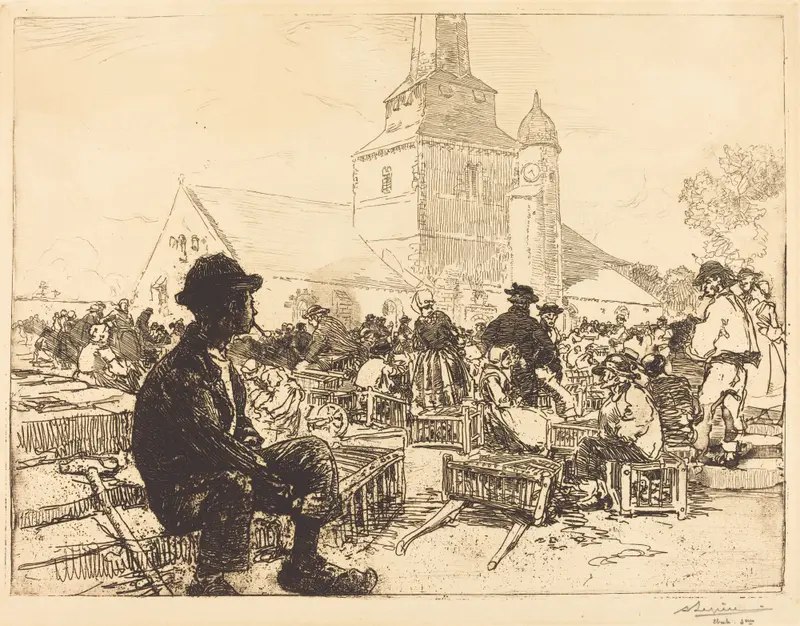
Poultry Market at St.-Jean-de-Mont (Marche a la volaille, a St.-Jean-de-Mont)
Auguste Lepère