
Ships on the River IJ in front of the Tollhouse near Amsterdam — History & Facts
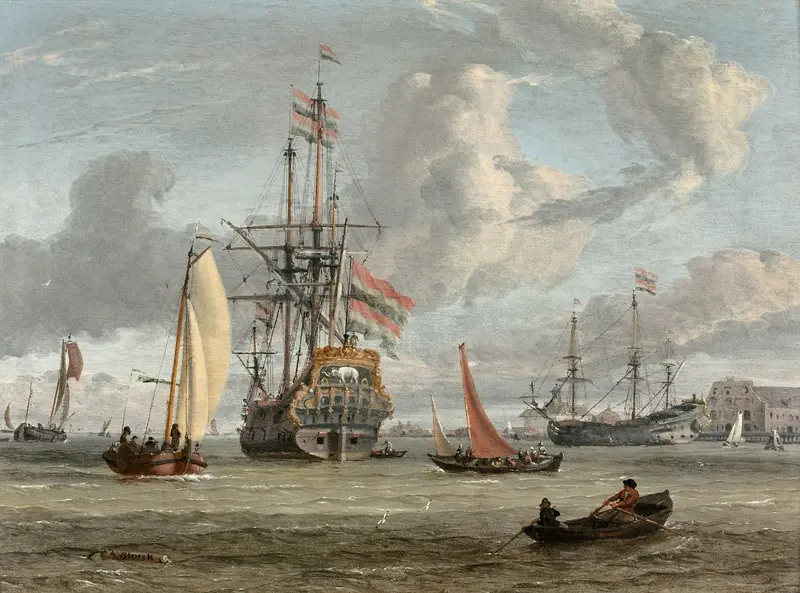
The first thing to catch the eye in Ships on the River IJ in front of the Tollhouse near Amsterdam is the restless choreography of vessels and people, each caught in a moment of purpose. Abraham Storck guides us through a day on the bustling River IJ, where sunlight and shadow chase each other across the water, and every sail is filled with the promise of movement. The drama is not in a single event, but in the layered commotion: boats jostle for space, flags snap in the wind, and the Tollhouse anchors the composition on the left, its presence a reminder of the order behind the apparent chaos.
In the foreground, two rowing boats cut across the current, their passengers intent on arrival or departure, while larger ships loom behind, their rigging and banners signaling power and pride. Storck’s palette, cool and luminous, lets the sky dominate, its cloudbanks echoing the ceaseless traffic below and drawing the viewer’s gaze from one animated group to the next. This painting belongs to the world of late seventeenth-century Amsterdam, when the Dutch Republic was a global maritime power and scenes like this were both everyday reality and a source of civic pride. Works of this kind, often commissioned by wealthy merchants or city officials, celebrated the prosperity and order of Dutch trade, with the Tollhouse itself—a product of 1662—standing as a symbol of regulation and economic control.
Storck, active around 1690, was known for his lively harbor scenes, which blend documentary detail with theatrical staging. Few traces remain of the individual stories behind each figure or ship, but the painting’s energy and precision invite us to imagine ourselves among the travelers, caught between sunlight and shadow on the restless water.
More Artworks by Abraham Storck

The Muscovite legation visiting Amsterdam, 29 August 1697
Abraham Storck
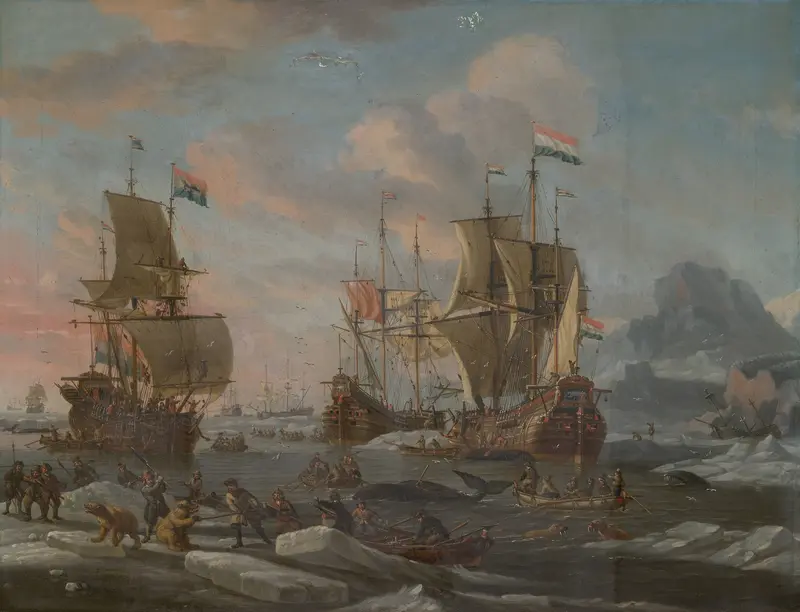
The Dutch Whaling Fleet
Abraham Storck
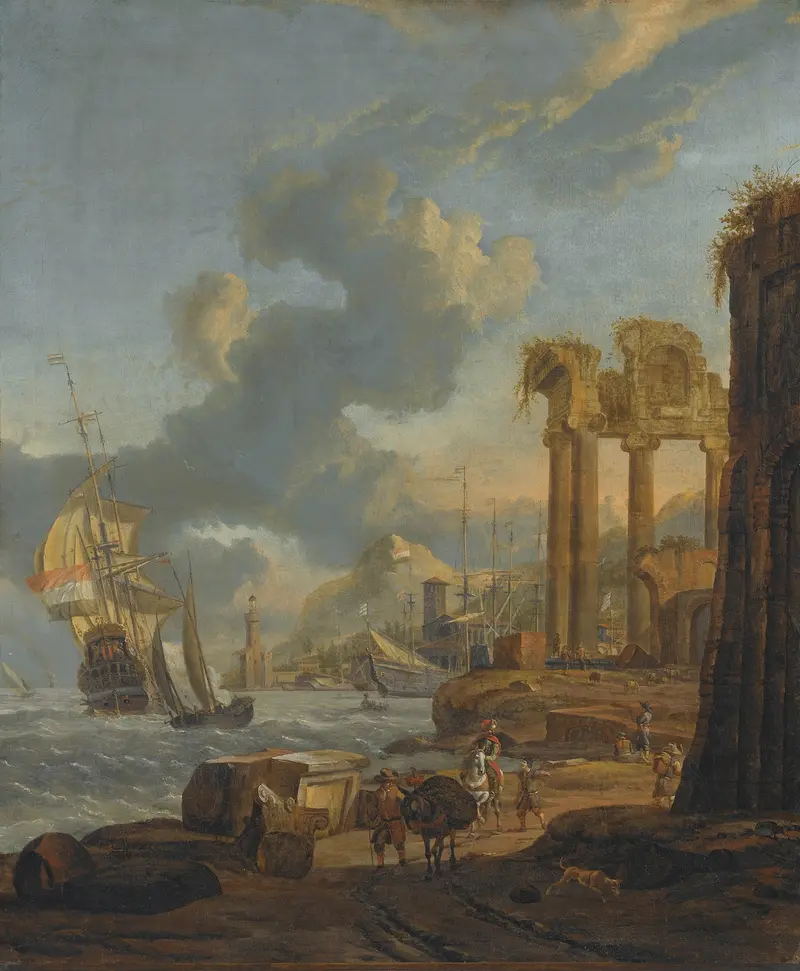
A Mediterranean Harbour Scene With Travellers On The Shore, A Dutch Man-Of-War On The Left
Abraham Storck
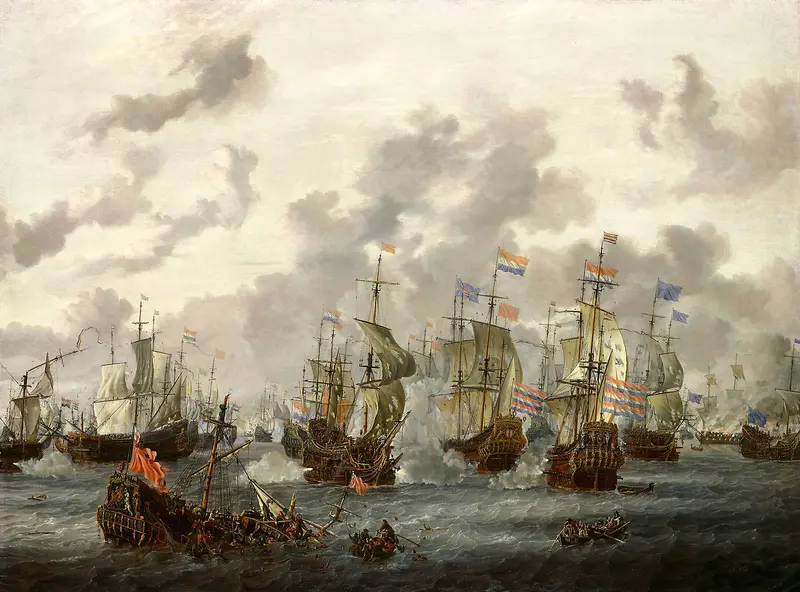
The Four Days’ Battle
Abraham Storck
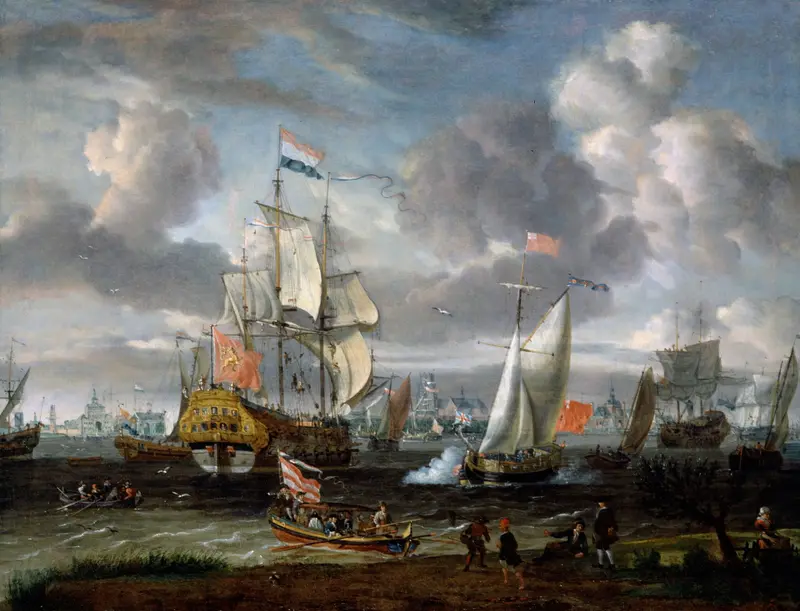
An English Yacht saluting a Dutch Man-of-War in the port of Rotterdam
Abraham Storck
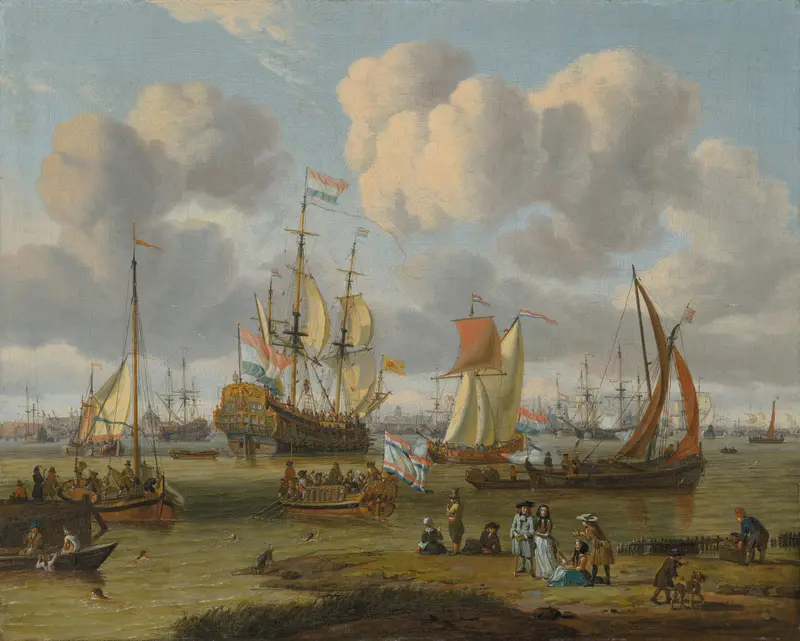
Shipping off Amsterdam with figures on a quay
Abraham Storck
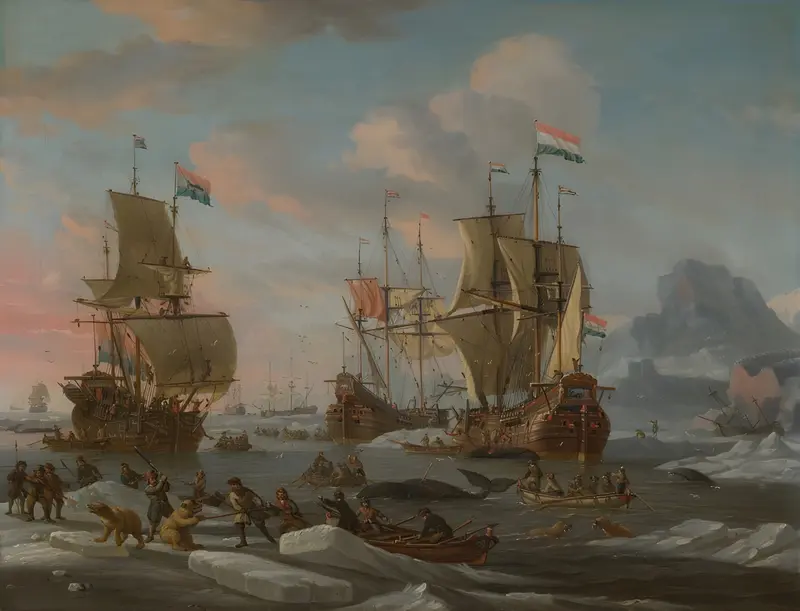
The Dutch Whaling Fleet
Abraham Storck
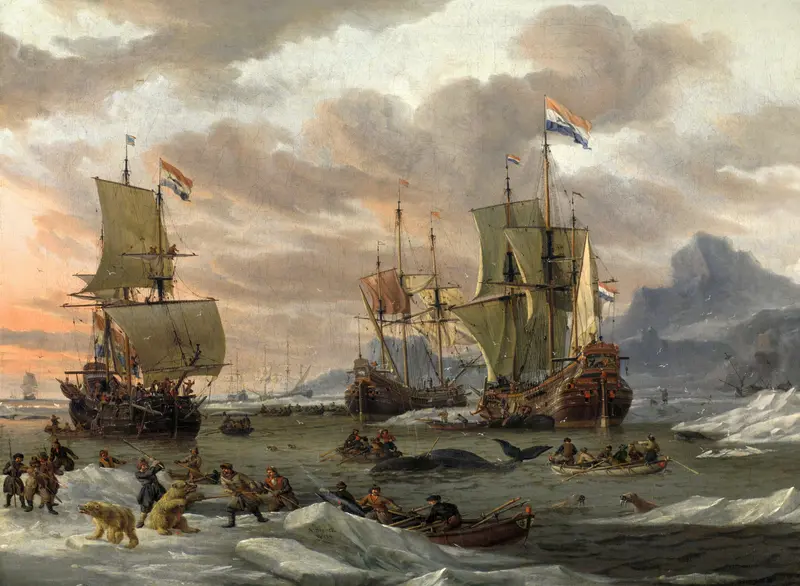
Whaling Grounds in the Arctic Ocean
Abraham Storck
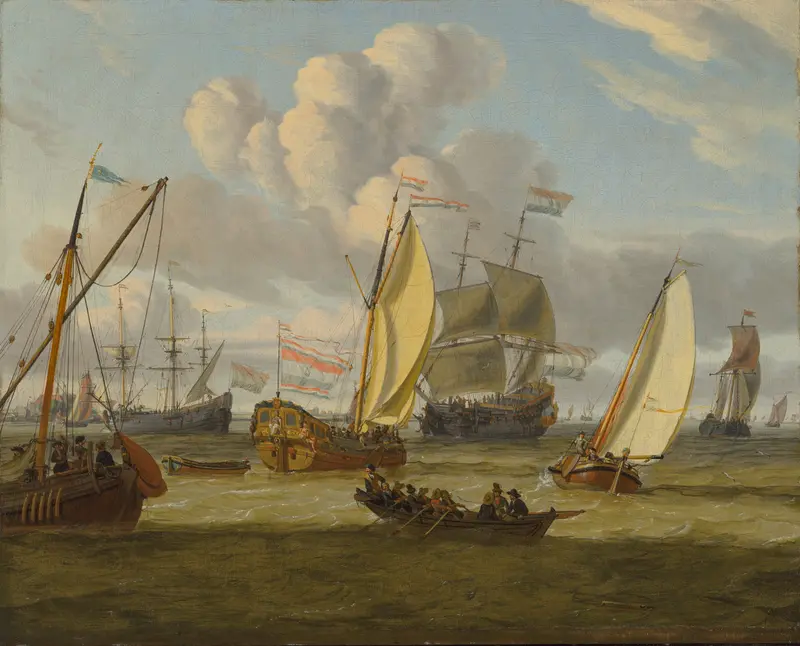
Shipping in an estuary
Abraham Storck
Grand navire de la couronne du Danemark près d’un littoral
Abraham Storck





