Shipwreck — History & Facts
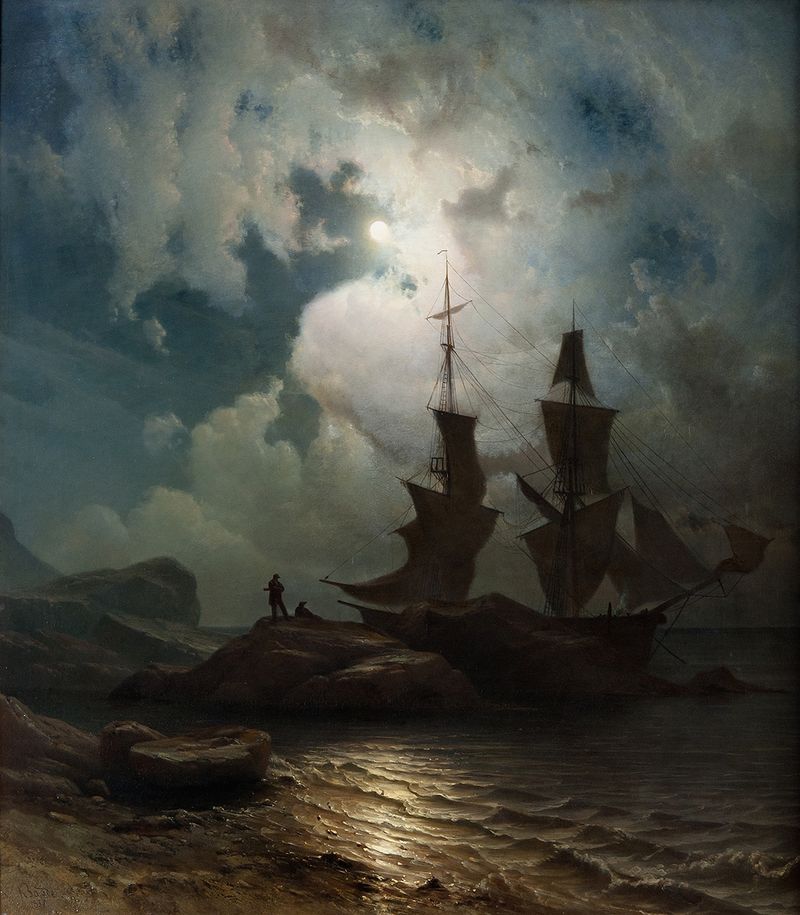
Is this a mirror — or a memory? The tumultuous seas and the remnants of a ship lying shattered on the rocks beckon us to confront both nature's fury and the fragility of human ambition. In the swirling chaos of waves and clouds, the painting captures a moment of profound despair, echoing the turmoil of an era marked by revolution and change. Focus your gaze on the jagged remnants of the ship, the muted browns and greys contrasting sharply against the vibrant blues of the turbulent sea. Notice how the light seems to filter through the storm clouds, illuminating the water's surface with a ghostly shimmer.
The composition draws you into the chaos, guiding your eye along the broken hull, while the movement of the waves conveys an overwhelming sense of urgency and loss, a reminder of the relentless power of nature. Delve deeper into the emotional undercurrents of this work; the shipwreck serves as a poignant symbol of dreams dashed against reality. The tumultuous sea, with its violent peaks and troughs, parallels the societal upheaval of the time, where aspirations often met with disaster. The interplay of light and shadow within the waves seems to echo the struggle between hope and despair, inviting interpretations of both personal and collective tragedies. Knud Baade painted this piece in 1839 during a period of personal reflection and artistic exploration in Norway.
Following the Romantic movement’s emphasis on nature and emotion, he was influenced by the larger European context of revolutions that sought to reshape societies. In these changing times, Shipwreck became a visual testament to both the unpredictability of life and the artist’s engagement with the human condition amidst the relentless forces of nature.