
Showers on the Sea — History & Facts
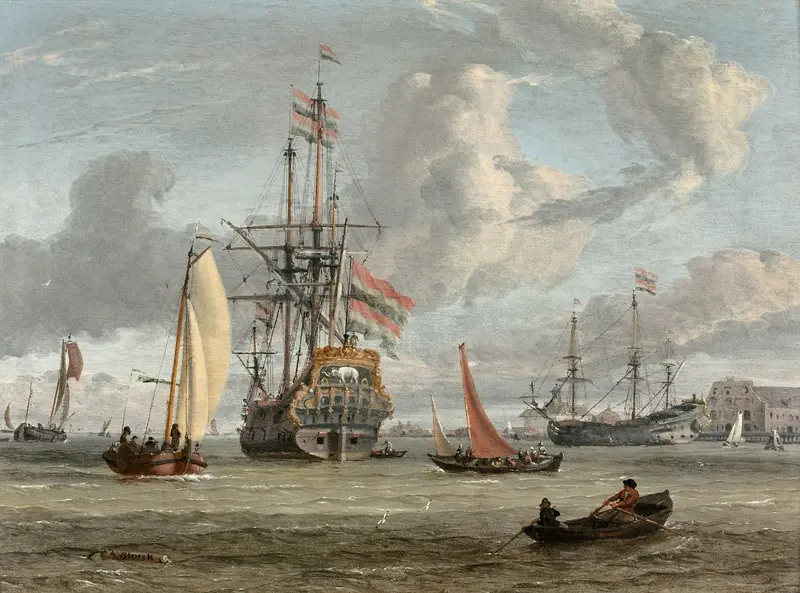
What first strikes the eye in Showers on the Sea is the restless choreography of ships and clouds, all caught in a moment of uneasy balance. The drama is not in a single event, but in the interplay between the vessels—some straining toward harbor, others braving the open water—and the brooding sky above. Storck’s composition pulls the viewer’s gaze from the dark, wind-lashed figures on the shore out to the sails, which billow and twist in the gusts, their flags signaling identity and allegiance.
The low horizon grants the sky a commanding presence, its churn of light and shadow echoing the turmoil below. Every detail, from the rigging to the churned-up water, serves to heighten the sense of anticipation: will the storm break, or will the ships slip safely past? Painted in 1686, this work belongs to the world of late seventeenth-century Dutch marine painting, when the sea was both a stage for national pride and a daily reality for a seafaring people. Artists like Abraham Storck found eager patrons among merchants and shipowners, who saw in such scenes a mirror of their own fortunes and ambitions.
These paintings were not just decoration; they were reminders of the risks and rewards of maritime life in a period when the Dutch Republic’s prosperity rode on the tides. While little is recorded about the specific journey of this canvas, its presence today in the collection at http://collection.smk.dk/#/en/detail/KMSsp651 is a testament to the enduring fascination with the age of sail. Look again, and sense how every figure and vessel is poised between order and chaos, just as their real-world counterparts once were.
More Artworks by Abraham Storck

The Muscovite legation visiting Amsterdam, 29 August 1697
Abraham Storck
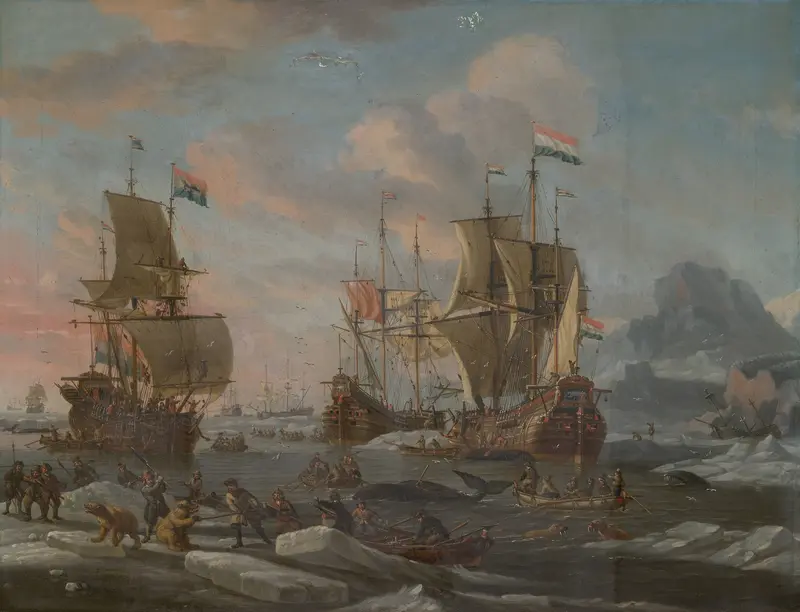
The Dutch Whaling Fleet
Abraham Storck
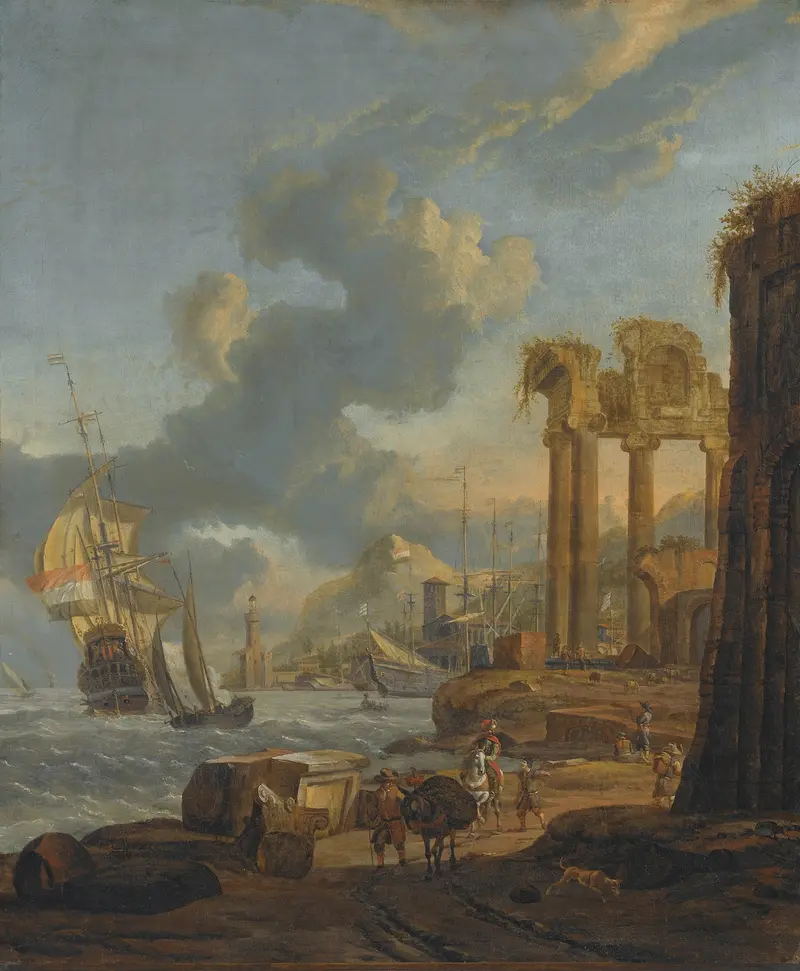
A Mediterranean Harbour Scene With Travellers On The Shore, A Dutch Man-Of-War On The Left
Abraham Storck
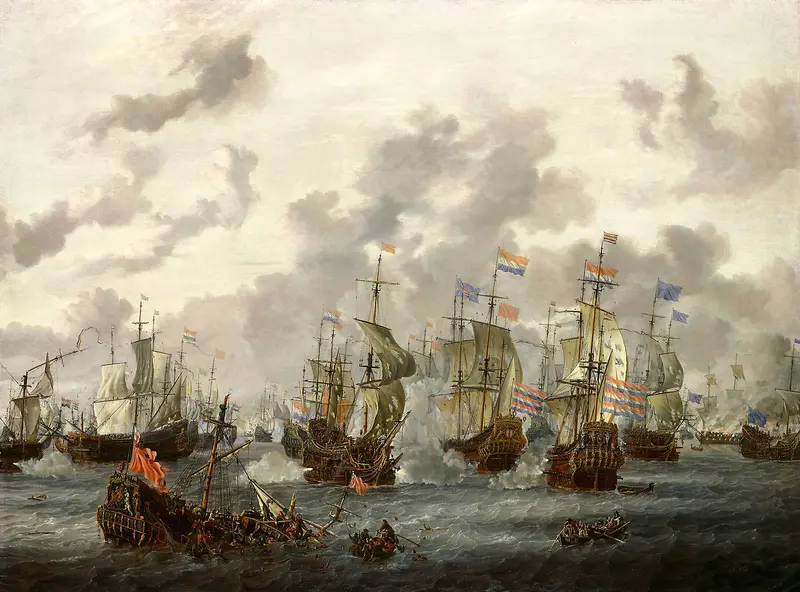
The Four Days’ Battle
Abraham Storck
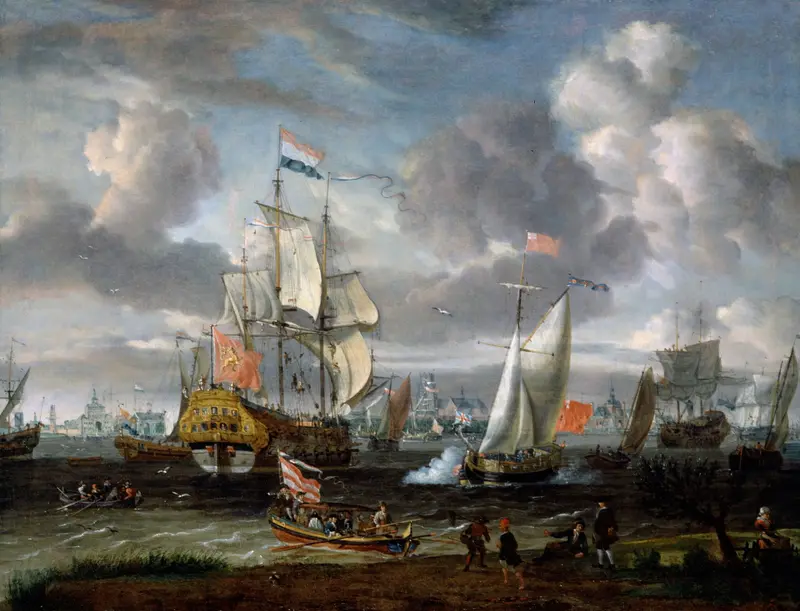
An English Yacht saluting a Dutch Man-of-War in the port of Rotterdam
Abraham Storck
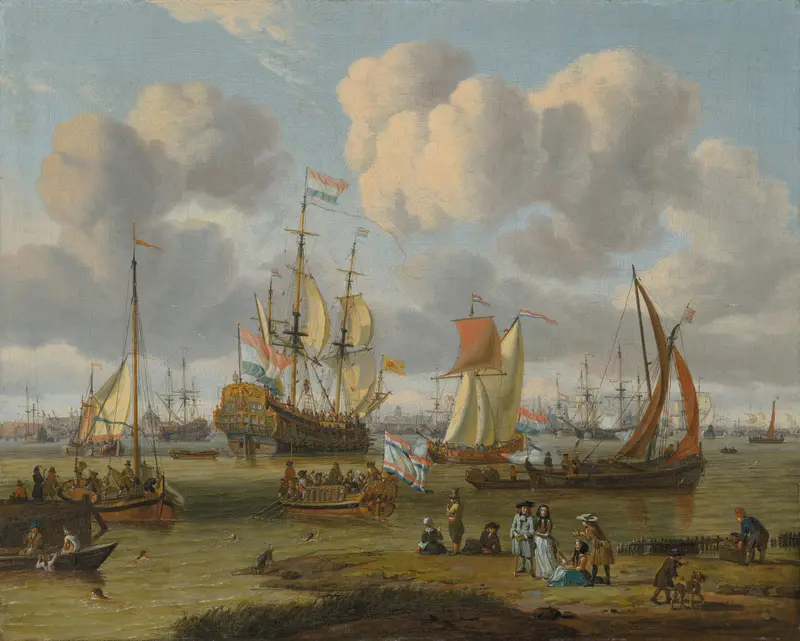
Shipping off Amsterdam with figures on a quay
Abraham Storck
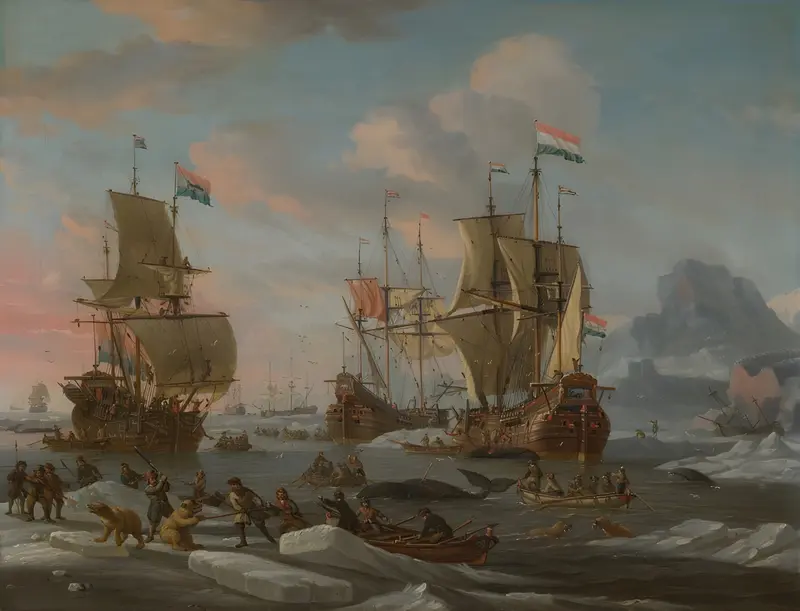
The Dutch Whaling Fleet
Abraham Storck
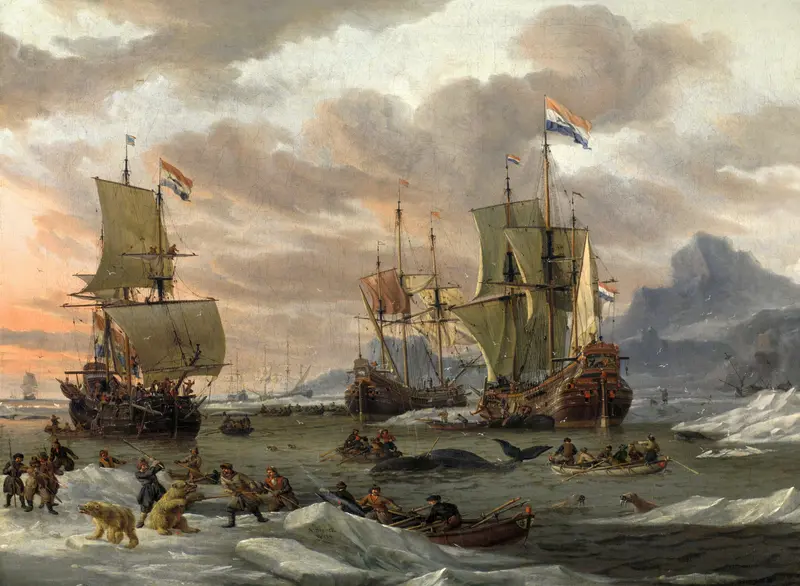
Whaling Grounds in the Arctic Ocean
Abraham Storck
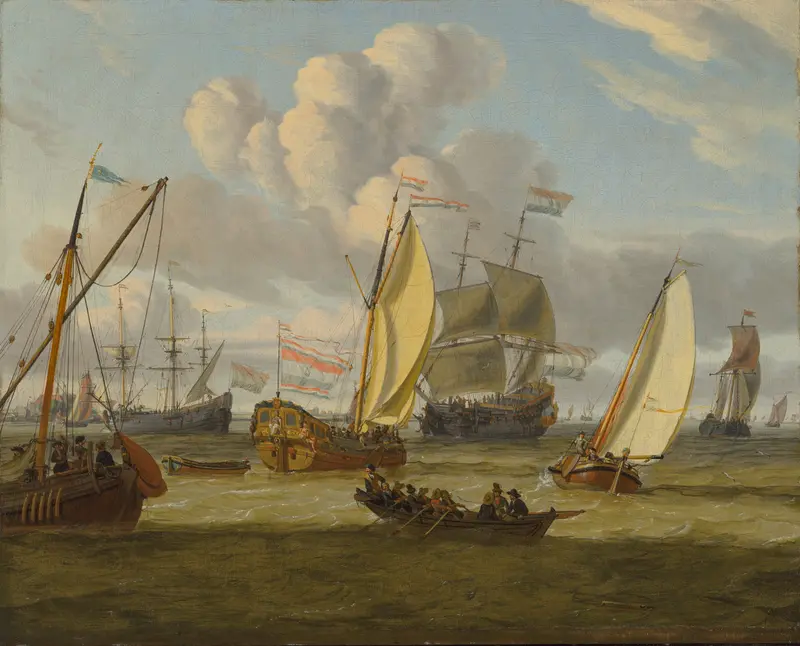
Shipping in an estuary
Abraham Storck
Grand navire de la couronne du Danemark près d’un littoral
Abraham Storck





