
Sloot bij de Gemeentelijke Gasfabriek in de Binckhorst in Den Haag — History & Facts
In the world of art, the legacy of a moment often transcends its initial depiction, inviting us to reflect on the deeper truths behind the surface. As you gaze at the artwork, your eyes are immediately drawn to the central figures, silhouetted against a backdrop of muted tones. Notice how the artist employs a delicate interplay of shadows and light, creating a haunting atmosphere that captivates the viewer. The contrasting colors in the foreground and background evoke an emotional tension, inviting a sense of introspection.
The brushwork, both fluid and deliberate, guides your gaze across the canvas, revealing layers of complexity within the simplicity of the scene. Hidden within the composition are echoes of industrial life, symbolizing the tension between human existence and the encroaching mechanization of the early 20th century. The figures, though static, convey a sense of urgency, their presence hinting at the burdens they carry. The use of earth tones reflects both the grim reality of their environment and a longing for hope, a duality that suggests the artist's contemplation of legacy—what is left behind in the wake of progress. Willem Adrianus Grondhout painted this piece between 1888 and 1934, a time when the world was grappling with rapid industrialization.
Working in the Netherlands, he was influenced by the changing landscapes surrounding him, where traditional ways of life were giving way to modernity. This artwork embodies the complexities of that era, marking a moment of transition both in his personal journey as an artist and within the broader artistic movement of his time.
More Artworks by Willem Adrianus Grondhout
Browse all →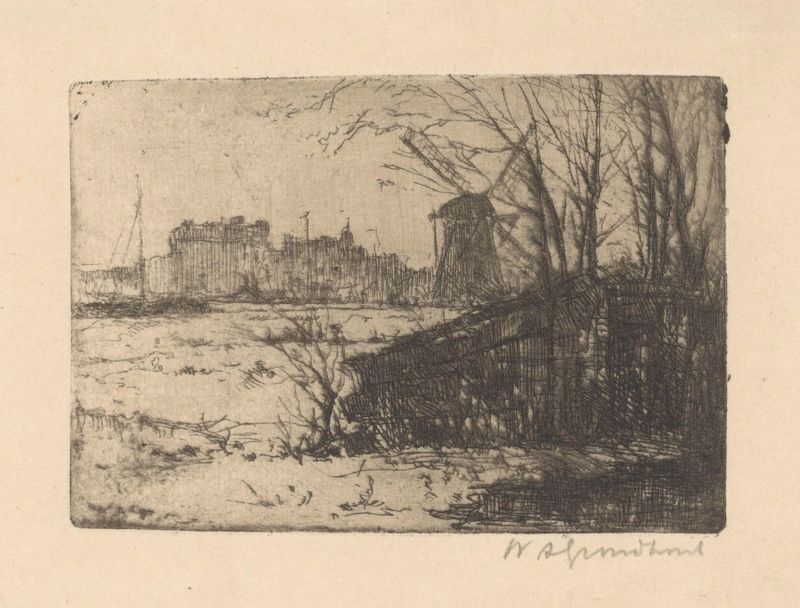
Landschap met molen in de Binckhorst in Den Haag
Willem Adrianus Grondhout
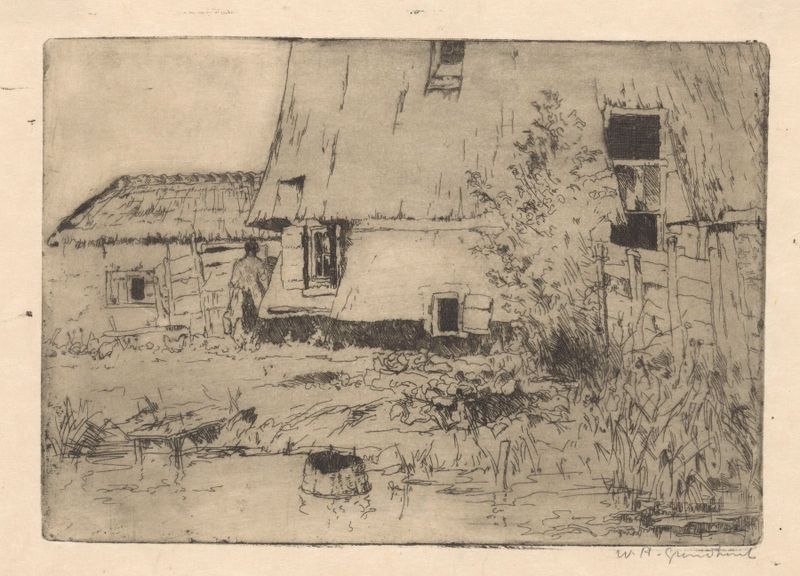
Voet van een molen in Voorburg
Willem Adrianus Grondhout
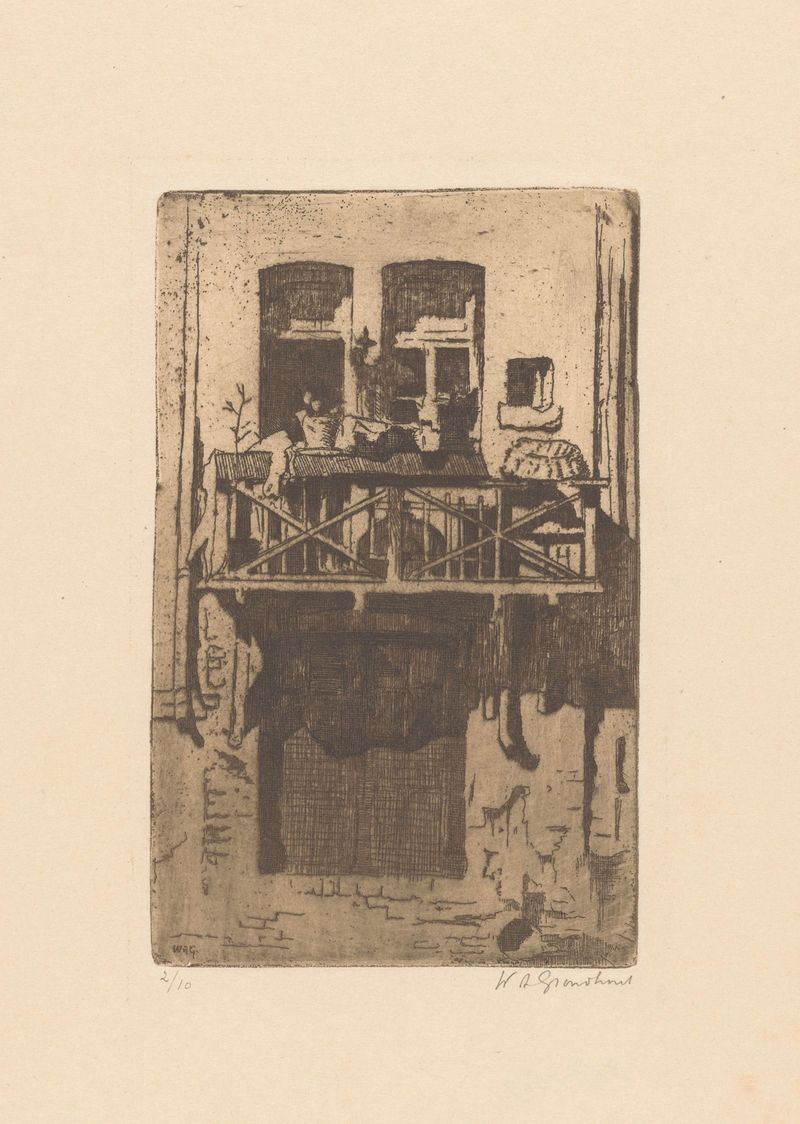
Balkon van een huis aan de Oudezijds Kolk in Amsterdam
Willem Adrianus Grondhout
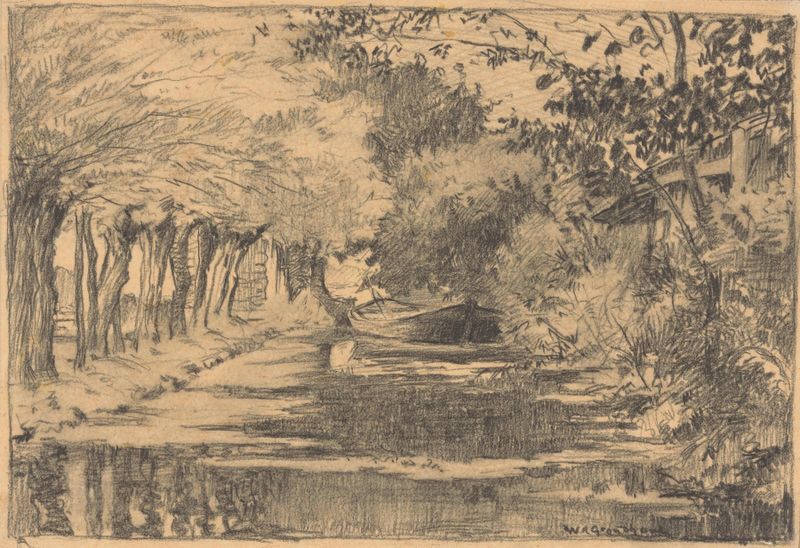
Broeksloot bij Voorburg
Willem Adrianus Grondhout
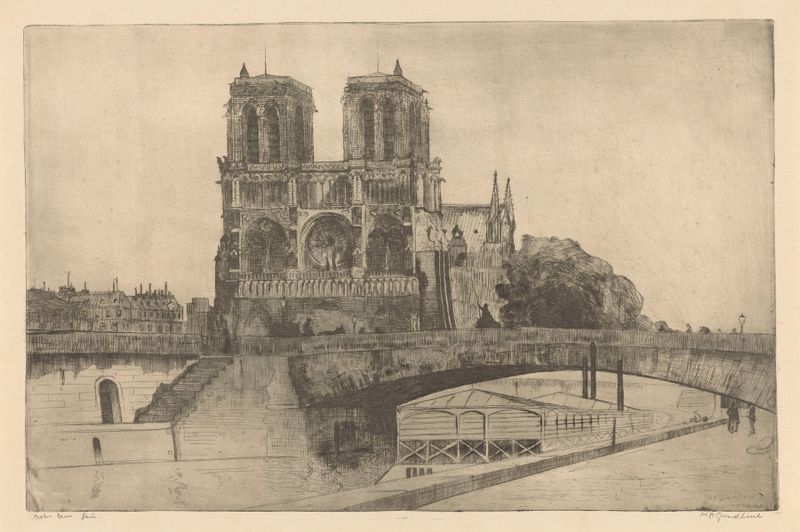
Notre-Dame, Paris
Willem Adrianus Grondhout
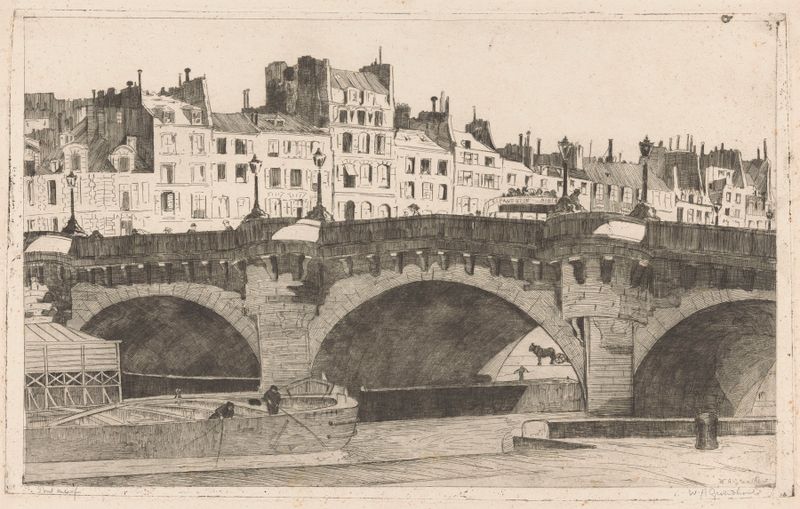
Pont Neuf
Willem Adrianus Grondhout
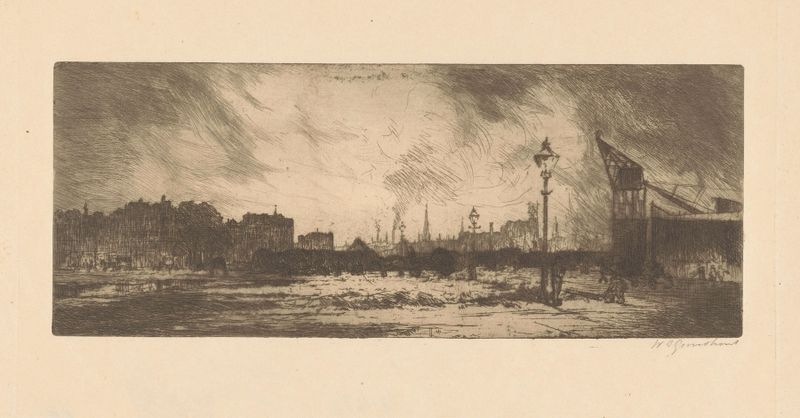
Havenkade met lantaarnpalen in Rotterdam
Willem Adrianus Grondhout
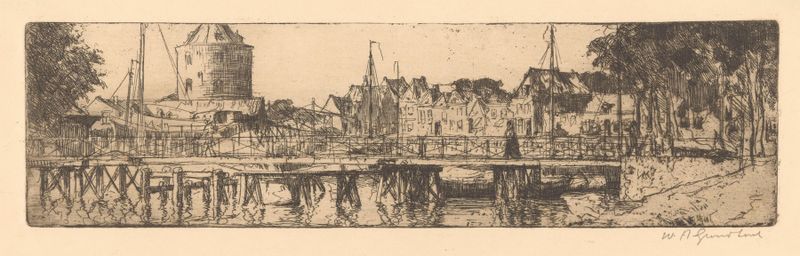
Enkhuizen
Willem Adrianus Grondhout
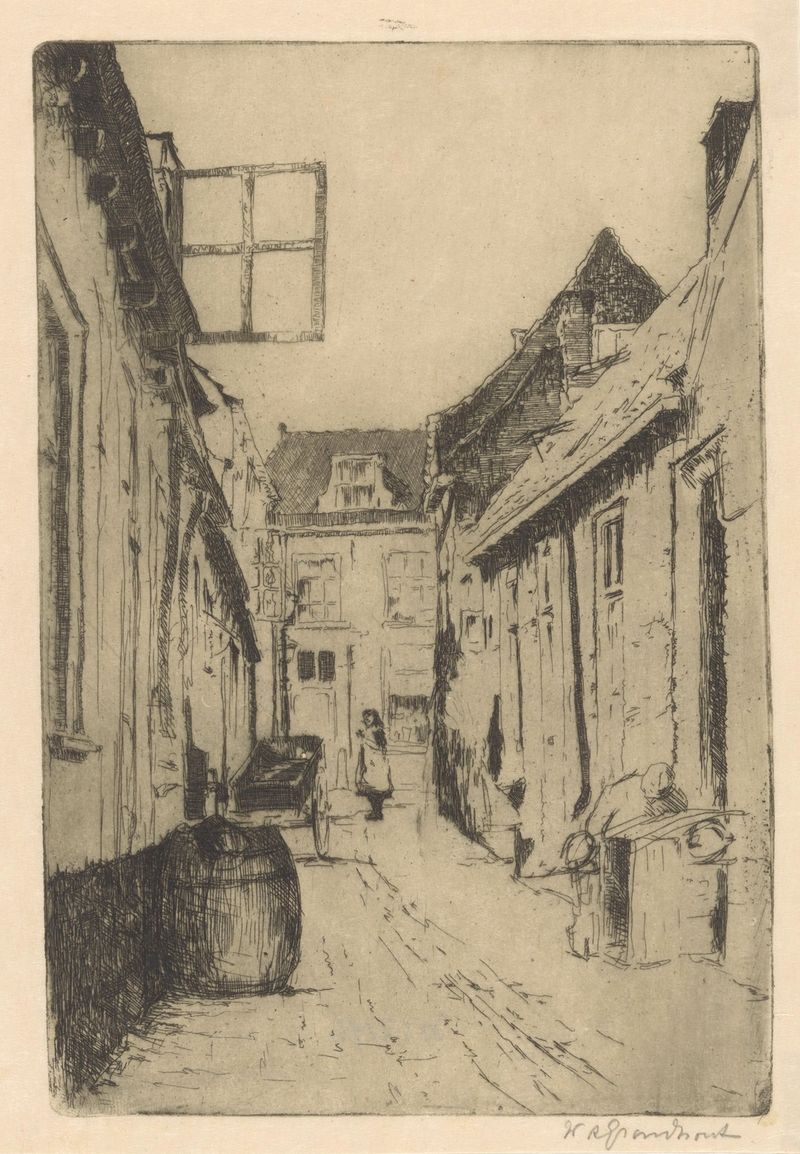
Straatje in Voorburg.
Willem Adrianus Grondhout
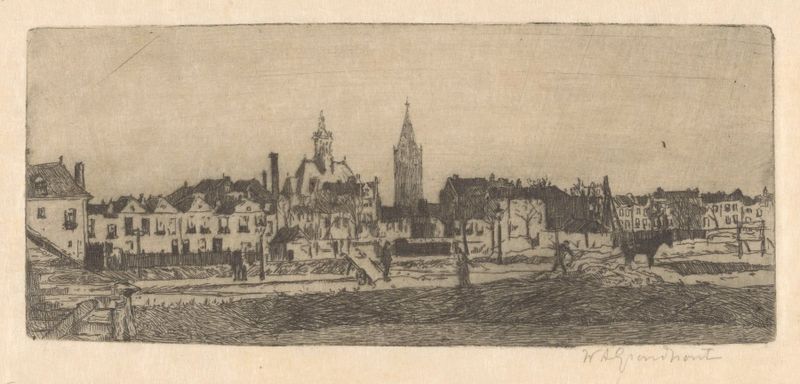
Delft
Willem Adrianus Grondhout





