
Śmierć króla Przemysła II. — History & Facts
Few paintings in Polish art have sparked as much debate about historical accuracy as Śmierć króla Przemysła II. by Jan Matejko. When first exhibited in 1875, the work reignited public interest in the violent end of Przemysł II, the king whose brief reign in 1295-1296 marked the first coronation of a Polish monarch in over two centuries. Matejko’s interpretation, shaped by 19th-century patriotic fervor, was immediately scrutinized by historians and critics alike, who questioned both its dramatic details and its political undertones. The painting captures the fateful moment on February 8, 1296, when Przemysł II, ambushed near Rogoźno, is mortally wounded by assassins.
Matejko freezes the king at the instant of betrayal: Przemysł, clad in regal garments, collapses amidst a tangle of attackers, his crown slipping from his head—a symbol of Poland’s fragile unity. The chaos is rendered in Matejko’s signature crowded composition, every figure charged with intent: the assailants’ grim determination, the loyal retainer’s desperate gesture, the cold steel glinting in winter light. Unlike the more restrained treatment of royal deaths in Delaroche’s The Execution of Lady Jane Grey, Matejko’s scene is dense with national symbolism and emotional immediacy. The precise medium of Śmierć króla Przemysła II. is not clearly documented, but its scale and technique align with Matejko’s other large historical canvases from the same period.
While the painting’s early exhibition in Kraków drew both acclaim and criticism, it has remained a touchstone for debates about Polish identity and history in art. Today, it stands among Matejko’s celebrated cycle of works on Polish kings, reflecting his lifelong mission to paint the nation’s past in vivid, sometimes controversial, detail. The painting’s current location is not universally agreed upon, but it is most often associated with major Polish museum collections dedicated to 19th-century national history.
More Artworks by Jan Matejko
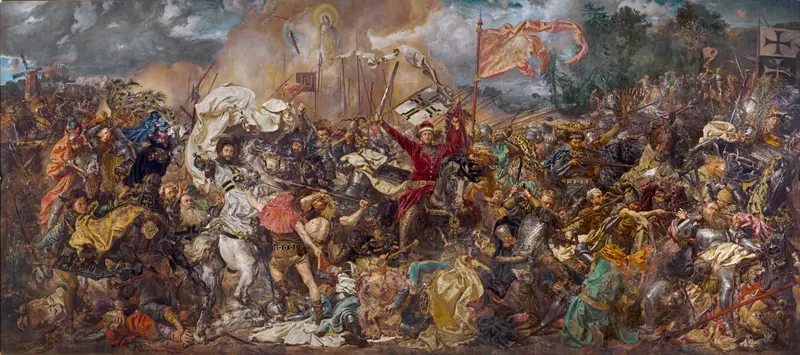
Battle of Grunwald
Jan Matejko

Stańczyk
Jan Matejko

Battle of Raclawice
Jan Matejko
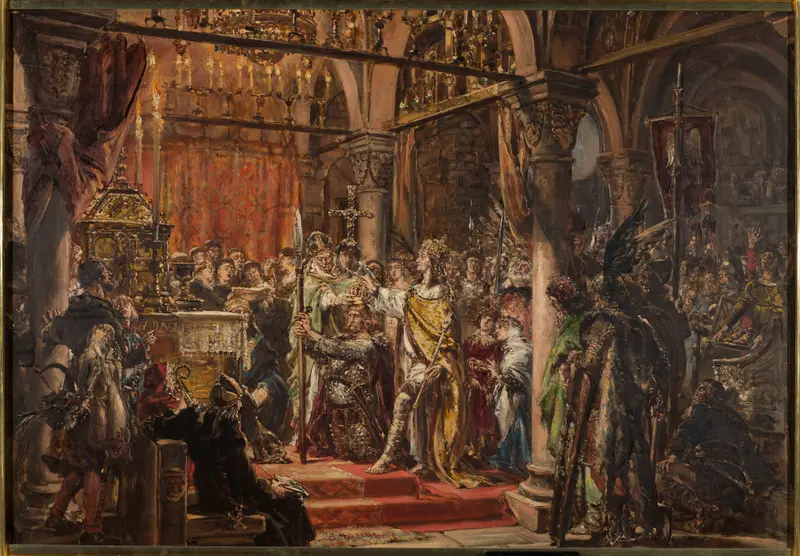
Coronation of the First King, 1001 AD, from the series “History of Civilization in Poland”
Jan Matejko
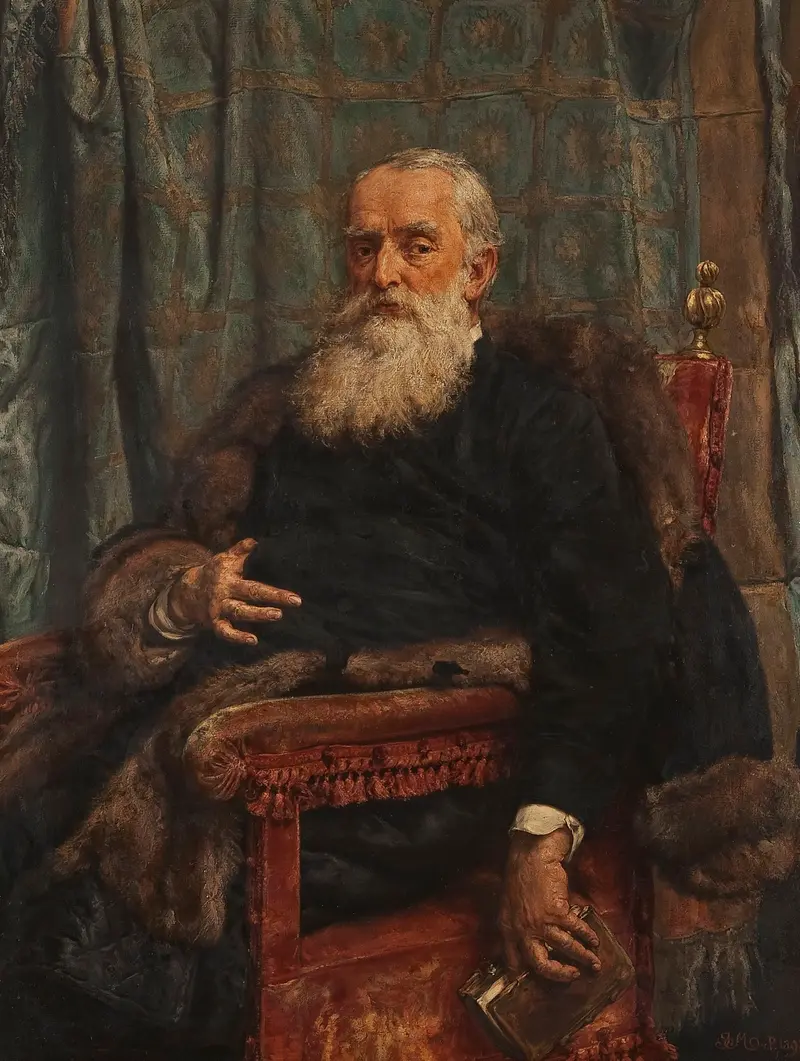
Portrait of Henryk Krajewski
Jan Matejko
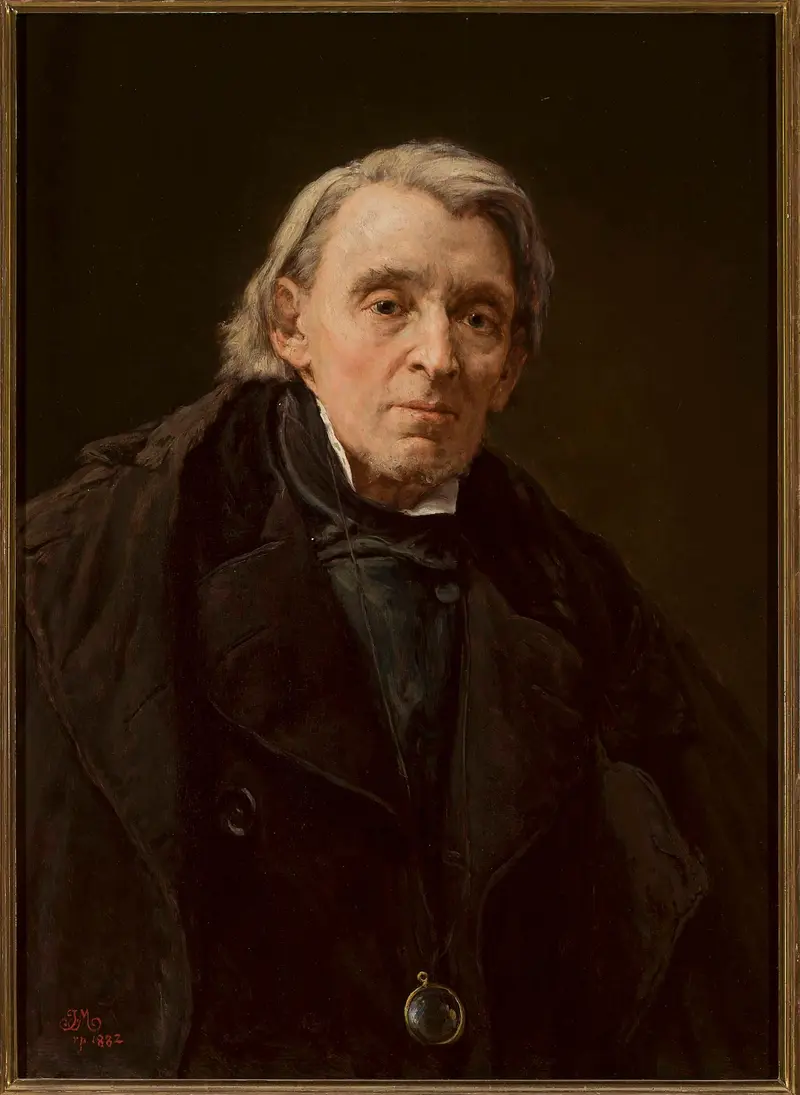
Portrait of Karol Podlewski
Jan Matejko
Portrait of Potocki and Poninski
Jan Matejko
Portrait of the artist's four children
Jan Matejko
Introduction of Christianity in Poland
Jan Matejko
Prussian Homage
Jan Matejko





