
Soldaten geven Christus te drinken — History & Facts
When did color learn to lie? Each hue here seems to whisper a secret, revealing the treachery that lies within the act of compassion. Look closely at the figures surrounding the central scene. The soldiers, clad in dark, somber tones, stand stark against the pale, almost ethereal figure of Christ, whose vulnerable posture draws the eye immediately. Notice how the light washes over Him, illuminating not just His face but also the betrayal etched in the expressions of those who offer Him a drink.
The golden chalice, glinting in their hands, becomes a cruel symbol of both hope and cruelty—the very act that seems to offer solace is steeped in malice. The contrast between the soldiers' steely determination and Christ's serene acceptance encapsulates a profound emotional tension. The vivid reds and deep blues of their garments suggest a clash of loyalties, while the gentle, tender gesture of offering reveals a chilling duplicity. It’s a moment where humanity's capacity for kindness intersects with raw betrayal, forcing the viewer to confront the complex nature of compassion in the face of violence. Lucas van Leyden created this work between 1510 and 1514 during a time of intense religious strife in Europe.
Emerging as a significant figure in the Northern Renaissance, he was known for his masterful engravings and innovative compositions. This painting reflects the era's tumult, as the Reformation was beginning to challenge established norms and beliefs, highlighting the moral ambiguities that would shape society's conscience.
More Artworks by Lucas van Leyden
Browse all →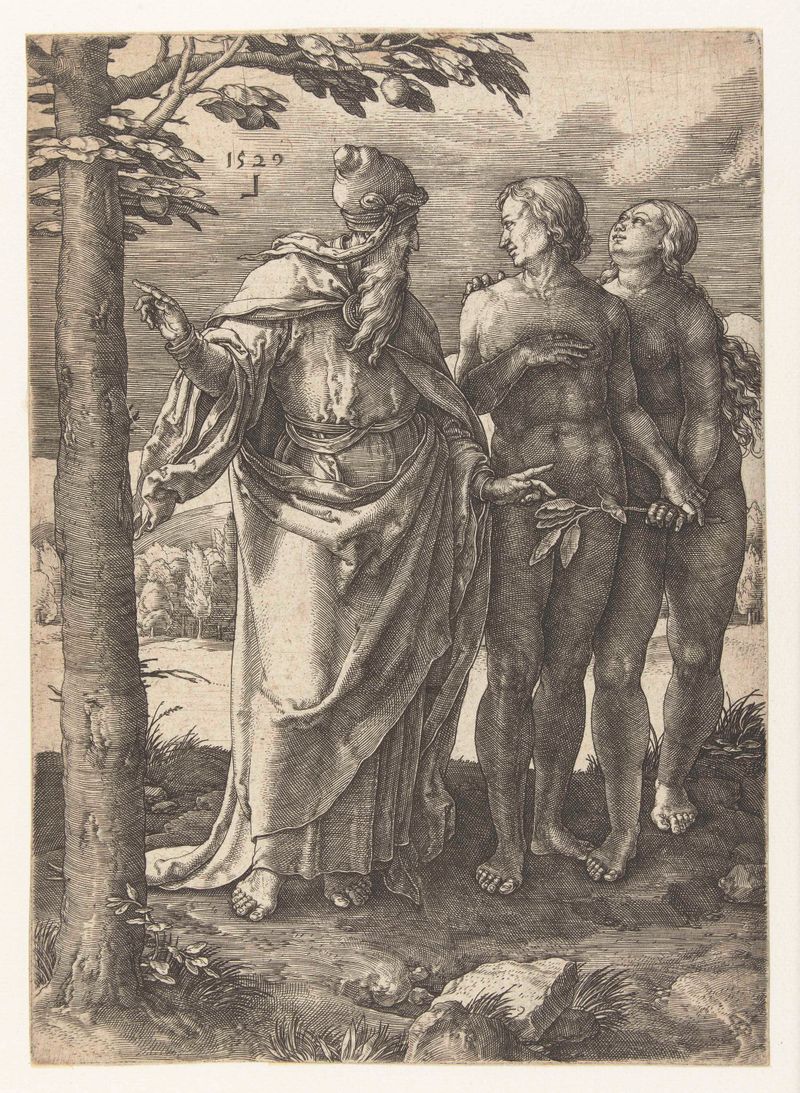
Het eerste verbod
Lucas van Leyden
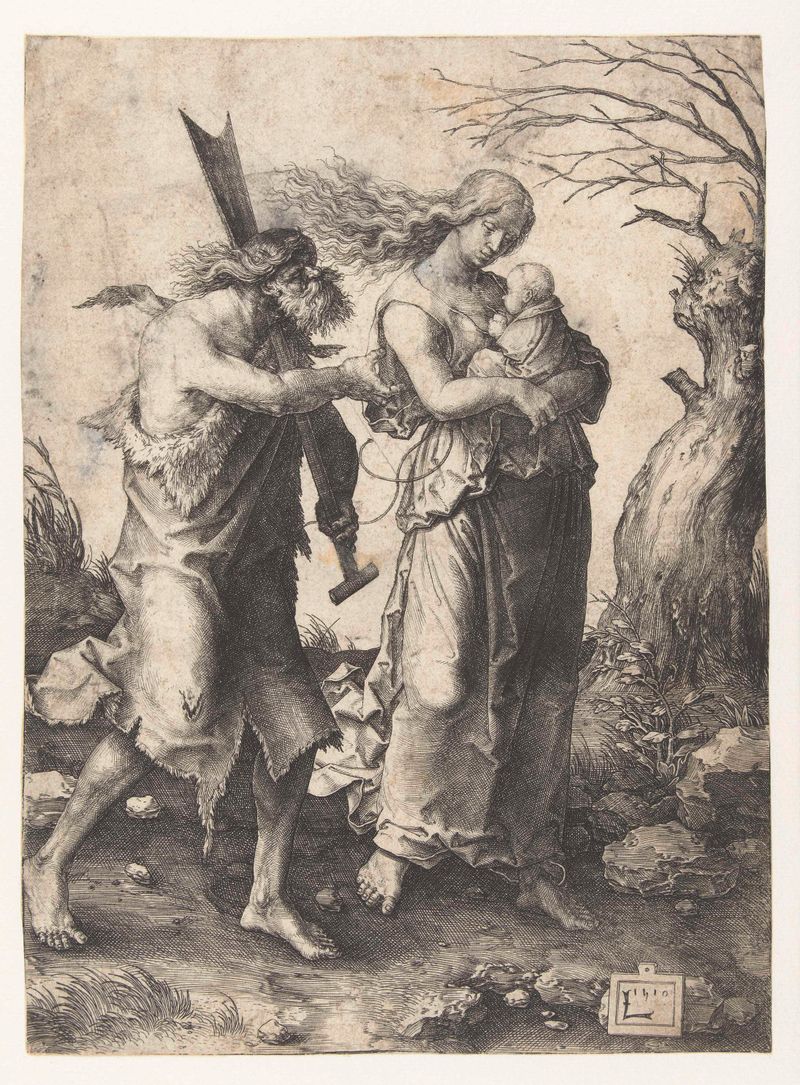
Adam en Eva na de verdrijving uit het paradijs
Lucas van Leyden
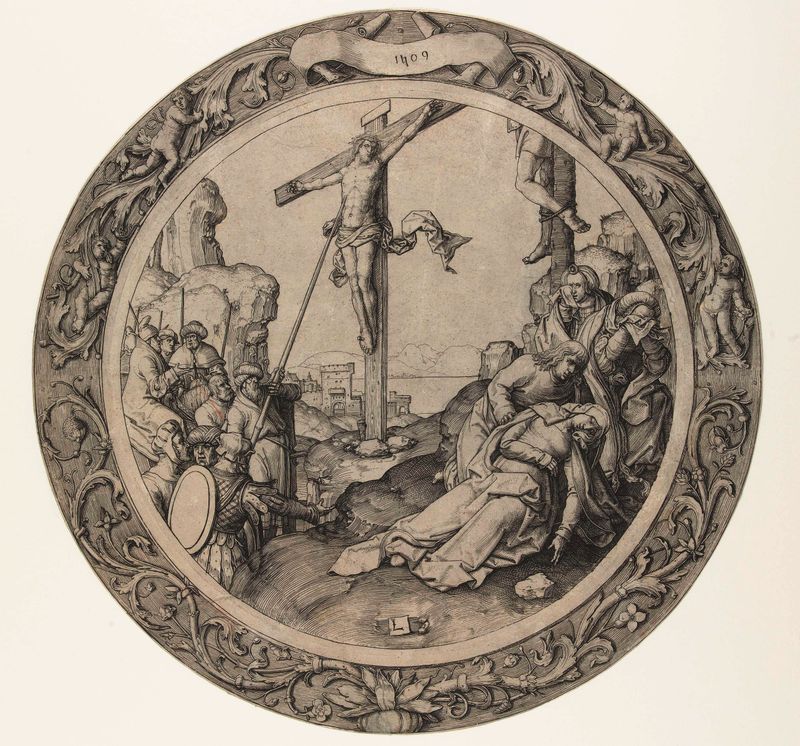
De kruisiging
Lucas van Leyden
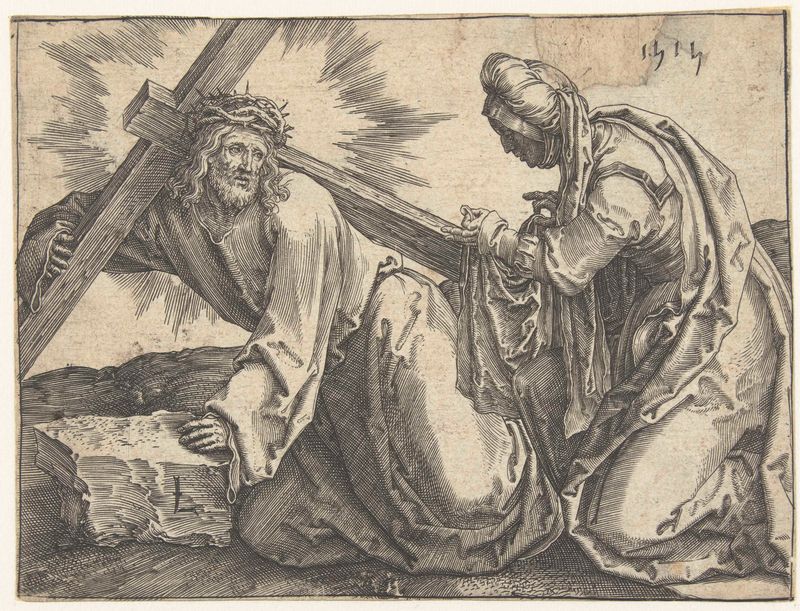
Kruisdraging
Lucas van Leyden
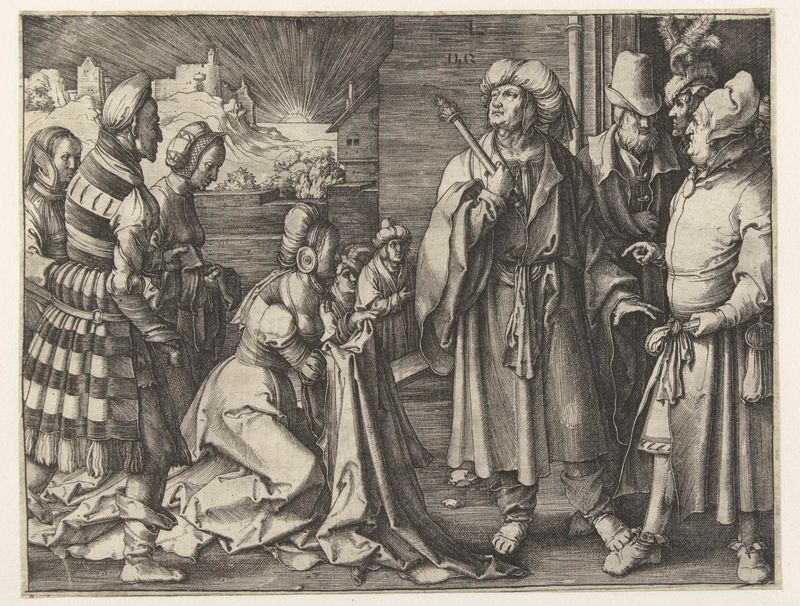
De vrouw van Potifar beschuldigt Jozef
Lucas van Leyden
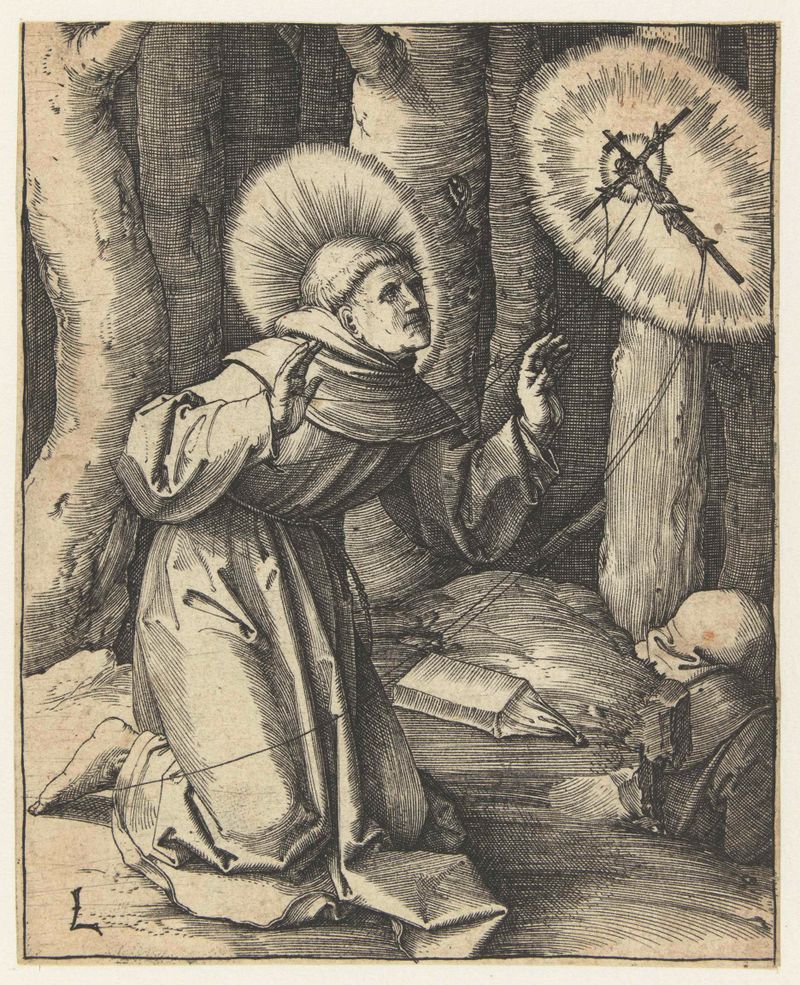
De stigmatisatie van de heilige Franciscus
Lucas van Leyden
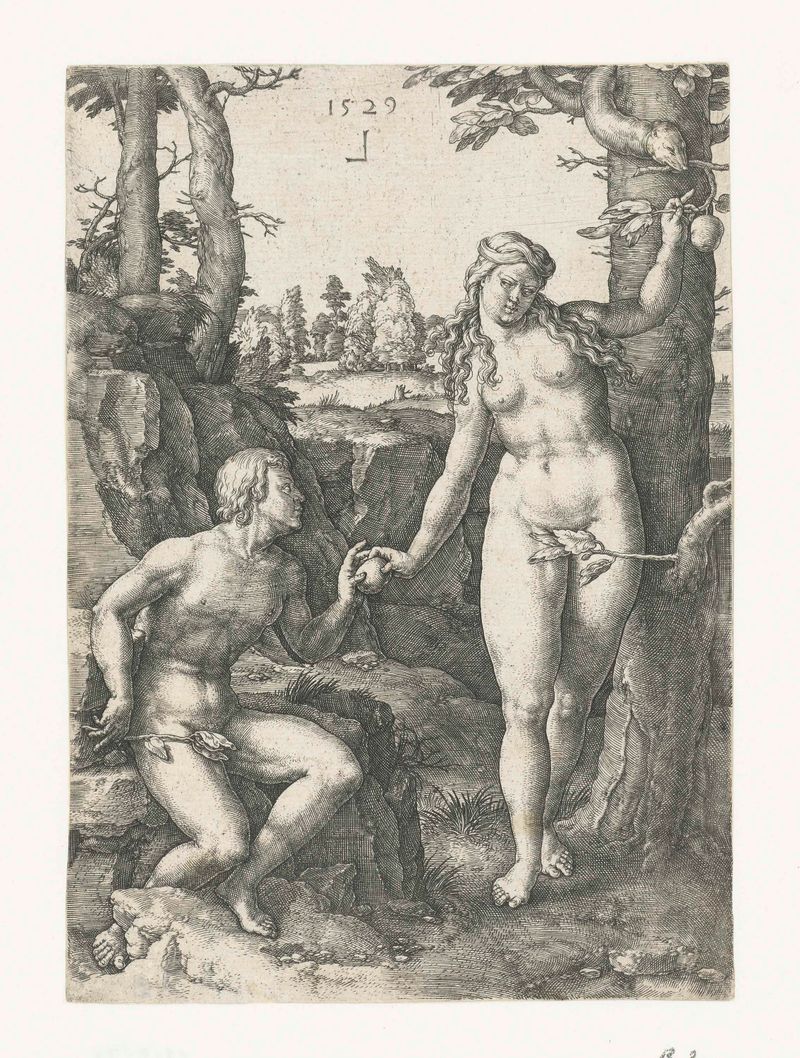
De zondeval
Lucas van Leyden
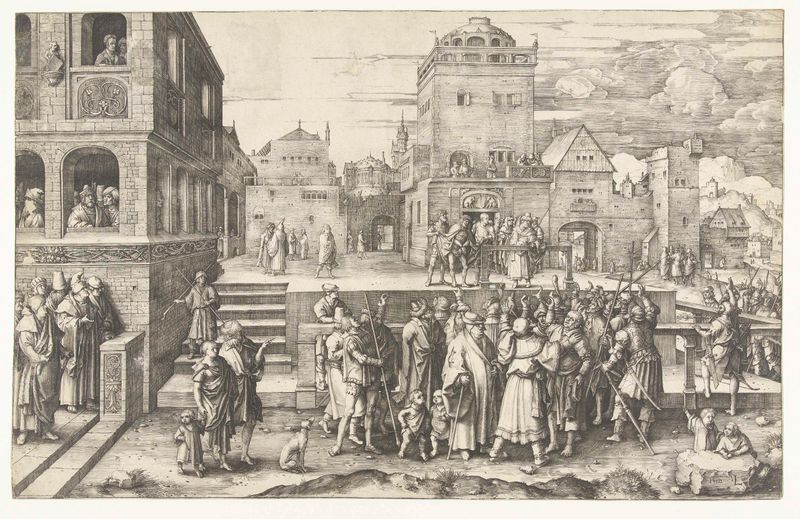
De grote Ecce Homo
Lucas van Leyden
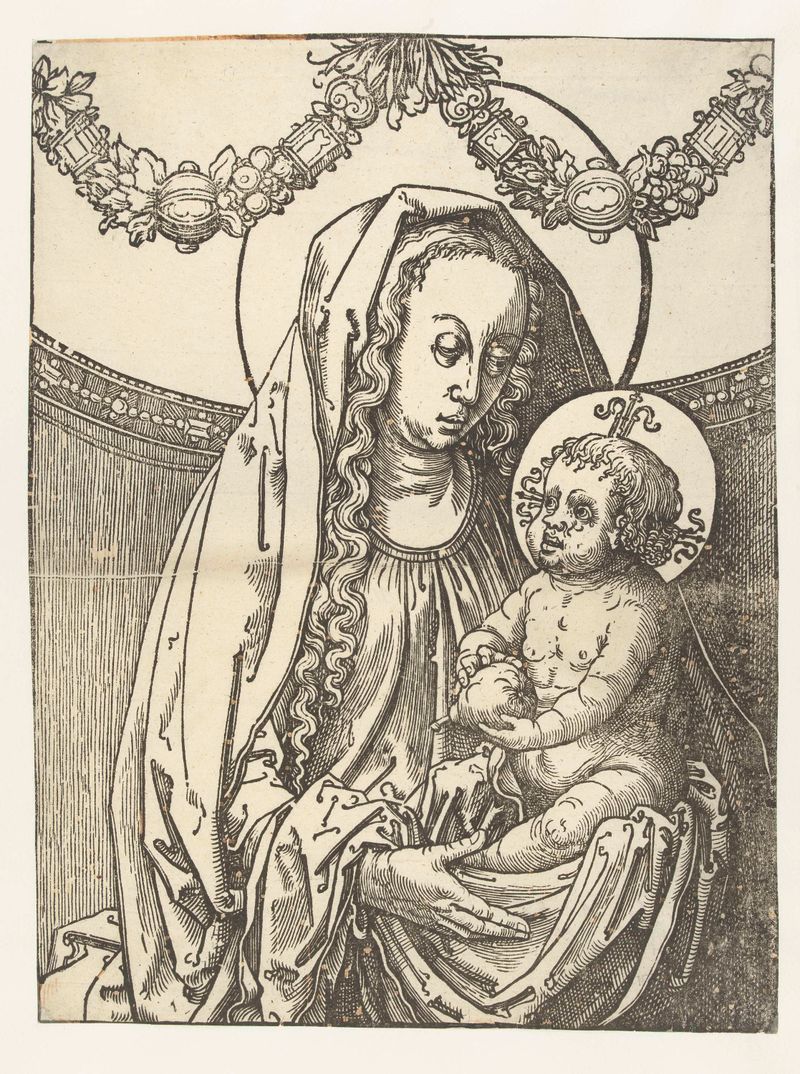
Maria met kind
Lucas van Leyden

Doornenkroning
Lucas van Leyden
More Religious Art
Browse all →
The Return of the Prodigal Son
Rembrandt van Rijn

The Garden of Earthly Delights
El Bosco

Count Orgaz’ funeral
El Greco

The Hundred Guilder Print: the central piece with Christ preaching, the plate arched
Rembrandt van Rijn

The Descent from the Cross
Rogier van der Weyden

The return of the prodigal son
Rembrandt van Rijn