
Southern Port with Figures and Ships — History & Facts
What draws the eye first in Southern Port with Figures and Ships is the grand, crumbling architecture rising at the harbor’s edge—a vision of ancient columns overgrown with foliage, their shadowy vaults sheltering a flurry of activity. The painting invites the viewer to wander through its sunlit expanse, from the bustling quay where merchants and sailors barter and load barrels, to the distant sails catching the golden light as ships glide out to sea. Storck’s careful play of light and shadow animates every corner: the sun glances off the marble ruins, casting the foreground in warm ochres, while the water shimmers in cool blues and greens, guiding the gaze out toward the horizon.
Each figure is busy with purpose—some negotiating, others resting, a few simply watching the ships depart—suggesting a world in constant motion, balanced between the old stones of empire and the restless promise of trade. Works like this, painted in the 17th century, reflect the Dutch fascination with distant shores and the wealth of the maritime world. Artists such as Abraham Storck specialized in these harbor scenes, blending fantasy architecture with the realities of commerce and navigation, catering to patrons who longed for both the grandeur of antiquity and the prosperity of their own age. These paintings were often destined for the homes or offices of merchants, shipowners, and collectors, serving as reminders of the reach and ambition of a seafaring nation.
Though little is recorded about the specific journey of this work—now found in a Scandinavian collection—its imagined port, painted around 1650, stands as a testament to the era’s dreams of adventure and exchange. Let your eye linger on the details: each flag, each gesture, each glint of sunlight tells a story of a world on the move.
More Artworks by Abraham Storck

The Muscovite legation visiting Amsterdam, 29 August 1697
Abraham Storck
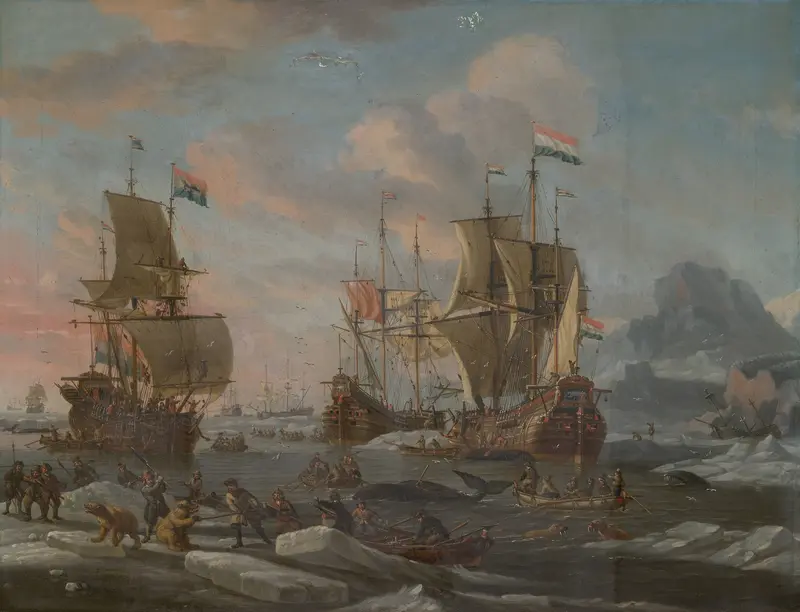
The Dutch Whaling Fleet
Abraham Storck
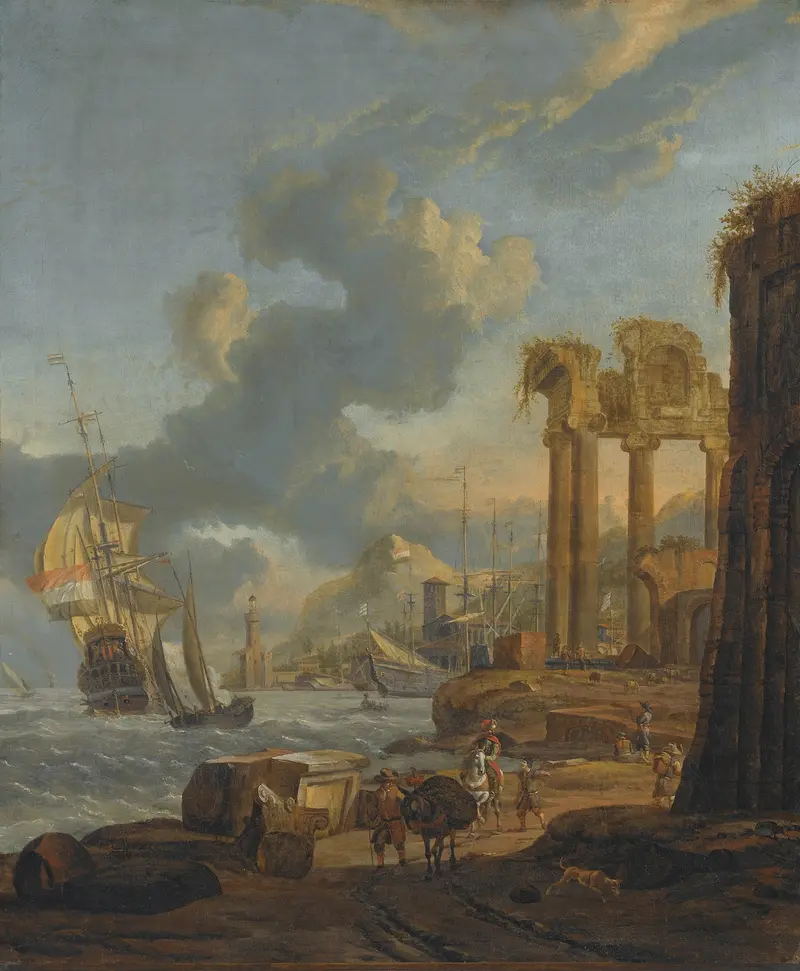
A Mediterranean Harbour Scene With Travellers On The Shore, A Dutch Man-Of-War On The Left
Abraham Storck
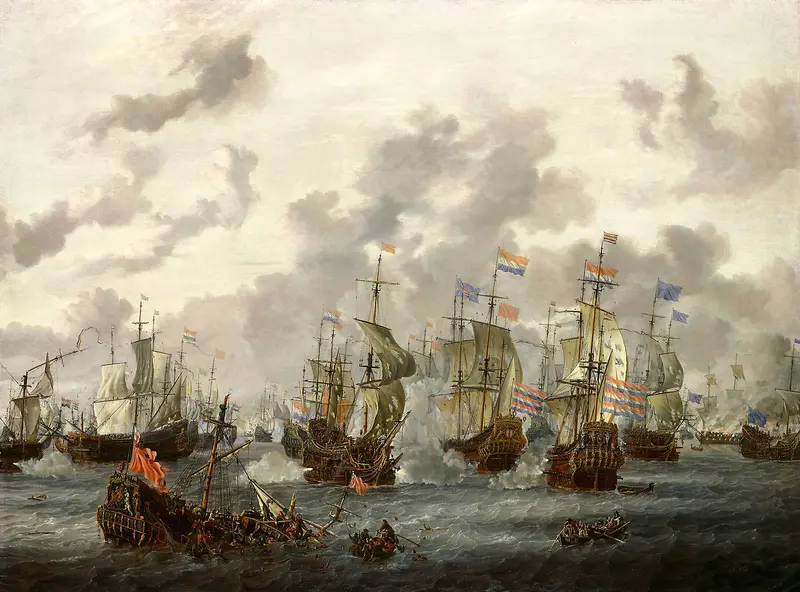
The Four Days’ Battle
Abraham Storck
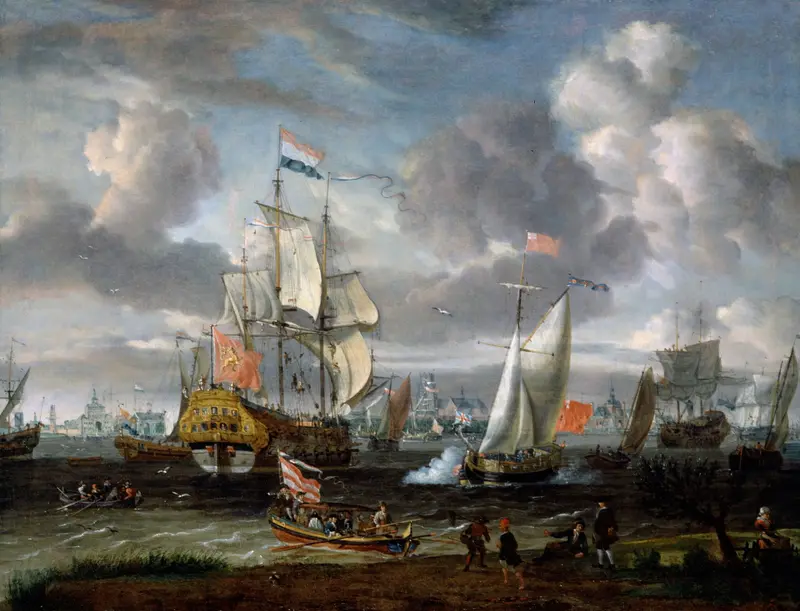
An English Yacht saluting a Dutch Man-of-War in the port of Rotterdam
Abraham Storck
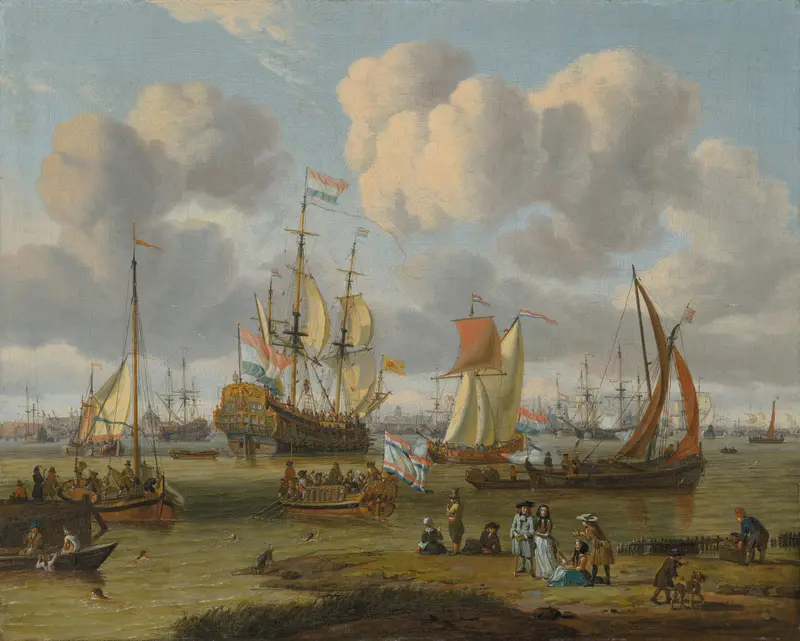
Shipping off Amsterdam with figures on a quay
Abraham Storck
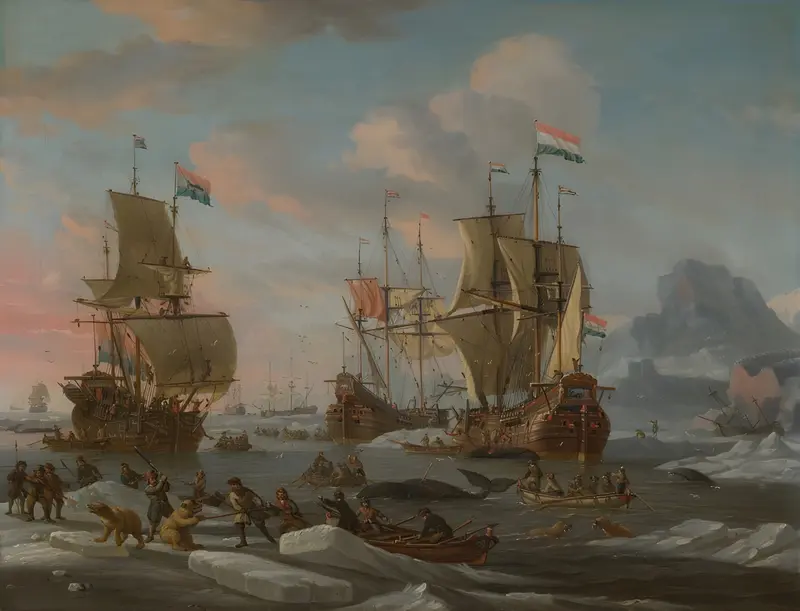
The Dutch Whaling Fleet
Abraham Storck
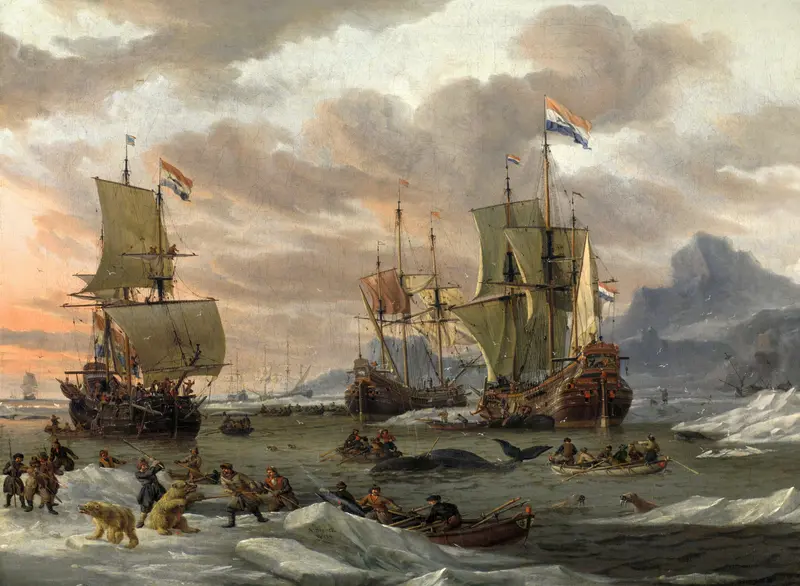
Whaling Grounds in the Arctic Ocean
Abraham Storck
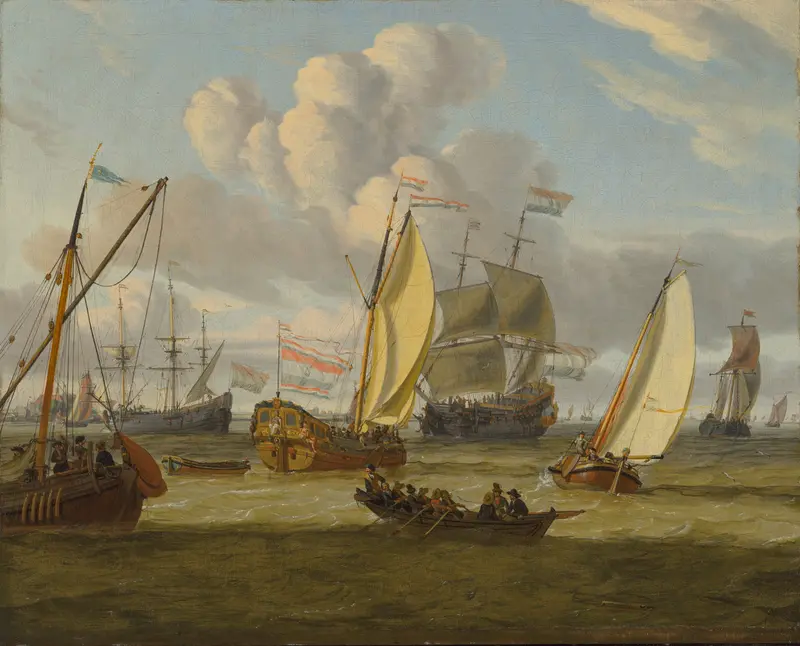
Shipping in an estuary
Abraham Storck
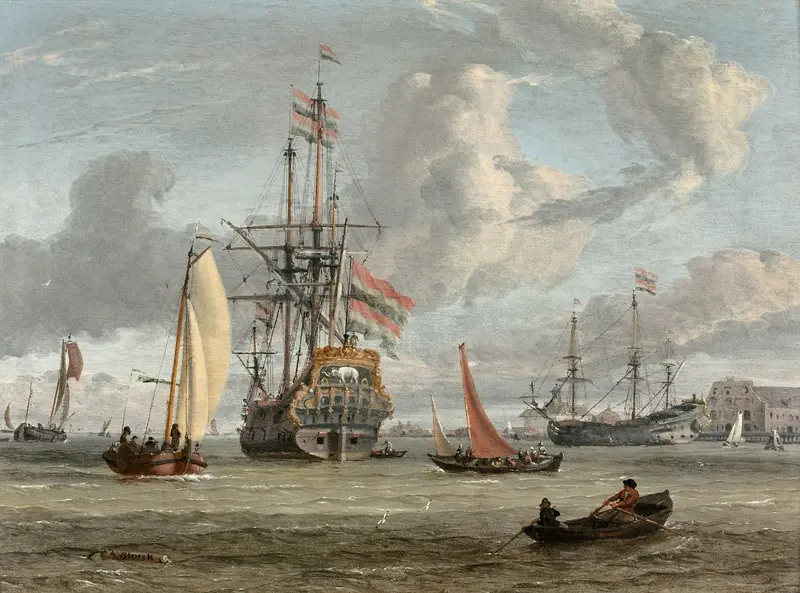
Grand navire de la couronne du Danemark près d’un littoral
Abraham Storck





