
Southern Sierra Nevada Mountains — History & Facts
A single, slender tree—stripped of most of its branches—leans at the center of Southern Sierra Nevada Mountains, drawing the eye upward and lending a sense of both fragility and endurance to the wilderness scene. The viewer’s gaze is led from the lush, marshy foreground, where a fallen trunk lies half-submerged, across a tranquil pool that reflects the sky’s pale light. Beyond, granite boulders catch the sun, their surfaces dappled with hints of orange and mossy green, while a dense stand of pines marches up toward the imposing, shadowed mountain.
The composition feels carefully staged to invite you in: a clearing, a mirror of water, a pathway of light, all culminating in the craggy heights that dominate the horizon. Bierstadt’s brushwork here is precise yet atmospheric, capturing both the detail of individual trees and the grandeur of the landscape as a whole. Painted in the mid-19th century, this work belongs to a moment when American artists ventured west, seeking to capture the vast, unfamiliar territories that were rapidly entering the nation’s imagination. Painters like Albert Bierstadt became known for their panoramic views of the American West, works that were often exhibited in eastern cities to audiences hungry for visions of untouched nature.
While little is recorded about the specific journey of this painting—aside from its appearance at Bonhams, Los Angeles, in 2015—it stands as a testament to the era’s fascination with wilderness and the belief that landscape painting could inspire awe, reverence, and even national pride. The careful balance between intimacy and scale sends the viewer back into the painting, searching for the quiet drama that unfolds in its light and shadow.
More Artworks by Albert Bierstadt

A Storm in the Rocky Mountains, Mt. Rosalie
Albert Bierstadt
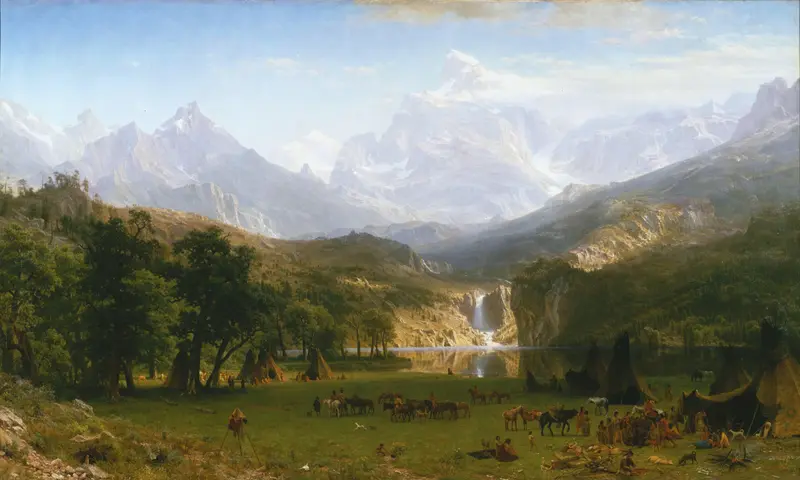
The Rocky Mountains, Lander's Peak
Albert Bierstadt
Niagara from the American Side
Albert Bierstadt
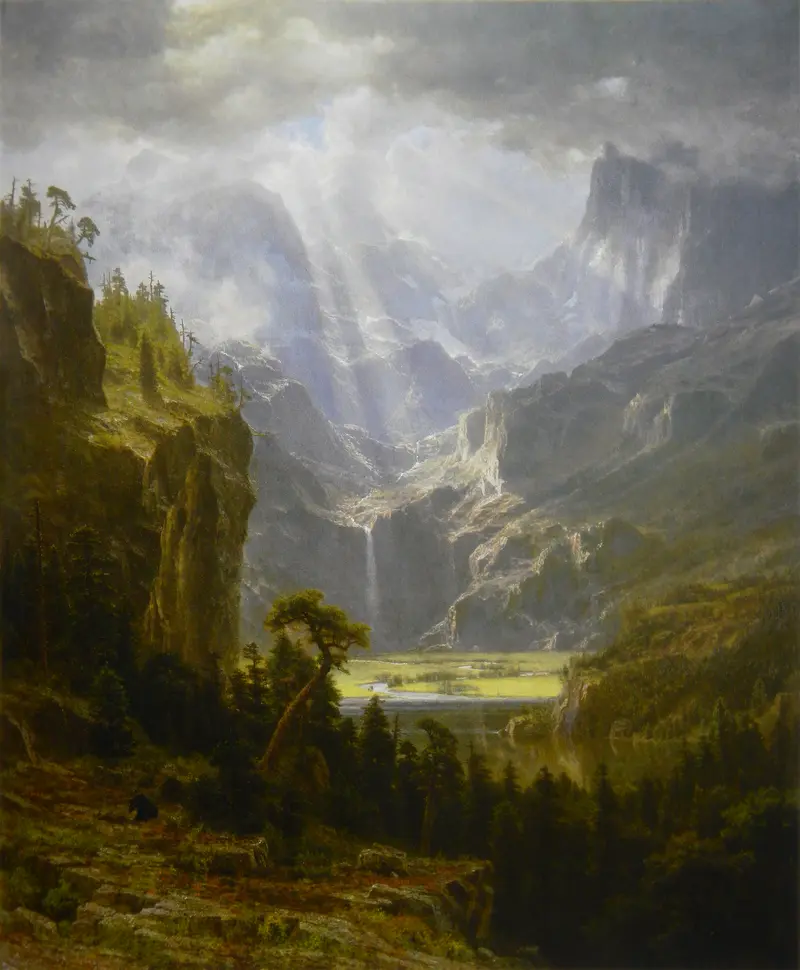
Rocky Mountains, Lander’s Peak
Albert Bierstadt

Valley of the Yosemite
Albert Bierstadt
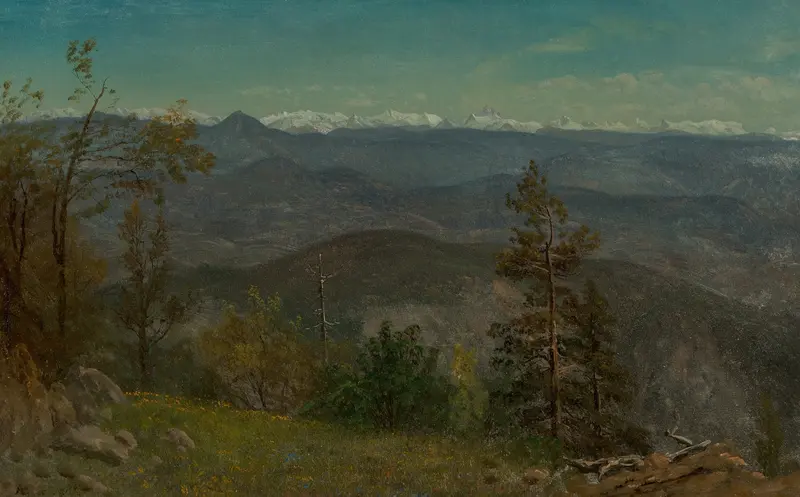
Yosemite Valley, California
Albert Bierstadt
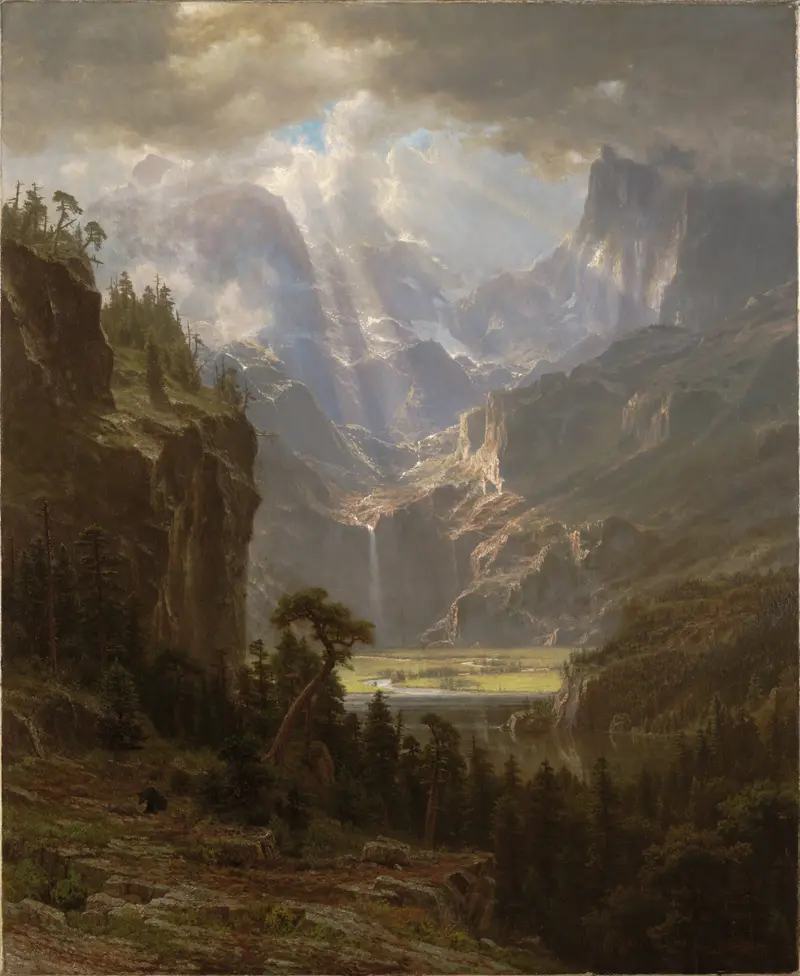
Rocky Mountains, "Lander's Peak"
Albert Bierstadt

Laramie Peak
Albert Bierstadt
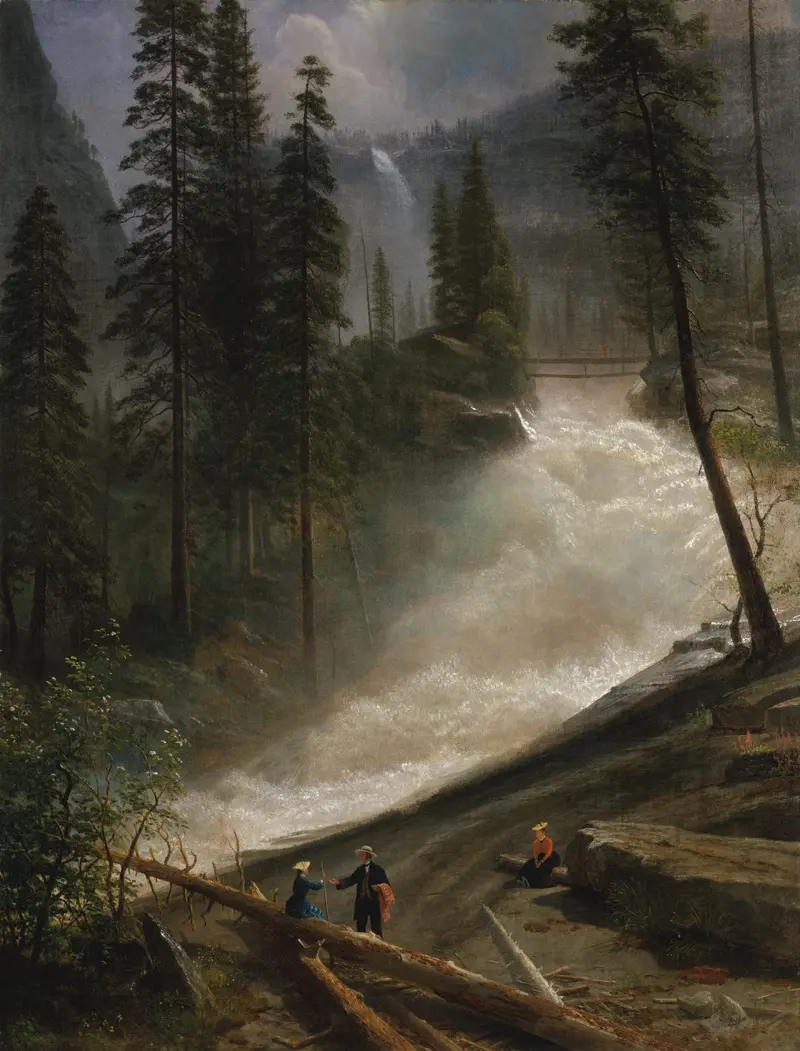
Nevada Falls, Yosemite
Albert Bierstadt
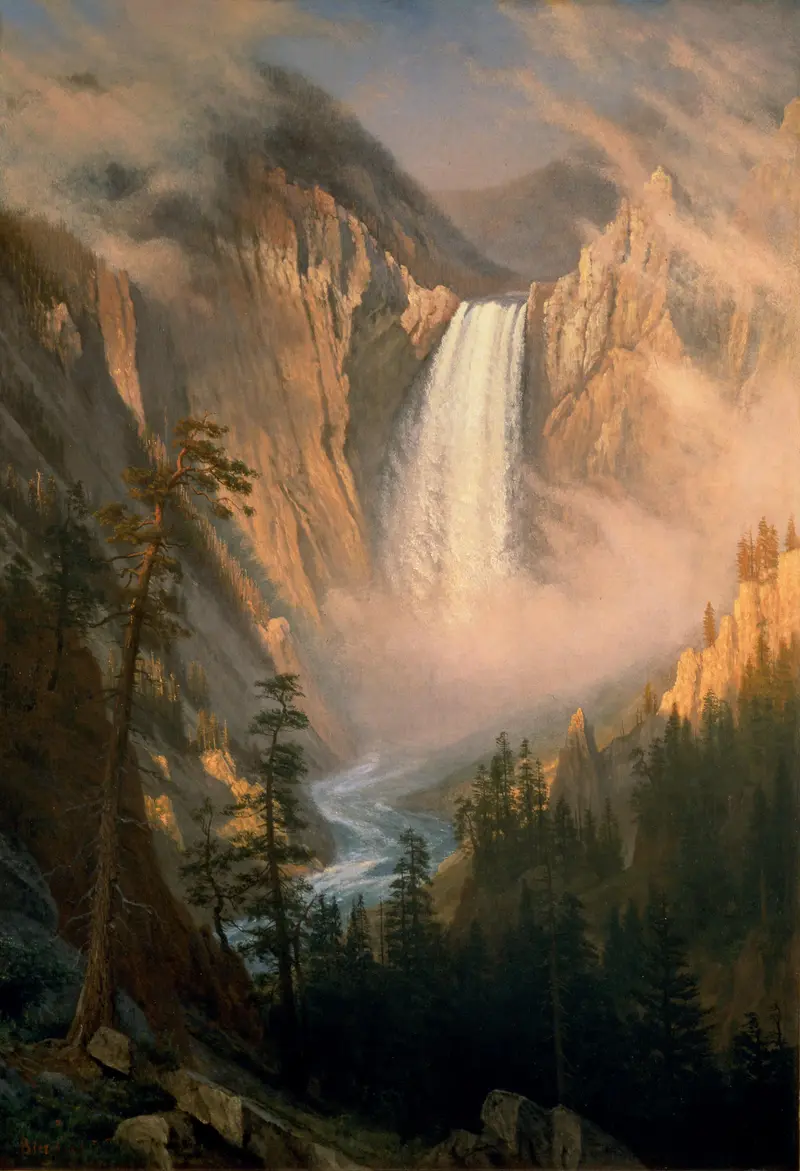
Yellowstone Falls
Albert Bierstadt
More Landscape Art

The Starry Night
Vincent van Gogh

View of Delft
Johannes Vermeer

Water Lilies
Claude Monet

The Grand Canal, Venice, looking north-west from the Ca' Corner to the Ca' Contarini degli Scrigni, with the campanile of Santa Maria della Carità
Canaletto

Windsor Castle
Canaletto

The Grand Canal looking North-East from the Palazzo Dolfin-Manin to the Rialto Bridge
Canaletto