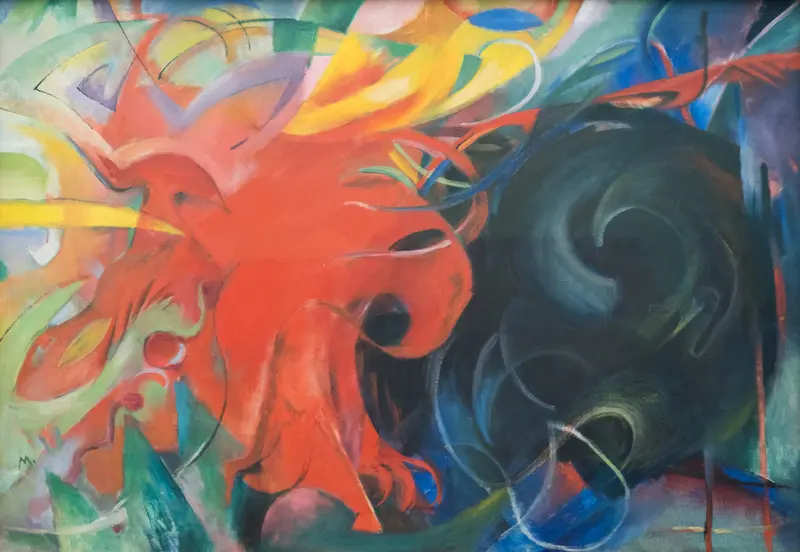
Speed — History & Facts
Few works so vividly capture the restless ambition of the Futurist movement as Speed by Jules Schmalzigaug. The painting’s title alone signals its allegiance to the early twentieth-century obsession with velocity and modernity, a fascination that swept across Europe in the years before the First World War. While the exact date and circumstances of Speed’s creation remain uncertain, it stands as a rare testament to Schmalzigaug’s brief but intense engagement with the Italian Futurists, whose manifesto declared, “We affirm that the world’s magnificence has been enriched by a new beauty: the beauty of speed.” Few Belgian artists were so closely linked to this radical group. In Speed, the viewer is thrust into a whirlwind of motion: arcs, spirals, and fractured forms rush across the canvas, dissolving any sense of stability or repose.
The eye is pulled along sweeping curves and intersecting planes, as if caught in the slipstream of a racing car or the blur of a city at night. Unlike the more mechanical renderings of Giacomo Balla’s Abstract Speed + Sound, Schmalzigaug’s approach is more lyrical, using color and rhythm to evoke the sensation of acceleration. The fragmented shapes and overlapping lines suggest both the machinery of the modern world and the pulse of human excitement, merging man and machine in a single visual experience. The physical history of Speed is as elusive as its subject.
The painting’s medium and precise provenance are not clearly recorded, and it is not known whether it was exhibited during Schmalzigaug’s lifetime or only rediscovered later. What is certain is that Schmalzigaug’s involvement with the Futurists marked a turning point in his short career, as he moved from impressionistic beginnings to a radical new visual language. Today, Speed is recognized as a rare Belgian contribution to Futurism, a movement otherwise dominated by Italian voices, and stands as a testament to the international reach—and restless energy—of early modern art.
More Artworks by Jules Schmalzigaug

A View of Scheveningen
Jules Schmalzigaug
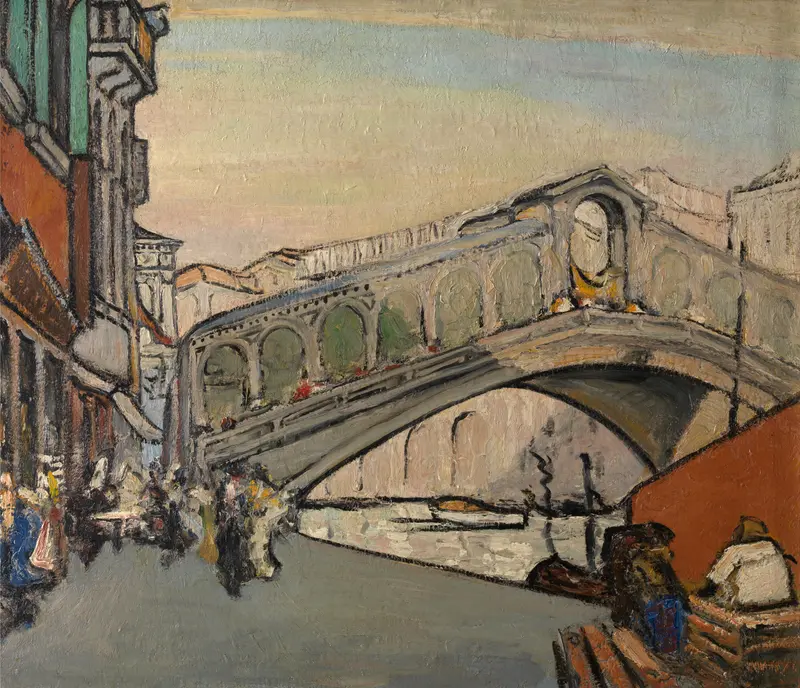
The Rialto Bridge in Venice
Jules Schmalzigaug

Abstract Bouquet
Jules Schmalzigaug
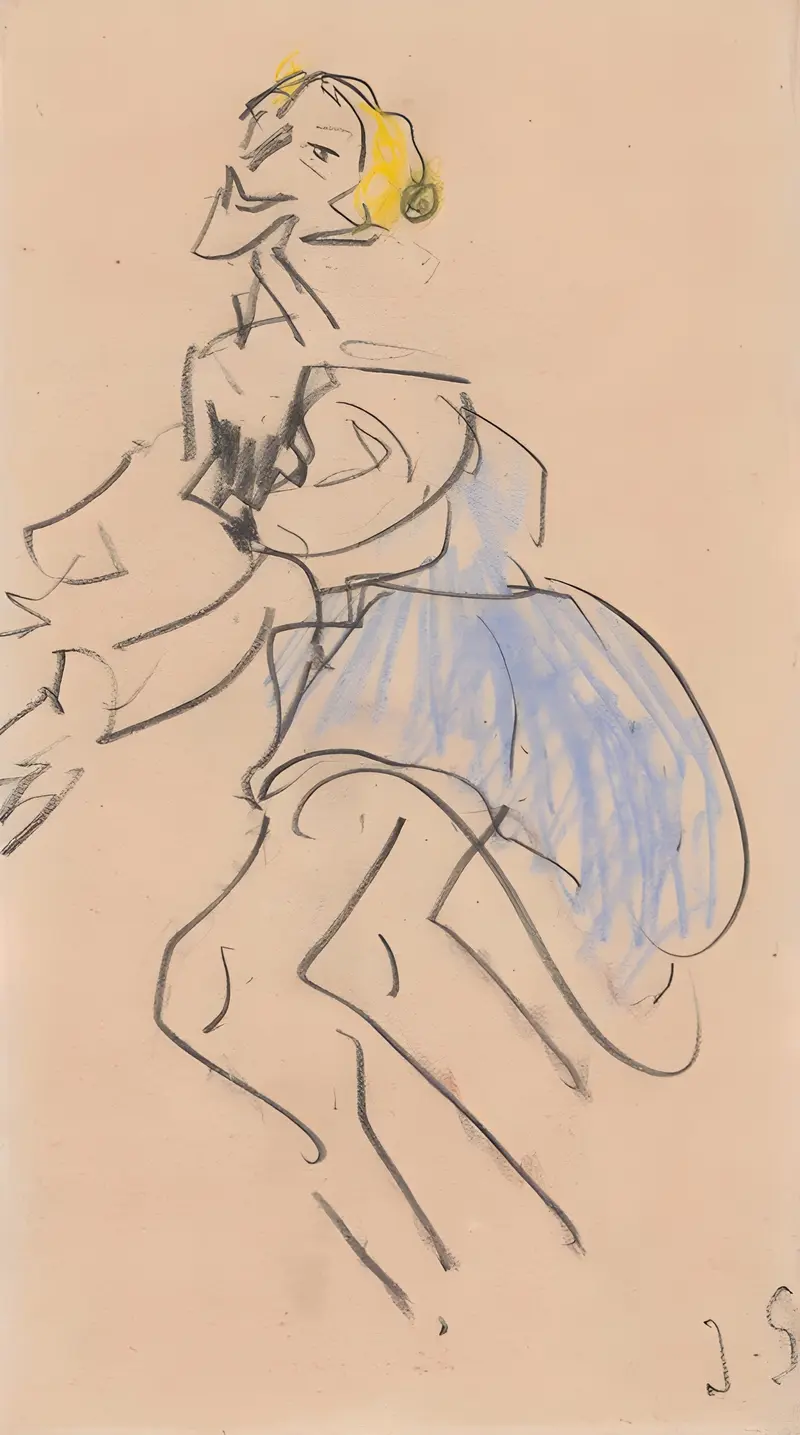
Dancer
Jules Schmalzigaug
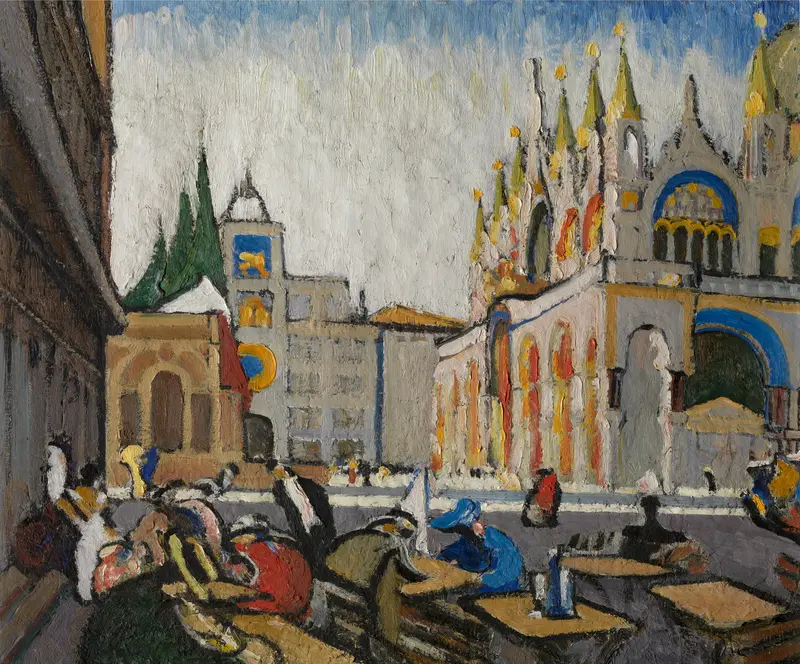
San Marco from the Piazetta
Jules Schmalzigaug
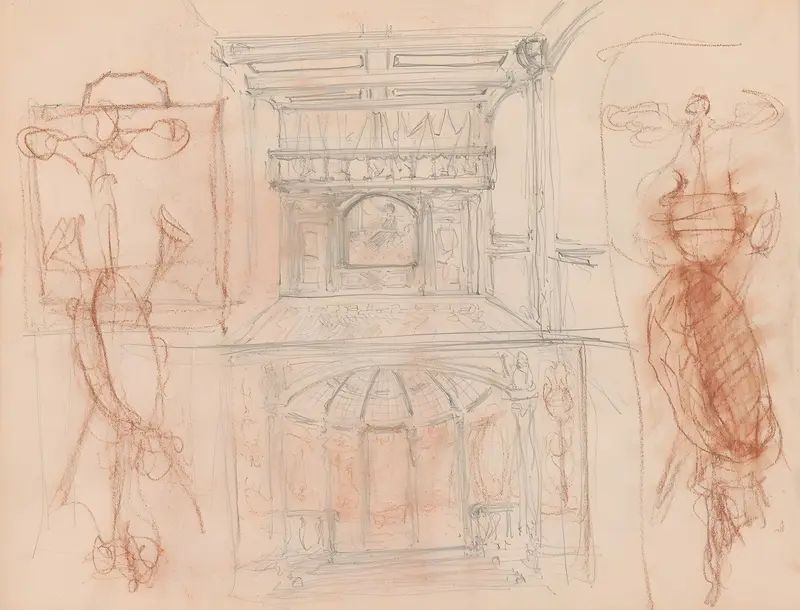
Architectural Elements
Jules Schmalzigaug
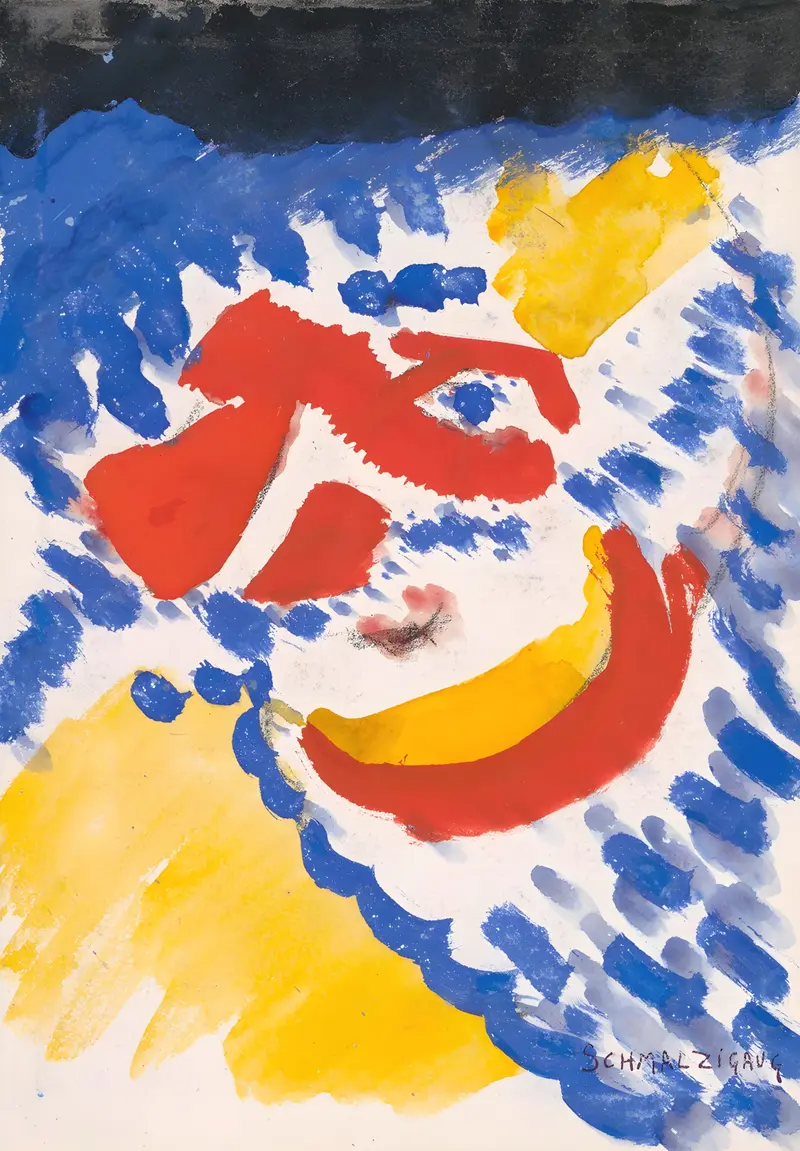
Blue, Red and Yellow Figures
Jules Schmalzigaug
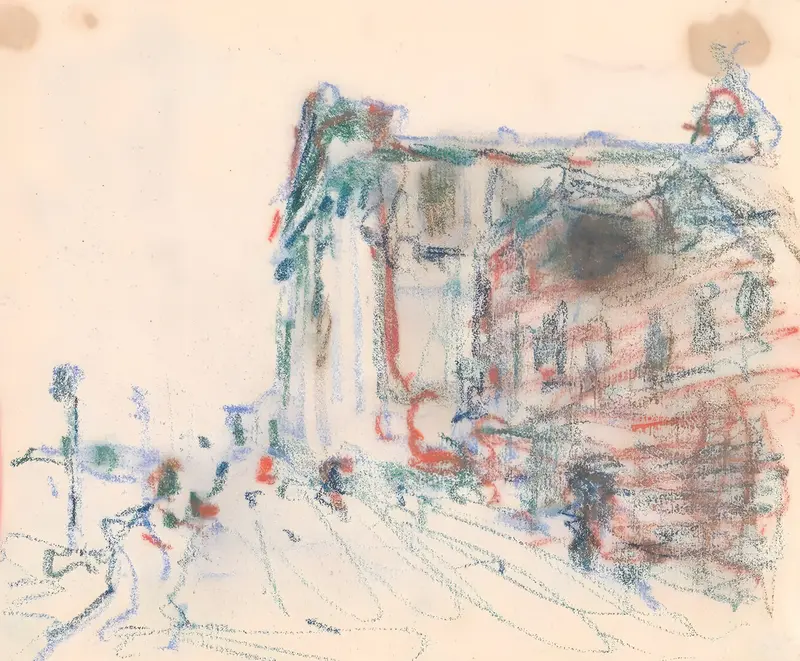
Chiesa dei Gesuati in Venice
Jules Schmalzigaug
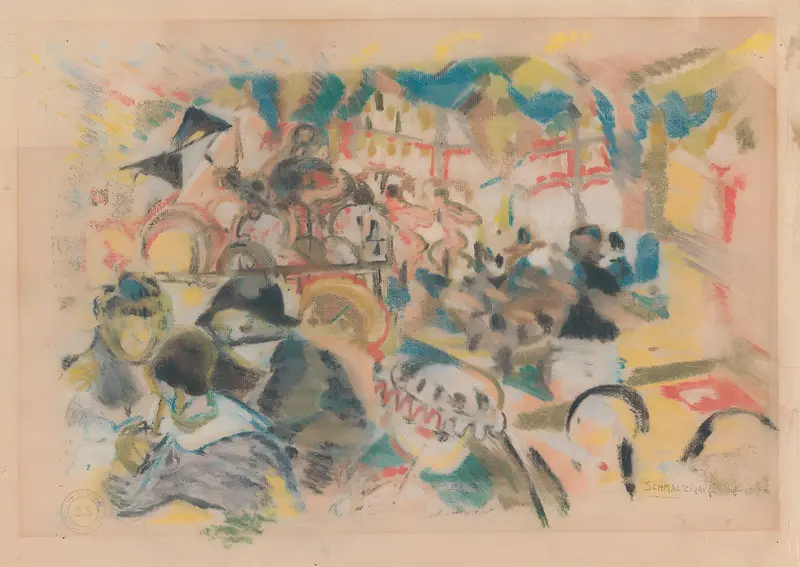
Café-chantant
Jules Schmalzigaug
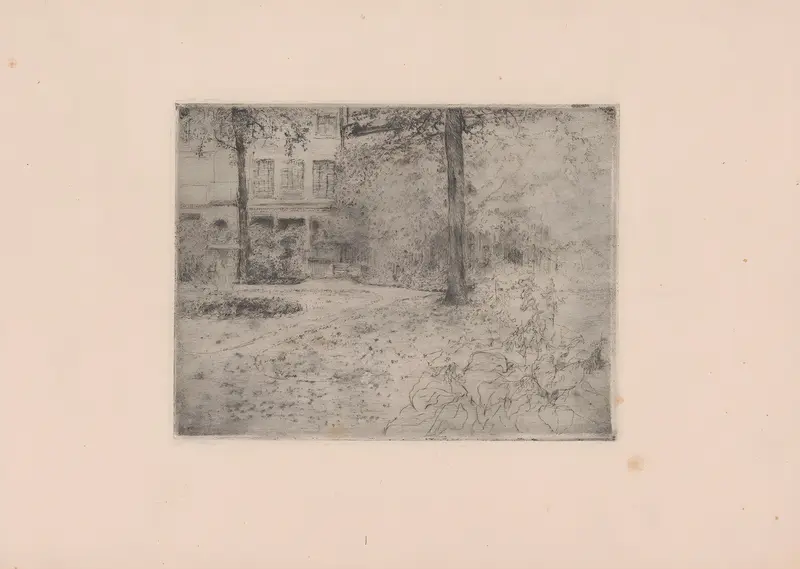
Backyard
Jules Schmalzigaug