
Spring — History & Facts
A hush seems to hang over the furrowed fields, broken only by the quiet exchange between two figures bent in conversation or labor. The eye is drawn first to these shadowed forms, their closeness suggesting a moment of shared effort or intimacy at the edge of spring’s awakening. The land around them is worked but not yet lush, the trees just beginning to show the promise of leaves.
Lepère’s hand, deft with line and subtle with color, uses the pale highlights and soft shadows to guide us through the scene: from the gentle rhythm of the plowed earth, up through the delicate tracery of bare branches, to the cluster of trees that anchor the horizon. The sky, brushed with faint clouds, opens the space and lends a sense of calm expectancy. Created probably in 1909, Spring belongs to a period when artists like Auguste Lepère turned their attention to the changing countryside and the people who shaped it. In the early twentieth century, rural scenes such as this were both a record and a meditation, capturing the slow transformation of the land as industrialization crept closer.
Works like this, now preserved thanks to the efforts of the National Gallery of Art and shared through open access, remind us how much of modern life was built on these quiet, seasonal labors. The drawing’s modesty is its strength: it invites us to linger, to notice the first stirrings of growth, and to imagine the world these figures inhabit.
More Artworks by Auguste Lepère

Le Pont-Neuf (Paris)
Auguste Lepère
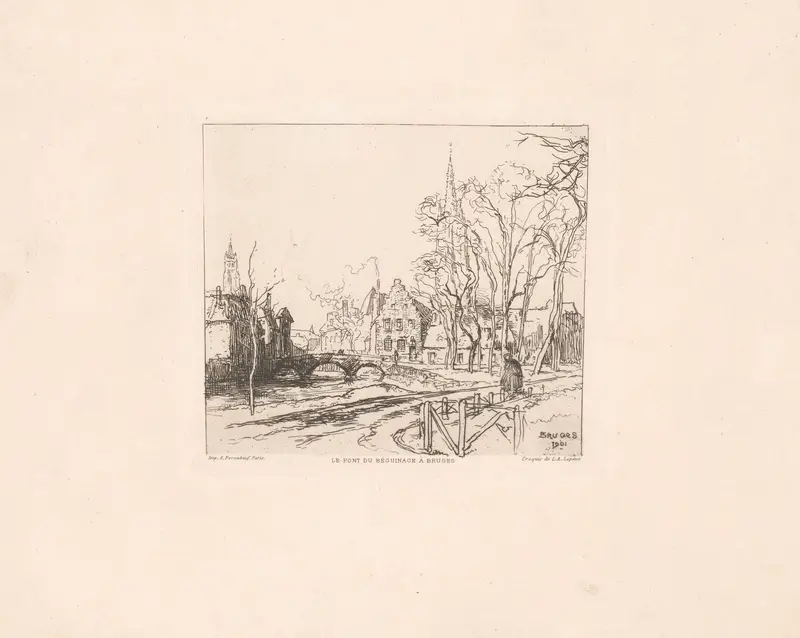
Le pont du Beguinage à Bruges
Auguste Lepère
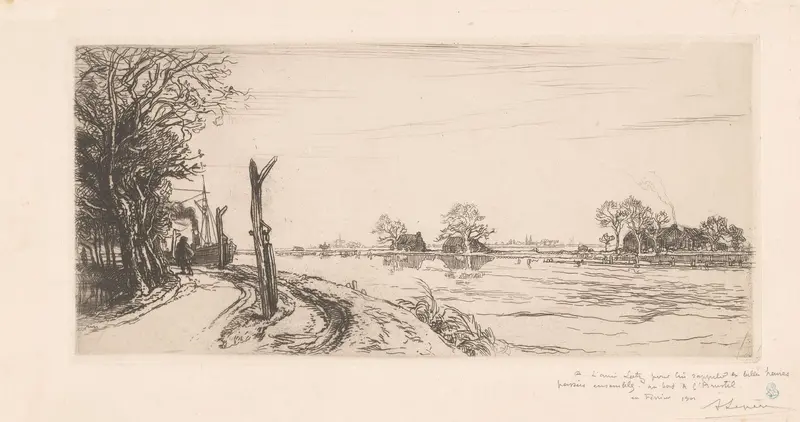
Au bord de l’Amstel
Auguste Lepère
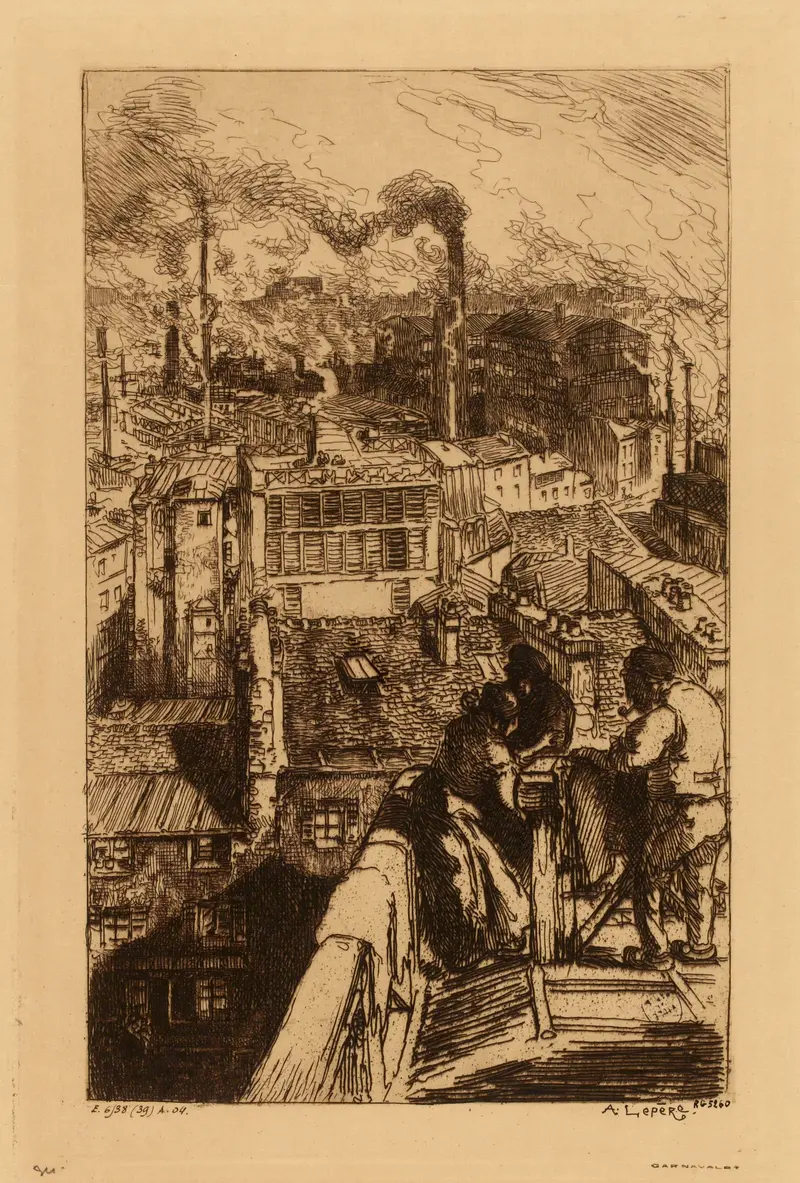
Le quartier des Gobelins
Auguste Lepère
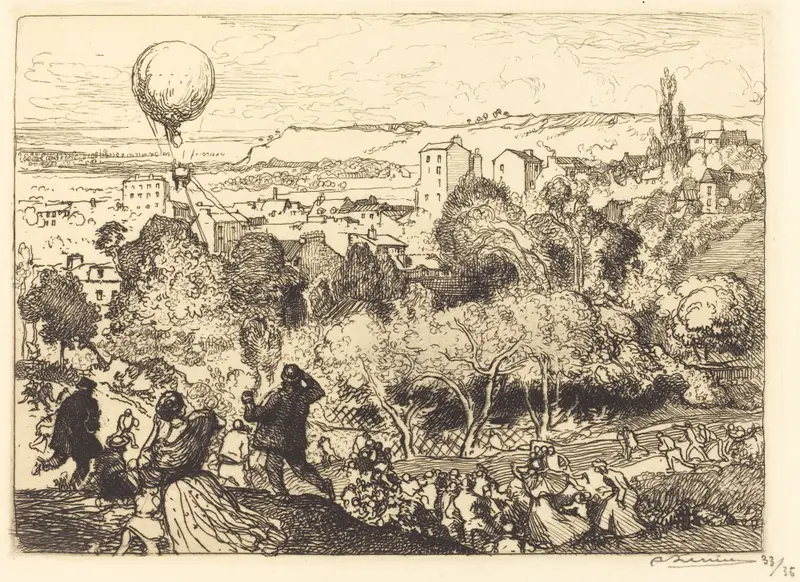
The Falling Balloon, in Pre-Saint-Gervais (Lebaloon qui tombe, au Pre-Saint-Gervais)
Auguste Lepère
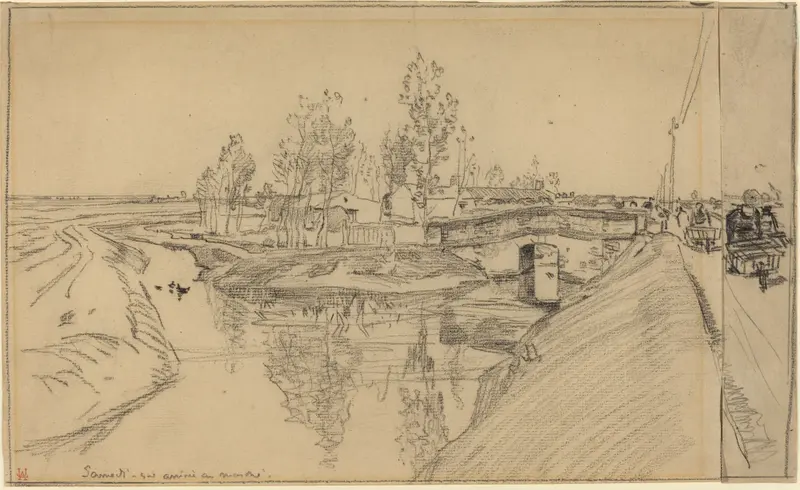
Arrivee au Marche
Auguste Lepère
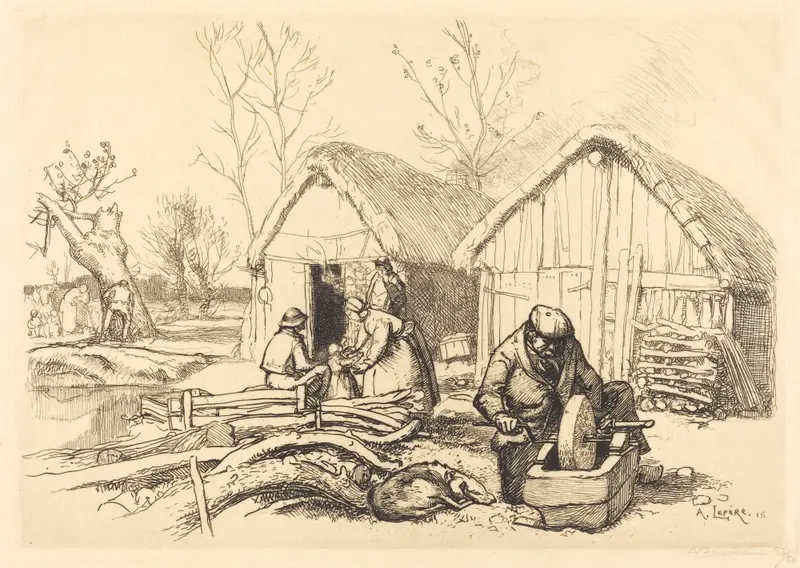
The House of the Woodcutter, Vendee (La maison du bucheron, Vendee)
Auguste Lepère
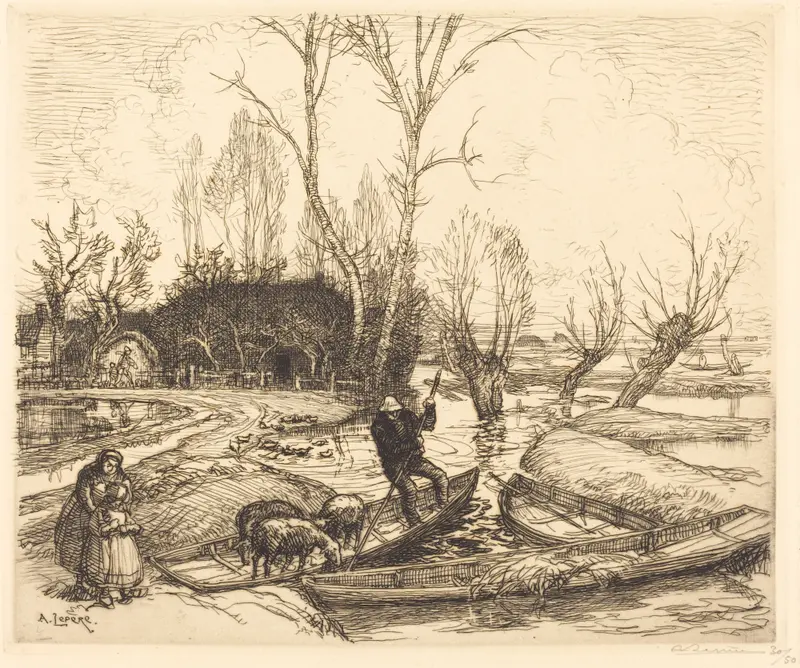
In the Deluged Marsh - The Shepherd (Au marais inonde - Le berger)
Auguste Lepère
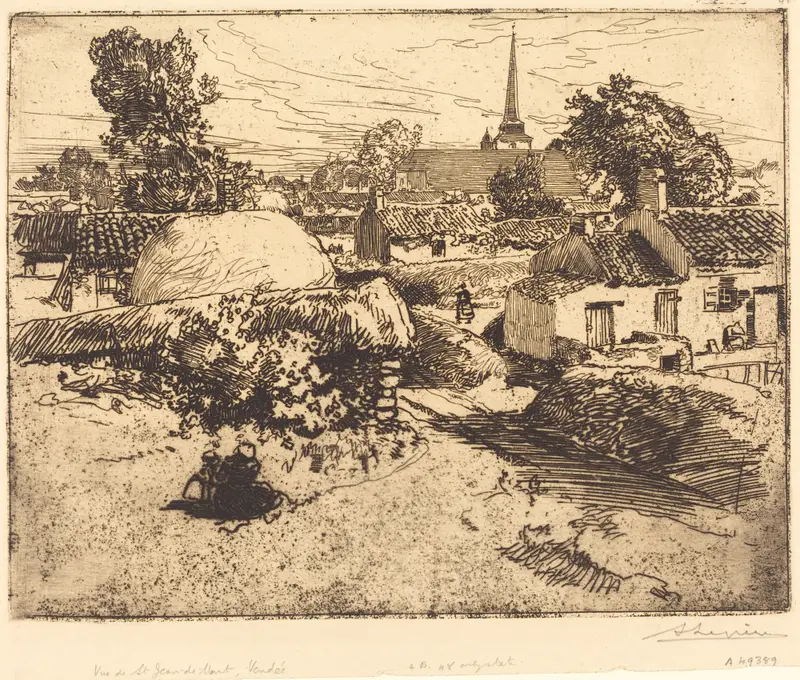
View of St.-Jean-de-Mont, Vendee (Vue de St.-Jean-de-Mont, Vendee)
Auguste Lepère
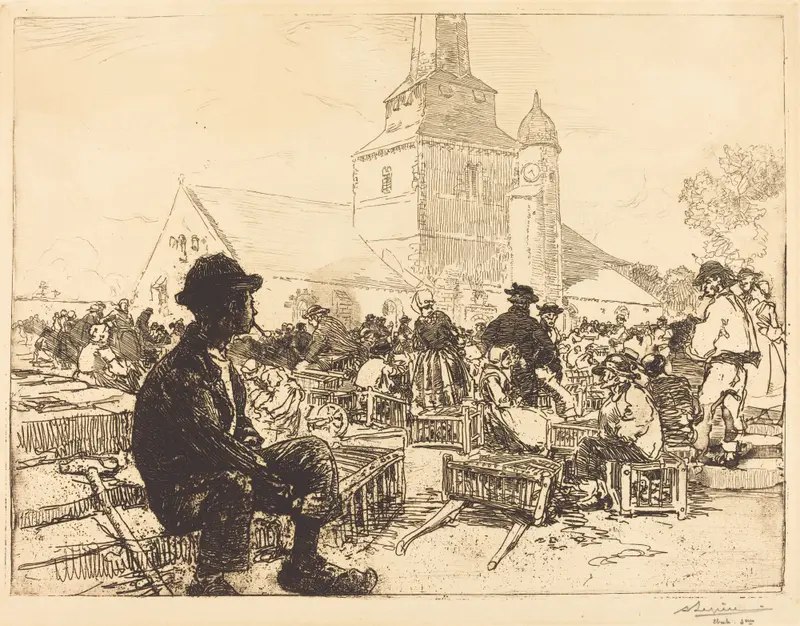
Poultry Market at St.-Jean-de-Mont (Marche a la volaille, a St.-Jean-de-Mont)
Auguste Lepère
More Landscape Art

The Starry Night
Vincent van Gogh

View of Delft
Johannes Vermeer

Water Lilies
Claude Monet

The Grand Canal, Venice, looking north-west from the Ca' Corner to the Ca' Contarini degli Scrigni, with the campanile of Santa Maria della Carità
Canaletto

Windsor Castle
Canaletto

The Grand Canal looking North-East from the Palazzo Dolfin-Manin to the Rialto Bridge
Canaletto