
Square de la Trinité — History & Facts
Is this a mirror — or a memory? In Square de la Trinité, light dances upon the canvas, evoking a sense of transcendence that lingers in the air. Look to the left, where a group of elegantly dressed figures congregates beneath the lush green foliage. Notice how Renoir captures the play of sunlight filtering through the leaves, casting dappled patterns on the cobblestones. The soft brushstrokes create an impressionistic rhythm, guiding your gaze across the scene, revealing the warmth of summer and the spirit of leisure that envelops the park.
The vibrant colors breathe life into the composition, with an emphasis on the harmony between man and nature. As you immerse yourself in the artwork, the contrast between the serene ambiance and the subtle hints of bustling life reveals deeper layers of meaning. The figures, engrossed in conversation, imply stories left untold, encapsulating fleeting moments of joy while hinting at the passage of time. The lush greenery symbolizes nature's embrace, suggesting a sanctuary amidst the chaos of urban life—a fleeting escape that invokes nostalgia and a longing for simpler days. Renoir created this piece between 1878 and 1879, during his time in Paris, where he was deeply influenced by the Impressionist movement.
Amidst the changing artistic landscape, he sought to capture the essence of modern life, focusing on the beauty of everyday moments. This period was marked by a growing appreciation for leisure in the burgeoning Parisian society, making Square de la Trinité a vivid reflection of both art and life during a transformative era.
More Artworks by Pierre-Auguste Renoir
Browse all →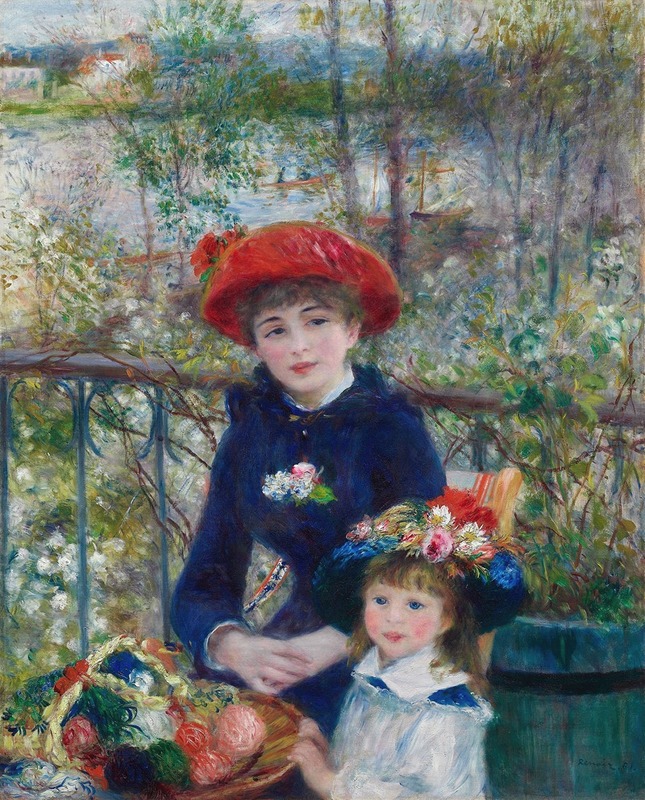
Two Sisters (On the Terrace)
Pierre-Auguste Renoir
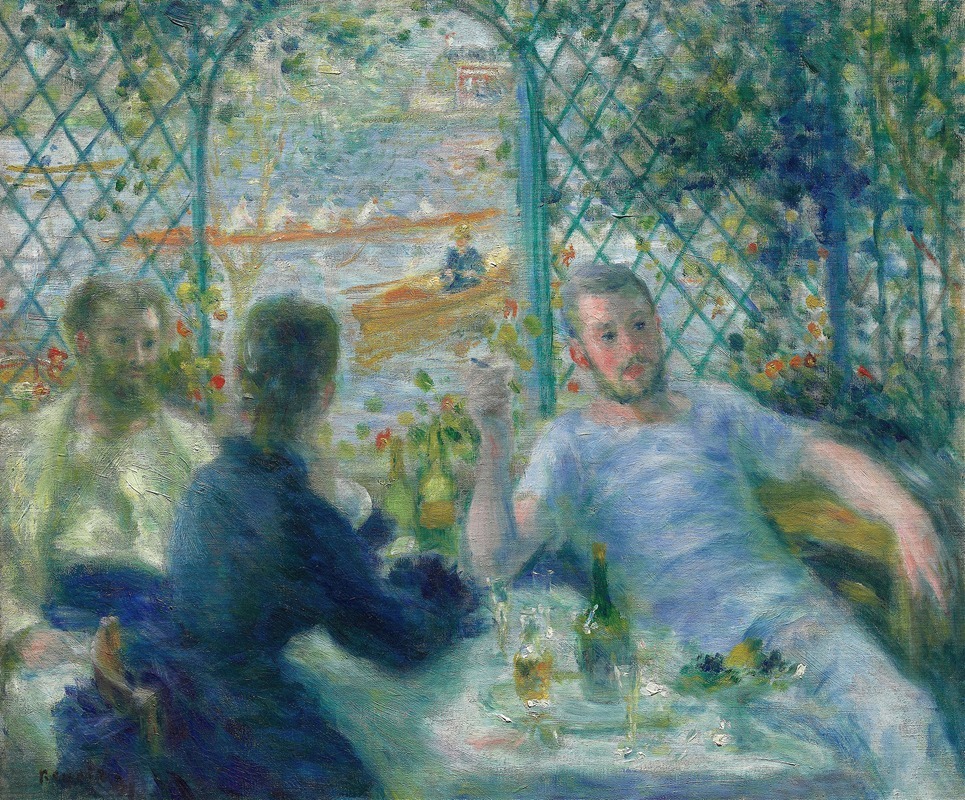
Lunch at the Restaurant Fournaise (The Rowers' Lunch)
Pierre-Auguste Renoir
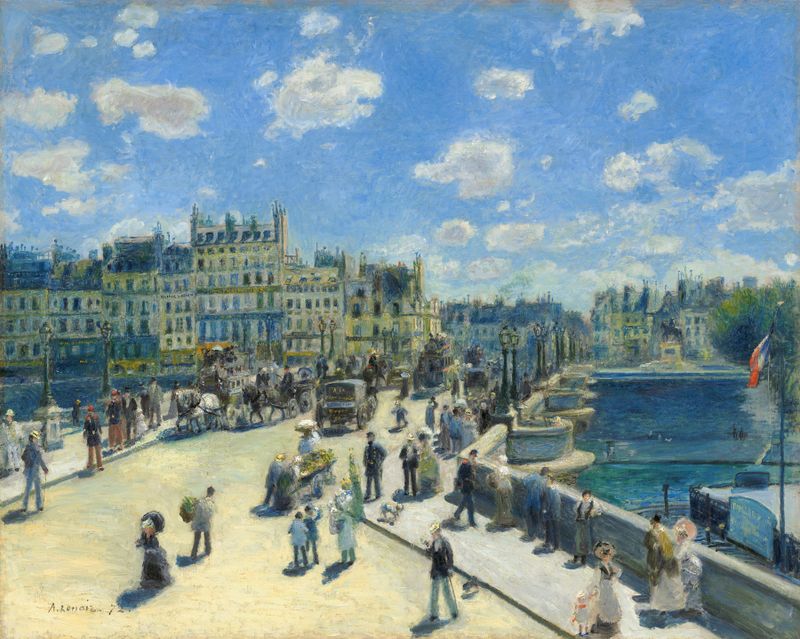
Pont Neuf, Paris
Pierre-Auguste Renoir
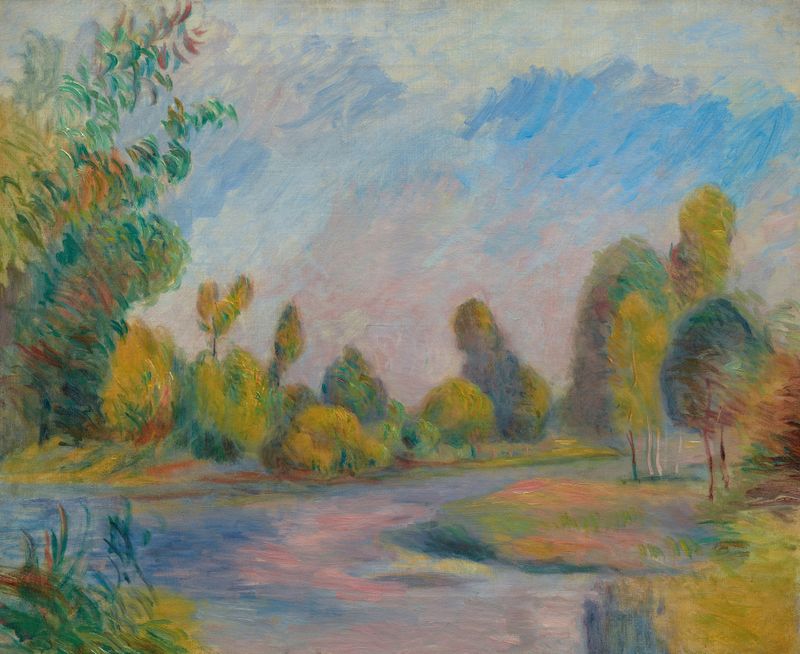
Au bord de la rivière
Pierre-Auguste Renoir

Near the Lake
Pierre-Auguste Renoir
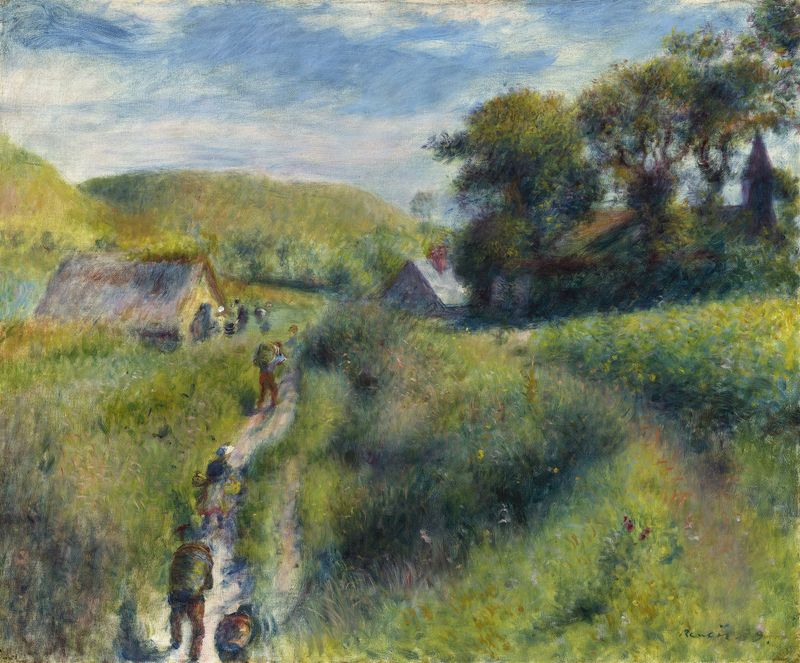
The Mussel Harvest
Pierre-Auguste Renoir

The Seine at Chatou
Pierre-Auguste Renoir
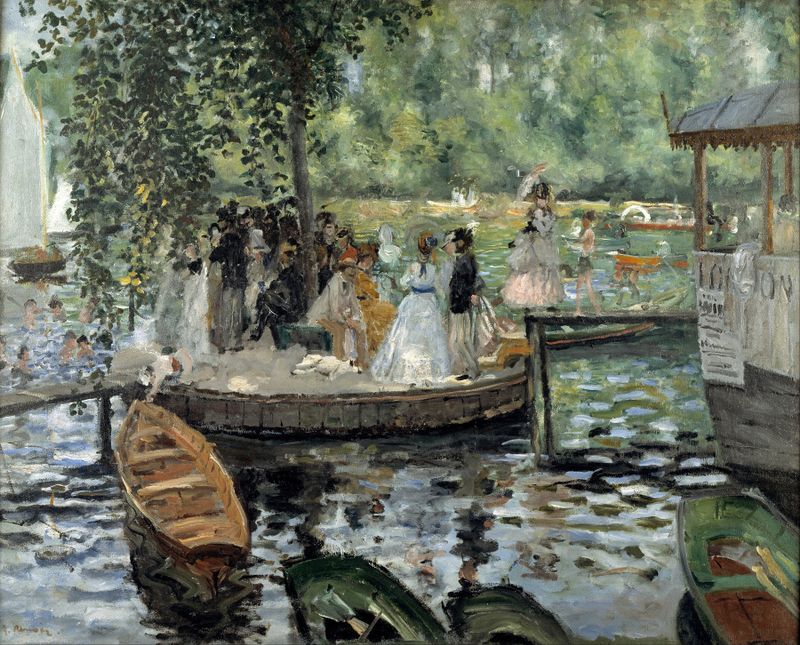
La Grenouillère
Pierre-Auguste Renoir
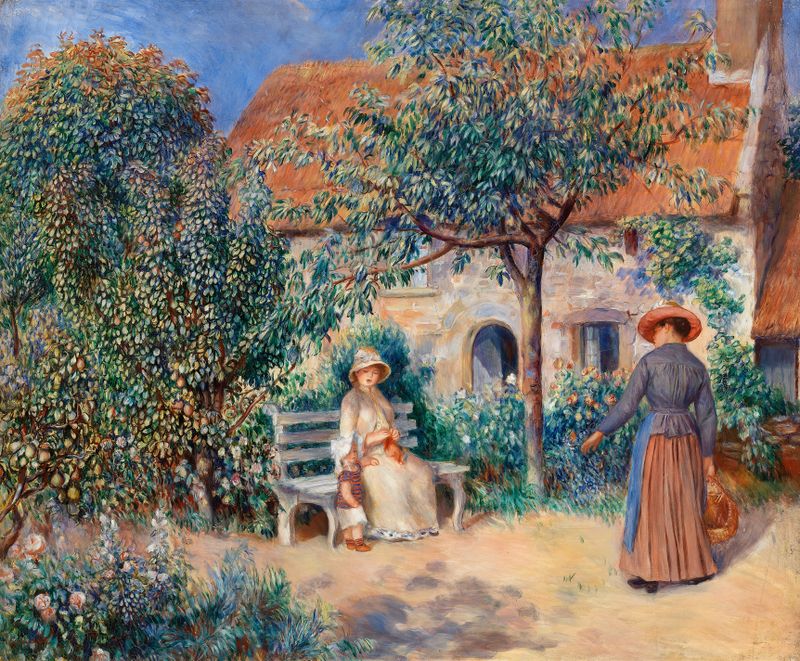
In Brittany (En Bretagne)
Pierre-Auguste Renoir
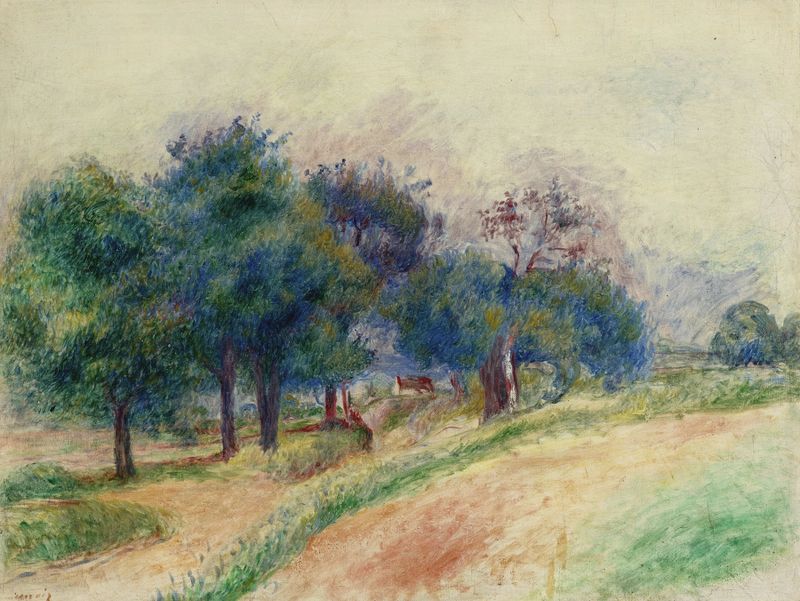
Paysage d’Essoyes
Pierre-Auguste Renoir





