
St. Lawrence River, from the Citadel, Quebec — History & Facts
The eye is drawn first to the Union Jack, crisp against a pale sky, marking out a moment of watchfulness and empire. Below, two uniformed figures—one standing, one seated—anchor the human presence atop the Citadel, their postures suggesting both vigilance and a pause in duty. The cannons, heavy and dark in the foreground, frame the view and remind us of the city’s strategic importance, but they also serve as a visual threshold: beyond them, the world opens up to a sunlit panorama of Quebec and the busy St.
Lawrence River, dotted with ships of every kind. The city itself is rendered in warm, orderly blocks, while the river’s haze blurs the line between water and sky, inviting the viewer to linger over the distant blue hills. Painted in 1880, St. Lawrence River, from the Citadel, Quebec belongs to a period when artists like Albert Bierstadt sought out grand vistas as records of place and power.
This was an era when landscape painting often doubled as a form of reportage, capturing the ambitions and anxieties of expanding nations. Such works were collected by civic leaders, businessmen, and institutions eager to display both local pride and cosmopolitan reach. Though little is recorded about the specific journey of this painting, its presence today in the collection of the Museum of Fine Arts, Boston, speaks to the enduring fascination with moments when history and geography meet at the edge of a continent.
The longer you look, the more the painting asks: who is watching, and who is being watched?
More Artworks by Albert Bierstadt

A Storm in the Rocky Mountains, Mt. Rosalie
Albert Bierstadt
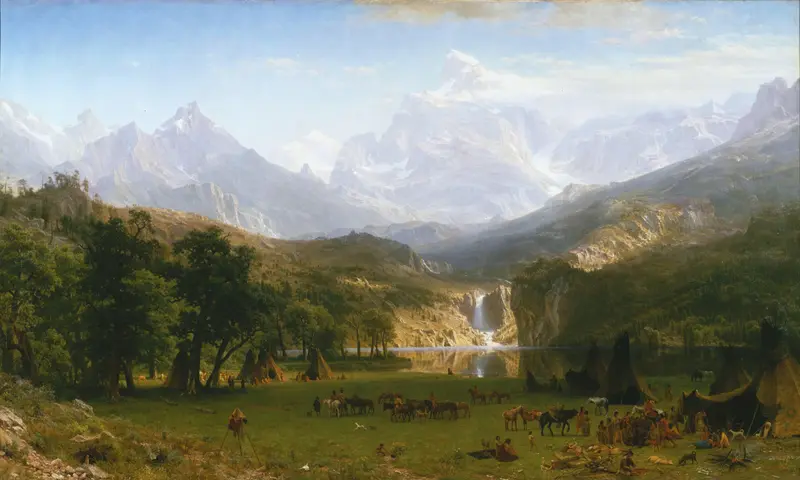
The Rocky Mountains, Lander's Peak
Albert Bierstadt
Niagara from the American Side
Albert Bierstadt
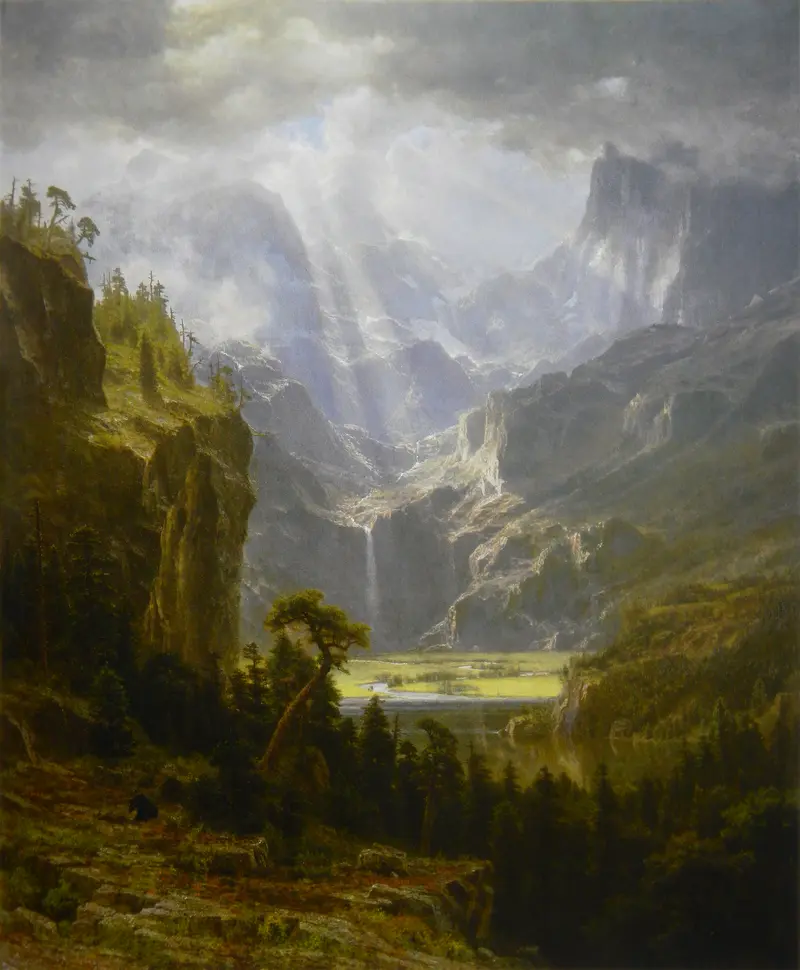
Rocky Mountains, Lander’s Peak
Albert Bierstadt

Valley of the Yosemite
Albert Bierstadt
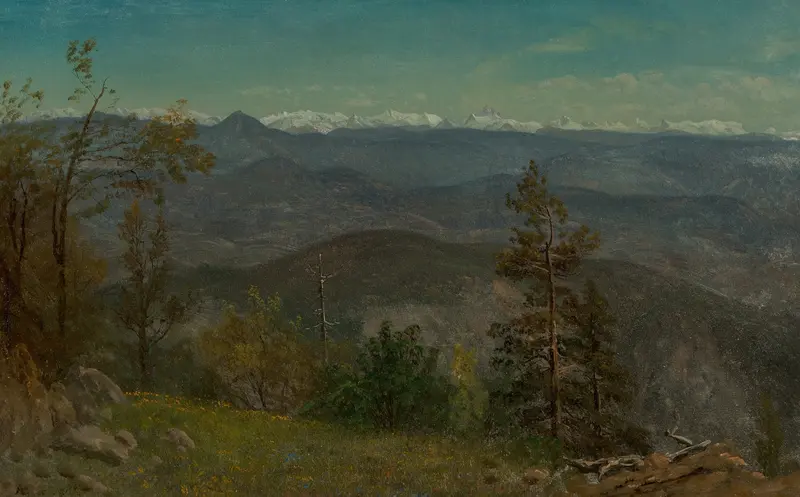
Yosemite Valley, California
Albert Bierstadt
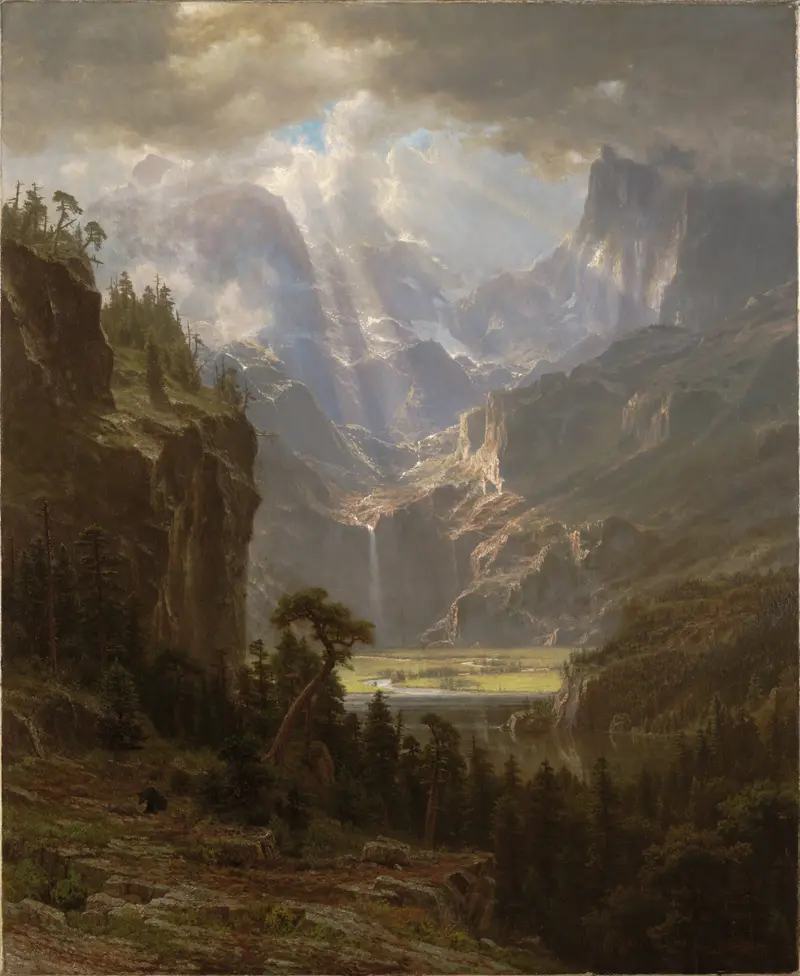
Rocky Mountains, "Lander's Peak"
Albert Bierstadt

Laramie Peak
Albert Bierstadt
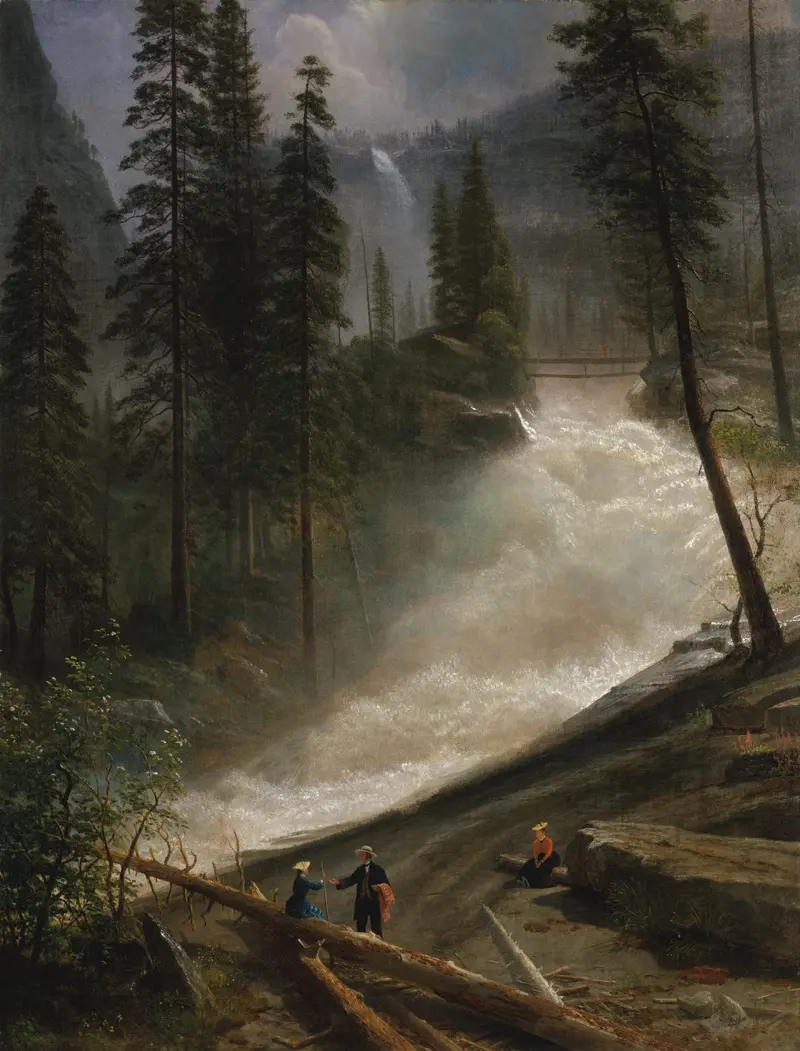
Nevada Falls, Yosemite
Albert Bierstadt
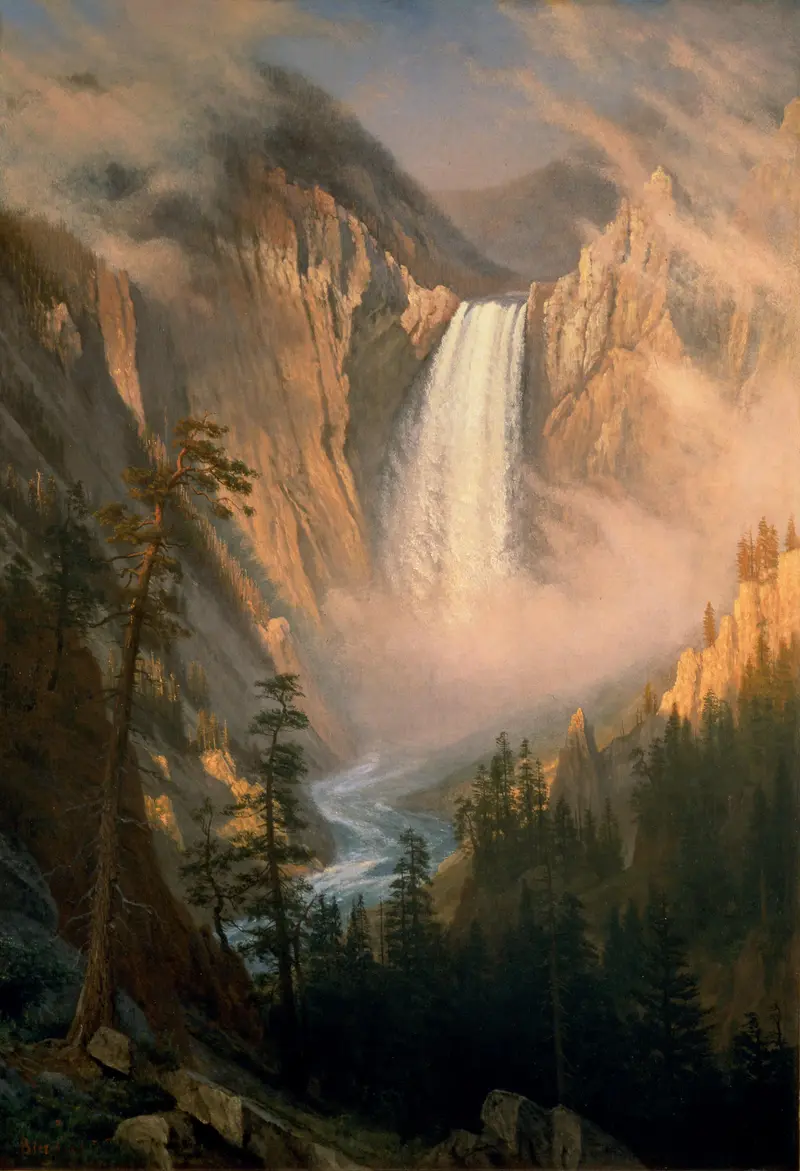
Yellowstone Falls
Albert Bierstadt
More Landscape Art

The Starry Night
Vincent van Gogh

View of Delft
Johannes Vermeer

Water Lilies
Claude Monet

The Grand Canal, Venice, looking north-west from the Ca' Corner to the Ca' Contarini degli Scrigni, with the campanile of Santa Maria della Carità
Canaletto

Windsor Castle
Canaletto

The Grand Canal looking North-East from the Palazzo Dolfin-Manin to the Rialto Bridge
Canaletto