
St. Peter at Lisieux, Normandy; West Front — History & Facts
The intricate facade before us suggests a profound complexity, one where madness lurks beneath the surface of its grandeur. The architectural details invite both admiration and contemplation, revealing layers of history and emotion that resonate deeply. Focus first on the intricate carvings adorning the west front, where the delicate interplay of light and shadow brings the stone to life. Notice how the figures seem to twist in agony and ecstasy, their expressions tangled in a frenzy of devotion and despair.
The muted palette, punctuated by hints of warmth, evokes a sense of solemnity, while the imposing arches loom above, hinting at the weight of faith entwined with fear. At the heart of this work lies an exploration of contrasting emotions—beauty intertwined with suffering, reverence shadowed by madness. The very structure evokes a dichotomy: the stillness of stone versus the turbulent lives of those who once worshipped within these walls. Each detail, from the lichen-encrusted surfaces to the crawling vines, tells a story of nature's reclamation over humanity's creations, reminiscent of the chaos that mirrors the human condition. In 1818, while creating this piece, Cotman was part of a burgeoning Romantic movement that sought to capture both the sublime and the grotesque in art.
He painted St. Peter at Lisieux, Normandy; West Front during a period of personal turmoil, as he grappled with the decline of his family's fortune. This backdrop of struggle, alongside the evolving art scene that celebrated both beauty and madness, profoundly influenced his perspective, leading him to find inspiration in the very ruins of history.
More Artworks by John Sell Cotman
Browse all →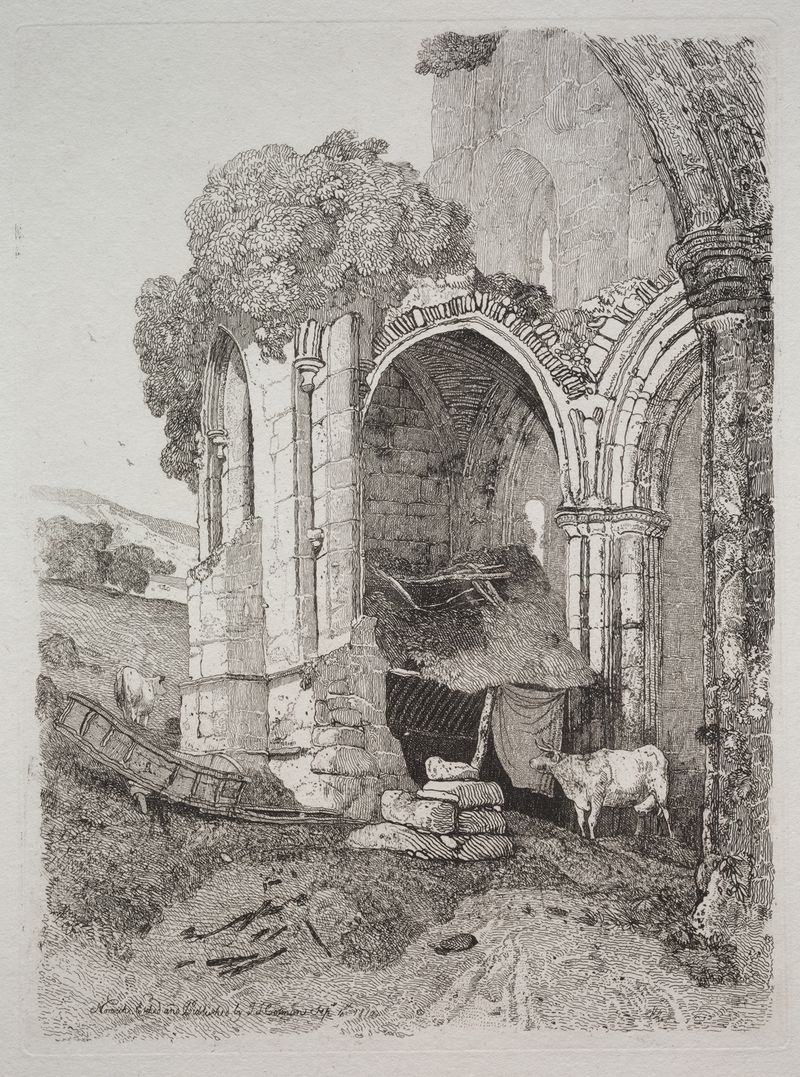
Rievaulx Abbey, Yorkshire
John Sell Cotman
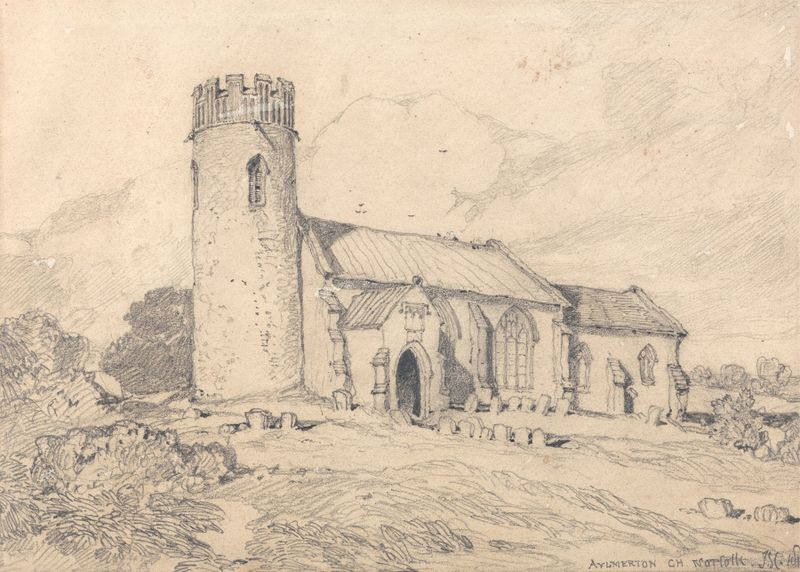
Aylmerton Church; Norfolk, from the South-West
John Sell Cotman
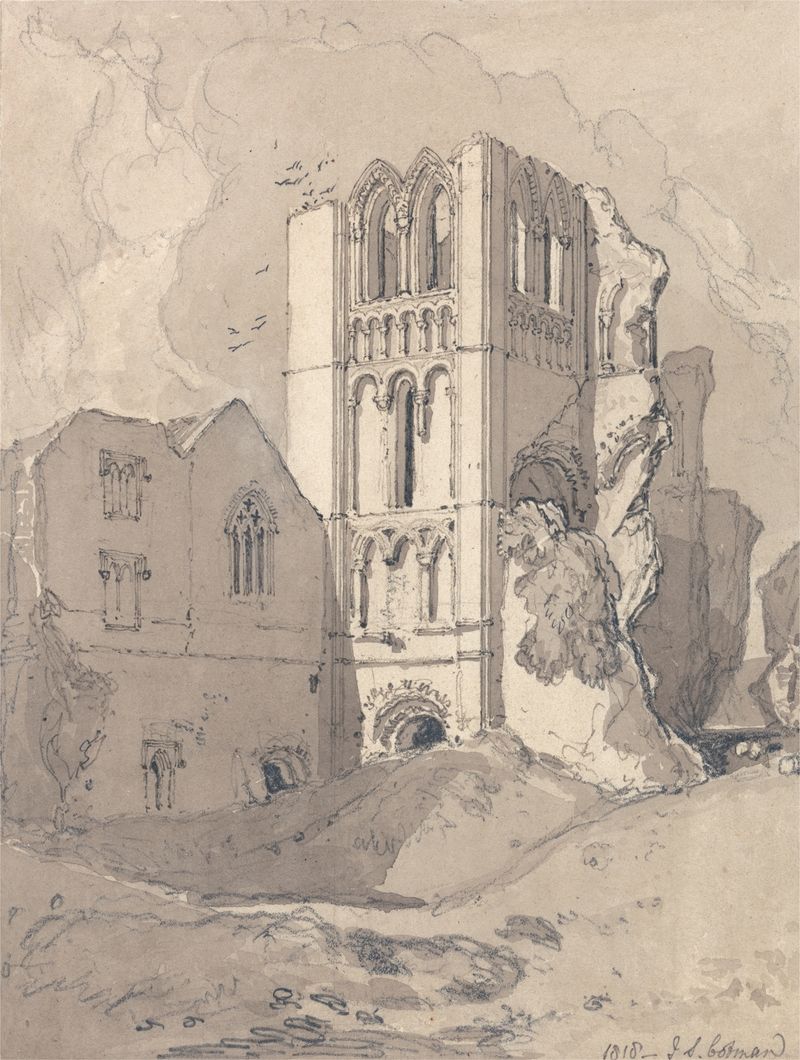
Castle Acre Priory, Norfolk
John Sell Cotman
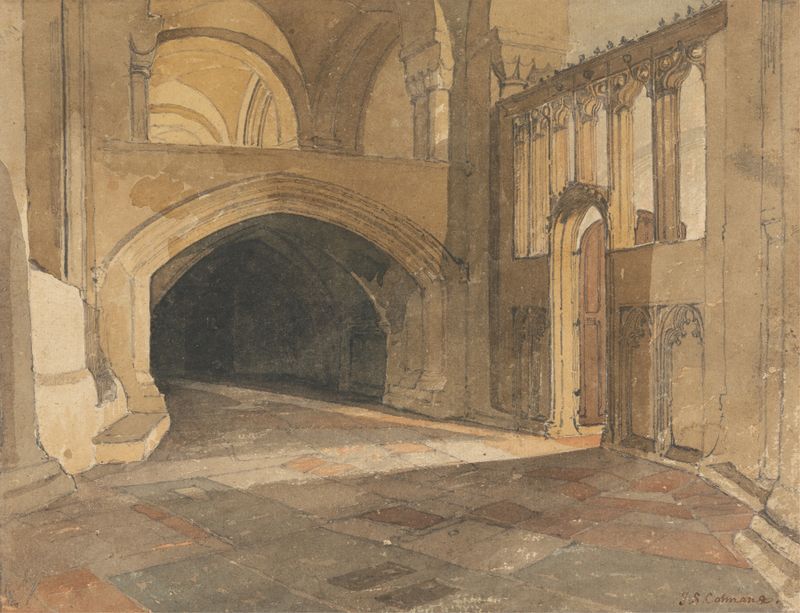
Norwich Cathedral; Entrance to Jesus Chapel
John Sell Cotman
Yarmouth Sands, Norfolk
John Sell Cotman
Castle Acre Priory, Norfolk
John Sell Cotman
Near Whitby, Yorkshire
John Sell Cotman
Whitby
John Sell Cotman
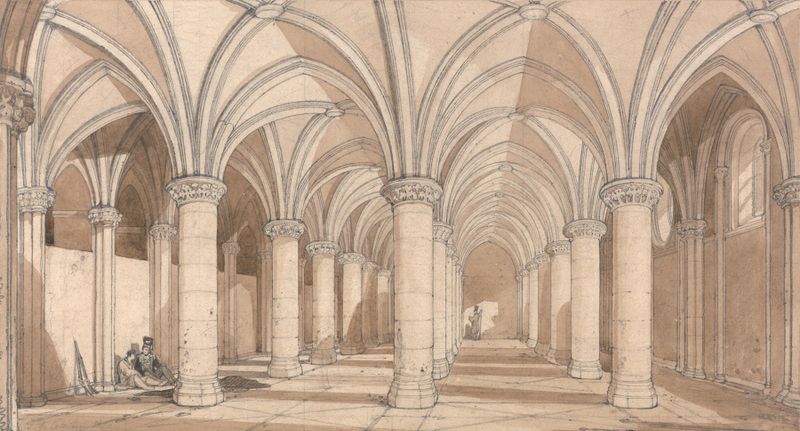
The Barons’ Hall, Mont Saint Michel
John Sell Cotman
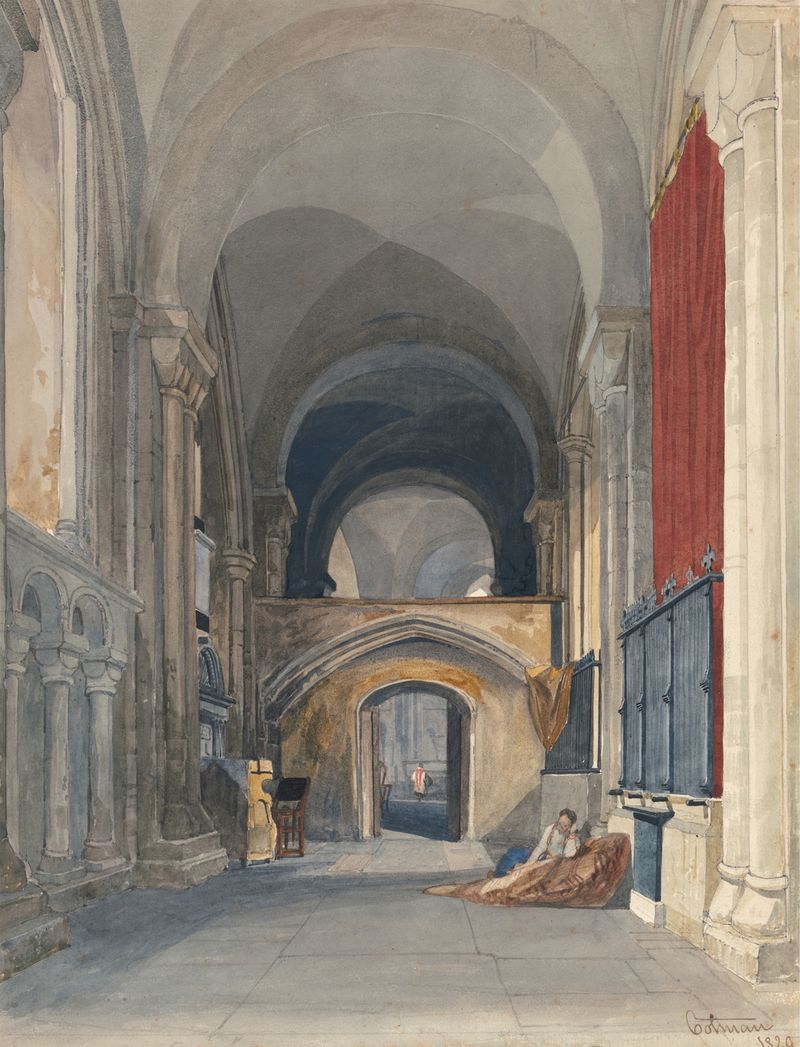
Norwich Cathedral; Interior of the North Aisle of the Choir, Looking East
John Sell Cotman
More Architecture Art
Browse all →
The statue of Liberty
Frédéric Auguste Bartholdi

View of Houses in Delft, Known as ‘The Little Street’
Johannes Vermeer

View of Houses in Delft, Known as ‘The Little Street’
Johannes Vermeer

The Cathedral in Rouen. The portal, Grey Weather
Claude Monet

The yellow house
Vincent van Gogh

The Church in Auvers-sur-Oise, View from the Chevet
Vincent van Gogh