
Stadtholder Prince Maurice Lying in State — History & Facts
What grips the viewer here is the hush: a prince lies still beneath a heavy mantle, his face drawn and serene, his head resting on a white pillow, crowned not with a diadem but a delicate lace cap. The artist, Adriaen van de Venne, leads the eye first to the lifeless features of Maurits, Prince of Orange, then outward to the sumptuous textures that surround him. The fur collar, the filigree of lace, the gold-threaded red fabric—all these speak of rank and ceremony, yet the mood is private, almost intimate.
The deep reds and warm browns do not shout triumph, but instead enclose the body in a final dignity, the folds of the drapery closing in like a curtain at the end of a play. This is a scene born of the early seventeenth century, when the deaths of rulers were marked with ritual and display, and portraits of the dead served both as memento and as political statement. In 1625, the Dutch Republic was still young, and the passing of its stadtholder was a moment of public consequence. Paintings like this—created in the year of Maurits’s death—were not only tributes, but also tools for memory and legitimacy, often commissioned by those close to power or by civic bodies.
Little is recorded of the journey this particular painting took before entering the Rijksmuseum collection, but its survival allows us to witness a moment when art, politics, and mourning converged. Look again at the face: it is not just a likeness, but a last encounter with a vanished world.
More Artworks by Adriaen van de Venne

Merry Company in an Arbor
Adriaen van de Venne
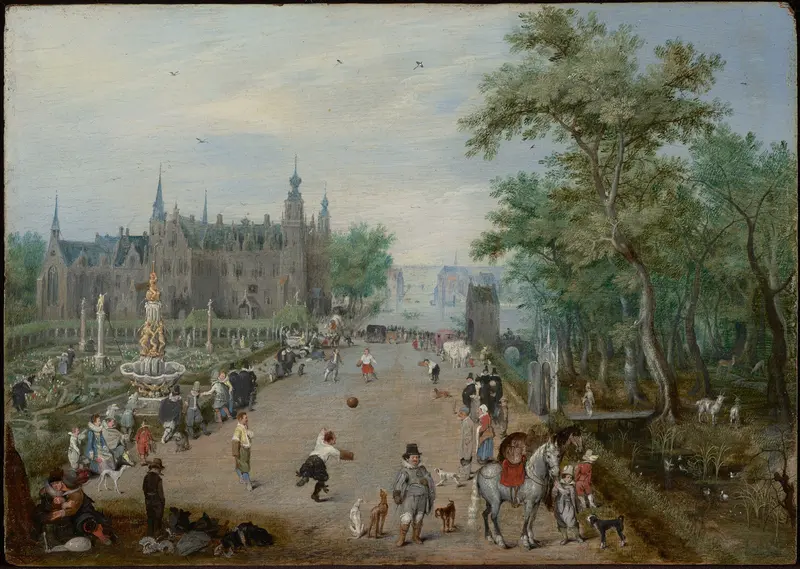
A Ball Game Before a Country Palace
Adriaen van de Venne
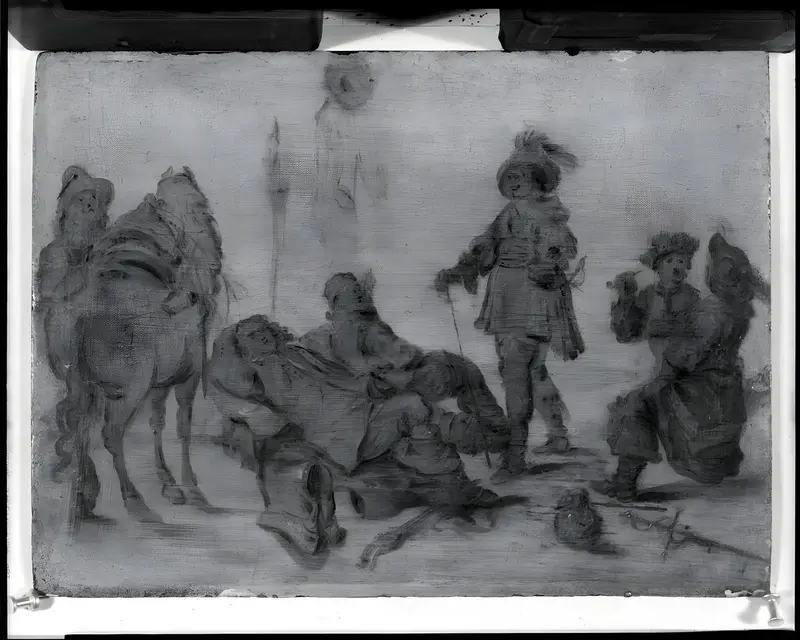
Group of Men and Horse
Adriaen van de Venne
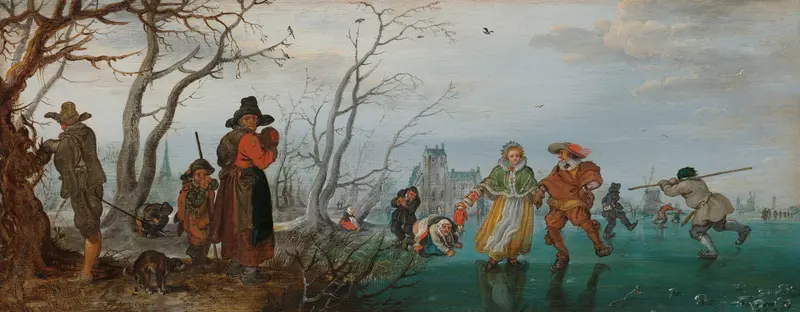
Winter
Adriaen van de Venne
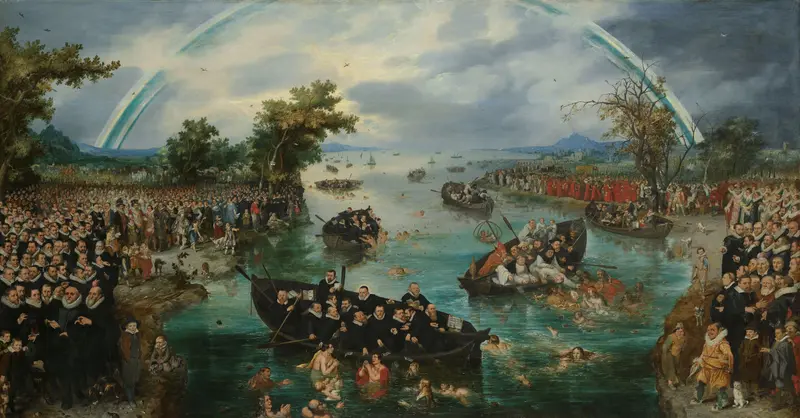
Fishing for Souls
Adriaen van de Venne
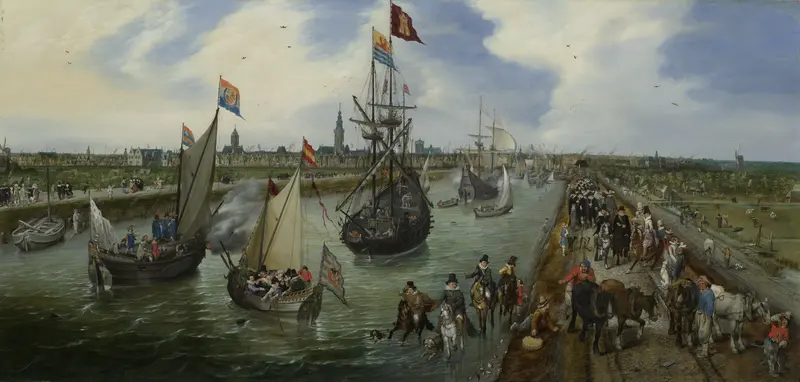
The Departure of a Dignitary from Middelburg
Adriaen van de Venne
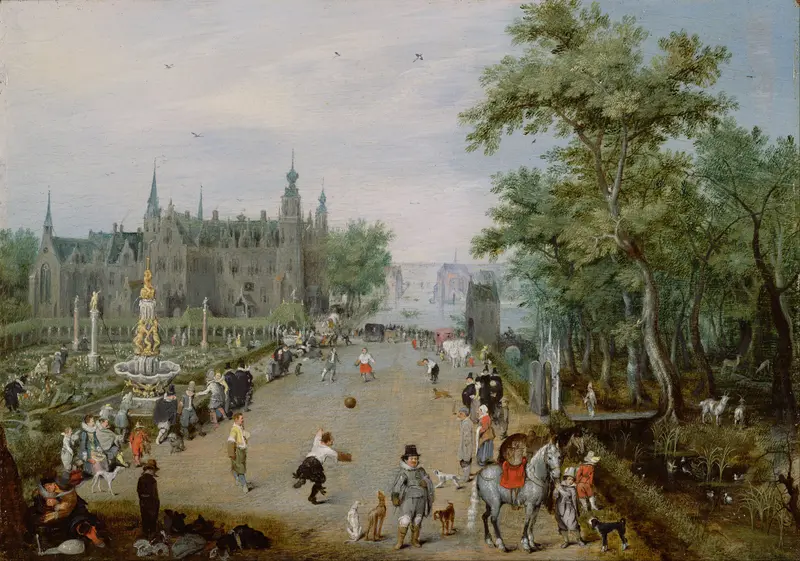
A Jeu de Paume Before a Country Palace
Adriaen van de Venne





