
Winter — History & Facts
What first catches the eye in Winter by Adriaen van de Venne is not the elegance of the skaters, but the earthy honesty of the scene’s left edge—a group of figures relieving themselves against bare winter trees, while a dog squats in the foreground. The painter sets up a vivid contrast: the comic and the refined, the natural and the staged, all sharing the same brittle landscape. The eye is drawn from these rough amusements to the gleaming ice, where couples in bright dress skate hand-in-hand, their costumes catching the cold light.
The ice itself becomes a stage, reflecting not only the figures but the social spectrum of a Dutch winter’s day, from the bundled poor to the fashionably attired. In the distance, windmills and gabled buildings root the scene in the familiar rhythms of the Dutch countryside, while leafless trees arch overhead, their branches like veins across a pale sky. This painting, created in 1625 and now in the Rijksmuseum, belongs to a celebrated tradition of seasonal imagery in the Dutch Golden Age. Such works were often painted for prosperous burghers, eager to decorate their homes with reminders of nature’s cycles and the pleasures—and realities—of daily life.
Adriaen van de Venne was known for his sharp, sometimes satirical eye, and here he weaves humor and observation into a tapestry that is both entertaining and revealing. The inclusion of bodily functions alongside genteel skating is no accident: it roots the scene in the everyday, reminding viewers that winter brings both hardship and delight. As you look again, notice how the painter’s wit and detail invite you to linger, searching for more stories hidden in the frost.
More Artworks by Adriaen van de Venne

Merry Company in an Arbor
Adriaen van de Venne
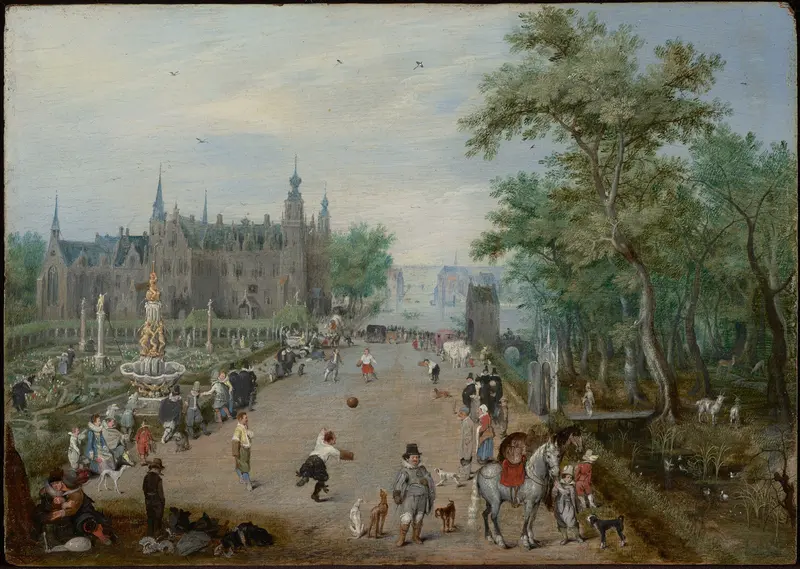
A Ball Game Before a Country Palace
Adriaen van de Venne
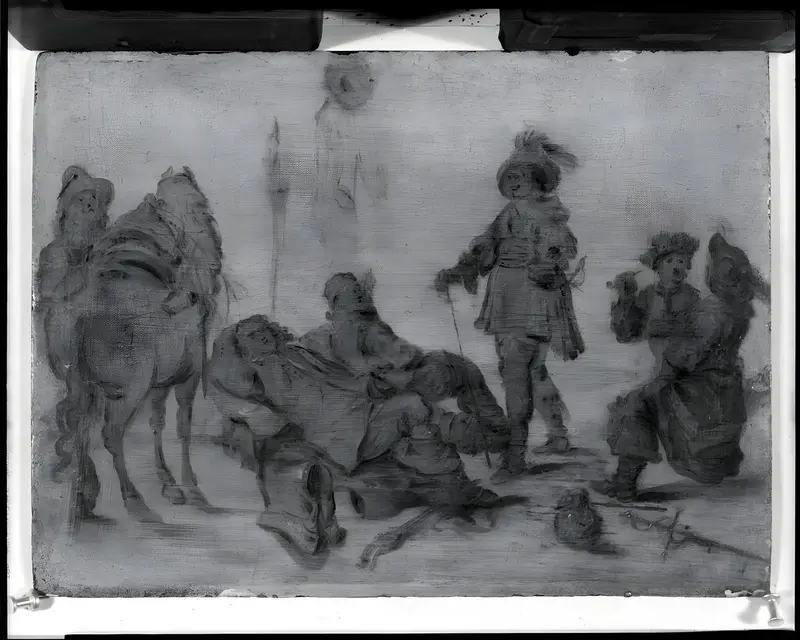
Group of Men and Horse
Adriaen van de Venne

Stadtholder Prince Maurice Lying in State
Adriaen van de Venne
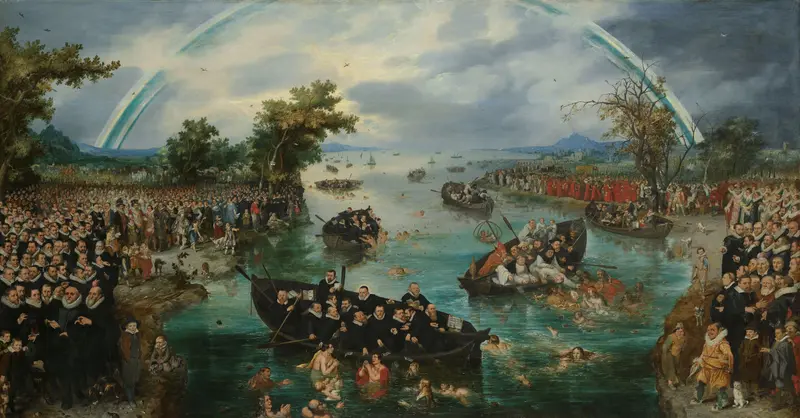
Fishing for Souls
Adriaen van de Venne
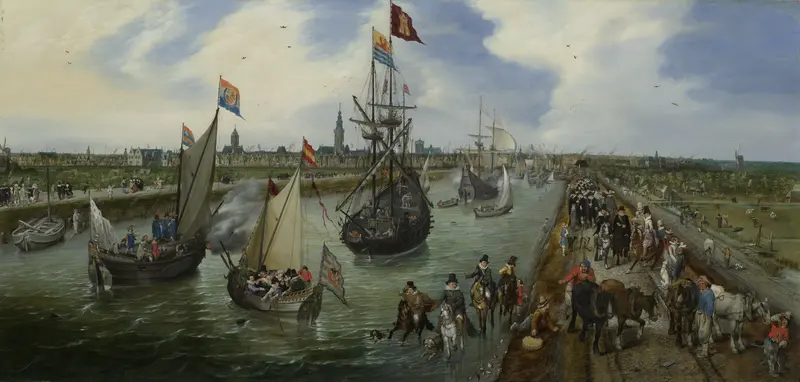
The Departure of a Dignitary from Middelburg
Adriaen van de Venne
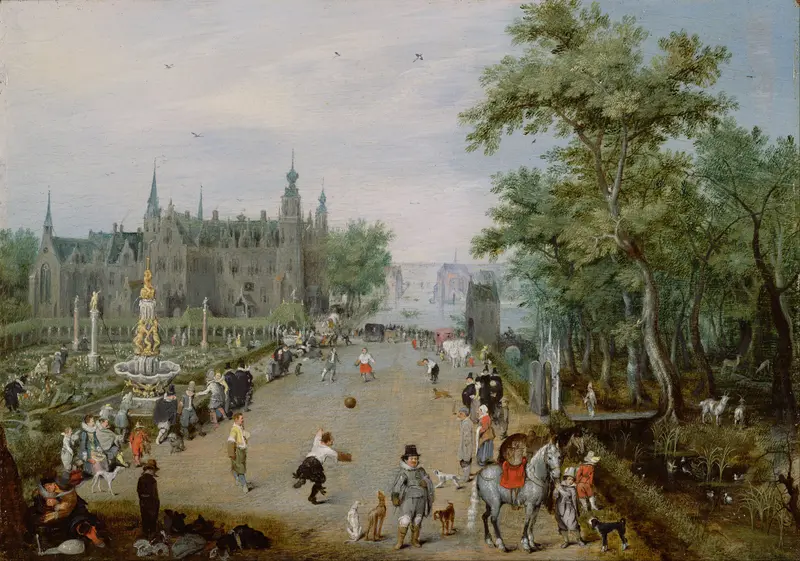
A Jeu de Paume Before a Country Palace
Adriaen van de Venne
More Genre Scene Art

Banquet of the Officers of the St George Civic Guard
Frans Hals

Rembrandt and Saskia in the Scene of the Prodigal Son
Rembrandt van Rijn

Bal du moulin de la Galette
Pierre-Auguste Renoir

Quadrille at the Moulin Rouge
Henri de Toulouse-Lautrec

A Burial at Ornans
Gustave Courbet

When Will You Marry?
Paul Gauguin