
A Jeu de Paume Before a Country Palace — History & Facts
What draws the eye first is not the grand palace or the formal gardens, but the lively throng of people caught in a moment of shared leisure. The scene is a tapestry of movement and interaction: at its heart, players are absorbed in a spirited game, their bodies twisted in motion, arms outstretched with the distinctive brassards strapped to their forearms for striking the ball. The fountain, crowned by a gilded figure, anchors the left, while the right dissolves into a shaded woodland where riders and dogs pause, as if the world of courtly play and the world of nature are meeting at the edge of the canvas.
The palette is cool and clear, the sky a pale wash that lets the intricate architecture and the bustle below command the stage. Every gesture, every grouping, is a clue to the social rituals and pleasures of the early seventeenth century. Painted in 1614 by Adriaen van de Venne, this work belongs to a tradition of Dutch and Flemish genre painting that delighted in capturing the pageantry of daily life and festivity. Despite its title, the source confirms the game played here is not the famed jeu de paume, but rather a "jeu de Ballon avec Brassard," a detail that hints at the evolving tastes in sport and recreation among the elite.
Such scenes were often commissioned to celebrate prosperity and order, or to display the harmonious coexistence of classes and activities under the watchful gaze of a noble estate. Little is recorded about the specific journey of this painting, now found in the digital collection of Google Arts & Culture, but its subject and style speak to a world in transition—where leisure, architecture, and landscape are woven together for the viewer’s delight. The longer you look, the more stories unfold from every corner of the canvas.
More Artworks by Adriaen van de Venne

Merry Company in an Arbor
Adriaen van de Venne
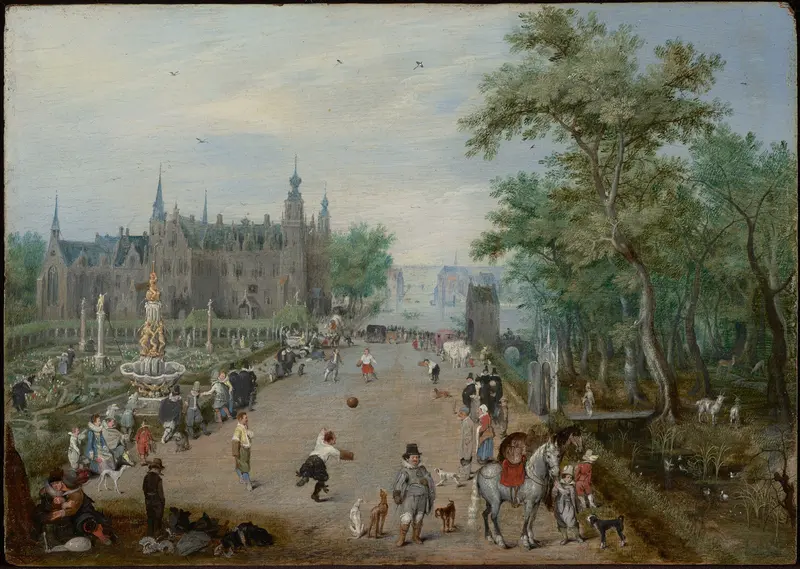
A Ball Game Before a Country Palace
Adriaen van de Venne
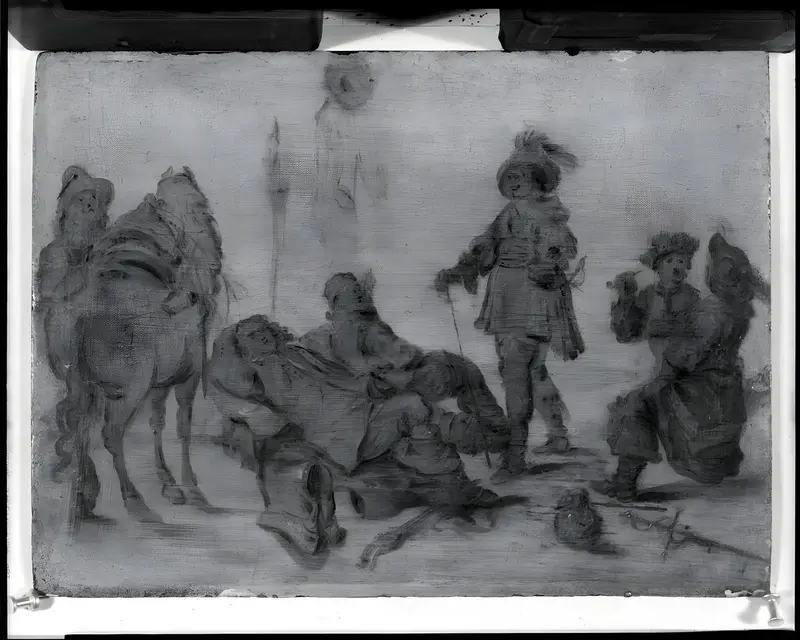
Group of Men and Horse
Adriaen van de Venne
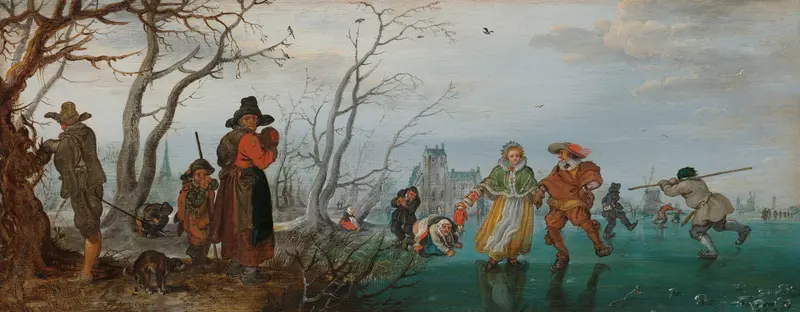
Winter
Adriaen van de Venne

Stadtholder Prince Maurice Lying in State
Adriaen van de Venne
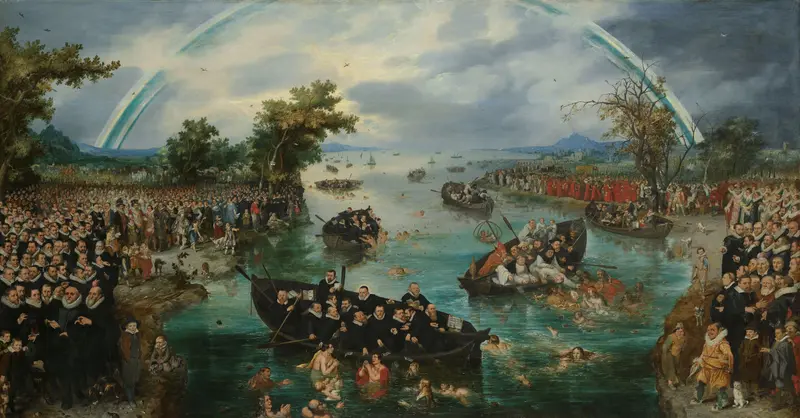
Fishing for Souls
Adriaen van de Venne
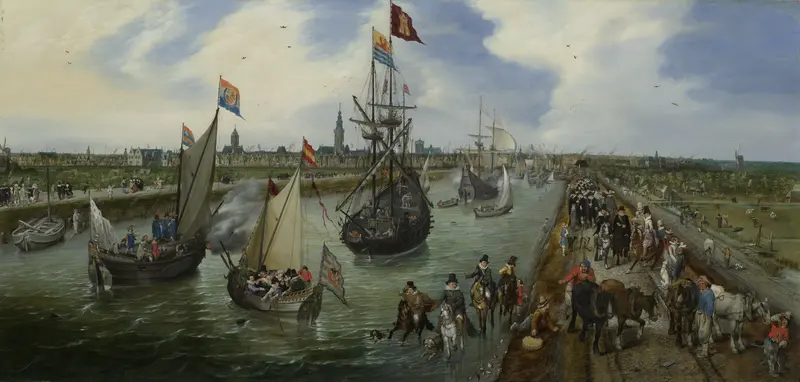
The Departure of a Dignitary from Middelburg
Adriaen van de Venne
More Genre Scene Art

Banquet of the Officers of the St George Civic Guard
Frans Hals

Rembrandt and Saskia in the Scene of the Prodigal Son
Rembrandt van Rijn

Bal du moulin de la Galette
Pierre-Auguste Renoir

Quadrille at the Moulin Rouge
Henri de Toulouse-Lautrec

A Burial at Ornans
Gustave Courbet

When Will You Marry?
Paul Gauguin