
Stallburggasse — History & Facts
Could beauty survive in a century of chaos? A question that lingers in the shadows of human experience and art, echoing through the ages as artists grapple with the remnants of violence that history leaves behind. Look to the left at the cobbled street, where the cool, muted colors of the buildings seem to sigh under the weight of time. The warm glow of sunlight creeps in, illuminating fragments of life—a door ajar, a window half-shuttered—each detail resonating with a quiet resilience. Notice how the brushstrokes blend seamlessly, creating a textured surface that invites you to explore the depths and nuances of the scene.
The artist’s deliberate arrangement of architecture gives the viewer a sense of containment, as though the world outside is both present and distant. Yet, amidst this enchanting façade lies an underlying tension, a juxtaposition of serenity and the potential for violence. The empty street, while peaceful, whispers of untold stories and the human scars left by conflict. Each building stands sentinel, a reminder of the tumultuous forces that have shaped its existence, suggesting that even beauty is not untouched by chaos.
The delicate balance of light and shadow serves as a metaphor for hope and despair, flickering like the last embers of a fading fire. Ernst Graner created this evocative piece during a time when art was beginning to reflect the complexities of modern life. His surroundings in the late 19th century were marked by rapid industrialization and social upheaval. In this environment, where the impact of war and societal change was palpable, the artist sought to portray the beauty of urban spaces, revealing the resilience of life despite the shadows that loomed over humanity.
More Artworks by Ernst Graner
Browse all →
The Departure of Emperor Francis Joseph, near the Schweizertor in Hofburg residence
Ernst Graner

Old Albrechtsplatz (today Albertinaplatz) in Vienna with the Philipphof and the Mozart monument
Ernst Graner
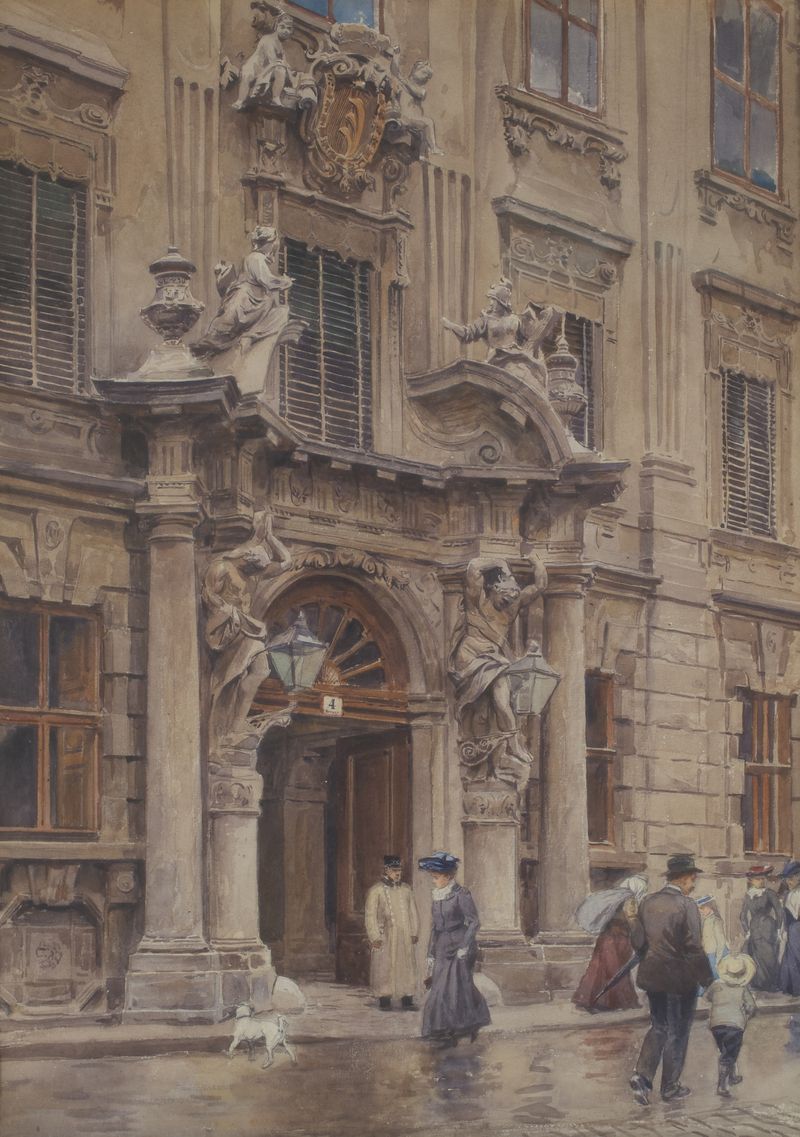
Das Portal Des Palais Kinsky
Ernst Graner
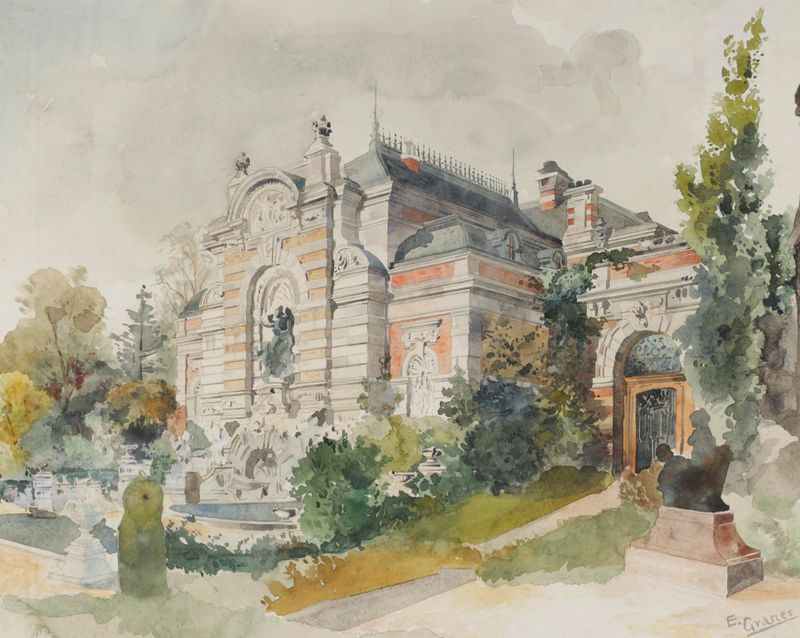
Villa in einem Park
Ernst Graner

Karlskirche
Ernst Graner

Kaiser Franz Joseph überquert den Naschmarkt
Ernst Graner

Palais des Prinzen Eugen in der Himmelpfortgasse
Ernst Graner

Die Schwendergasse In Wien Mit Schwenders Colosseum
Ernst Graner
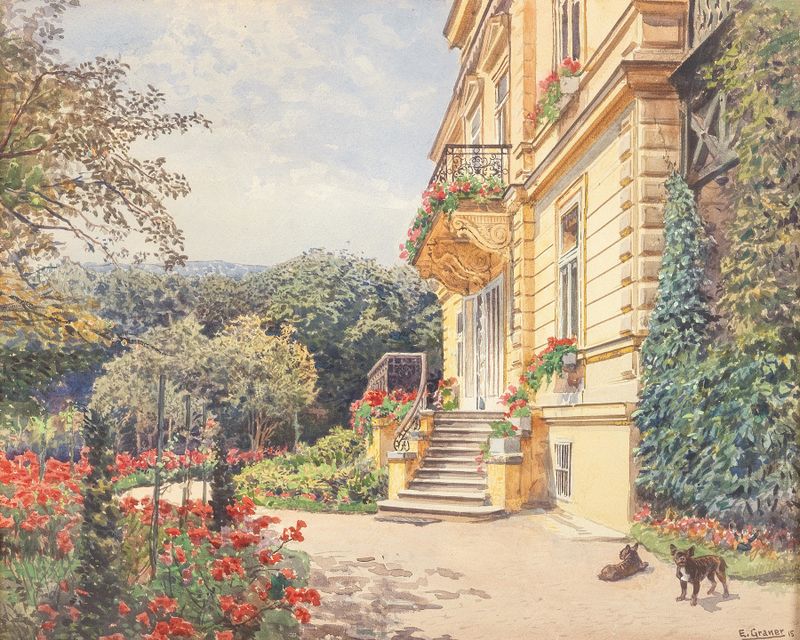
Villa in gepflegtem Garten
Ernst Graner
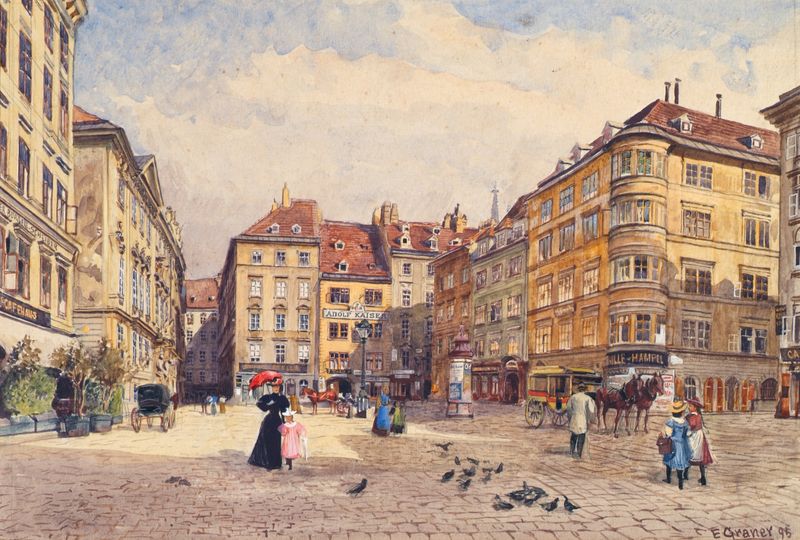
Der Judenplatz In Wien
Ernst Graner





