Steamer Harlingen — History & Facts
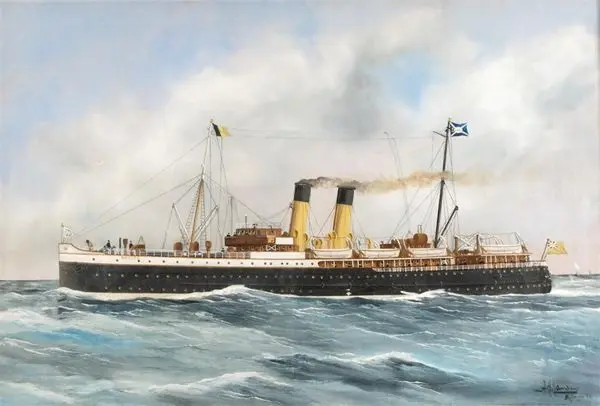
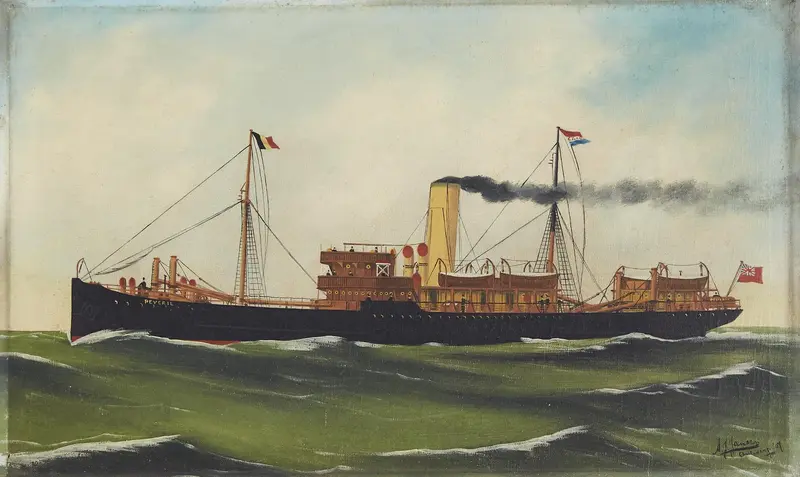
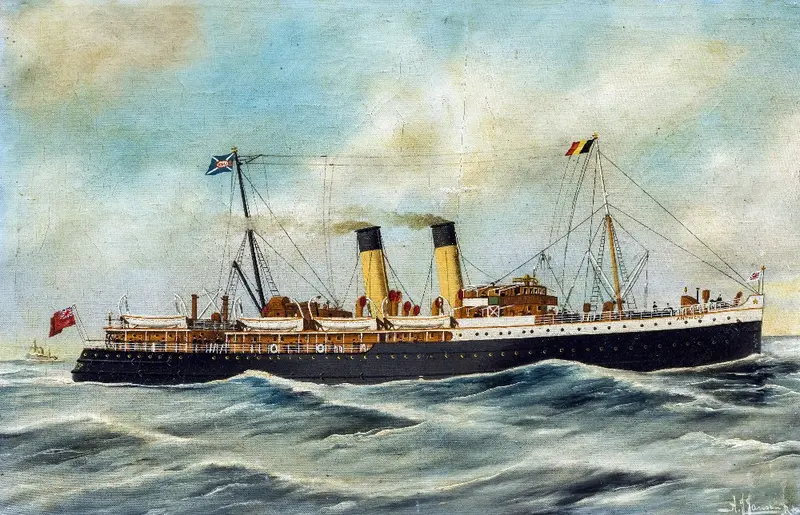
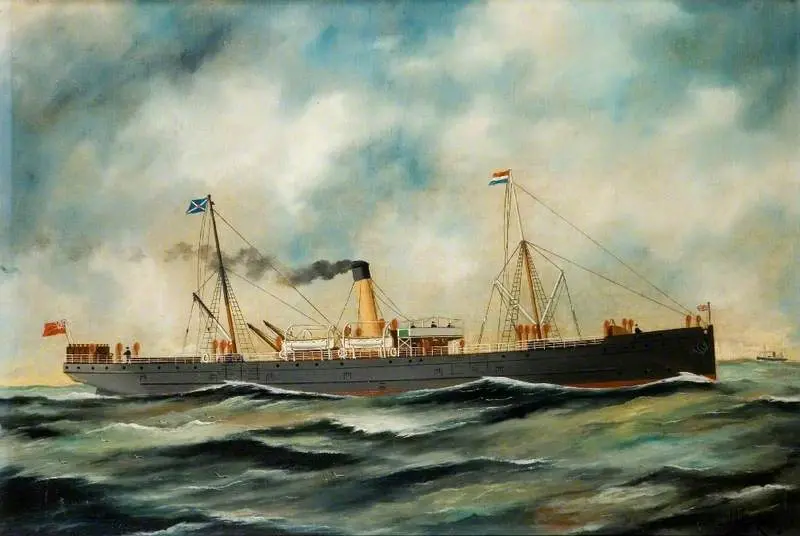
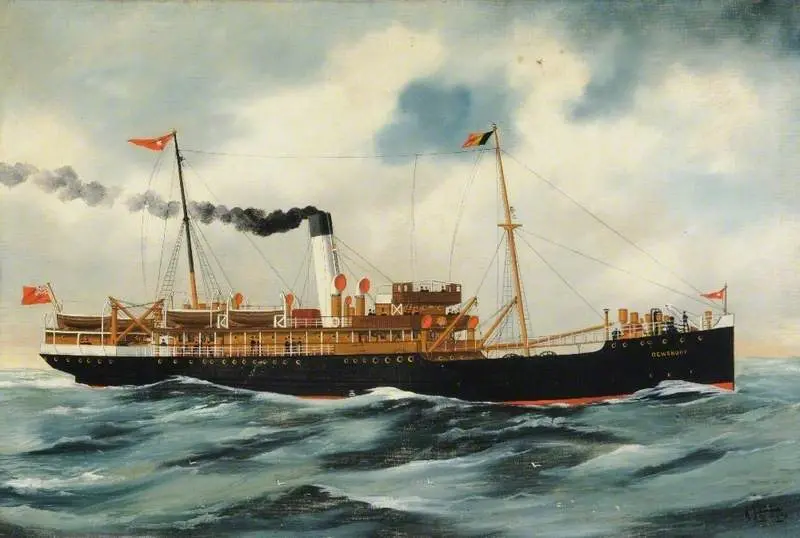
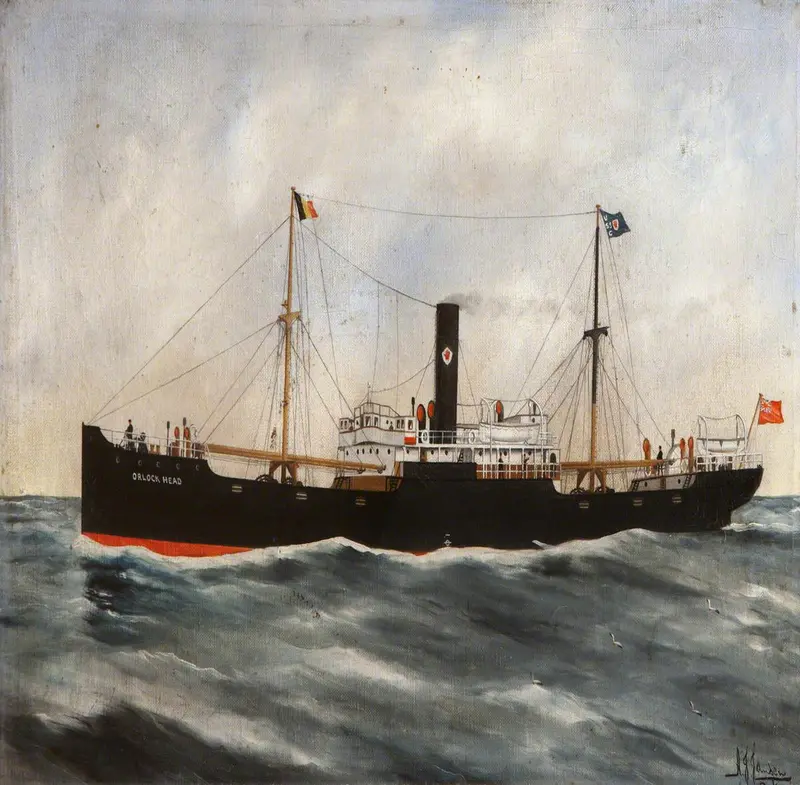
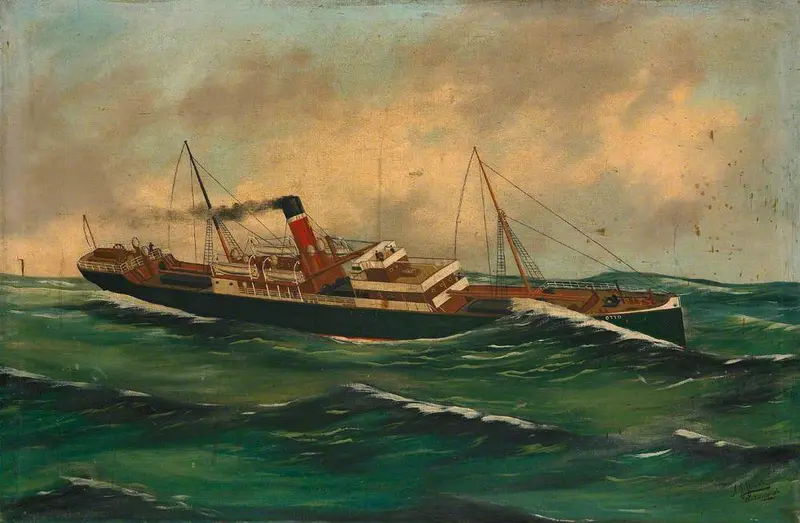
What first catches the eye in Steamer Harlingen by A. J. Jansen is the crisp silhouette of the steamship itself, slicing through a restless green sea under a sky heavy with weather.
The ship’s hull, painted in deep blacks and ochres, stands out against the churning water, while its flags—each one meticulously rendered—signal its identity and allegiance. The artist gives the vessel an almost heroic bearing, with the low horizon granting the steamer a commanding presence and the angled rigging drawing the viewer’s gaze upward to the fluttering banners. Smoke pours steadily from the funnel, a dark thread against the pale sky, marking the ship’s progress and the industrial power it represents. Painted in 1910, this work belongs to a period when steamships were the lifeblood of European trade and migration, and portraits of ships like this were often commissioned by shipping companies or proud captains to commemorate a launch or a successful voyage.
Marine painting was a thriving genre, capturing the technological advances and ambitions of the early twentieth century, when the world’s oceans were highways of commerce and connection. Little is recorded about this particular painting’s journey or its painter, but its presence in a modern collection speaks to the enduring fascination with the age of steam and the artists who chronicled it. The careful attention to the ship’s structure and the mood of the open sea invite the viewer to imagine the world of 1910, poised between tradition and the accelerating pace of modernity—an invitation to linger over every detail.