
Steigerpoort te Leerdam — History & Facts
What if silence could speak through light? In the tranquil interplay of shadow and illumination, a conversation unfolds—a dialogue between the stillness of a moment and the breath of nature. Look to the left, where the graceful arch of the gate beckons, its weathered stones imbued with a soft, golden hue. The artist’s brushstrokes create a gentle texture that conveys both age and serenity, drawing the eye toward the shimmering water that mirrors the sky’s pastel blues and pinks. Notice how the wisps of clouds appear to dance above, their reflections rippling subtly upon the surface below, inviting contemplation and a sense of calm. In this piece, the tension between the man-made and the natural becomes palpable.
The sturdy gate stands resolute against the fluidity of the water, symbolizing humanity's attempts to contain nature while simultaneously surrendering to its beauty. Weissenbruch captures an ephemeral moment, where the light transforms mundane objects into something transcendent, sparking a sense of awe that resonates deeply within the viewer. Created during the 19th century, Steigerpoort te Leerdam reflects Weissenbruch's commitment to capturing the Dutch landscape at a time when Romanticism was shifting into Realism. Living in The Hague, he was influenced by the rise of plein air painting, which emphasized direct observation of nature.
This period marked a significant evolution in the art world, as artists sought to express both the sublime and the everyday, and Weissenbruch’s work stands as a testament to these changing tides.
More Artworks by Jan Weissenbruch
Browse all →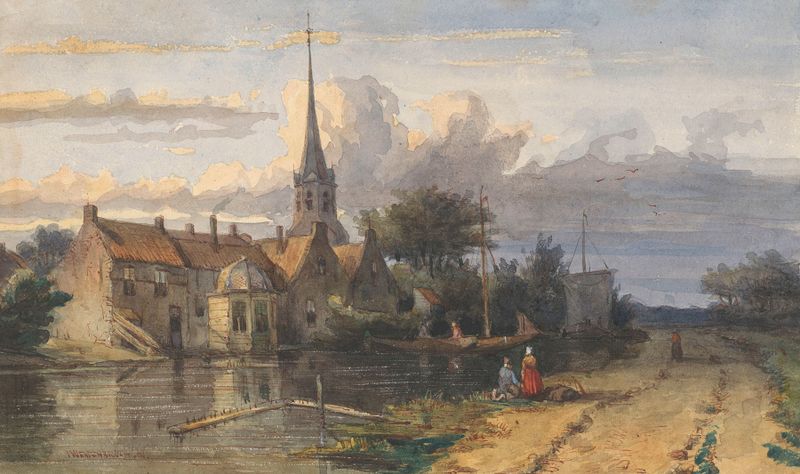
Gezicht op een dorp aan een vaart
Jan Weissenbruch
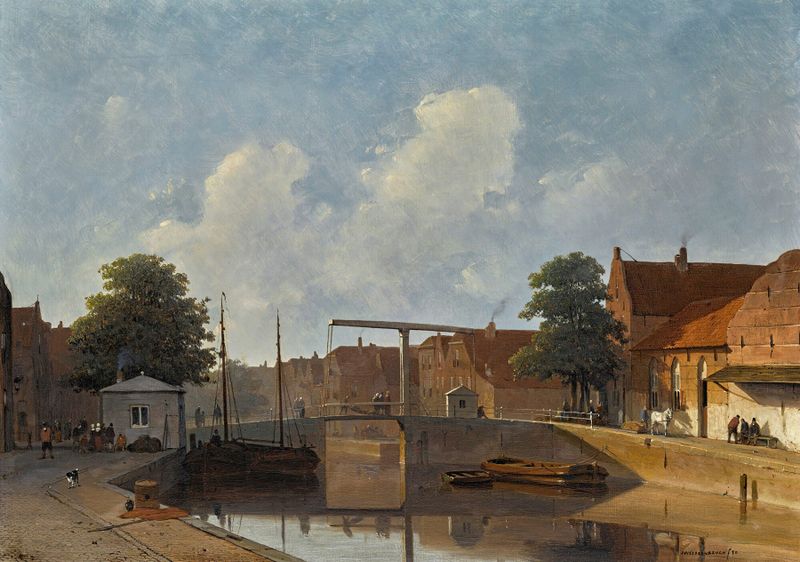
A Dutch Canal
Jan Weissenbruch
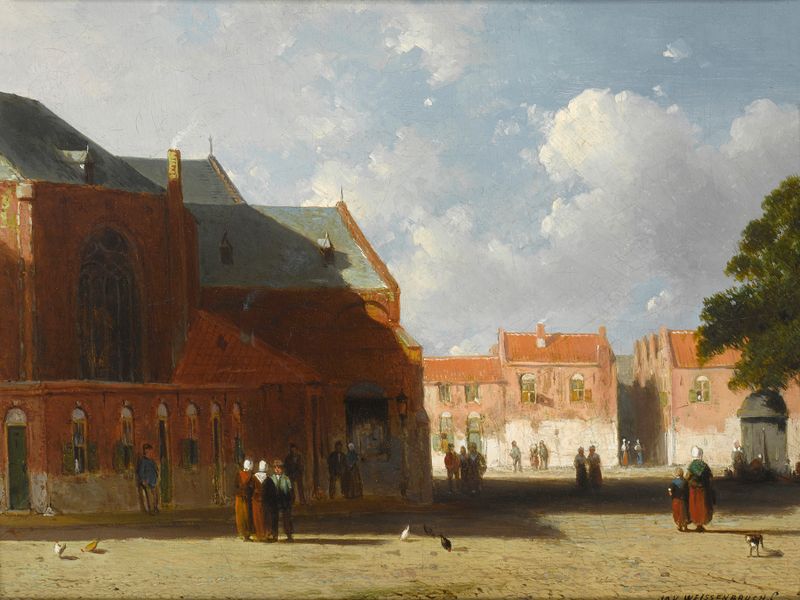
A view of a Dutch town
Jan Weissenbruch
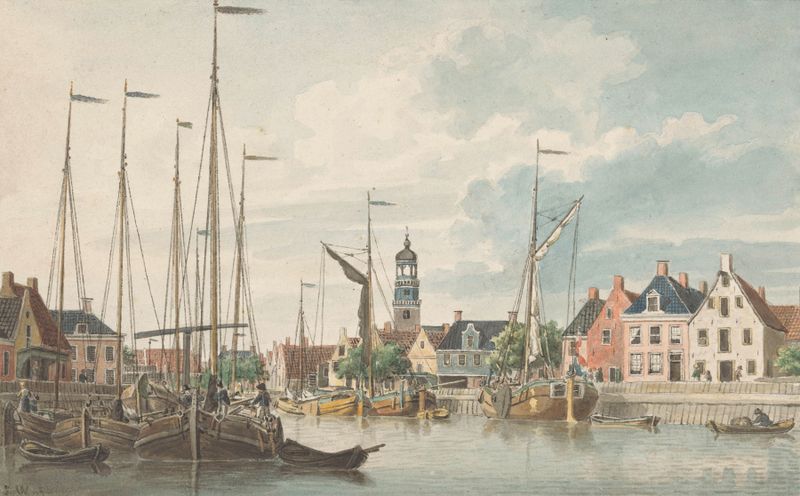
Gezicht te De Lemmer
Jan Weissenbruch
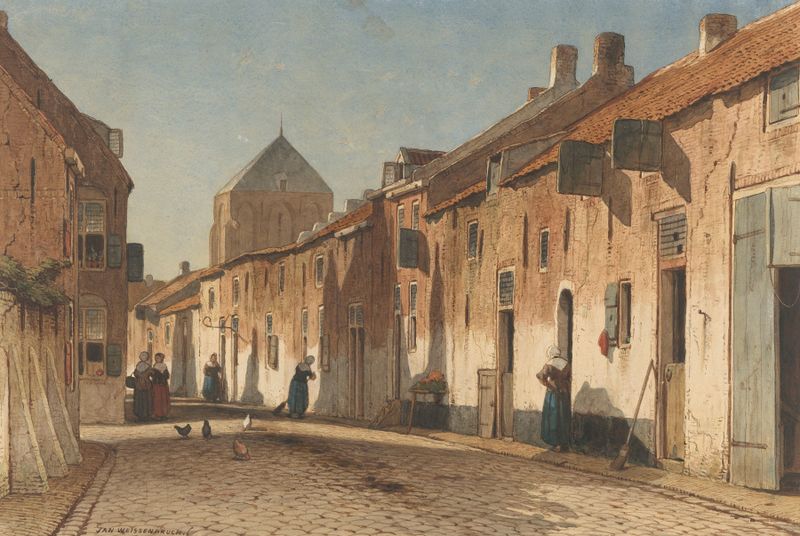
Dorpsstraat
Jan Weissenbruch
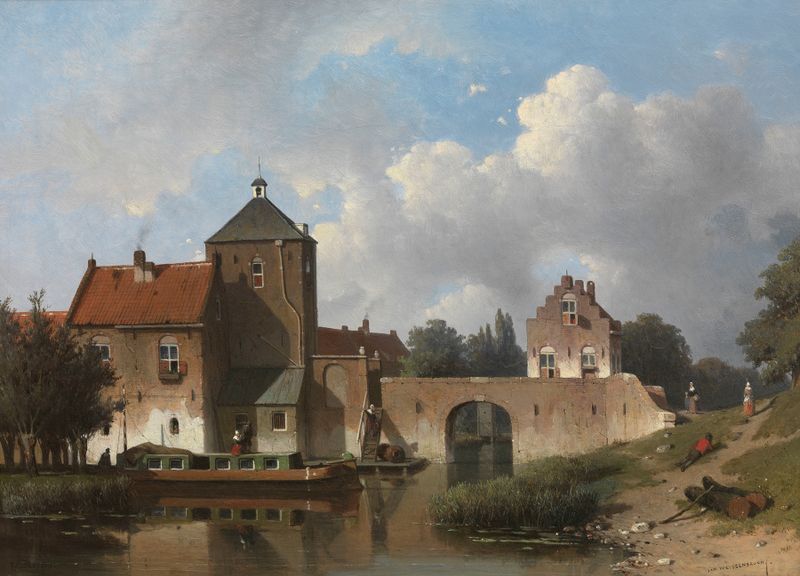
The IJsselpoort at IJsselstein
Jan Weissenbruch
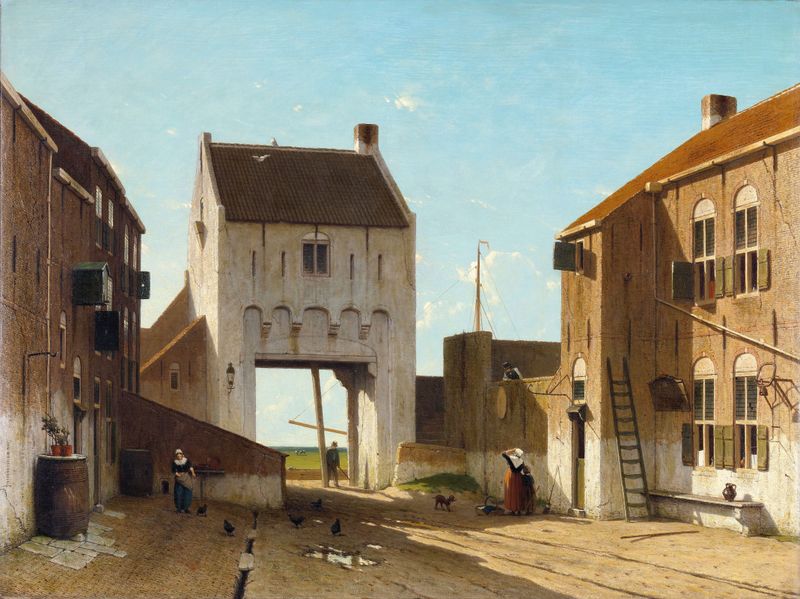
A Town Gate in Leerdam
Jan Weissenbruch
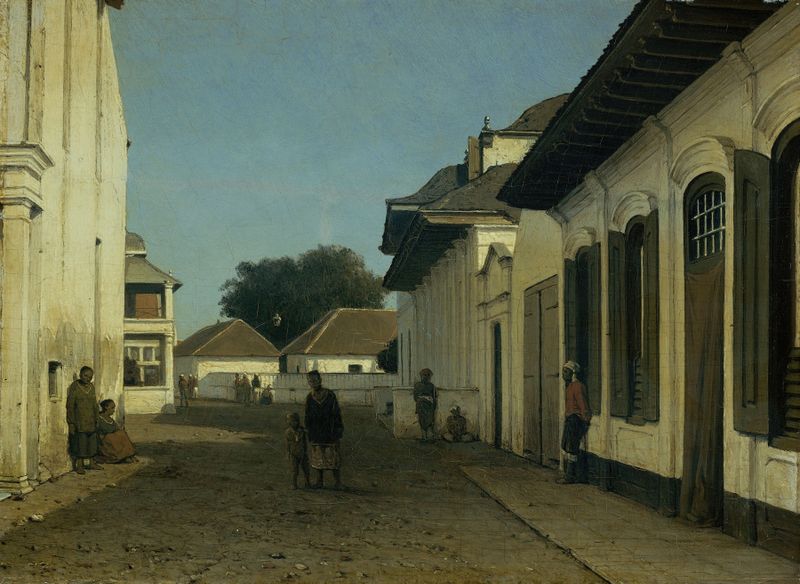
Een straat in het oude deel van Batavia
Jan Weissenbruch
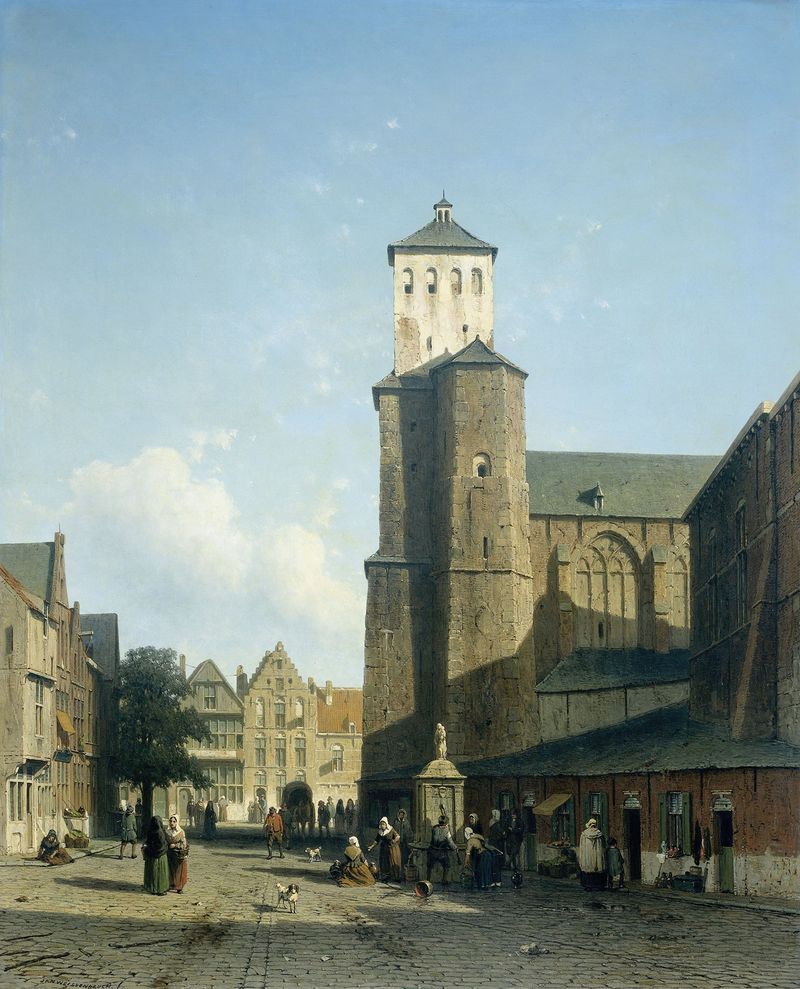
St Denis Church in Liège
Jan Weissenbruch
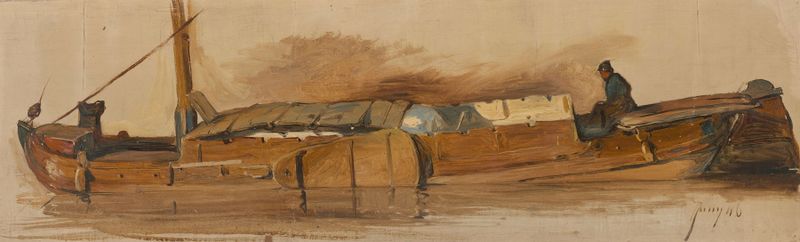
Lange schuit met schipper
Jan Weissenbruch
More Architecture Art
Browse all →
The statue of Liberty
Frédéric Auguste Bartholdi

View of Houses in Delft, Known as ‘The Little Street’
Johannes Vermeer

View of Houses in Delft, Known as ‘The Little Street’
Johannes Vermeer

The Cathedral in Rouen. The portal, Grey Weather
Claude Monet

The yellow house
Vincent van Gogh

The Church in Auvers-sur-Oise, View from the Chevet
Vincent van Gogh