
The IJsselpoort at IJsselstein — History & Facts
Could beauty survive in a century of chaos? A question that echoes in the tranquil yet haunting essence of The IJsselpoort at IJsselstein. Look to the foreground, where the meticulously rendered stone arch of the gate draws your eye with its rich textures and tones. The play of light across the water reflects the soft pastel hues of the sky, creating a shimmering path that invites the viewer into the scene. Pay attention to the delicate brushwork that captures the gentle ripples of the river, contrasting with the solid structure of the gate, which stands as a testament to endurance amid the fleeting moments of nature. Beneath the serene surface lies a deeper narrative of fear and uncertainty.
The looming gate, while beautiful, suggests barriers and protection, juxtaposed against the tranquil water that signifies fluidity and change. The architecture seems to whisper of history, of passage and the weight of time, hinting at a world that has seen both tranquility and turmoil. The soft, fading light also evokes a sense of vulnerability, as the day wanes—a reminder of the transient nature of beauty in the face of chaos. In 1852, Jan Weissenbruch painted this scene while navigating a period of artistic evolution in Europe.
The Netherlands was experiencing a resurgence of interest in landscapes, and Weissenbruch was at the forefront, creating works that harmonized realism with a poetic sensibility. His focus on the interplay of light and architecture reflects both his own artistic exploration and the broader shifts in society during a time marked by rapid change and uncertainty.
More Artworks by Jan Weissenbruch
Browse all →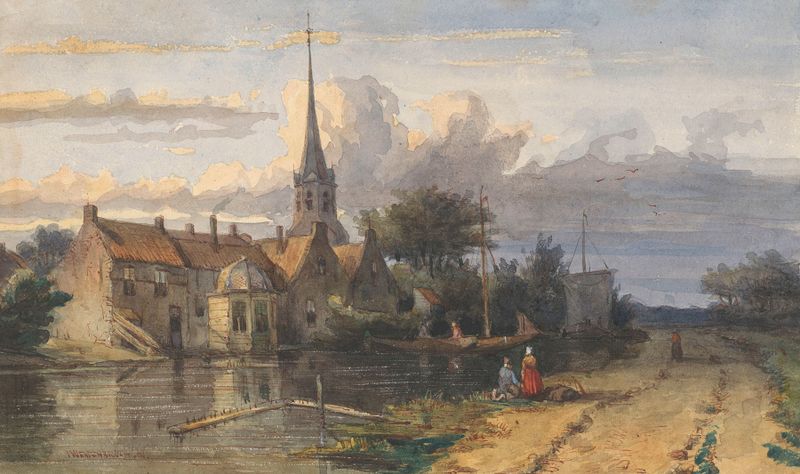
Gezicht op een dorp aan een vaart
Jan Weissenbruch
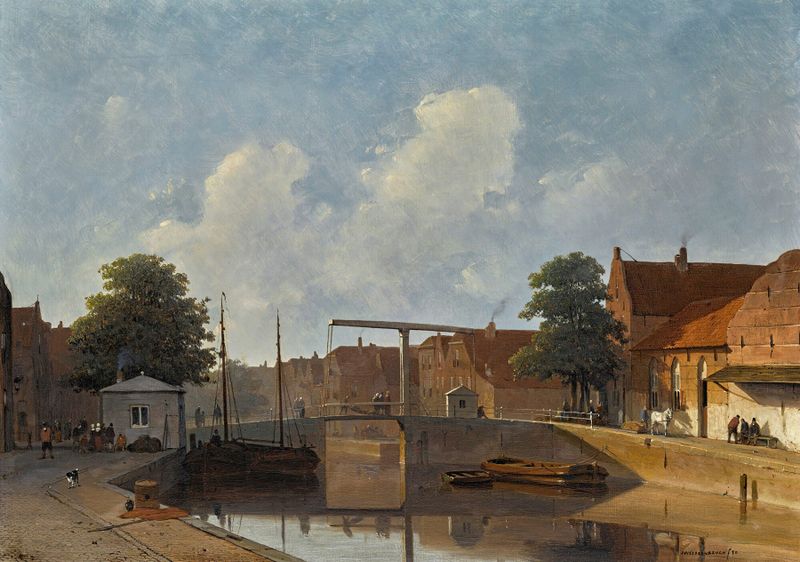
A Dutch Canal
Jan Weissenbruch
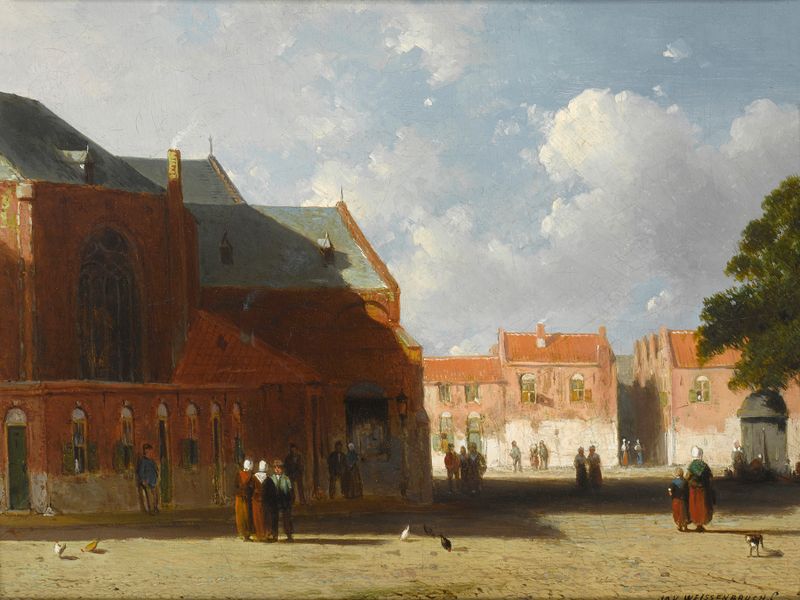
A view of a Dutch town
Jan Weissenbruch
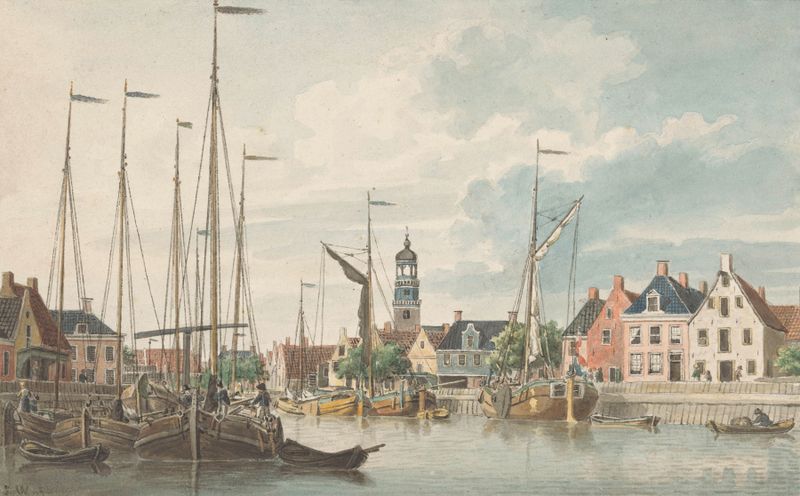
Gezicht te De Lemmer
Jan Weissenbruch
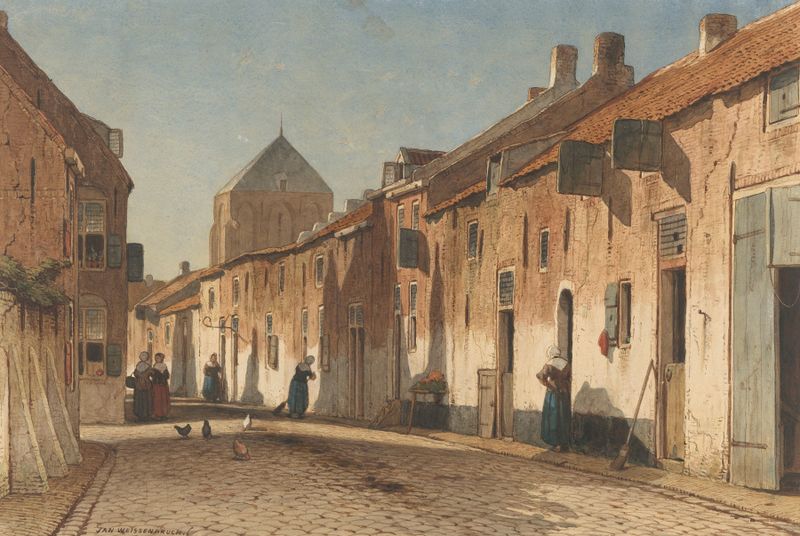
Dorpsstraat
Jan Weissenbruch
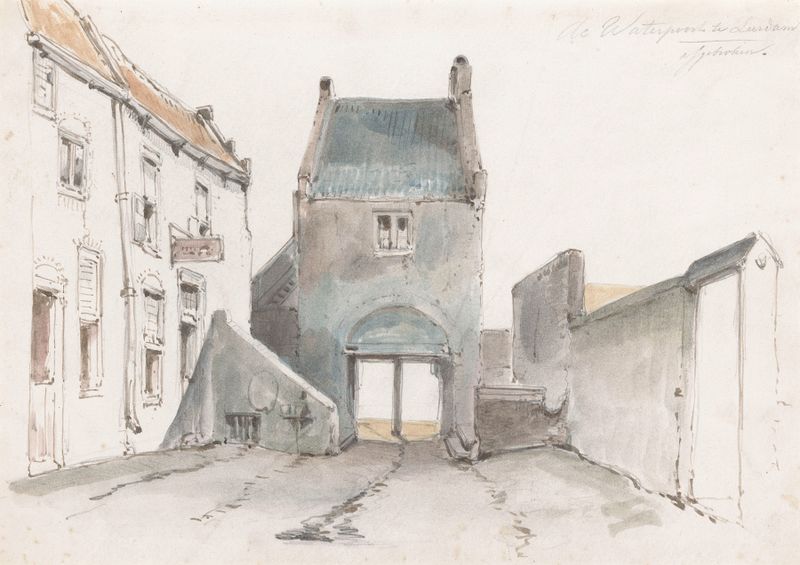
Steigerpoort te Leerdam
Jan Weissenbruch
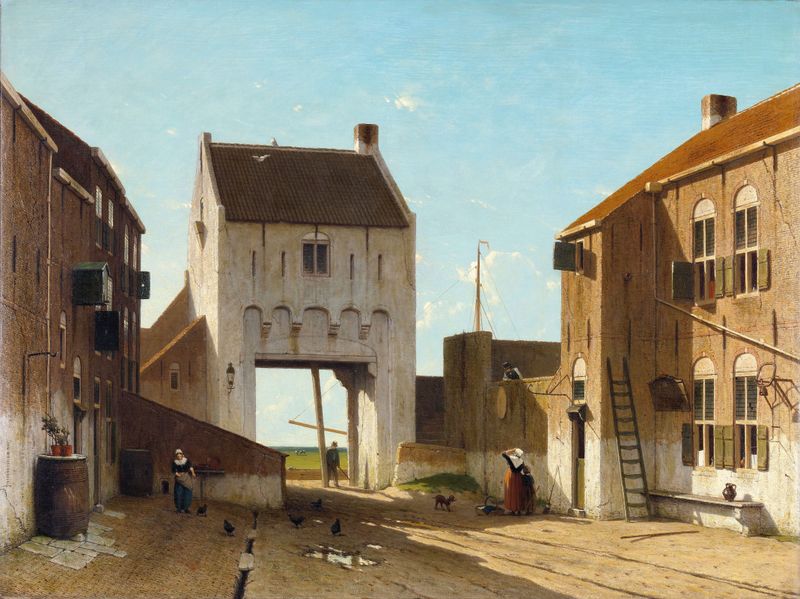
A Town Gate in Leerdam
Jan Weissenbruch
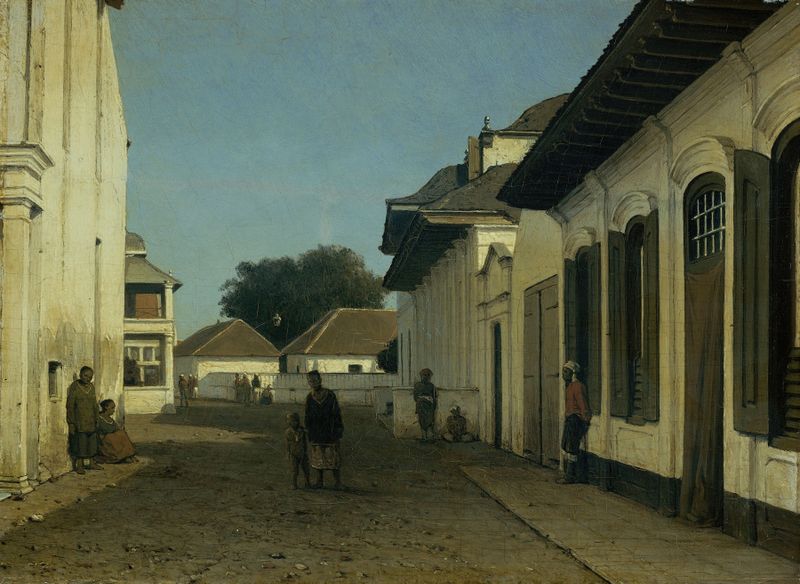
Een straat in het oude deel van Batavia
Jan Weissenbruch
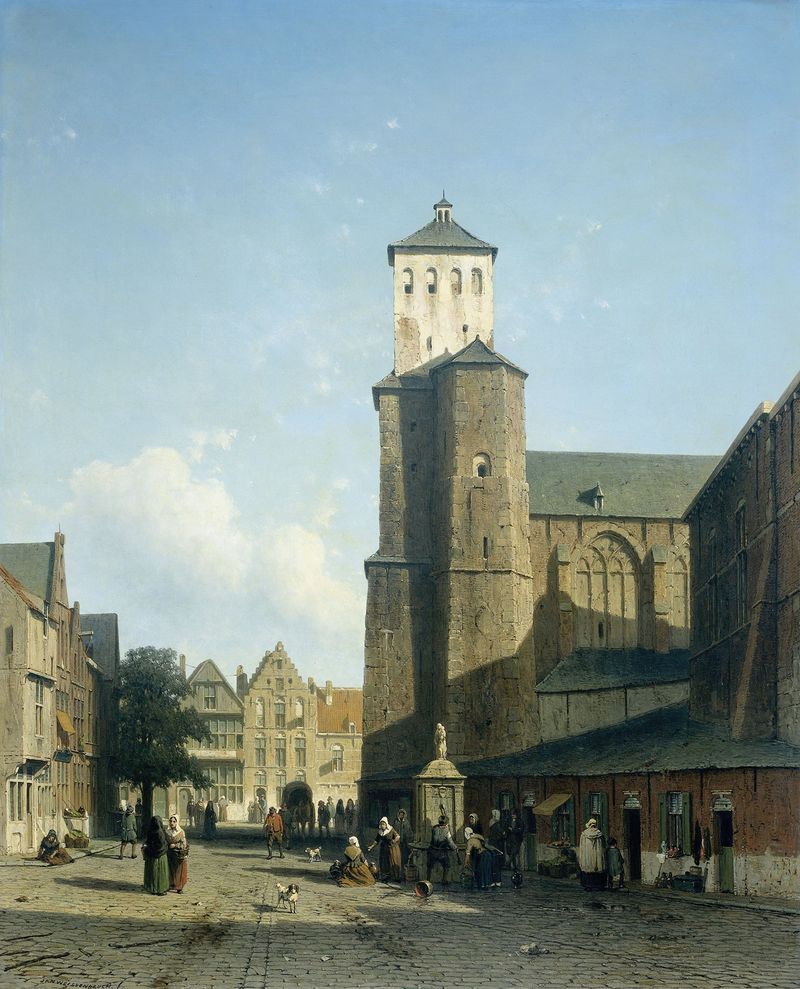
St Denis Church in Liège
Jan Weissenbruch
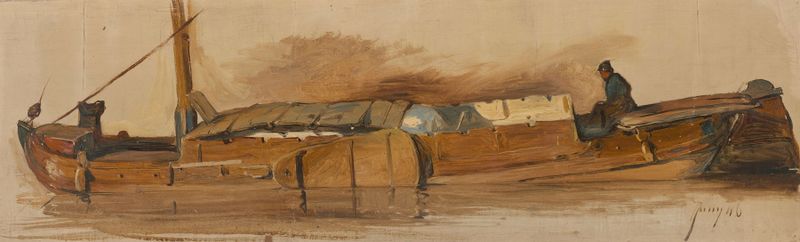
Lange schuit met schipper
Jan Weissenbruch





