
Een straat in het oude deel van Batavia — History & Facts
What secret hides in the quiet of the canvas? In the hushed spaces of urban life, echoes of history don't just linger; they envelop the viewer in a shroud of melancholy. Look to the left at the narrow cobblestone street, where the shadows stretch long and delicate, hinting at the fading light of day. Notice how the muted palette of earthy browns and soft blues captures a sense of nostalgia, while the soft brushwork conjures the textures of weathered buildings. The composition draws the eye down the winding pathway, inviting you to explore the secrets nestled within the architecture, as if the very walls hold stories waiting to be whispered. Yet, there exists a profound contrast between the vibrant life once thrumming through this street and the stillness that now prevails.
The figures, seemingly lost in their own thoughts, evoke a sense of solitude amid the gentle reminder of community life. Each brick, each shadow carries a weight of time, suggesting that joy and sorrow coexist in these forgotten places, forever intertwined in the fabric of memory. Jan Weissenbruch painted this evocative scene of Batavia in the latter half of the 19th century, during a period marked by the rise of Dutch colonial power and an increasing fascination with the exoticism of the East. Exploring both landscapes and the human experience, his works often reflected the interplay of nostalgia and reality, capturing fleeting moments in a rapidly changing world.
More Artworks by Jan Weissenbruch
Browse all →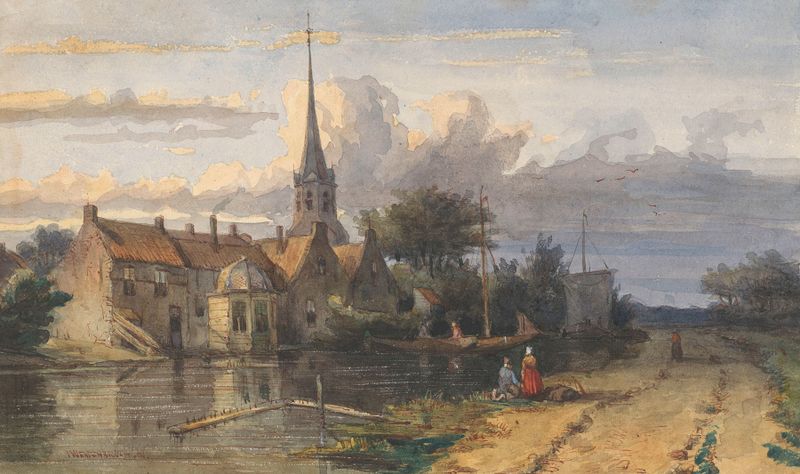
Gezicht op een dorp aan een vaart
Jan Weissenbruch
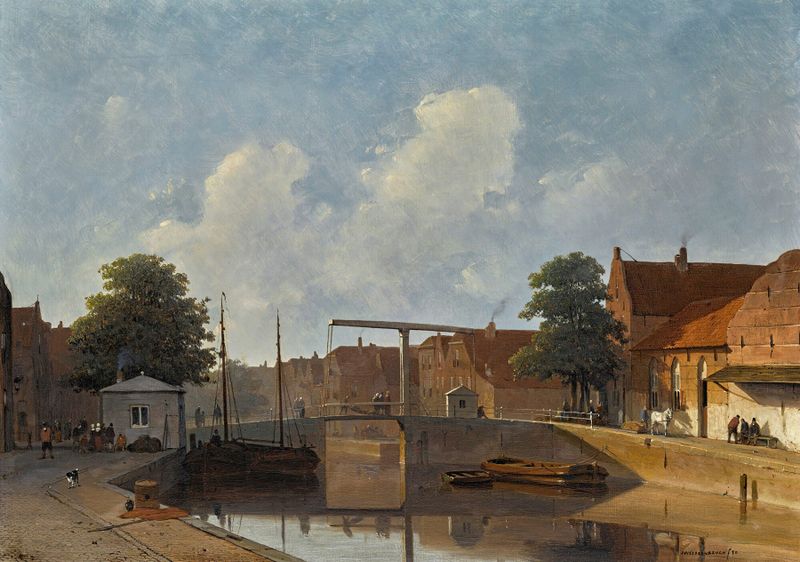
A Dutch Canal
Jan Weissenbruch
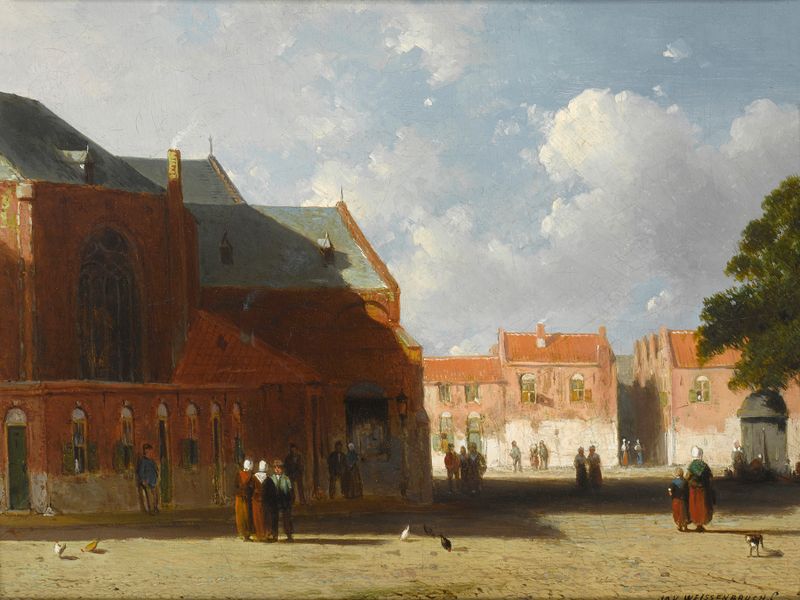
A view of a Dutch town
Jan Weissenbruch
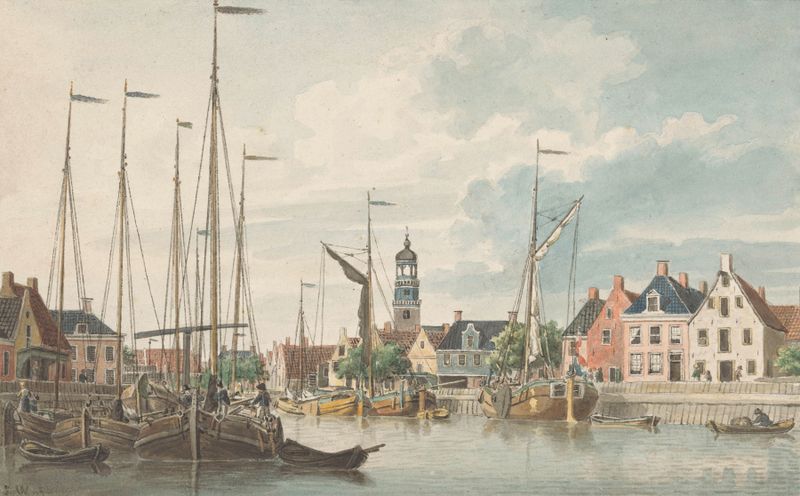
Gezicht te De Lemmer
Jan Weissenbruch
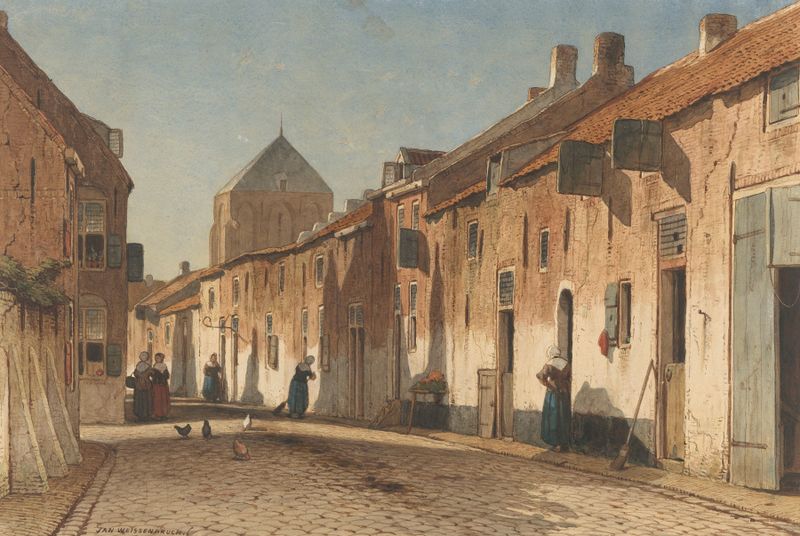
Dorpsstraat
Jan Weissenbruch
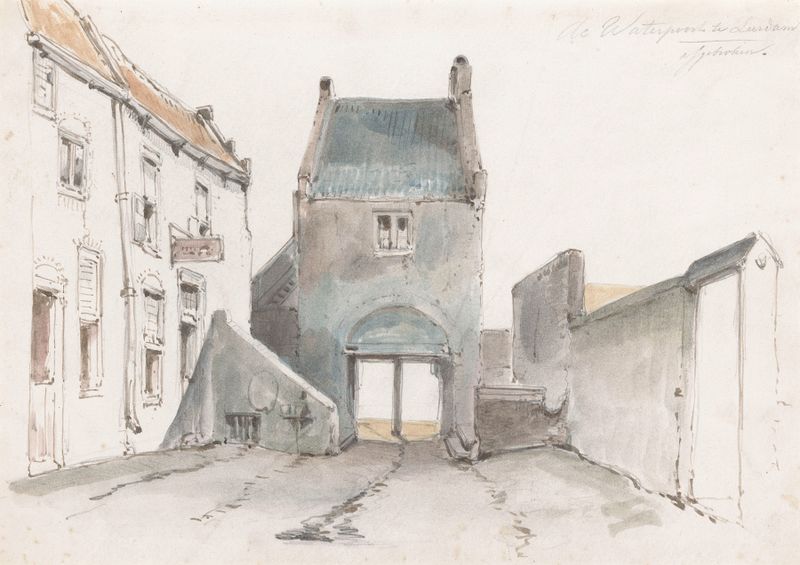
Steigerpoort te Leerdam
Jan Weissenbruch
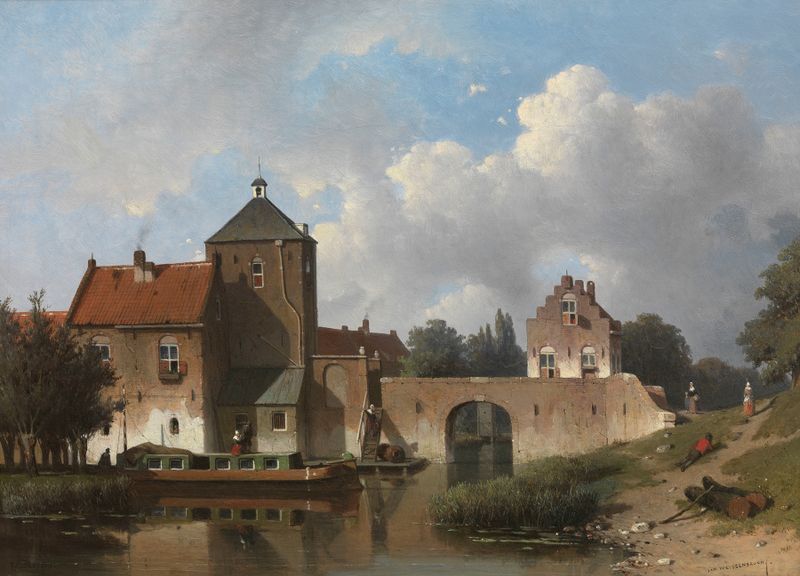
The IJsselpoort at IJsselstein
Jan Weissenbruch
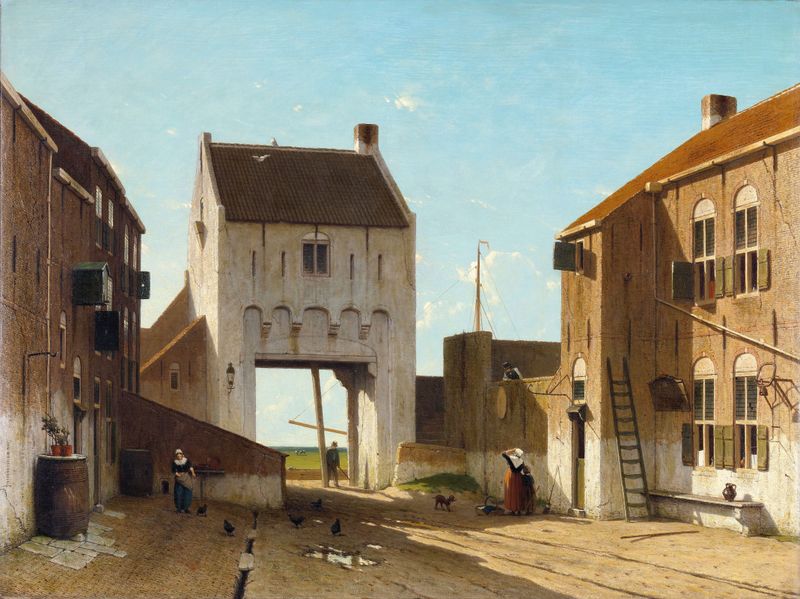
A Town Gate in Leerdam
Jan Weissenbruch
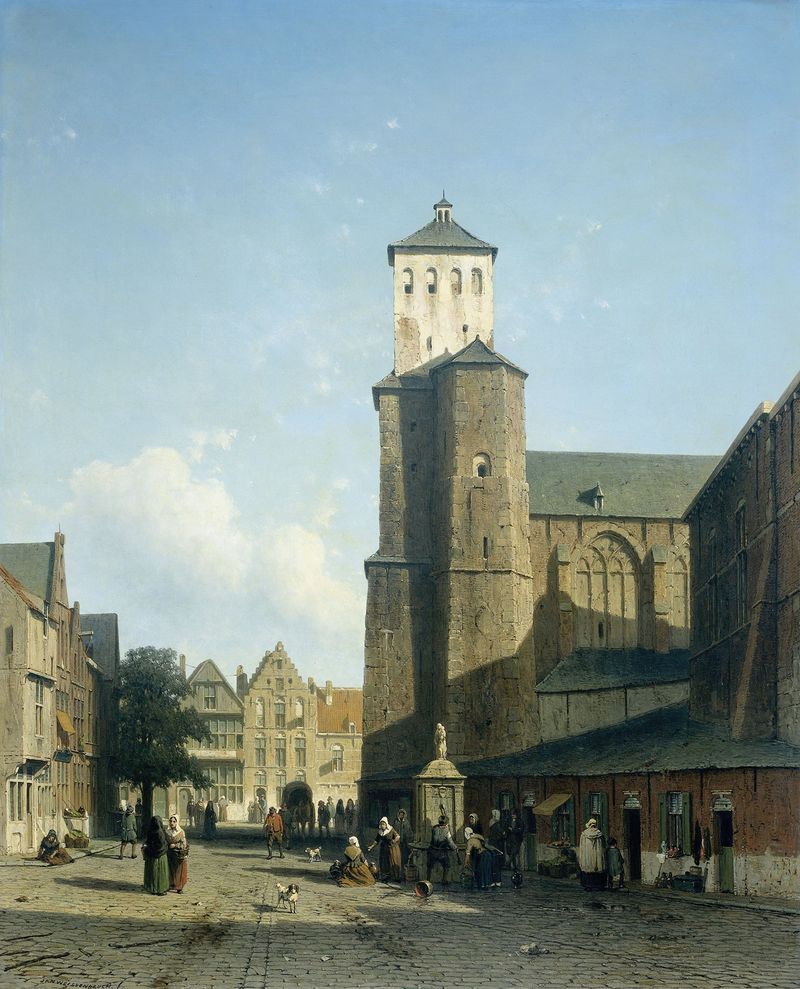
St Denis Church in Liège
Jan Weissenbruch
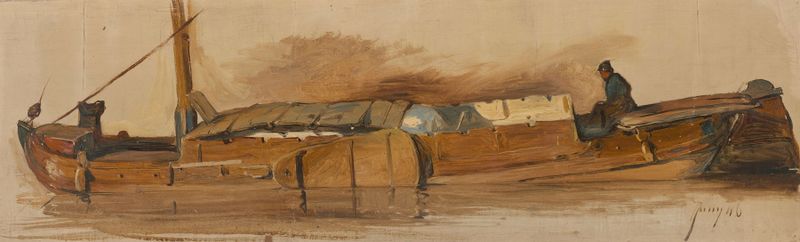
Lange schuit met schipper
Jan Weissenbruch





