
Lange schuit met schipper — History & Facts
Who listens when art speaks of silence? In the stillness of Lange schuit met schipper, shadows and light intertwine, echoing the profound nuances of loss. Look to the center of the canvas, where a solitary barge, manned by a diminutive figure, navigates the quiet waters of a brooding river. The muted palette—earthy browns, soft grays, and gentle blues—anchors the viewer’s gaze while the delicate brushwork imbues the scene with life. The horizon stretches wide, inviting contemplation, as the low-hanging clouds loom above, merging sky and water in an almost ethereal embrace. Yet, beneath this placid surface lies an undercurrent of emotional tension.
The solitary presence of the ship's captain, small against the vastness of nature, evokes a sense of isolation, a poignant commentary on human existence. The way the water ripples around the vessel suggests a world in transition, where the weight of history and the passage of time converge in a single moment. Each stroke captures the essence of longing—a longing not just for connection, but for the echoes of voices lost to the stillness. Jan Weissenbruch painted this work during a period of personal and artistic introspection, between 1832 and 1880, in the Netherlands.
His contribution to the Hague School—marked by a focus on atmospheric effects and the portrayal of everyday life—reflected a broader shift in art towards realism. In a world evolving with industrialization, Weissenbruch's landscape embodies the quiet resilience of humanity amidst the changes, marking a subtle yet powerful tribute to what is fleeting and forever remembered.
More Artworks by Jan Weissenbruch
Browse all →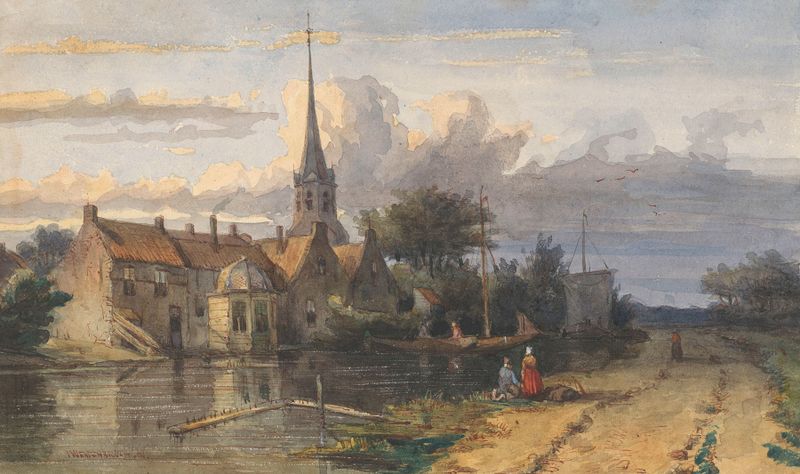
Gezicht op een dorp aan een vaart
Jan Weissenbruch
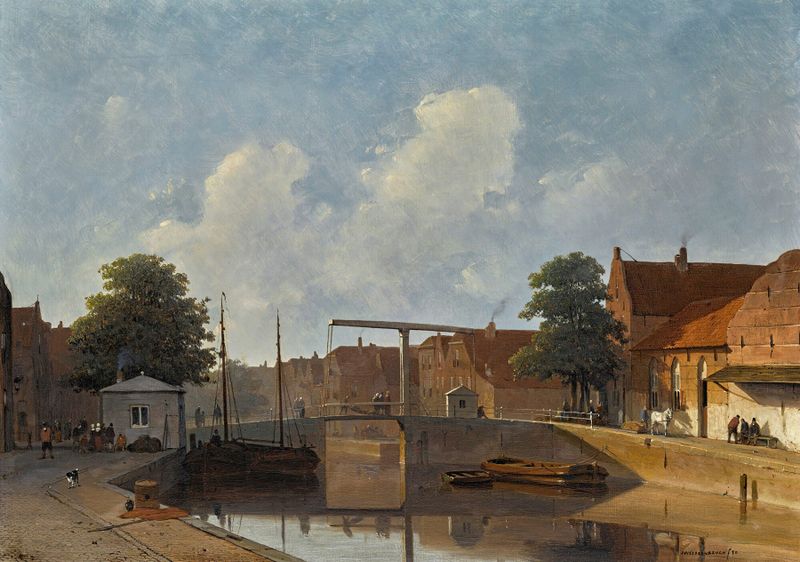
A Dutch Canal
Jan Weissenbruch
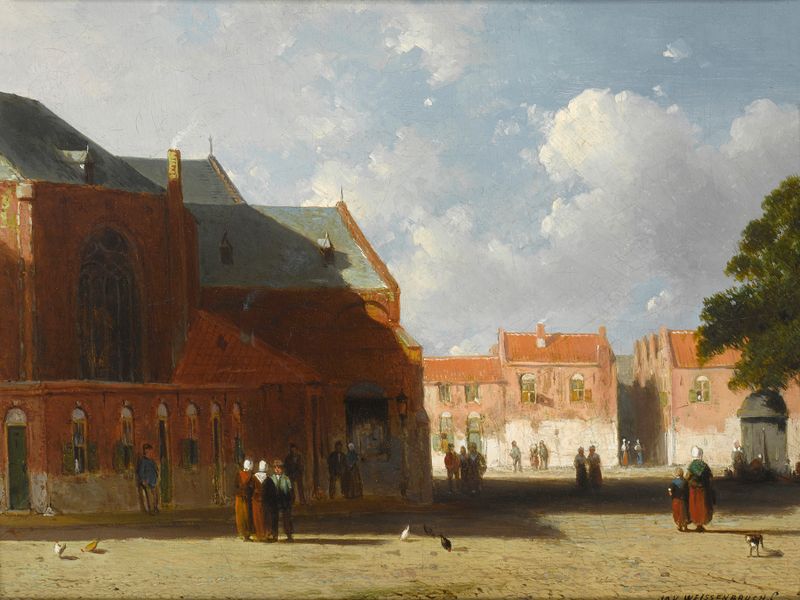
A view of a Dutch town
Jan Weissenbruch
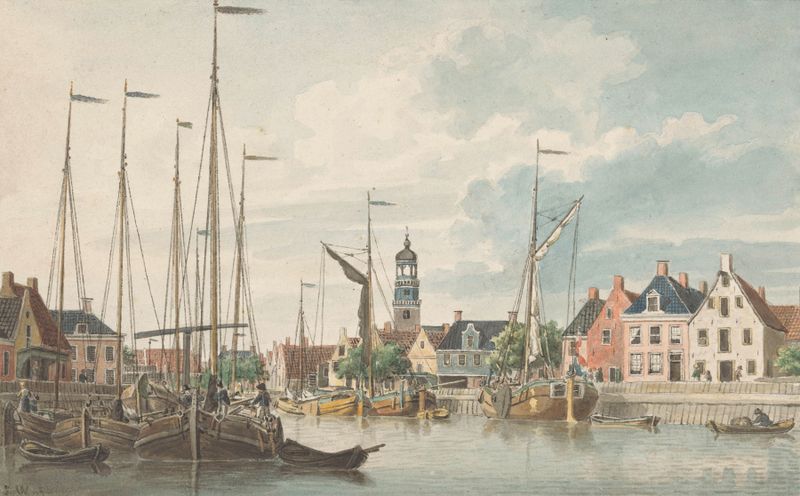
Gezicht te De Lemmer
Jan Weissenbruch
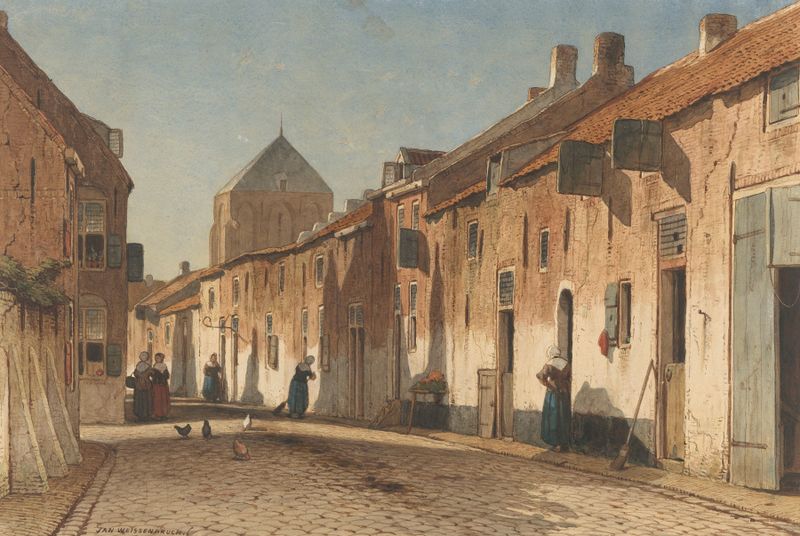
Dorpsstraat
Jan Weissenbruch
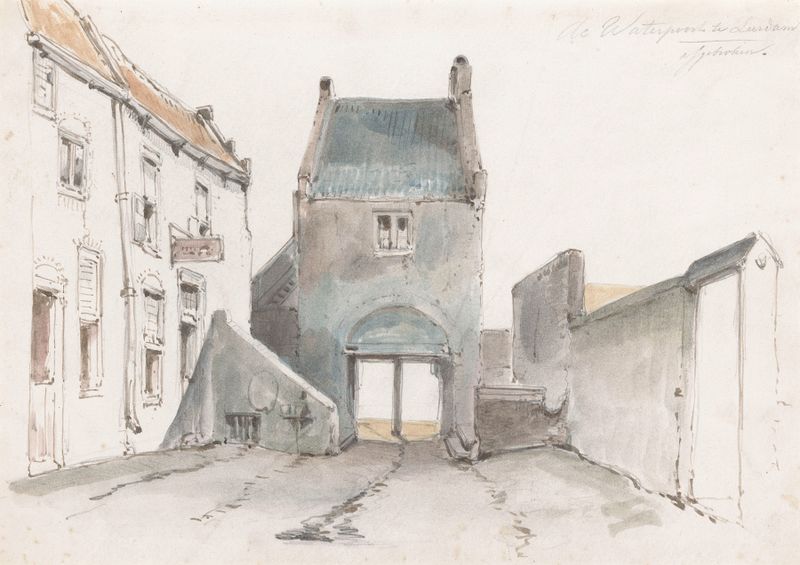
Steigerpoort te Leerdam
Jan Weissenbruch
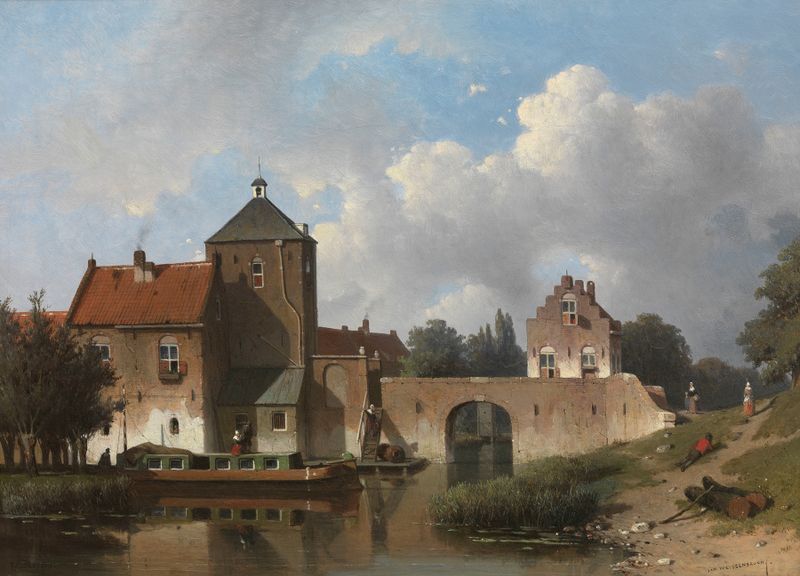
The IJsselpoort at IJsselstein
Jan Weissenbruch
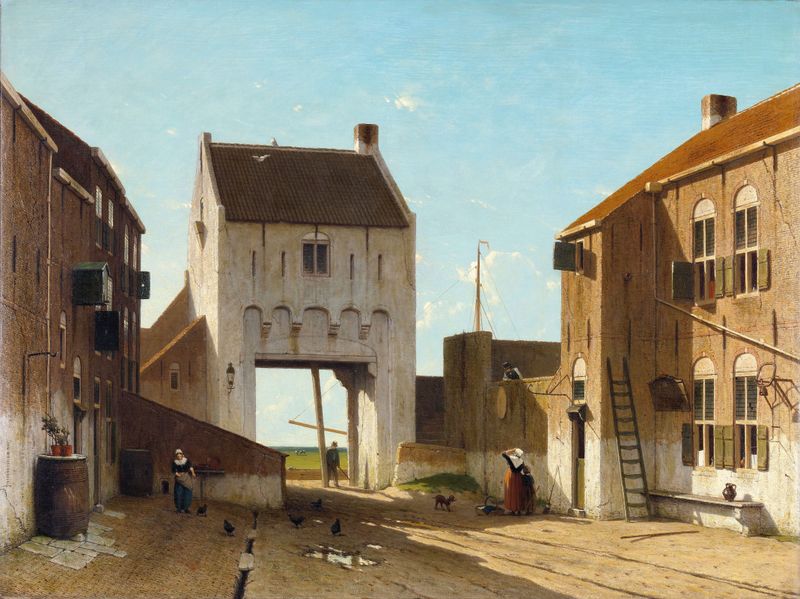
A Town Gate in Leerdam
Jan Weissenbruch
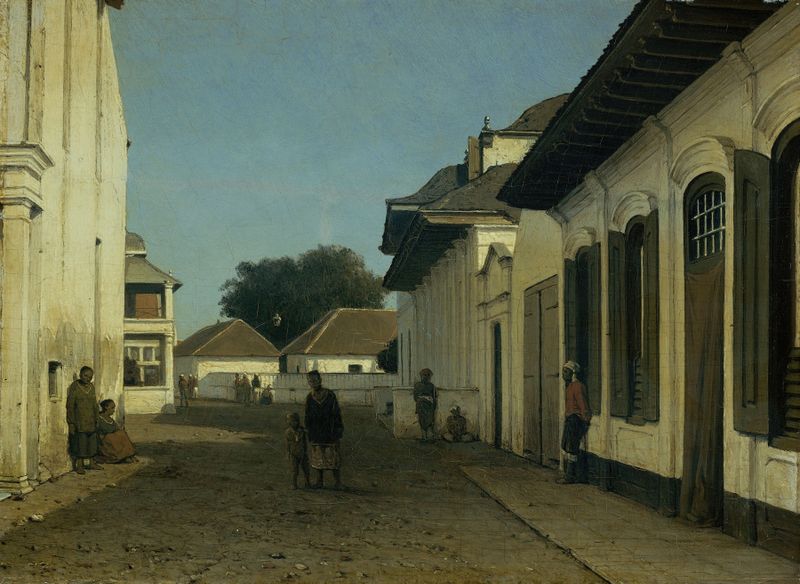
Een straat in het oude deel van Batavia
Jan Weissenbruch
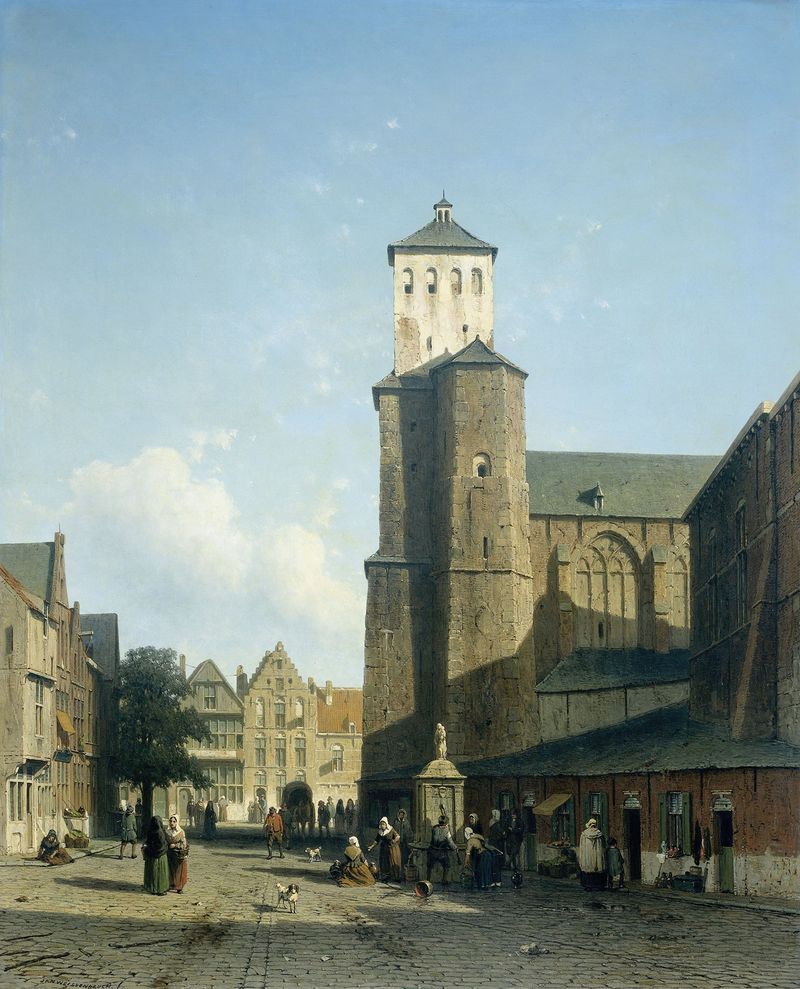
St Denis Church in Liège
Jan Weissenbruch





