
Stepping Stones, Bolton Abbey — History & Facts
Who listens when art speaks of silence? In John Atkinson Grimshaw's Stepping Stones, Bolton Abbey, divinity manifests in the quiet interplay of twilight and water, beckoning contemplation. Look to the left, where the river reflects an ethereal glow, its surface rippling with whispered secrets. The stepping stones, worn yet steadfast, guide the viewer's eye toward the distant arches of the abbey, cloaked in a gentle haze. Notice how the deep blues and soft golds harmonize, revealing a world suspended between day and night, where each stroke of the brush evokes both tranquility and mystery. As you dwell in this serene landscape, consider the contrast between the resilience of the stones and the ephemeral light enveloping them.
The figures, seemingly lost in reverie, embody a profound stillness, inviting a dialogue between humanity and nature. This sacred moment hints at a divine presence, where time stands still, urging us to reflect on our own paths. In 1868, Grimshaw painted this scene during a period of artistic transition and personal exploration. He was establishing his reputation in England, embracing the Pre-Raphaelite influences that celebrated realism and the beauty of the natural world.
Amidst the changing tides of the Victorian era, his work resonated with a desire to capture the fleeting moments that connect us to something greater, a quest for beauty that remains timeless.
More Artworks by John Atkinson Grimshaw
Browse all →
Under the Silvery Moonbeams
John Atkinson Grimshaw
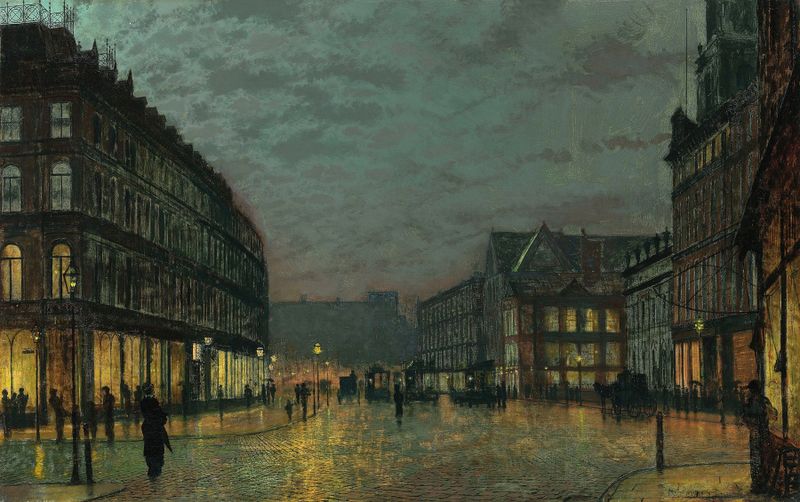
Boar Lane, Leeds by lamplight
John Atkinson Grimshaw
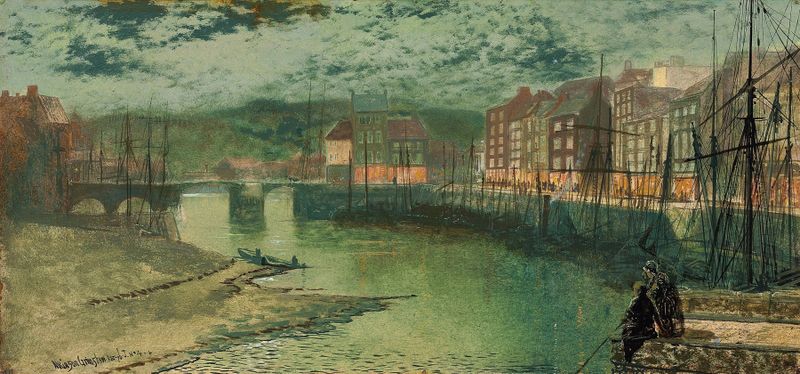
Whitby docks
John Atkinson Grimshaw

Old Chelsea
John Atkinson Grimshaw

Late October
John Atkinson Grimshaw
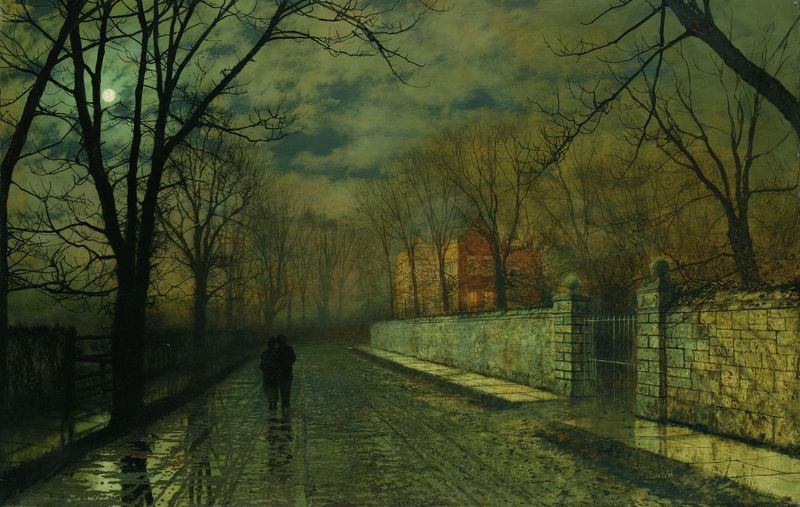
Figures In A Moonlit Lane After Rain
John Atkinson Grimshaw

Liverpool Lights
John Atkinson Grimshaw
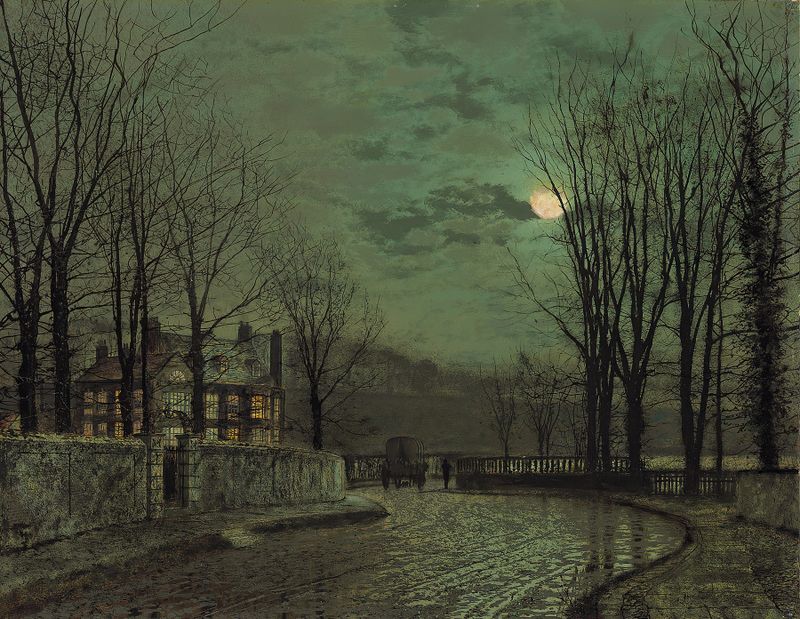
November Moonlight
John Atkinson Grimshaw
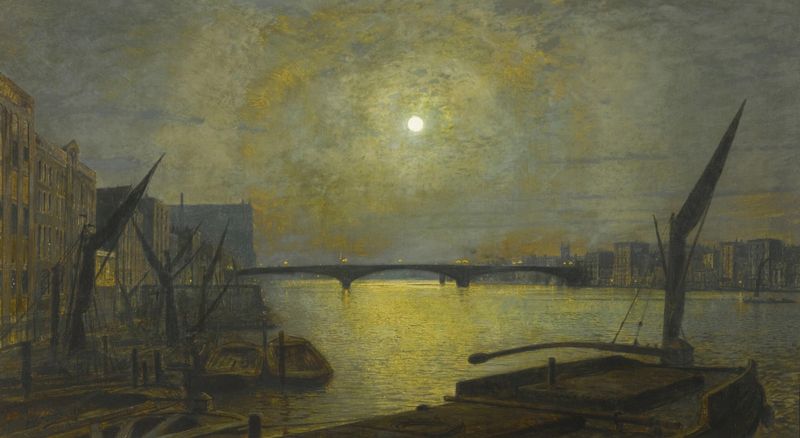
Southwark Bridge from Blackfriars by Moonlight
John Atkinson Grimshaw

Whitby From Scotch Head, Moonlight On The Esk
John Atkinson Grimshaw





