Still life with flowers and piggy bank — History & Facts
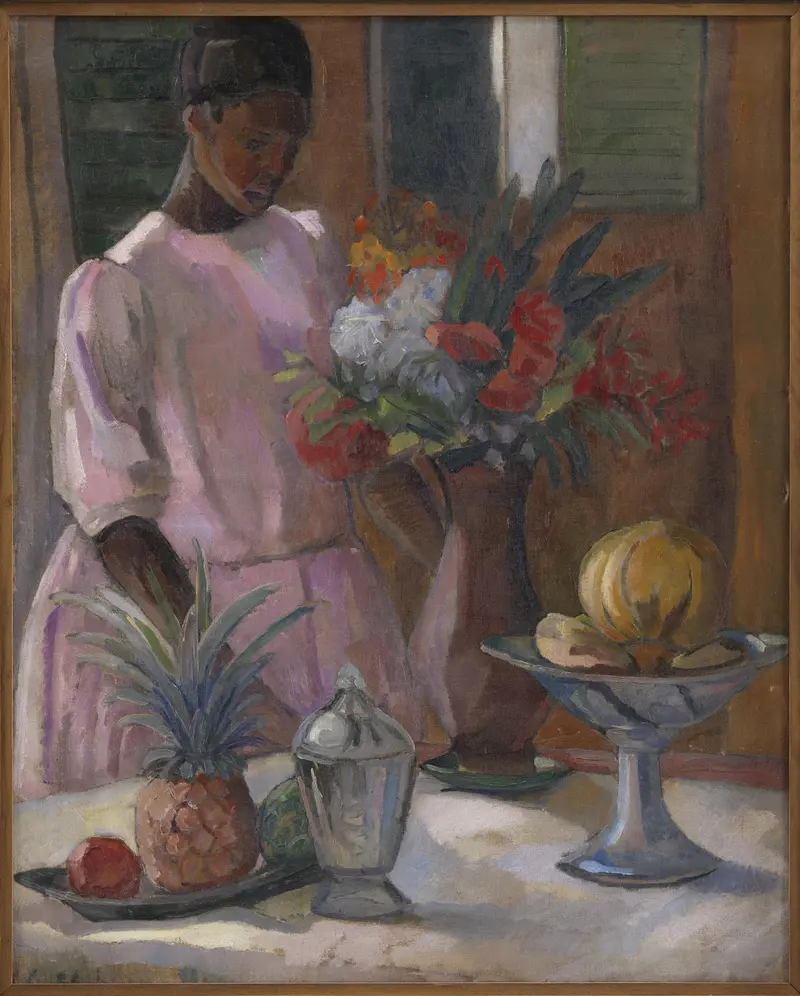
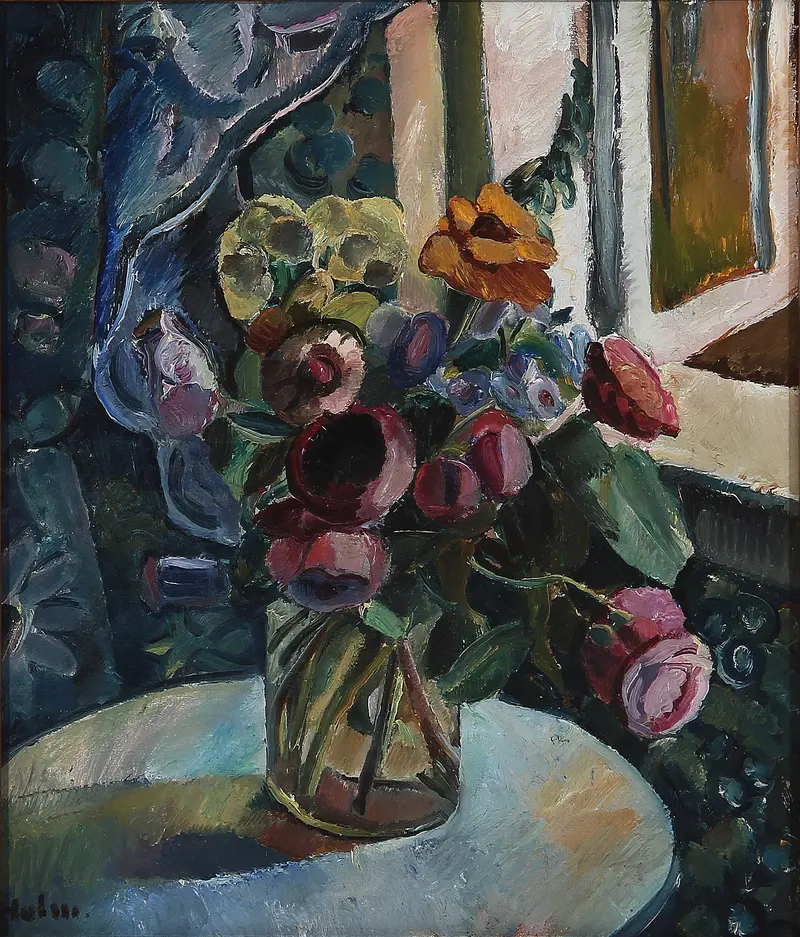
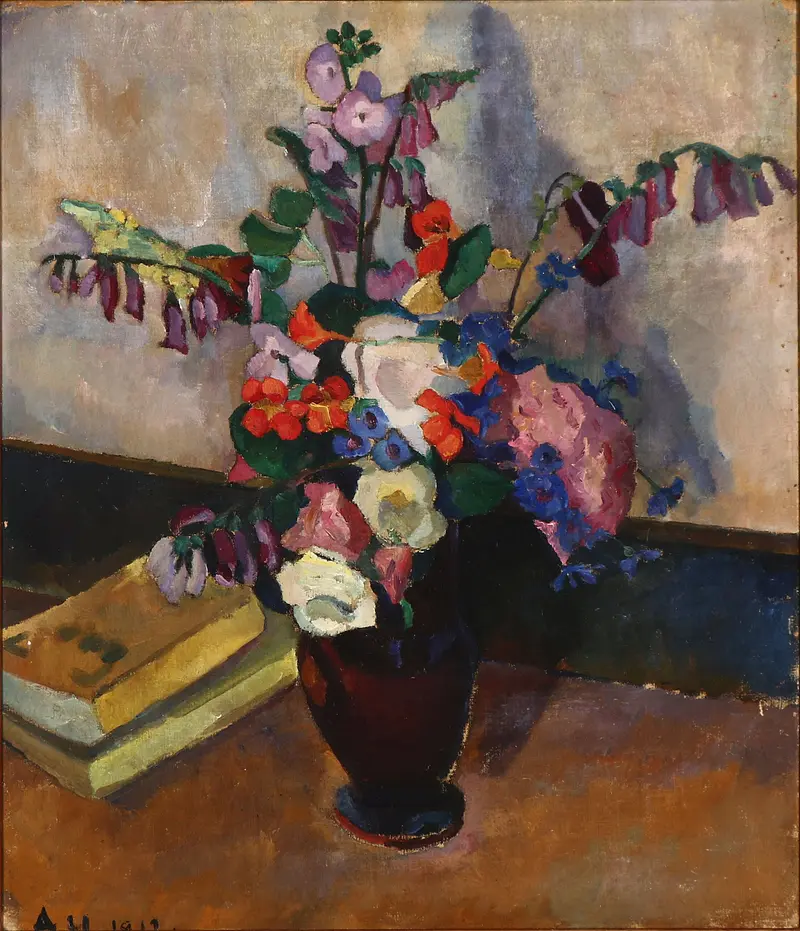
The piggy bank waits in the foreground, a silent sentinel among the blooms and everyday objects, its presence both playful and quietly symbolic. Your eye is first caught by the riot of flowers, their petals rendered in thick, confident strokes of red, yellow, and violet, tumbling out of a sturdy jug. From there, the composition leads you to a basket of green fruit, its curved handle echoing the rounded back of the piggy bank beside it.
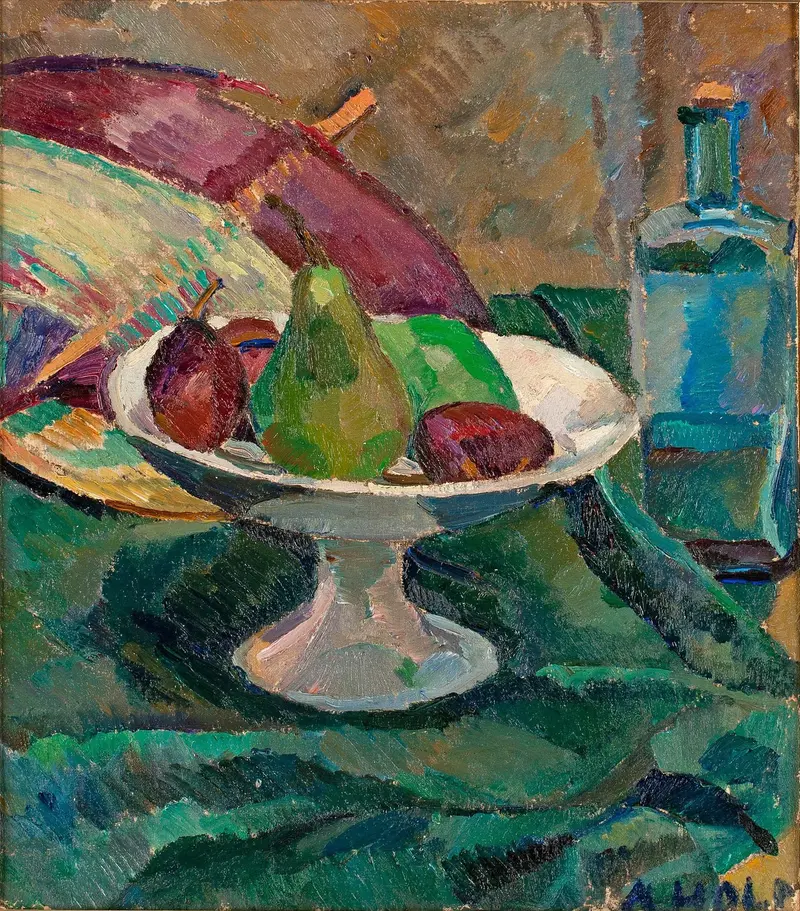
The light is cool and indirect, flattening the space and lending an almost sculptural quality to each object, as if time has paused to let us consider their relationships. The palette is earthy yet vibrant, the brushwork lively—each element seems to press forward, asking to be noticed. Works like this, rooted in the tradition of early twentieth-century still life, were often painted in domestic settings, celebrating the beauty of ordinary things. Artists such as Astrid Holm found in these arrangements a chance to experiment with color, form, and the boundaries between observation and invention.
The inclusion of a piggy bank—a humble, everyday object—alongside flowers and fruit, hints at the shifting values and playful spirit of the modern era. Though little is recorded about this specific painting, now documented in the collection of bruun-rasmussen.dk, it stands as a testament to a moment when artists found the extraordinary in the familiar. Look again at the piggy bank: what stories might it hold, sitting so quietly among the flowers?