
Still Life with Peaches — History & Facts
What first catches the eye in Still Life with Peaches is not the fruit itself, but the quiet drama staged on their surface: a black fly perches on the velvet skin of a peach, while a pale butterfly hovers above, wings open as if caught mid-breath. The peaches glow with a gentle, golden warmth, their round forms set against a shadowy backdrop of grape leaves and dark fruit. Light pools on the peaches, drawing the viewer’s gaze to their downy texture before it slips upward to the delicate wings of the butterfly and the flash of red on a second, more hidden insect.
Every element here is chosen for its power to hold attention—the insects are not mere decoration, but reminders of the fleeting nature of ripeness and beauty. This work belongs to the world of late seventeenth-century Dutch still life, a genre that delighted in the close observation of everyday abundance. Painters like Abraham Van Calraet turned humble fruit and insects into meditations on time and decay, often for wealthy patrons who wished to display both their taste and their awareness of life’s brevity. Created sometime between 1657 and 1722, and now part of the Boijmans collection, this painting stands as a quiet testament to that era’s fascination with the ordinary made extraordinary.
The longer you look, the more you notice: the subtle bruises on the peaches, the almost hidden grapes, the way life and impermanence meet in a single, luminous moment.
More Artworks by Abraham Van Calraet
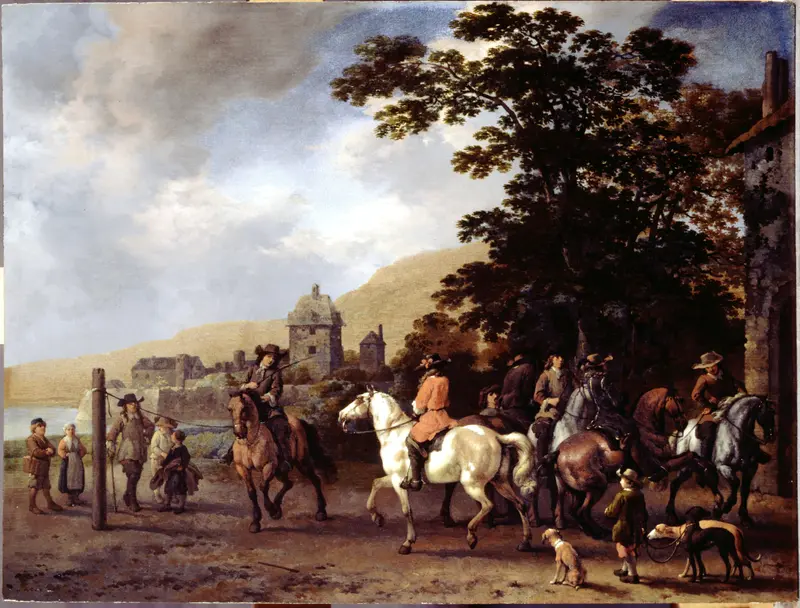
A Riding School in the Open Air
Abraham Van Calraet
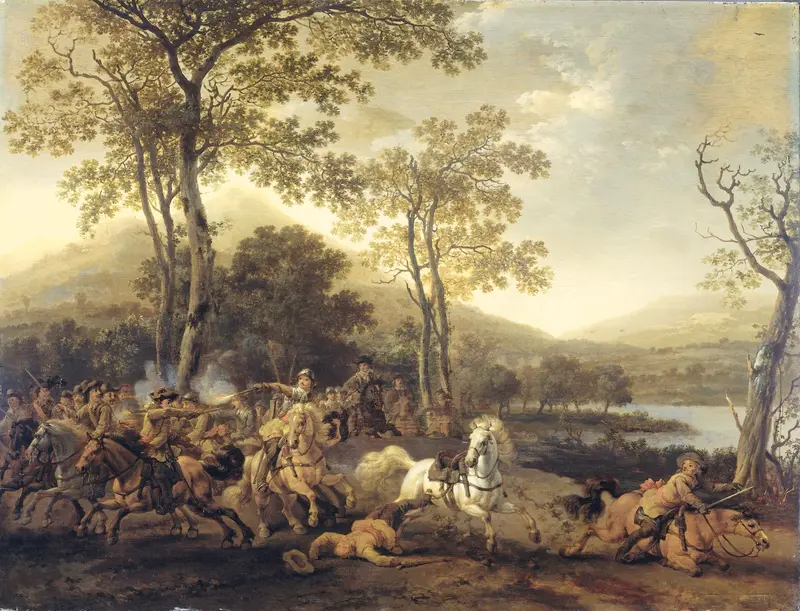
Cavalry Skirmish
Abraham Van Calraet
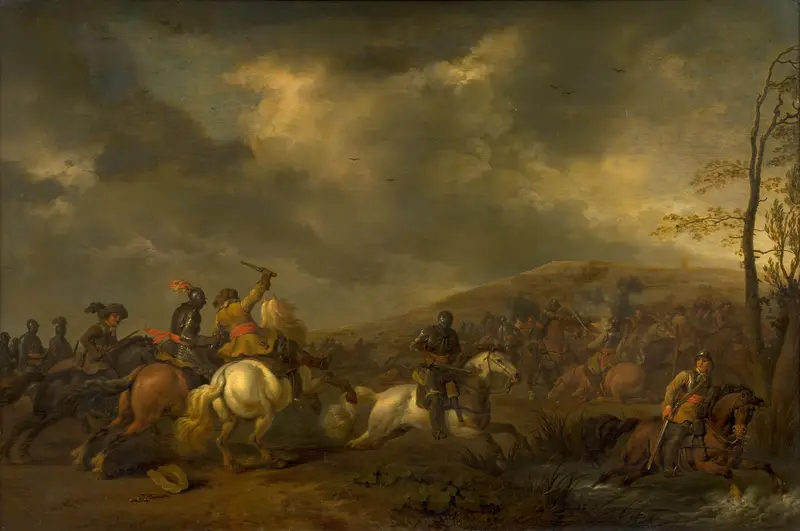
Choc de cavalerie
Abraham Van Calraet
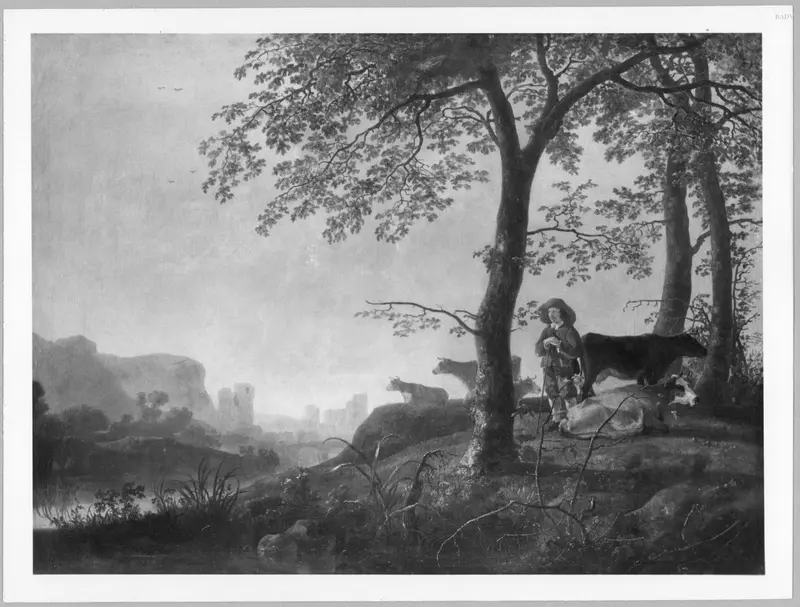
Herder and Cattle under Trees
Abraham Van Calraet
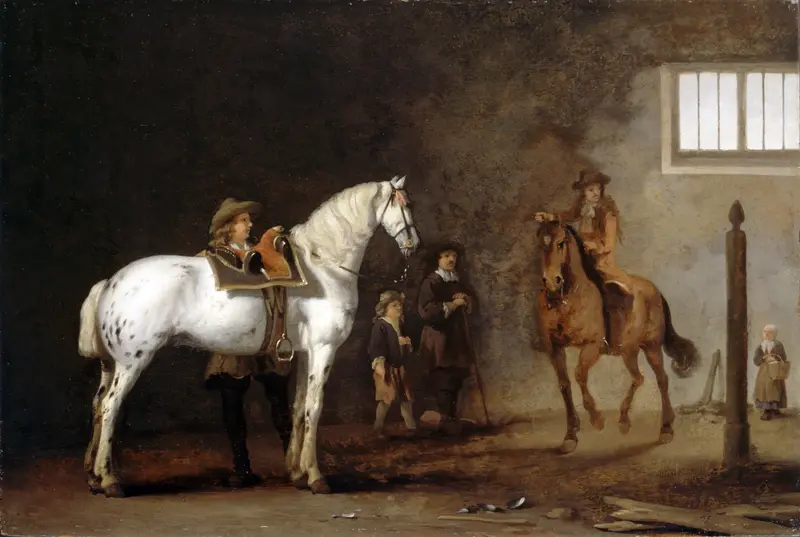
White Horse in a Riding School
Abraham Van Calraet
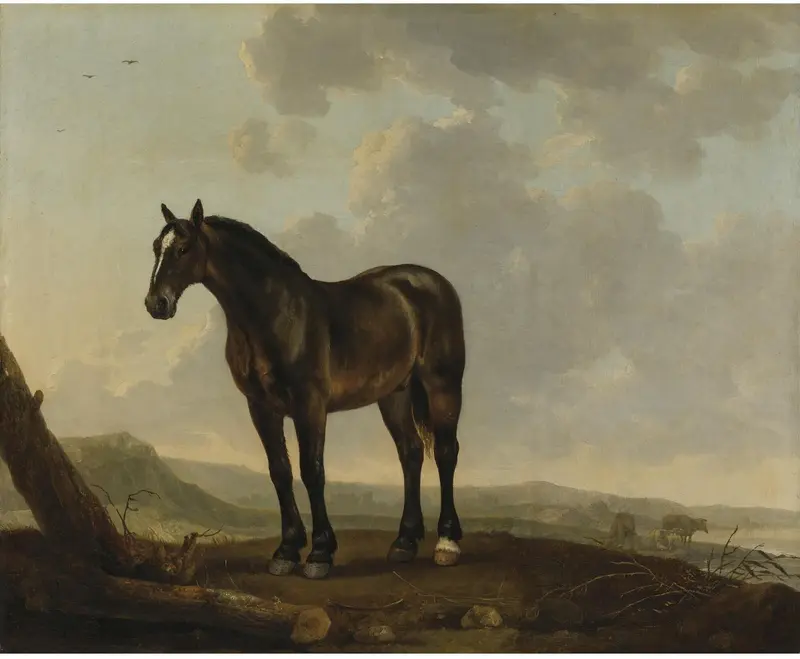
Landscape with a brown horse
Abraham Van Calraet
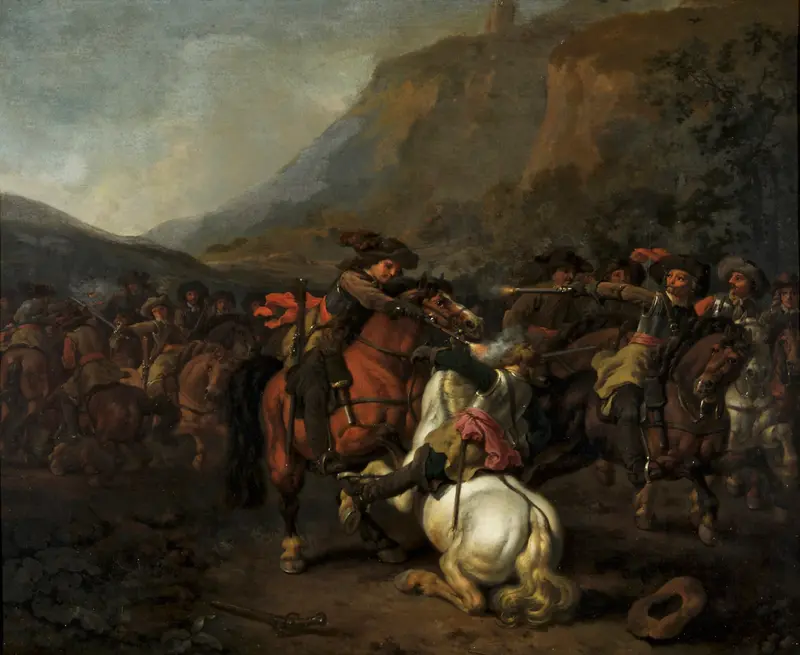
Ruitergevecht DM 016 1163 Dordrechts Museum
Abraham Van Calraet
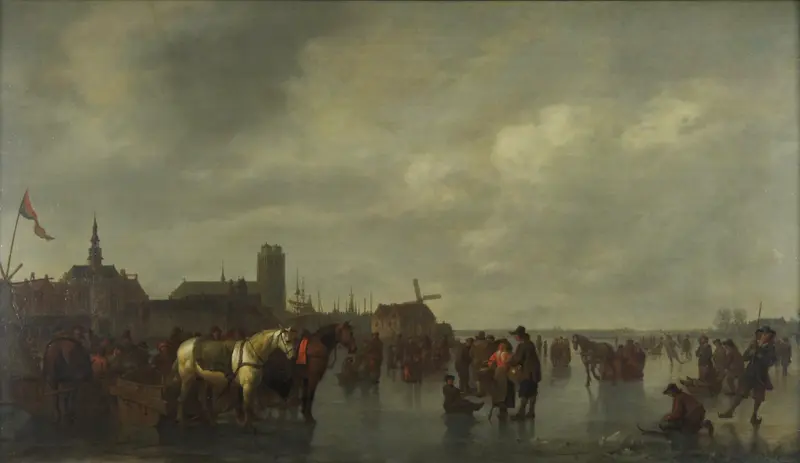
Scene on the Ice outside Dordrecht
Abraham Van Calraet
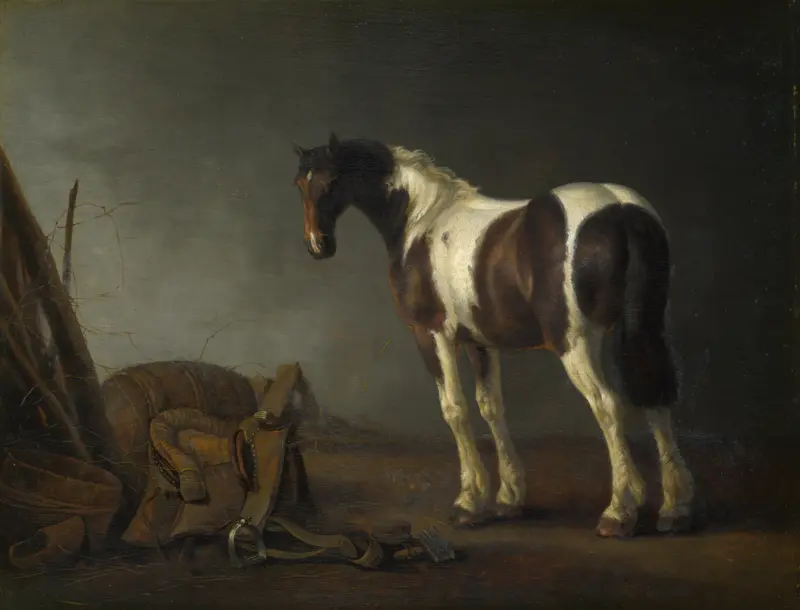
A Horse with a Saddle Beside it
Abraham Van Calraet
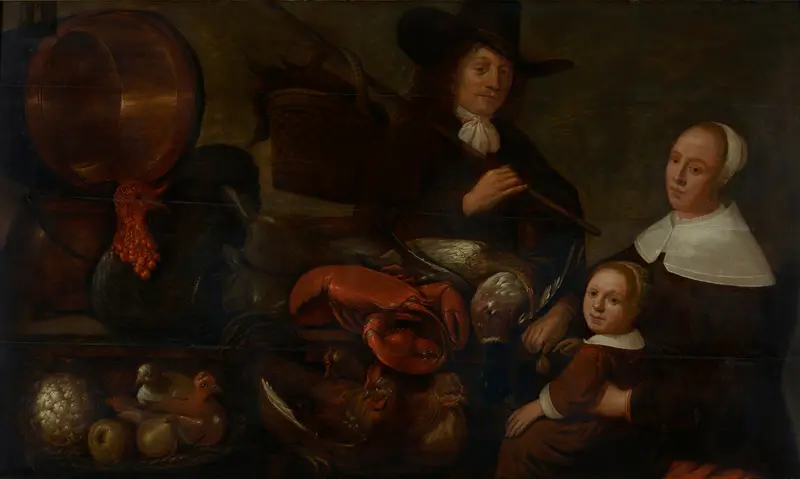
Portrait of a family
Abraham Van Calraet





