
White Horse in a Riding School — History & Facts
The eye is drawn first to the luminous white horse, its coat almost glowing against the shadowed walls of the riding school. This animal stands in poised stillness, a living sculpture, while its handler—dressed with a flourish of hat and boots—seems to pause mid-conversation or instruction. The light pouring in from the high window slices through the gloom, spotlighting not only the horse but the careful choreography of figures: the mounted rider, the attentive onlookers, the distant servant girl.
Every gesture is deliberate; the raised hoof of the brown horse, the casual lean of the man with the cane, the scattered feathers on the ground, all contribute to a sense of practiced routine interrupted by a moment of quiet attention. Painted before 1722 by Abraham Van Calraet, this scene belongs to a world where equestrian skill was both spectacle and status. Riding schools were centers of discipline and display, frequented by the well-to-do who prized horsemanship as a mark of education and refinement. Paintings like this, emerging from the Dutch tradition, often served as records of social aspiration or private pride, sometimes commissioned by patrons eager to immortalize their horses or their own accomplishments.
While history has kept few traces of this specific work’s journey, its presence in a modern online collection invites us to linger on its details—the interplay of light and shadow, the subtle hierarchy of figures—and imagine the quiet rituals of a bygone era.
More Artworks by Abraham Van Calraet
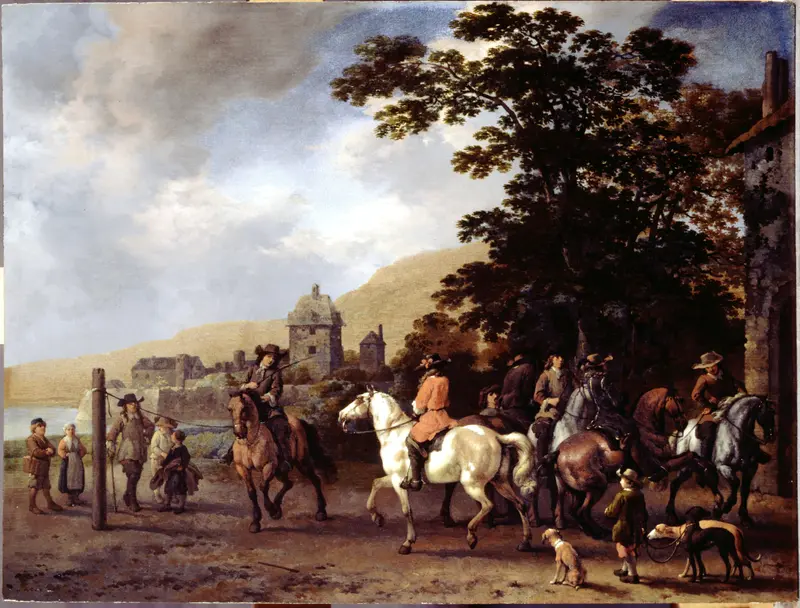
A Riding School in the Open Air
Abraham Van Calraet
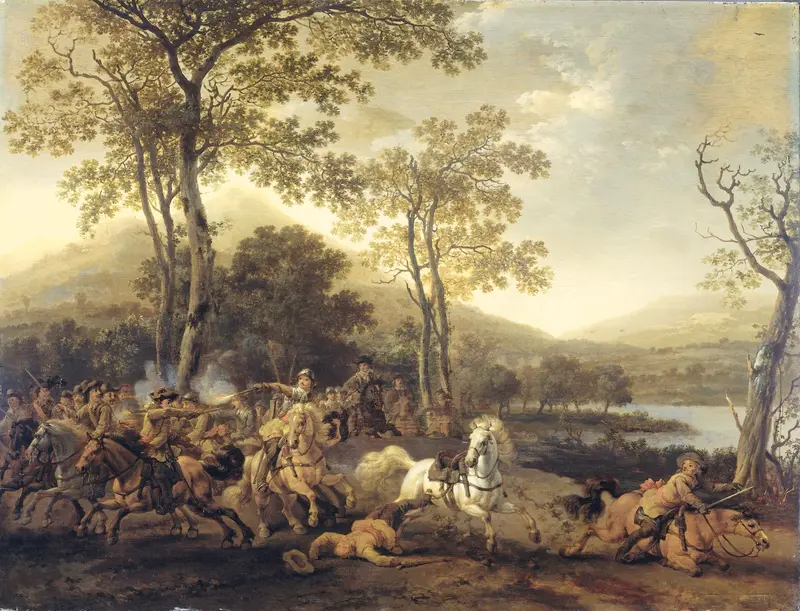
Cavalry Skirmish
Abraham Van Calraet
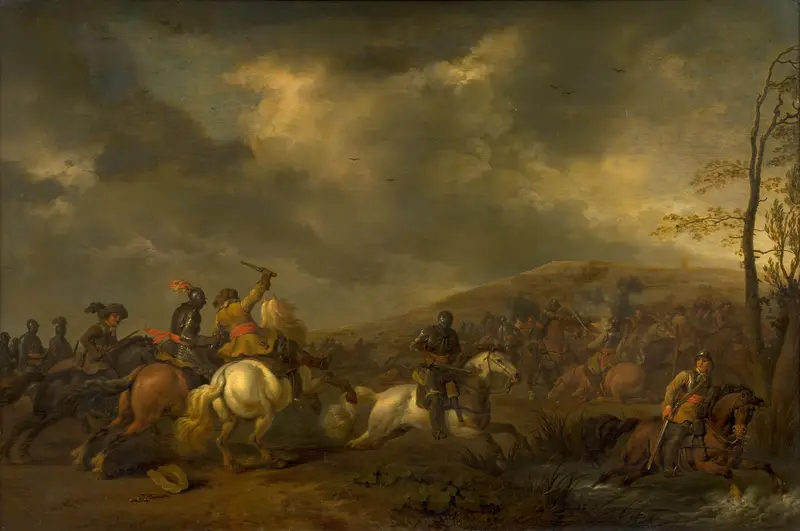
Choc de cavalerie
Abraham Van Calraet
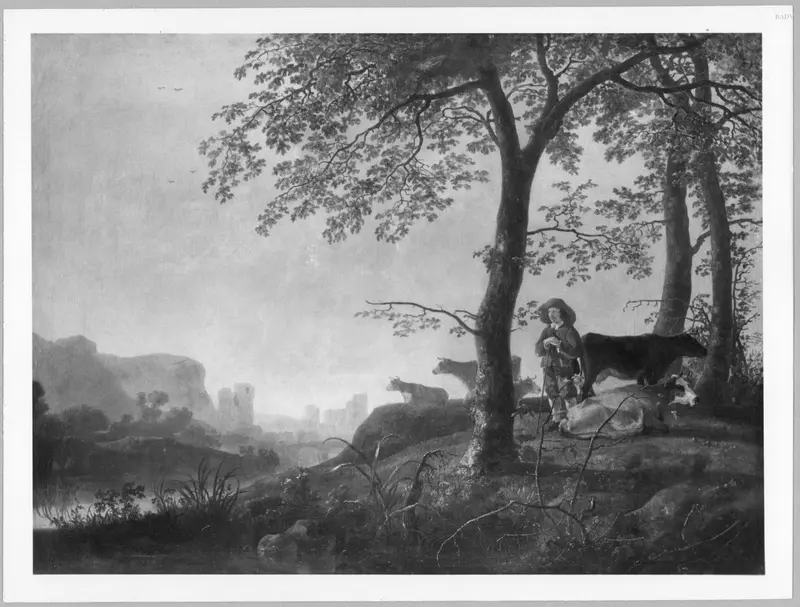
Herder and Cattle under Trees
Abraham Van Calraet
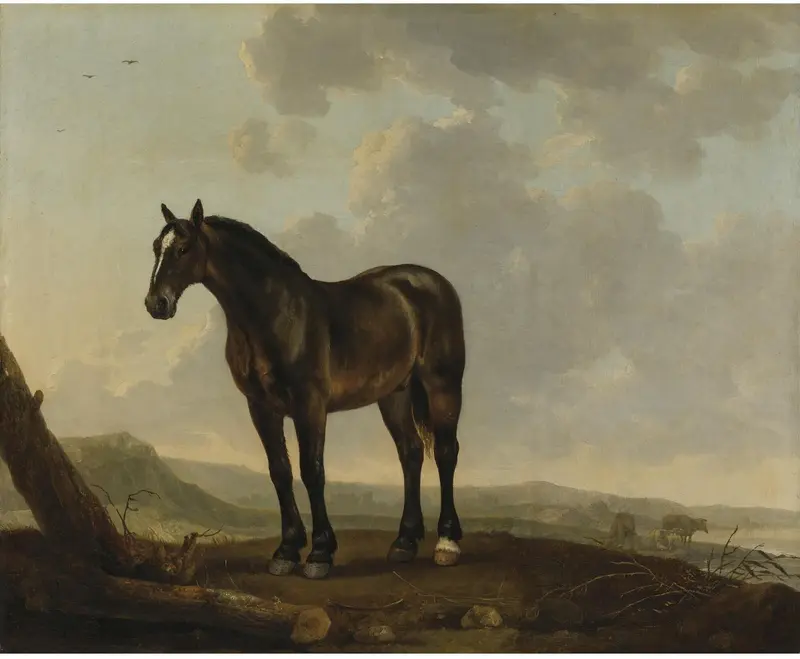
Landscape with a brown horse
Abraham Van Calraet
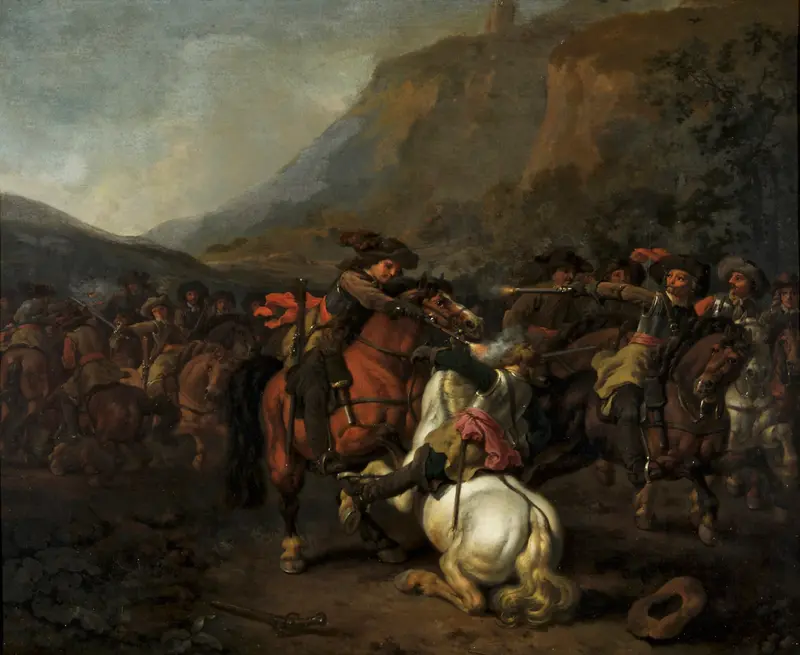
Ruitergevecht DM 016 1163 Dordrechts Museum
Abraham Van Calraet
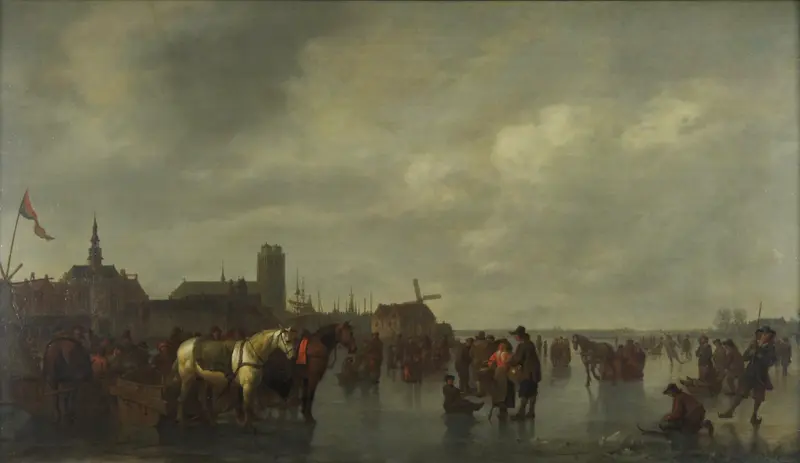
Scene on the Ice outside Dordrecht
Abraham Van Calraet
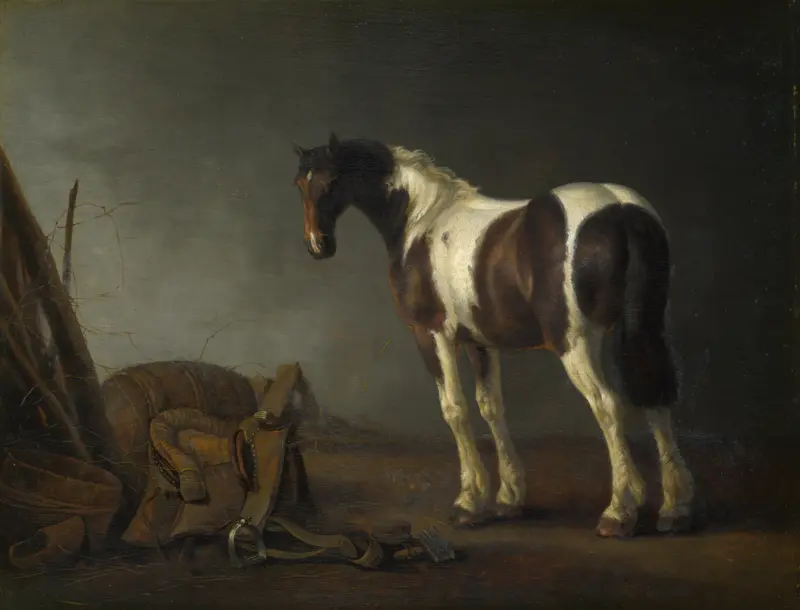
A Horse with a Saddle Beside it
Abraham Van Calraet
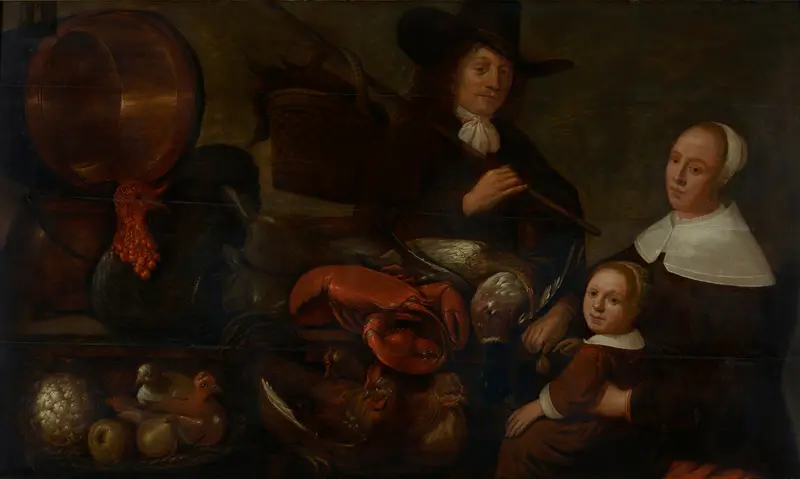
Portrait of a family
Abraham Van Calraet
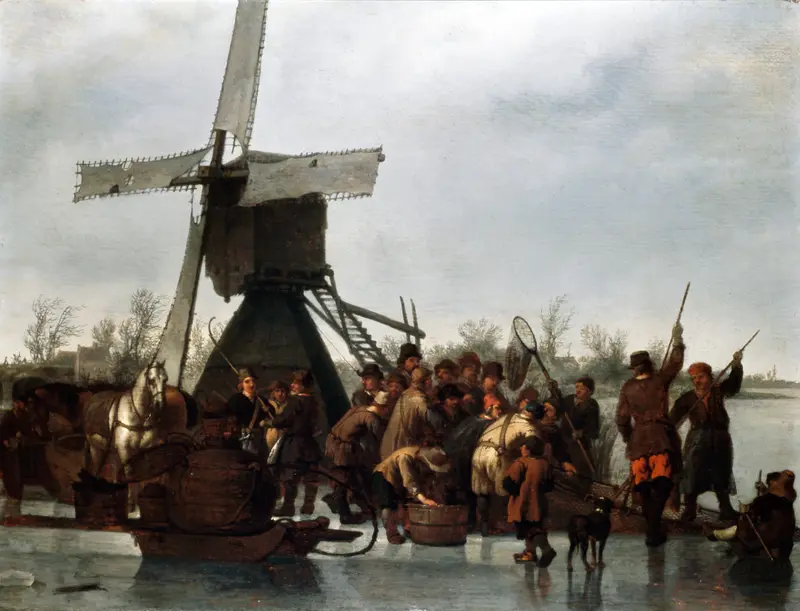
Fishing on the Ice
Abraham Van Calraet





