
Landscape with a brown horse — History & Facts
What first catches the eye in Landscape with a brown horse is the sheer presence of the animal, standing alone and alert against a sweep of open sky. The horse’s gaze meets the viewer’s, as if pausing mid-step to acknowledge our intrusion into its world. Light falls across its flanks, revealing a careful study of muscle and hide, while the muted earth tones of the landscape anchor the animal in its environment.
The low horizon grants the sky a commanding role, with clouds rolling in soft, weighty masses overhead. In the distance, other horses graze near water, but it is the solitary brown horse in the foreground that commands the scene, a figure of both strength and quiet watchfulness. Painted in 1700, this work by Abraham Van Calraet belongs to a tradition in Dutch art that celebrated the dignity of animals and the subtle drama of rural life. Such paintings were often prized by collectors who sought reminders of the countryside’s calm and the virtues of honest labor.
In the late seventeenth and early eighteenth centuries, artists like Van Calraet responded to changing tastes, blending natural observation with a sense of poetic stillness. While history has kept few traces of this particular painting’s journey, its presence in a modern auction catalogue reminds us how these images continue to invite contemplation. The horse, poised between earth and sky, waits for your gaze to complete its story.
More Artworks by Abraham Van Calraet
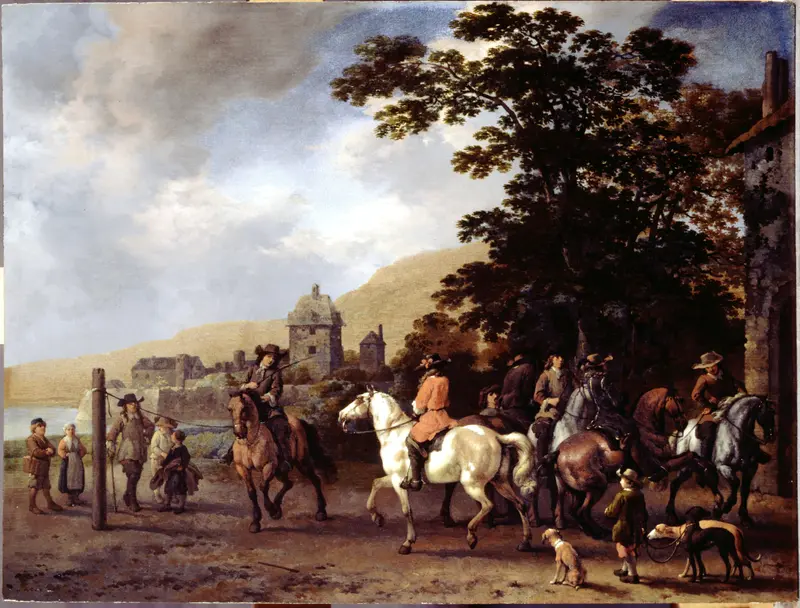
A Riding School in the Open Air
Abraham Van Calraet
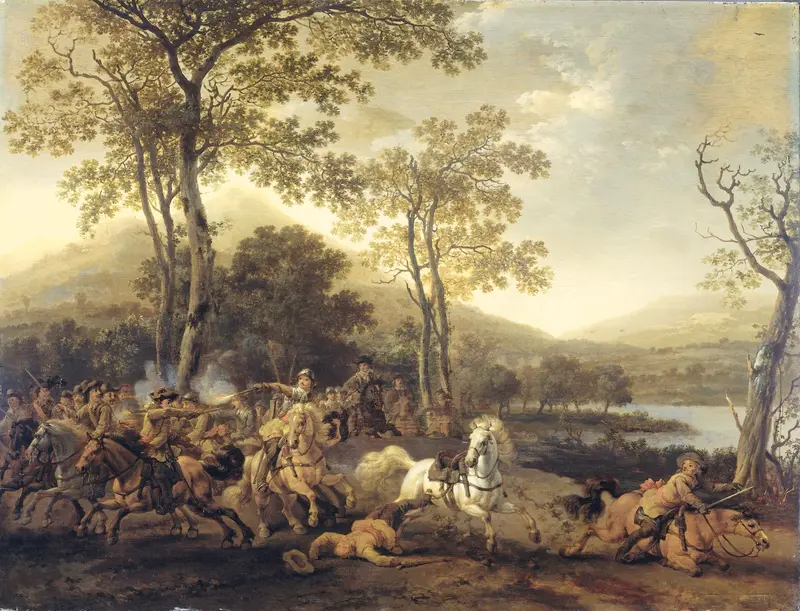
Cavalry Skirmish
Abraham Van Calraet
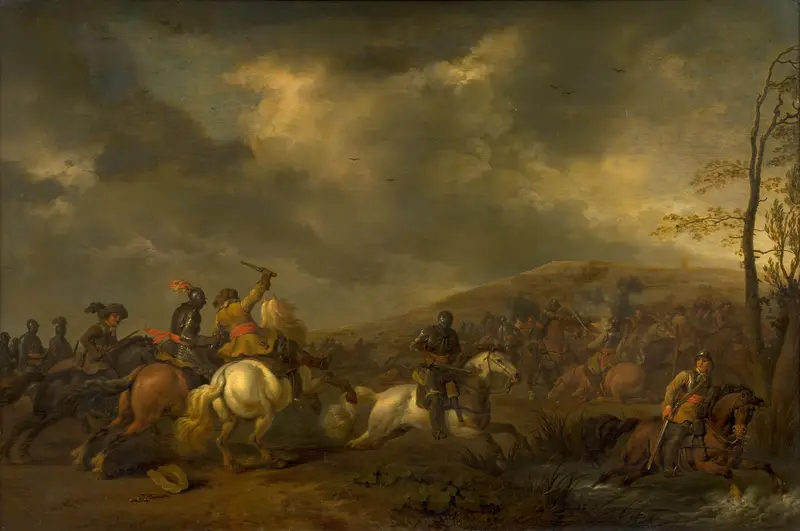
Choc de cavalerie
Abraham Van Calraet
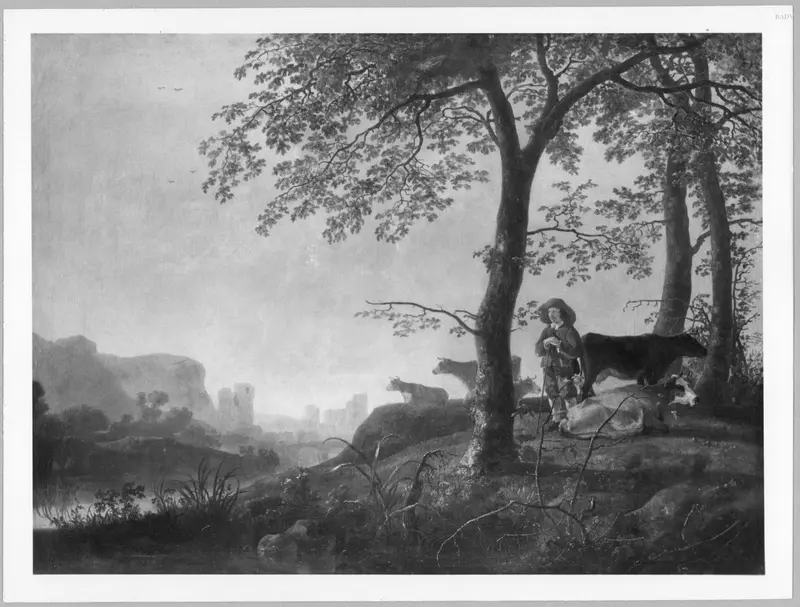
Herder and Cattle under Trees
Abraham Van Calraet
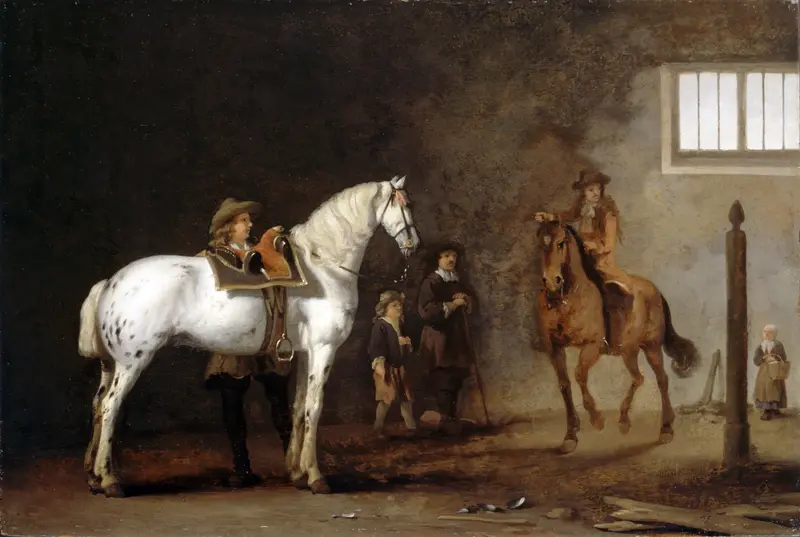
White Horse in a Riding School
Abraham Van Calraet
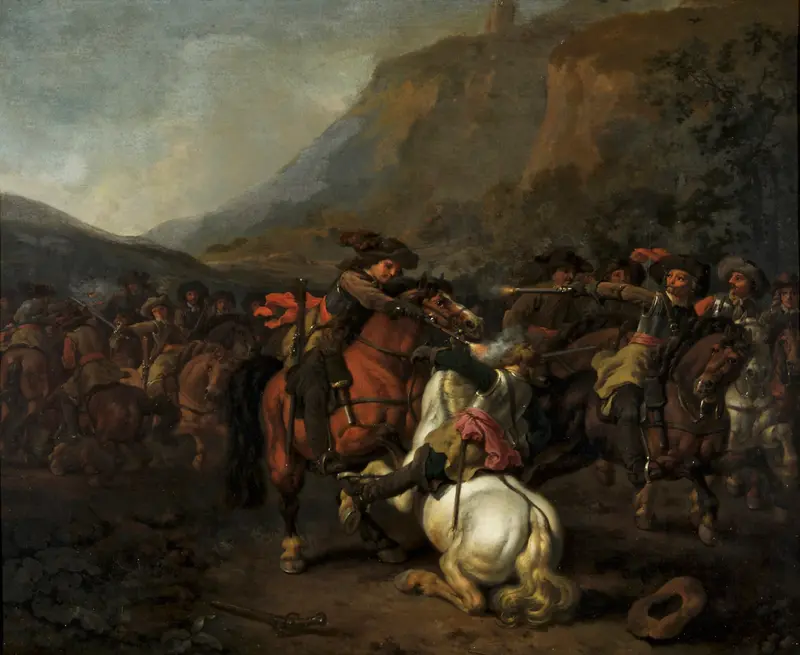
Ruitergevecht DM 016 1163 Dordrechts Museum
Abraham Van Calraet
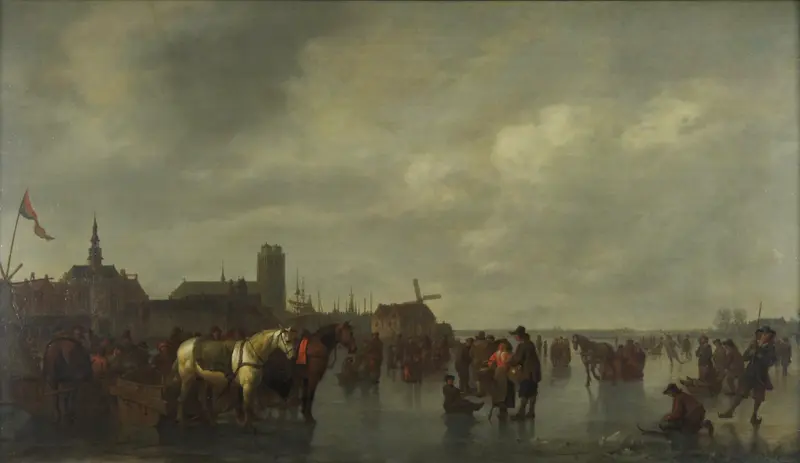
Scene on the Ice outside Dordrecht
Abraham Van Calraet
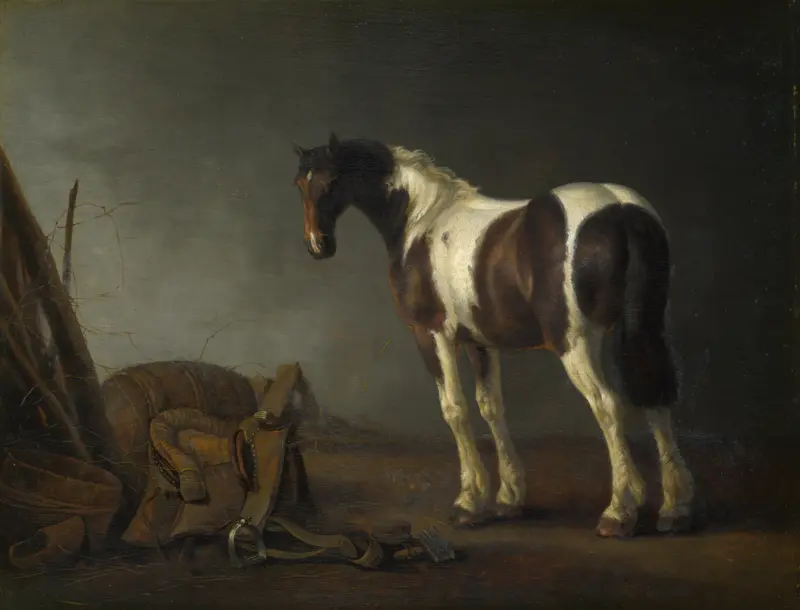
A Horse with a Saddle Beside it
Abraham Van Calraet
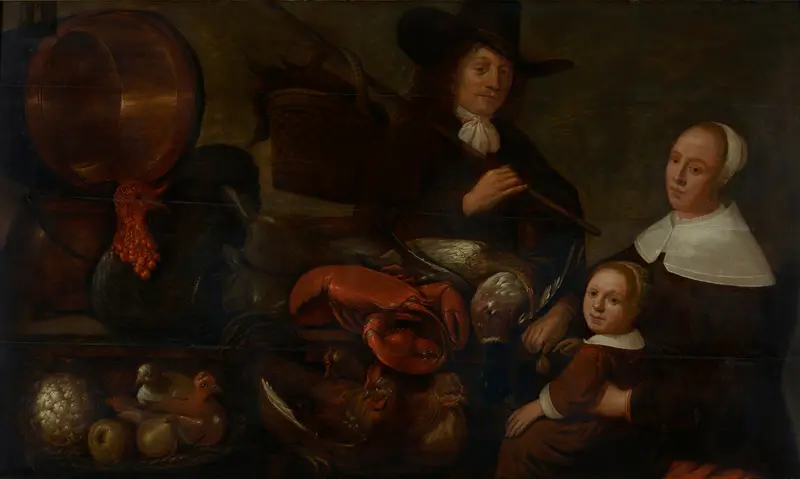
Portrait of a family
Abraham Van Calraet
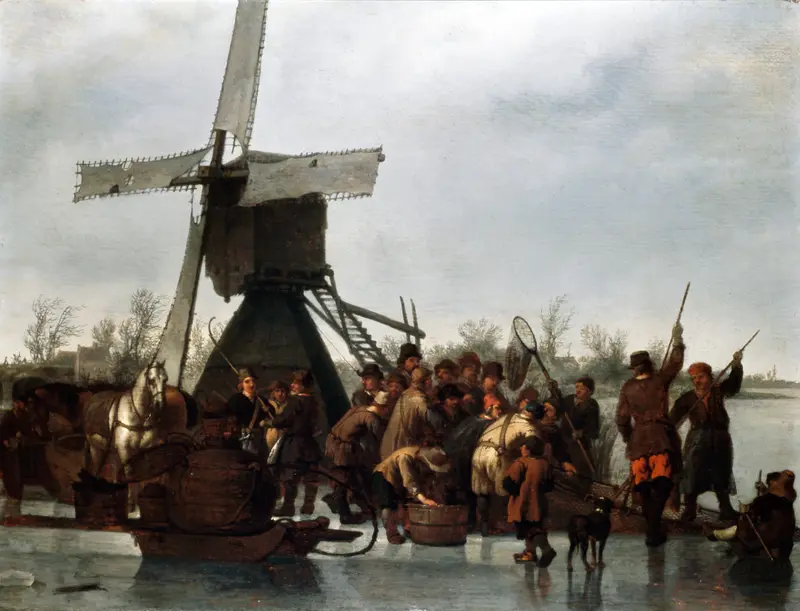
Fishing on the Ice
Abraham Van Calraet
More Landscape Art

The Starry Night
Vincent van Gogh

View of Delft
Johannes Vermeer

Water Lilies
Claude Monet

The Grand Canal, Venice, looking north-west from the Ca' Corner to the Ca' Contarini degli Scrigni, with the campanile of Santa Maria della Carità
Canaletto

Windsor Castle
Canaletto

The Grand Canal looking North-East from the Palazzo Dolfin-Manin to the Rialto Bridge
Canaletto