
Storm on the Dune, Vendee (L'orage sur la dune, Vendee) — History & Facts
The sky in Storm on the Dune, Vendee by Auguste Louis Lepère seizes the eye first—a roiling mass of inked lines, heavy with movement, pressing down on the land below. At the heart of the scene, a woman and child huddle together, the adult’s arm thrown protectively over her head, her figure braced against the invisible force of the wind. The child clings close, face hidden, while the land stretches away beneath the looming sky.
Lepère’s restless hatching animates the clouds and rain, making the weather itself feel like a living presence, while the figures anchor the drama in human experience. The low horizon gives the sky dominance, turning a simple moment of shelter into a grand contest between humanity and nature. Works like this, created in the late nineteenth or early twentieth century, reflect the era’s fascination with the everyday heroism of rural life and the unpredictable power of the natural world. Artists such as Lepère—a master printmaker known for his scenes of French countryside and labor—often turned to etching to capture fleeting effects of light, weather, and emotion with immediacy and intimacy.
While little is recorded about the specific history of this print, its presence in the National Gallery of Art’s open access collection speaks to the enduring appeal of these quietly dramatic moments. The eye returns, again and again, to the charged space between the huddled figures and the storm above.
More Artworks by Auguste Louis Lepère

Notre Dame vue du Marché aux pommes
Auguste Louis Lepère
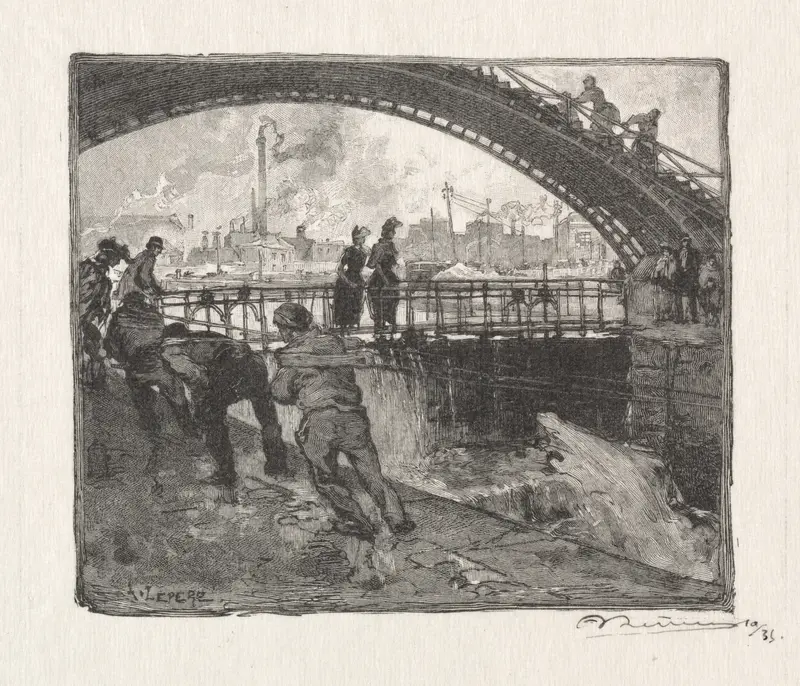
L’Ecluse du Canal St. Martin
Auguste Louis Lepère
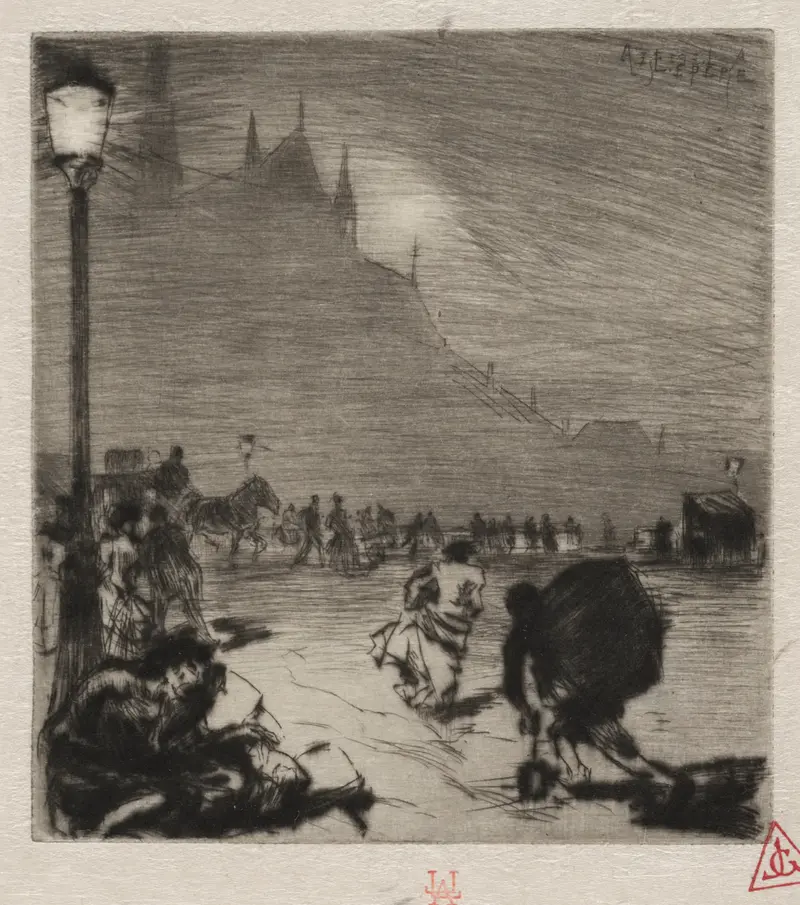
Au Coin du Pont-aux-Doubles
Auguste Louis Lepère
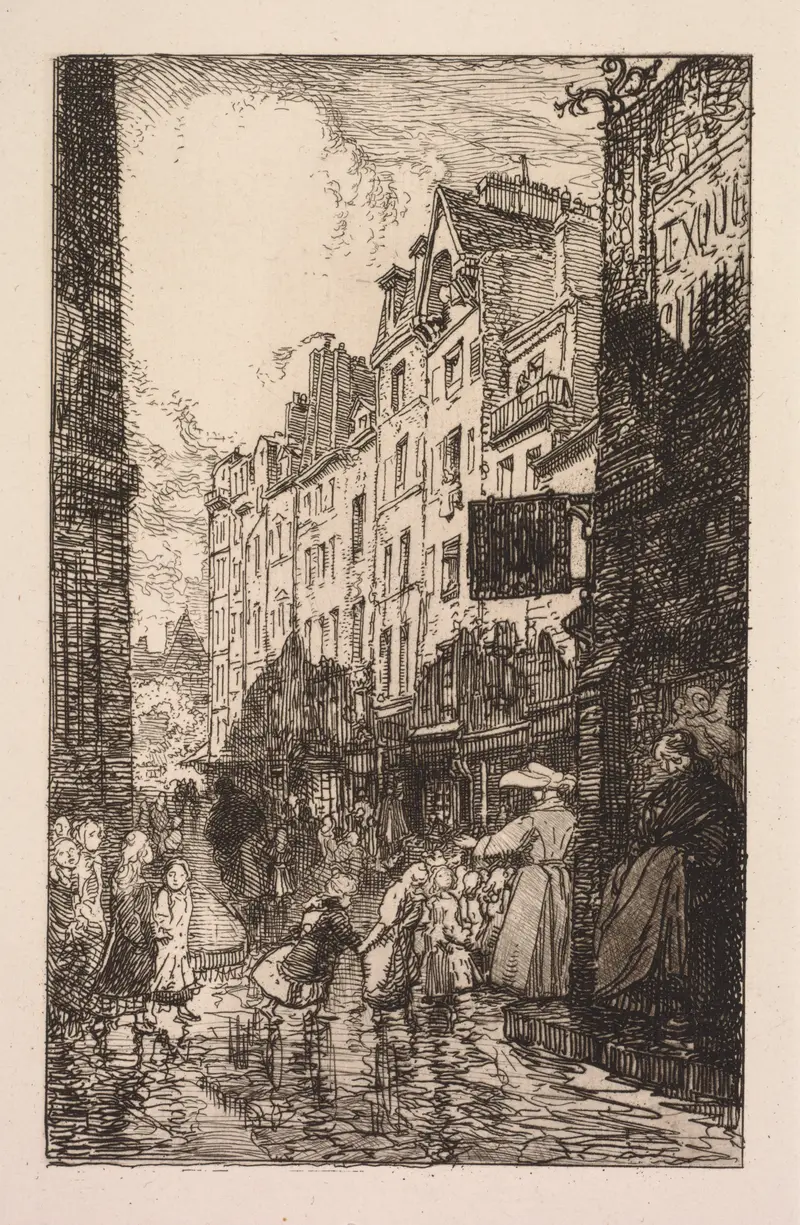
La Rue des Prêtres Saint-Séverin
Auguste Louis Lepère
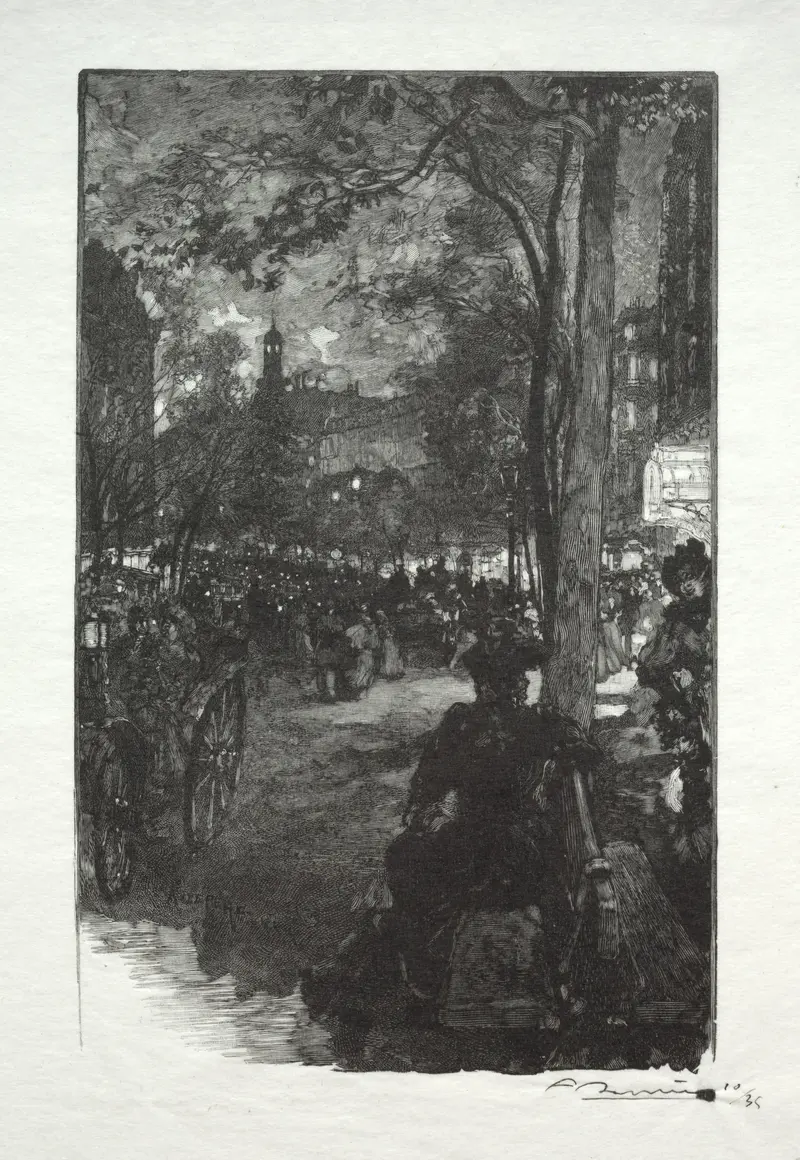
Le Boulevard Montmartre, le Soir
Auguste Louis Lepère
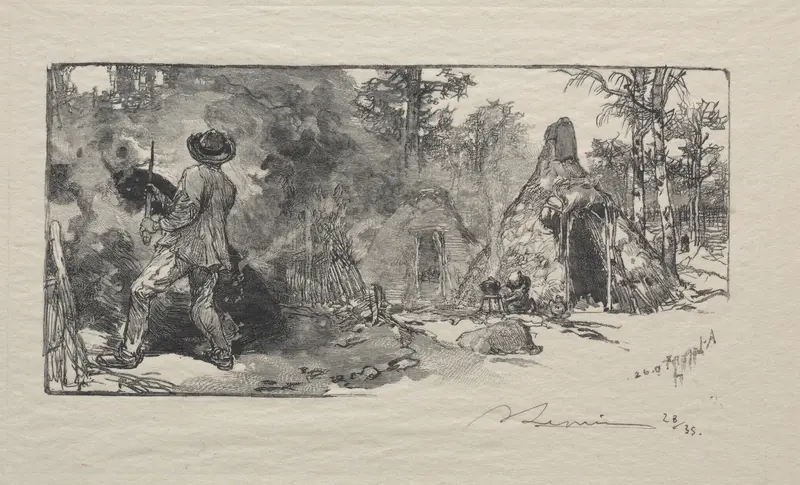
Les Charbonniere
Auguste Louis Lepère
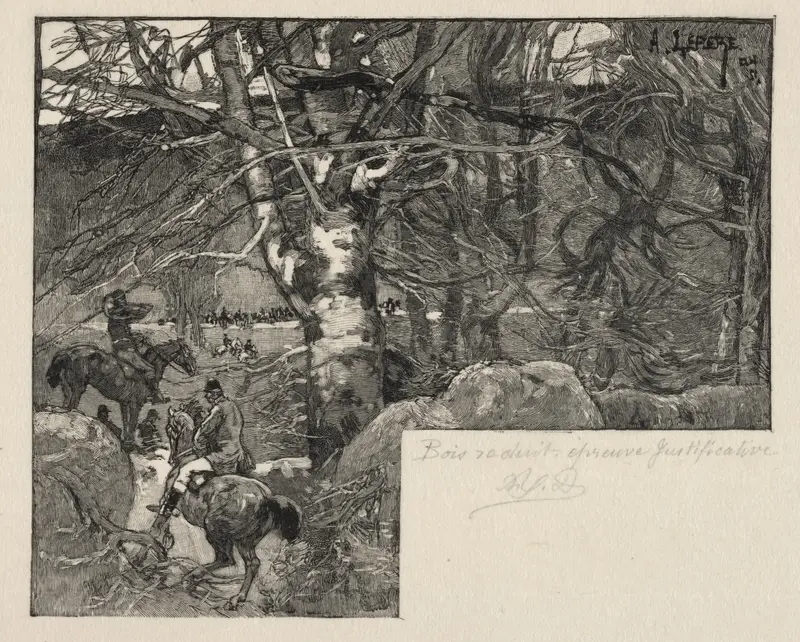
Une Chasse au Mont Gérard
Auguste Louis Lepère
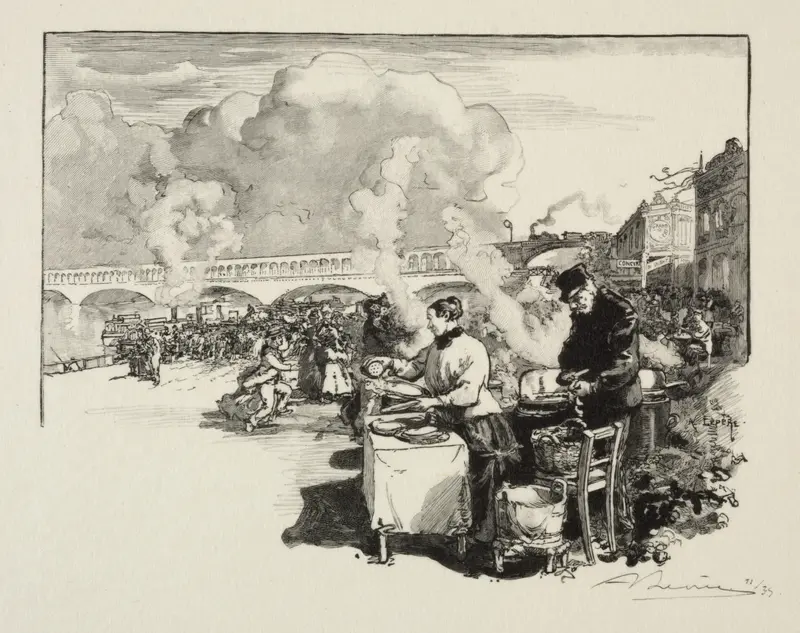
Debarcadère des bateaux-omnibus
Auguste Louis Lepère

La Seine, au quai de la Rapée
Auguste Louis Lepère

Le Palais des Arts Liberaux, Intèrieur
Auguste Louis Lepère
More Landscape Art

The Starry Night
Vincent van Gogh

View of Delft
Johannes Vermeer

Water Lilies
Claude Monet

The Grand Canal, Venice, looking north-west from the Ca' Corner to the Ca' Contarini degli Scrigni, with the campanile of Santa Maria della Carità
Canaletto

Windsor Castle
Canaletto

The Grand Canal looking North-East from the Palazzo Dolfin-Manin to the Rialto Bridge
Canaletto