
Storm on the Island of Yeu — History & Facts
In the realm of art, how do we capture the fleeting moments of nature’s fury, and what emotions linger in the aftermath? Focus on the tumultuous waves crashing against the rugged coastline, each crest a swirl of vivid blues and whites. Notice how the dark, brooding sky looms overhead, painted with sweeping strokes that convey both movement and foreboding. The chaotic composition pulls the eye toward the jagged edges of the rocks, a testament to nature's relentless force, while the flecks of light break through the clouds, hinting at hope amid destruction. Within this tempest lies the tension of betrayal—not just of the land by the storm, but perhaps of the tranquility that once reigned here.
The vibrant contrast between the swirling storm and the steadfastness of the island speaks to the fragility of peace, suggesting a deeper narrative of conflict and resilience. Each brushstroke, alive with emotion, reveals the artist's struggle to convey the dichotomy of beauty and violence, inviting contemplation on the nature of upheaval. Painted in 1916, this work emerged during a time of global strife amid World War I. Lepère, a prominent French printmaker and painter, sought refuge in capturing the raw power of nature, perhaps reflecting on the turmoil of his era.
While the world around him was engulfed in chaos, he turned to the island of Yeu, a place of personal solace, channeling his experiences into a vivid portrayal of nature's unruly majesty and the enduring spirit of the human heart.
More Artworks by Auguste Louis Lepère
Browse all →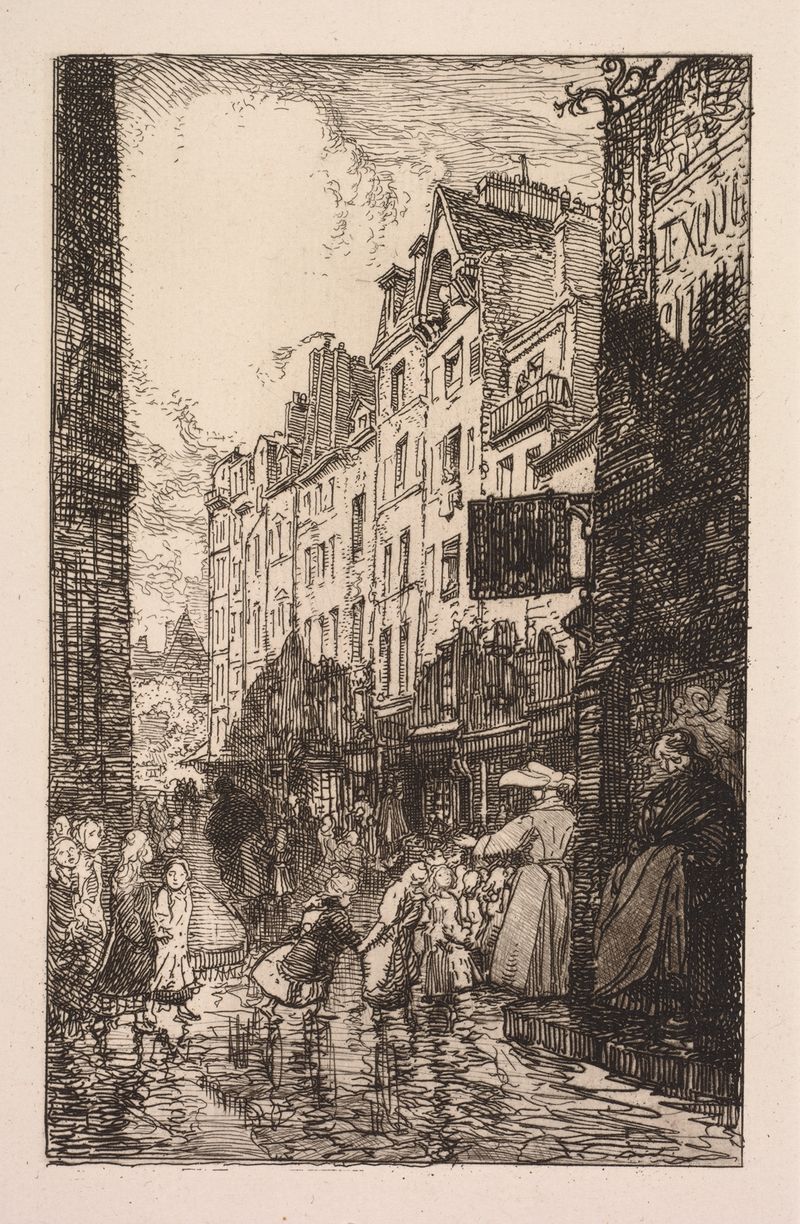
La Rue des Prêtres Saint-Séverin
Auguste Louis Lepère
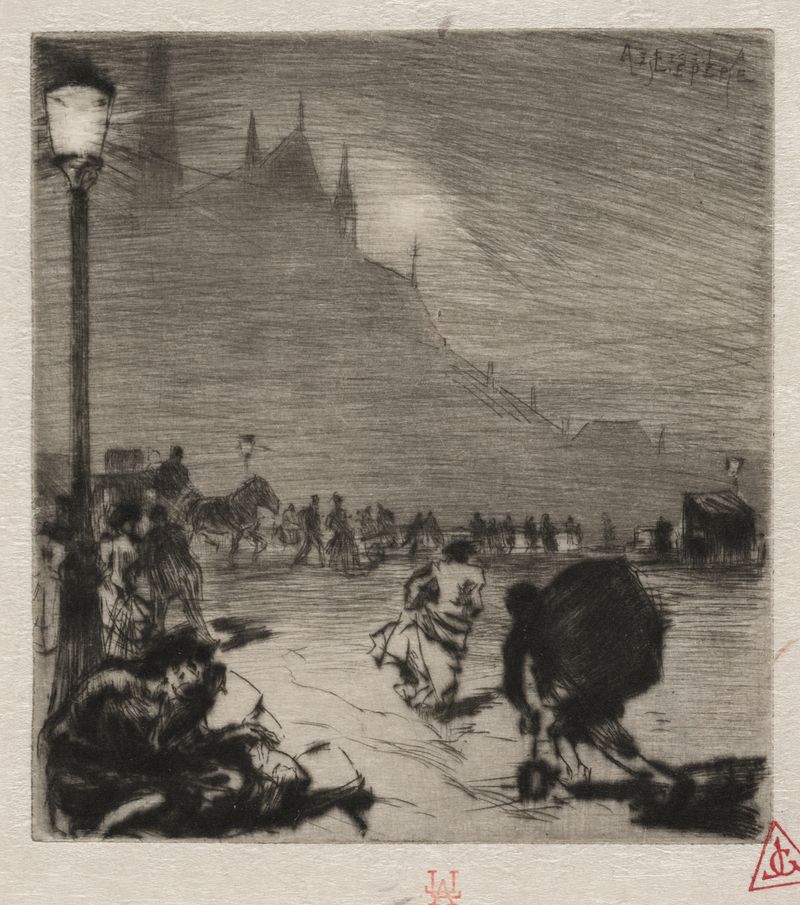
Au Coin du Pont-aux-Doubles
Auguste Louis Lepère
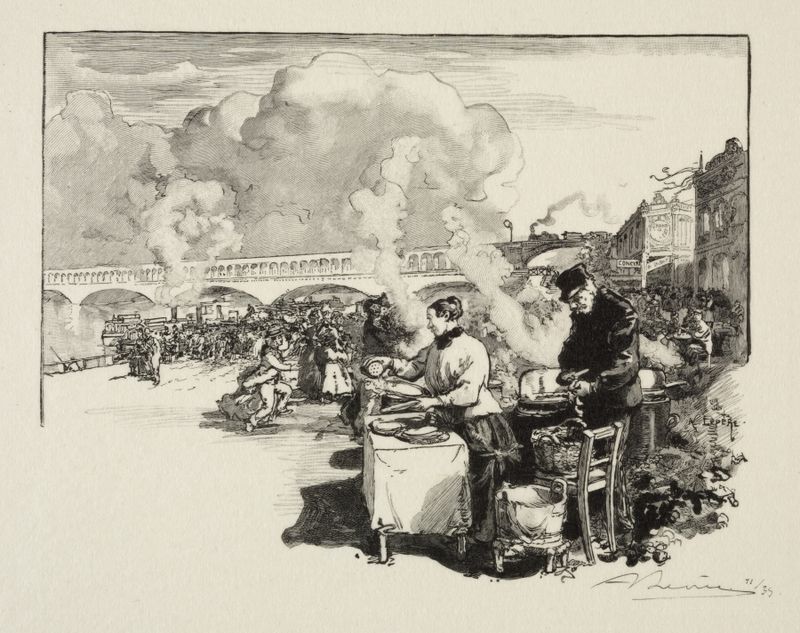
Debarcadère des bateaux-omnibus
Auguste Louis Lepère

La Seine, au quai de la Rapée
Auguste Louis Lepère
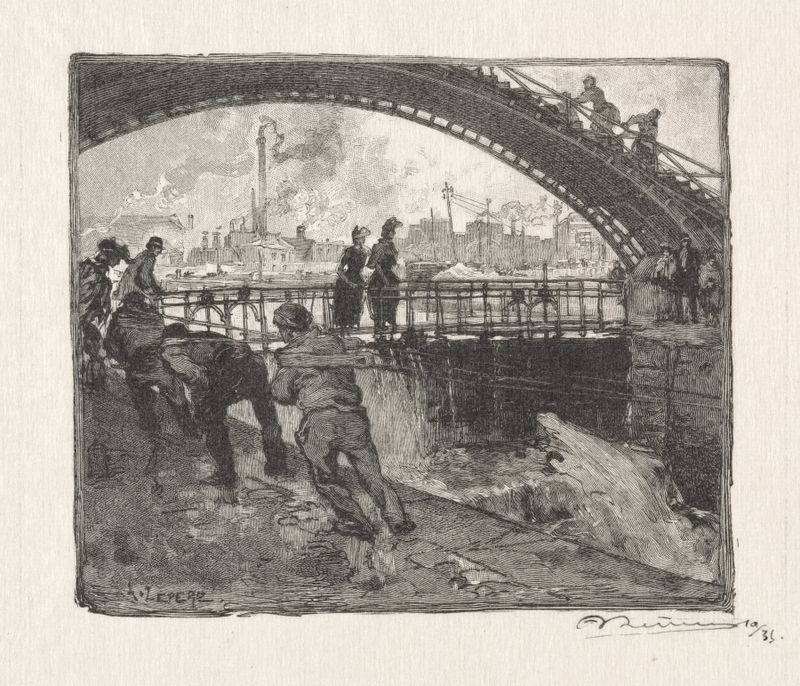
L’Ecluse du Canal St. Martin
Auguste Louis Lepère

Le Boulevard Montmartre, le Soir
Auguste Louis Lepère

Une Chasse au Mont Gérard
Auguste Louis Lepère
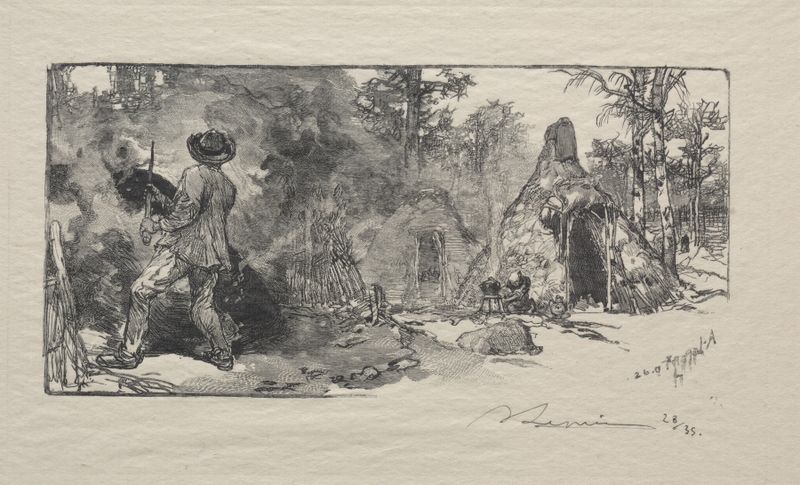
Les Charbonniere
Auguste Louis Lepère
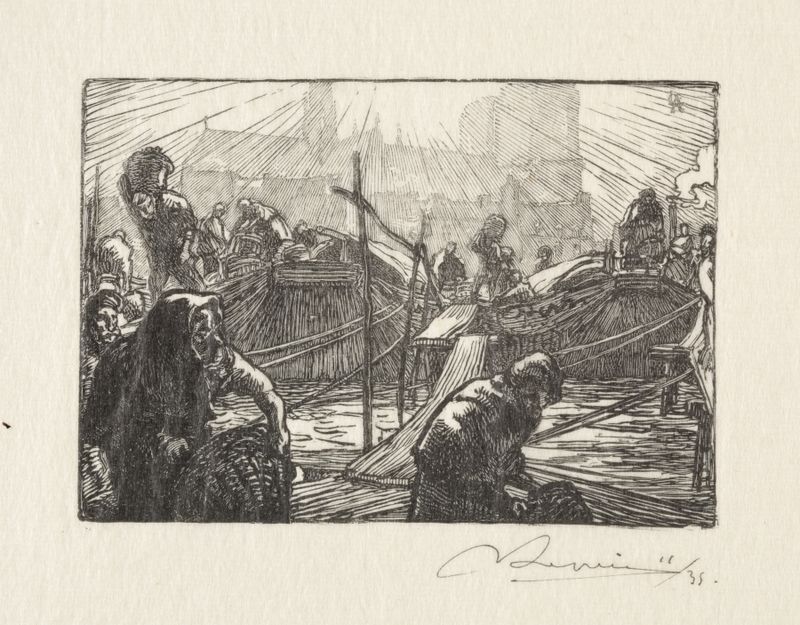
Notre Dame vue du Marché aux pommes
Auguste Louis Lepère

Le Palais des Arts Liberaux, Intèrieur
Auguste Louis Lepère





