
Street in Seville — History & Facts
In Street in Seville, the vibrant palette evokes an undercurrent of anxiety, reminding us of the fragility of life amidst bustling streets. Look to the left at the sun-drenched façade of the building, where ochres and soft whites dance together in a radiant embrace. Notice how the artist juxtaposes the sharp shadows of the figures against the glowing warmth of the wall, creating a striking tension. The pedestrians, characterized by hurried movements, are mere silhouettes against this vivid backdrop, their hurried gestures contrasting against the stillness of the ancient architecture. Hidden beneath the seemingly carefree ambiance lies a deeper narrative: the fear of the unknown lurking in the periphery of joy.
The figures, although lively, reflect a sense of urgency, perhaps hinting at the fleeting nature of their lives in a rapidly changing world. The play of light and shadow not only delineates space but also symbolizes the balance between hope and trepidation, suggesting that every joyful moment carries within it an awareness of life's impermanence. In 1905, Conder painted this work during a period of artistic exploration while living in Spain. The early 20th century was marked by a growing interest in impressionism and post-impressionism, as artists sought to capture the essence of the world around them.
Conder’s time in Seville deeply influenced his work, reflecting both the local culture and the broader existential themes that captivated many artists of his generation.
More Artworks by Charles Conder
Browse all →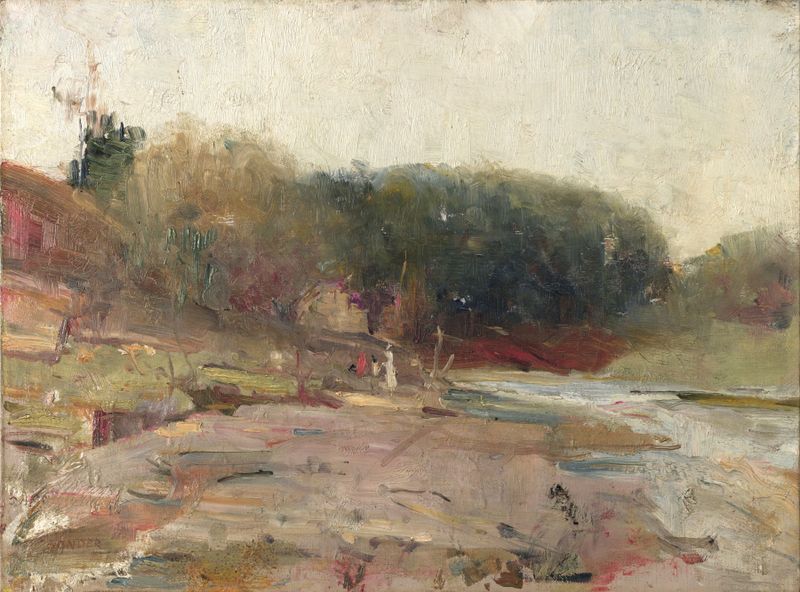
On the River Yarra, near Heidelberg, Victoria
Charles Conder
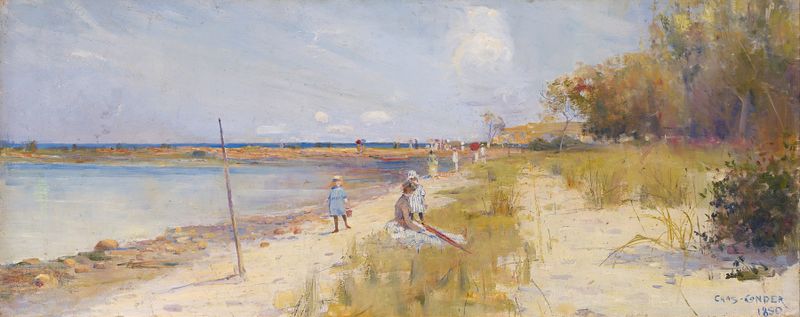
Rickett’s Point
Charles Conder

Sunset, Sydney Harbour
Charles Conder

Australian landscape
Charles Conder

Riddell’s Creek
Charles Conder
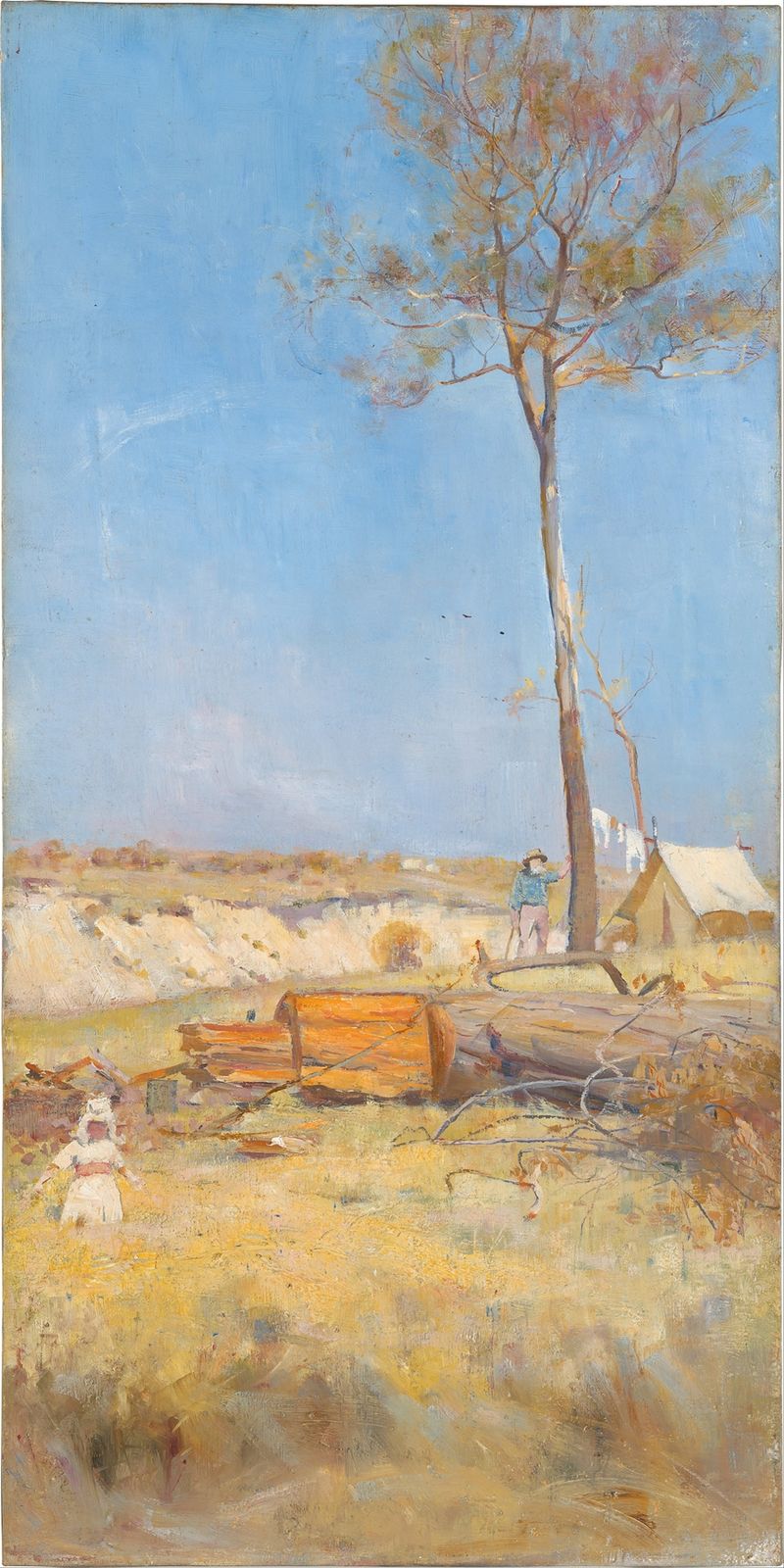
Under a southern sun
Charles Conder
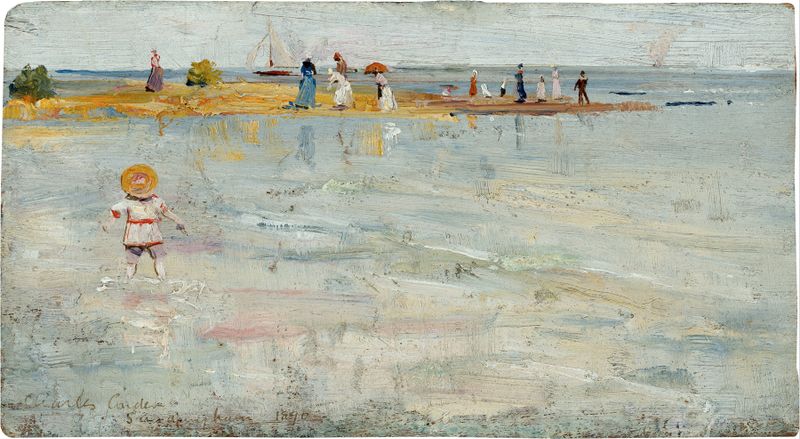
Ricketts Point, Beaumaris
Charles Conder

Going home
Charles Conder
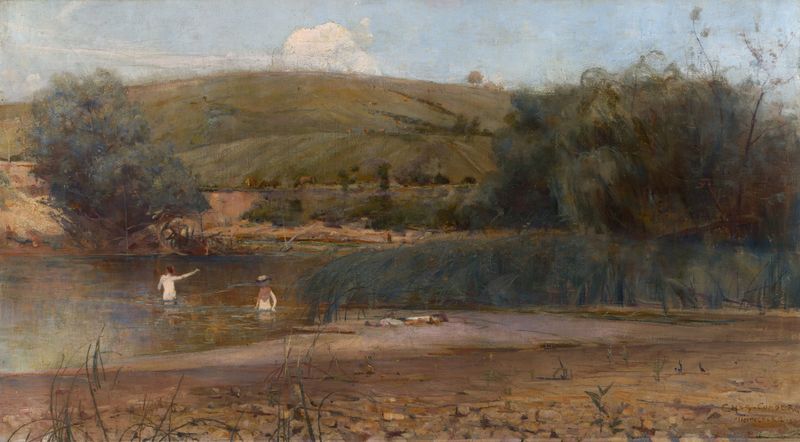
The Yarra, Heidelberg
Charles Conder
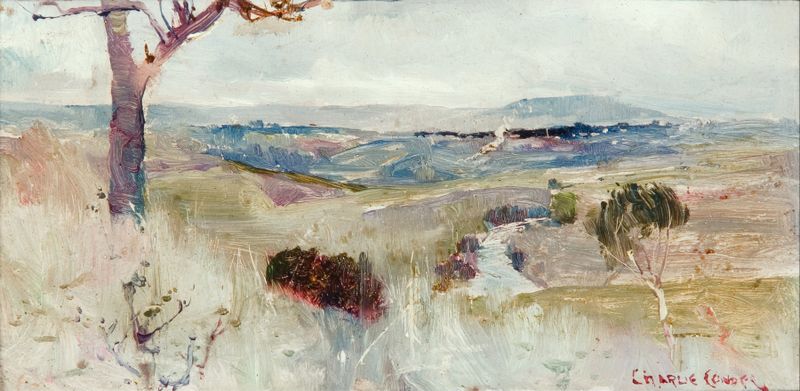
Dandenongs from Heidelberg
Charles Conder





