Studies of landscapes and nudes — History & Facts
When Pierre-Auguste Renoir turned fifty-nine in 1900, he was already acclaimed for his vibrant scenes of modern life, but it was his tireless curiosity that led him to fill entire sketchbooks with studies like Studies of landscapes and nudes. These pages were never meant for public exhibition, yet they offer a rare, candid glimpse into the artist’s restless hand and searching eye. Unlike his polished salon canvases, these studies were private experiments—moments of artistic rehearsal that reveal Renoir’s process as he moved between the natural world and the human form.
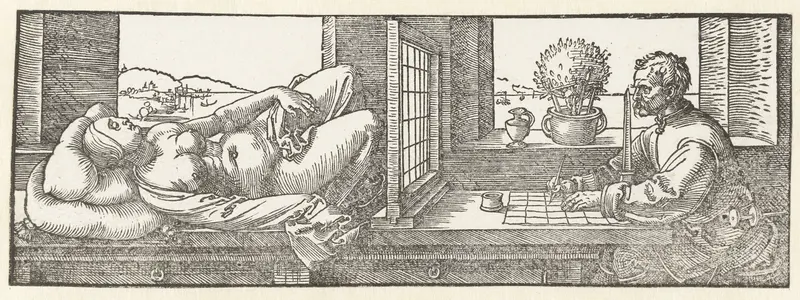
The sheer informality of these sketches, and their preservation, is a testament to the value later generations placed on the artist’s working method. In Studies of landscapes and nudes, Renoir captures fleeting impressions: the curve of a reclining figure, the dappled light on a hillside, the loose gesture of a tree’s branches. The viewer is invited into the artist’s moment of observation, as if standing beside him outdoors or in his studio. The nudes, rendered with swift, confident lines, echo the warmth and intimacy found in his larger paintings, while the landscapes pulse with the movement of wind and sun.
Unlike the classical precision of Ingres’s academic studies, Renoir’s approach is looser, prioritizing sensation over outline, and light over detail. The result is a series of vignettes, each a fragment of the world as Renoir saw and felt it. The exact journey of this particular set of studies is not fully documented, a common fate for works on paper from this period, which were often dispersed or kept in private hands before being recognized as significant in their own right. What is certain is that by the turn of the twentieth century, Renoir’s reputation was such that even his informal studies attracted collectors and curators eager to understand his evolving style.
Today, works like Studies of landscapes and nudes are treasured for the window they offer onto the daily discipline and experimentation behind Impressionism. They remind us that Renoir’s celebrated canvases were born from countless hours of looking, sketching, and reimagining the world around him.
More Artworks by Pierre-Auguste Renoir

Jetée De Fleurs
Pierre-Auguste Renoir

Portrait of Madame Charpentier
Pierre-Auguste Renoir

Bal du moulin de la Galette
Pierre-Auguste Renoir

Dance at Bougival
Pierre-Auguste Renoir

Luncheon of the Boating Party
Pierre-Auguste Renoir

Mother and Child
Pierre-Auguste Renoir

Woman with a Hat
Pierre-Auguste Renoir

Femme Au Chapeau
Pierre-Auguste Renoir

Femme au Fauteuil Vert
Pierre-Auguste Renoir

Gabrielle, Jean et une petite fille
Pierre-Auguste Renoir