
Study for "The Landing of Columbus" — History & Facts
What draws the eye first is the immense, spreading tree anchoring the left of the scene, its roots gripping the earth like ancient fingers. The branches stretch outward, framing a distant horizon where land meets sky in a quiet haze. Every brushstroke in the foliage seems to pulse with the humid air of an unfamiliar shore, while the filtered light beneath the canopy falls gently on the ground, inviting the viewer to step forward and linger.
Beyond the tree, the landscape recedes into soft greens and blues, punctuated by the faint suggestion of palm trees and low structures—hints of human presence dwarfed by the grandeur of nature. The composition leads the gaze from the solidity of the trunk to the open promise of the world beyond, capturing a moment of anticipation and possibility. Painted in 1892, this Study for The Landing of Columbus by Albert Bierstadt belongs to an era when American artists looked both westward and outward, drawn to scenes of discovery and encounter. The late nineteenth century saw a surge of interest in historical and exploratory subjects, often commissioned to commemorate national milestones or to decorate public spaces.
Bierstadt, famed for his panoramic landscapes, here turns his attention to a quieter, preparatory study—perhaps intended as groundwork for a grander narrative canvas. History has kept few traces of this particular work, now documented in the collection of Christie's, but its quiet presence invites us to imagine the stories that might unfold just beyond the edge of the frame. Let your gaze settle under the tree’s sheltering branches, and consider what new world might lie ahead.
More Artworks by Albert Bierstadt

A Storm in the Rocky Mountains, Mt. Rosalie
Albert Bierstadt
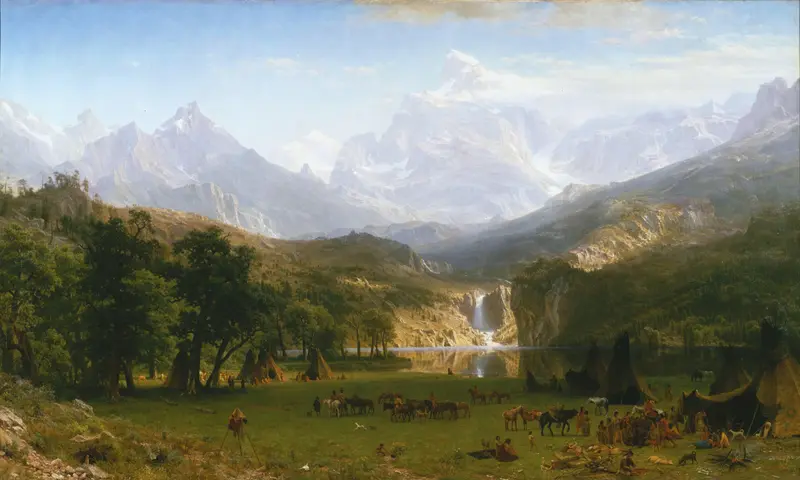
The Rocky Mountains, Lander's Peak
Albert Bierstadt
Niagara from the American Side
Albert Bierstadt
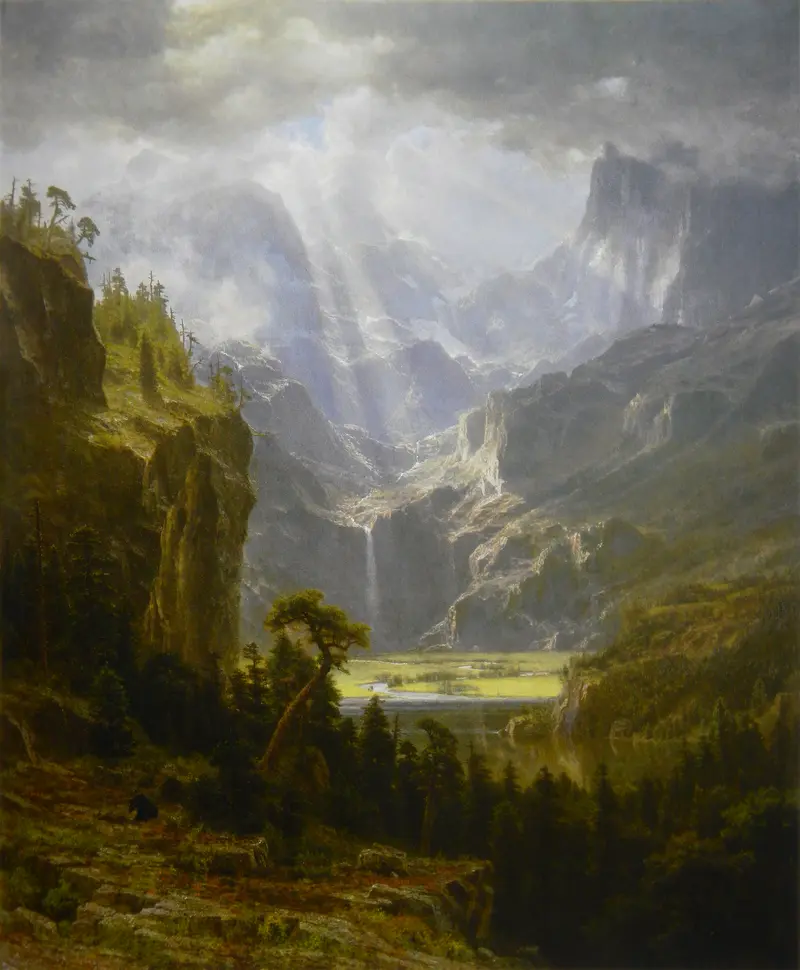
Rocky Mountains, Lander’s Peak
Albert Bierstadt

Valley of the Yosemite
Albert Bierstadt
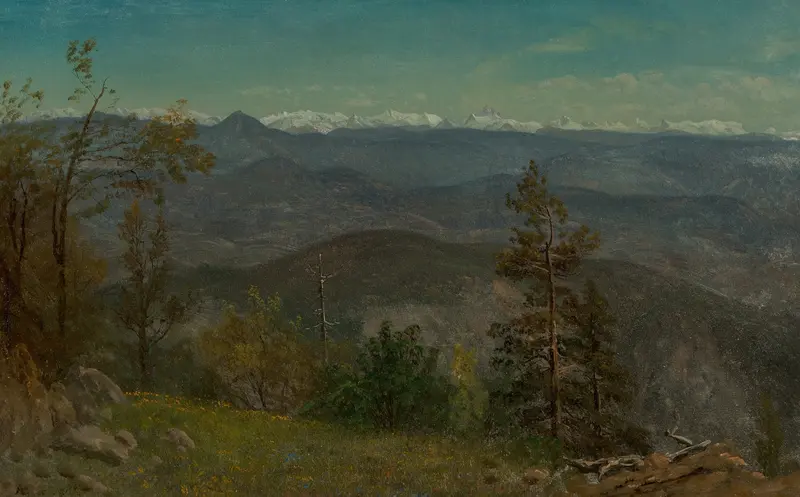
Yosemite Valley, California
Albert Bierstadt
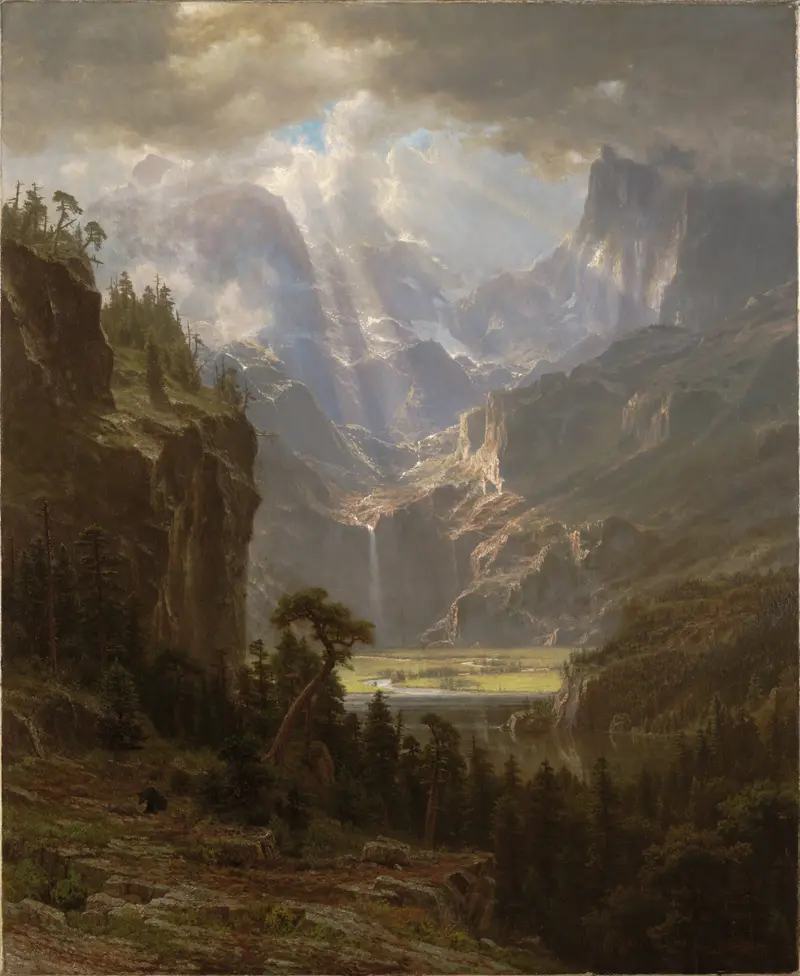
Rocky Mountains, "Lander's Peak"
Albert Bierstadt

Laramie Peak
Albert Bierstadt
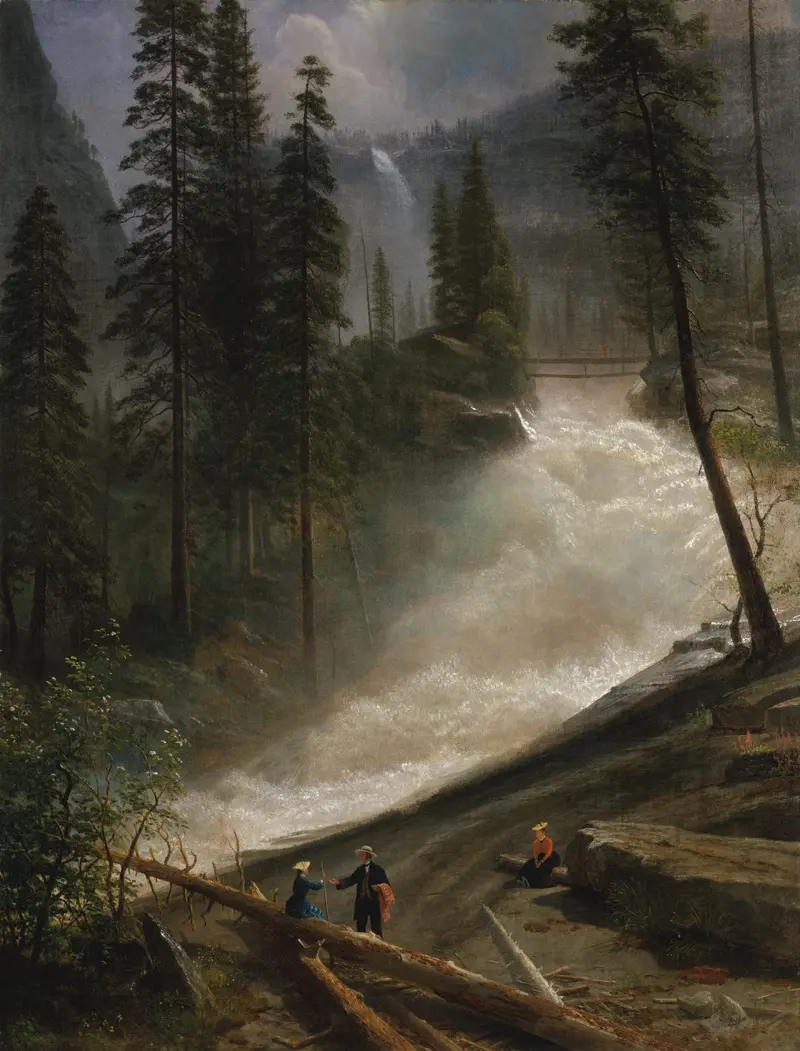
Nevada Falls, Yosemite
Albert Bierstadt
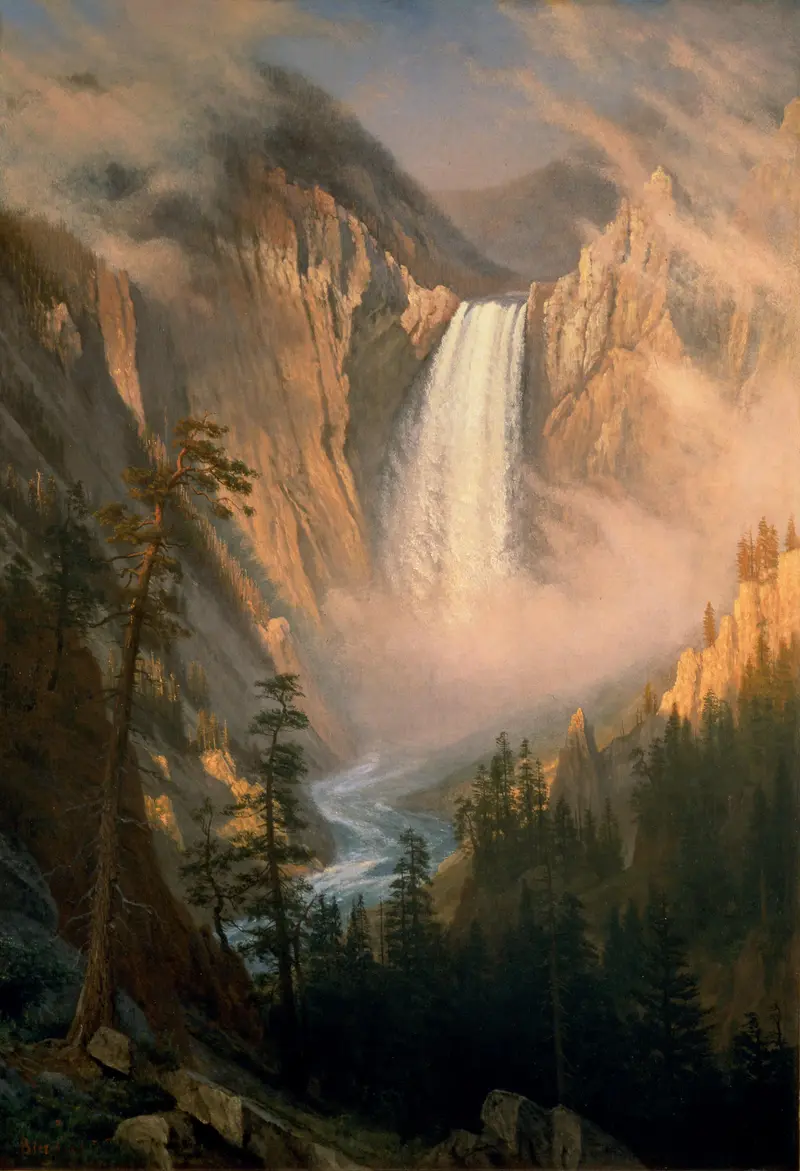
Yellowstone Falls
Albert Bierstadt
More Landscape Art

The Starry Night
Vincent van Gogh

View of Delft
Johannes Vermeer

Water Lilies
Claude Monet

The Grand Canal, Venice, looking north-west from the Ca' Corner to the Ca' Contarini degli Scrigni, with the campanile of Santa Maria della Carità
Canaletto

Windsor Castle
Canaletto

The Grand Canal looking North-East from the Palazzo Dolfin-Manin to the Rialto Bridge
Canaletto