Wortel bloemen (Wild Carrots) — History & Facts
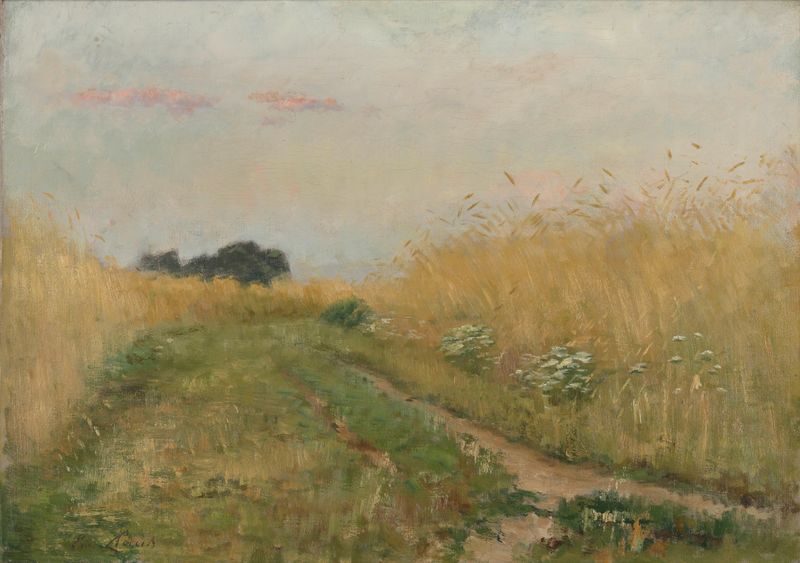
Where does light end, and longing begin? In Wortel bloemen, the brush of Emile Claus blurs the boundaries between the visible and the unseen, inviting us to explore the delicate dance of nature and emotion. Focus first on the gentle play of light that bathes the wild carrots, illuminating their feathery greens and whispering whites. Notice how the vibrant hues draw your eye to the center, where the flowers emerge in a soft, almost ethereal glow. The delicate strokes convey a sense of spontaneity, as if the artist captured the very heartbeat of the wildflowers swaying in a summer breeze.
The composition, with its loose yet intentional arrangement, evokes a serene chaos, mirroring the wildness of nature itself. Yet beneath the surface beauty lies an intricate web of tension. The juxtaposition of light and shadow suggests a fleeting moment—joy intertwined with a trace of melancholy. The wild carrots, symbolizing both the vibrancy of life and the wild, untamed aspects of human emotion, hint at madness lurking just beyond the edges of clarity.
Each flower not only represents a moment in time but whispers of deeper longings and the ephemeral nature of existence. In 1896, Claus was immersed in the vibrant atmosphere of Belgium, where the rise of Impressionism was challenging traditional artistic conventions. At this time, he was experimenting with light and color, seeking to capture the essence of landscapes and still lifes in a new way. This painting reflects his desire to transcend mere representation, aiming instead to connect with the viewer’s innermost feelings and the tumultuous beauty of life itself.