
Sunset — History & Facts
Who listens when art speaks of silence? In the embrace of twilight, the world holds its breath, and every brushstroke whispers of an illusion that transcends mere representation. Focus on the canvas’ gentle gradient, where hues of deep orange and soft lavender dance together at the horizon. Look closely at the interplay of shadows and light as they mingle across the water's surface, mirroring the sky's fading warmth. Notice how the horizon line invites your gaze to traverse the tranquil expanse, while delicate brushwork captures the fleeting moment, conjuring an ephemeral beauty that feels both arresting and serene. Beneath the surface beauty lies a poignant contrast—the vibrant colors suggest warmth and comfort, yet the vast emptiness evokes a profound sense of solitude.
This duality invites contemplation on the fleeting nature of time and the illusion of permanence. The calm water reflects not just the sunset but also, perhaps, the quietude within oneself, a moment suspended between day and night, life and the unknown. In 1916, the artist captured Sunset during a time of personal exploration, finding solace in the landscapes of New England. The early 20th century was marked by a shift in artistic movements, with many seeking to express the emotional resonance of nature.
For Tryon, this painting encapsulated not only his mastery of color and light but also a yearning for connection within a rapidly changing world.
More Artworks by Dwight William Tryon
Browse all →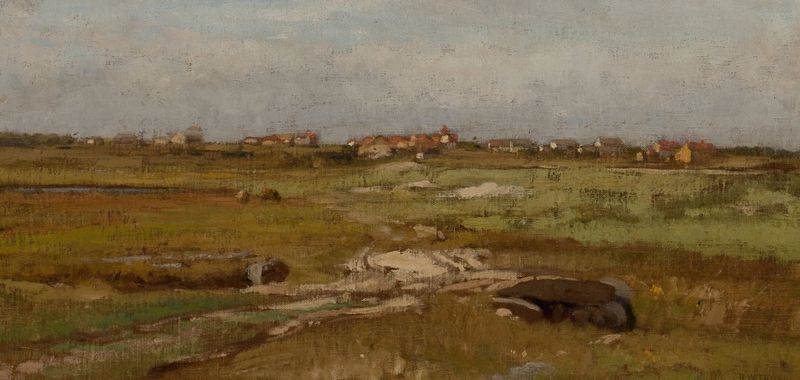
Marsh Landscape
Dwight William Tryon
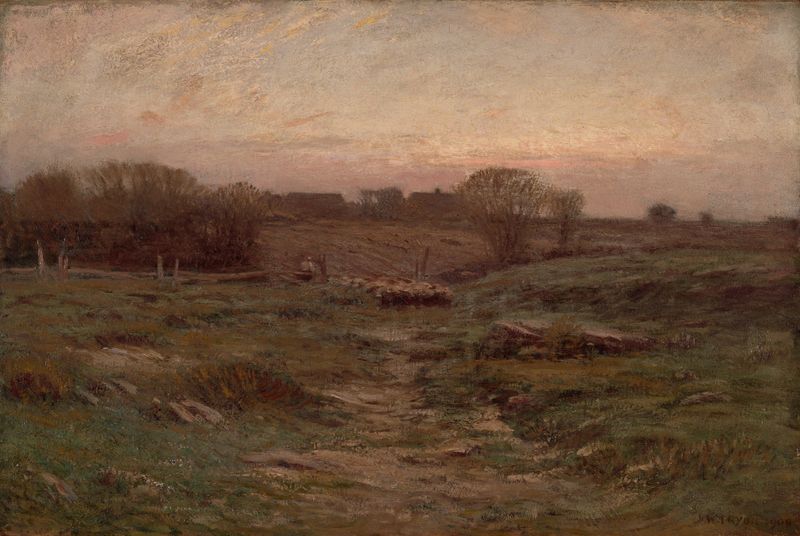
Landscape (Sheep in the Valley)
Dwight William Tryon
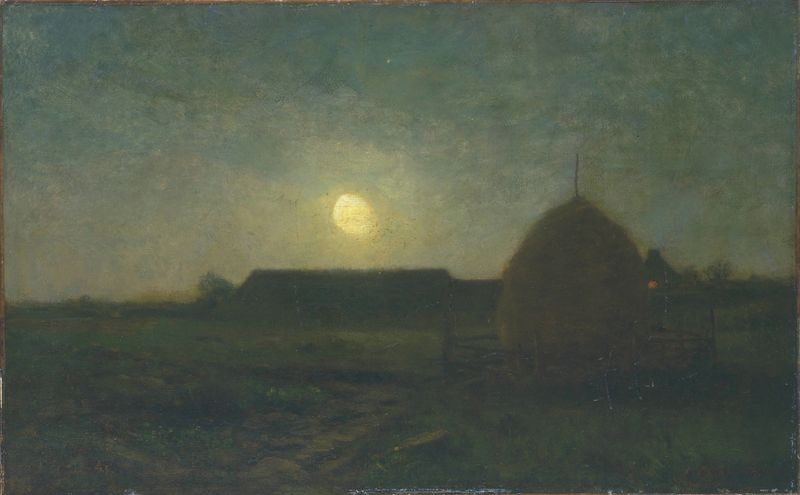
Moonlight
Dwight William Tryon

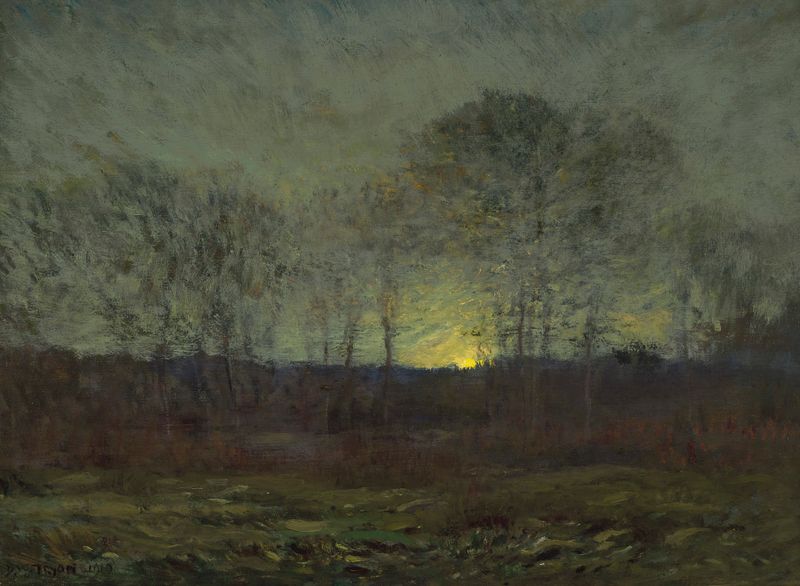
Evening Landscape
Dwight William Tryon
Moonrise
Dwight William Tryon
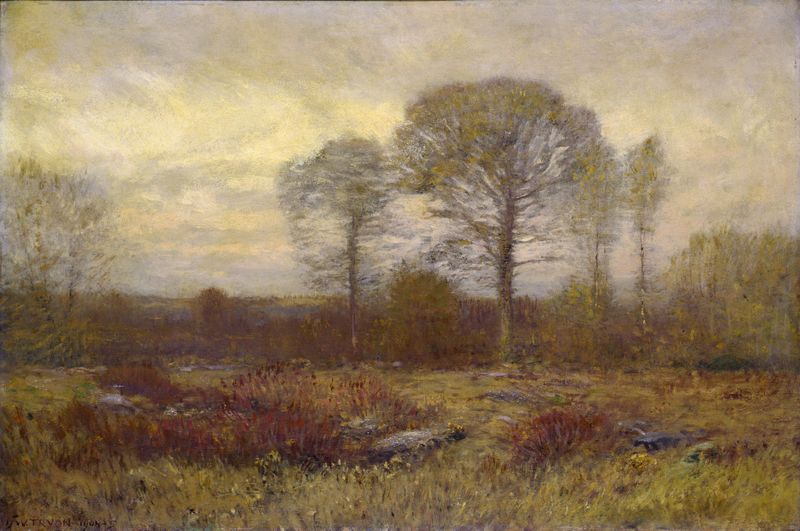
November
Dwight William Tryon
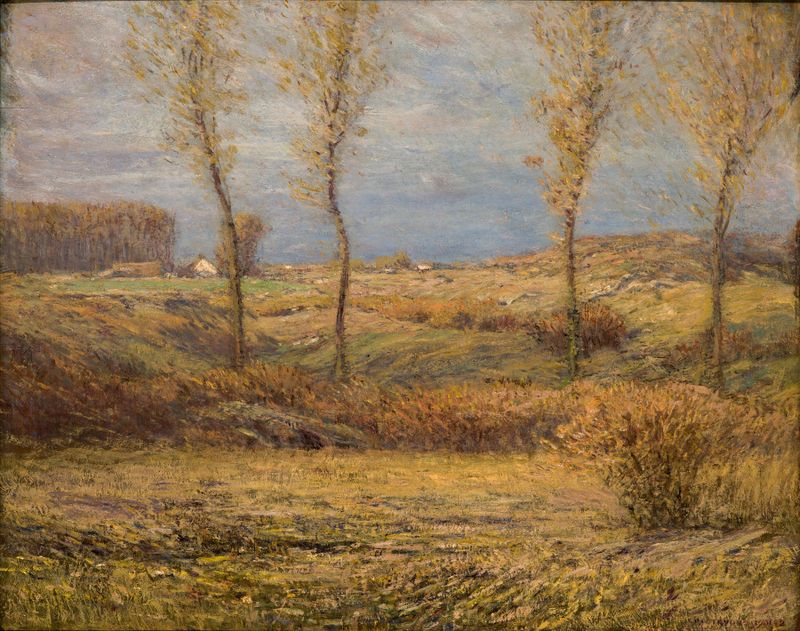
November Morning
Dwight William Tryon

Coastal Scene
Dwight William Tryon

Twilight
Dwight William Tryon
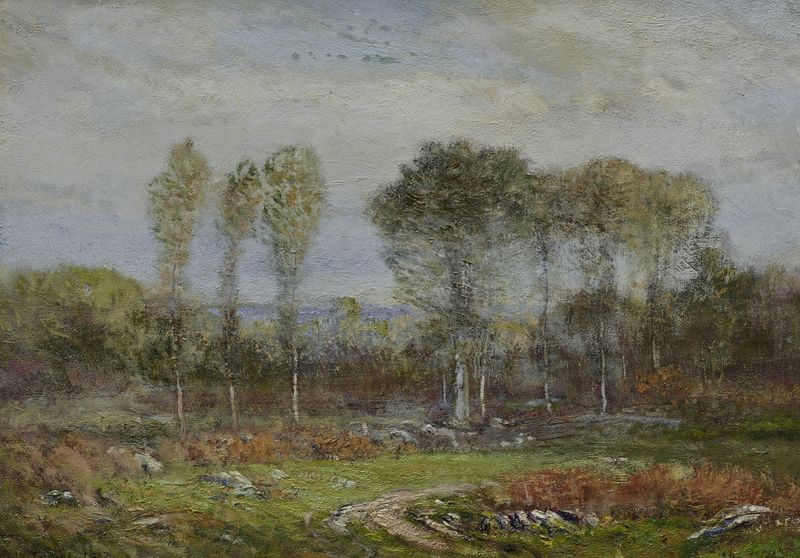
Morning in September
Dwight William Tryon





