
Sunset — History & Facts
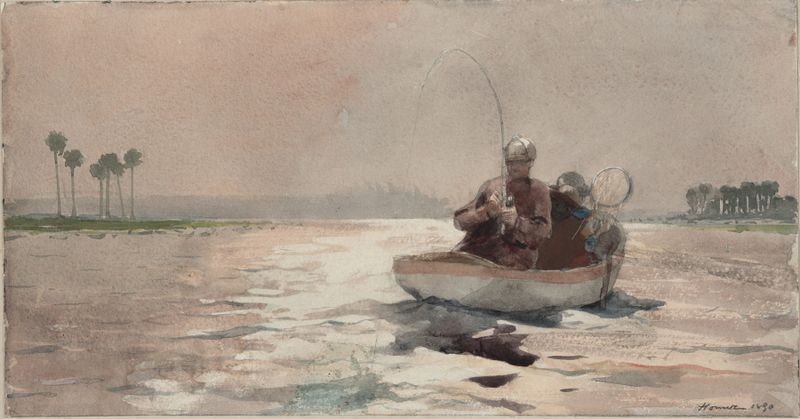
In the amber glow of twilight, the sky ignites with hues of orange and pink, hinting at the day’s bittersweet farewell. This moment, suspended between light and darkness, captures a profound yearning that transcends mere beauty. Look to the center where the horizon stretches, painted in rich, fiery tones that blend seamlessly into the cool blues above. Shadows linger at the water's edge, reflections shimmering like whispers of fleeting time.
Homer’s masterful brushwork creates a dynamic interplay of color and form, inviting the eye to wander across the canvas while evoking an overwhelming sense of nostalgia. Yet, within this serene landscape lies a deeper emotional texture. The transition from day to night symbolizes the impermanence of beauty and the inevitability of change. The stillness of the water contrasts sharply with the vibrant sky, evoking a tension between fleeting moments of joy and the underlying melancholy of longing.
It speaks to the human experience—our desire to hold on to fleeting beauty while confronting the shadows that follow. Winslow Homer painted this piece around 1875 during a period of artistic exploration and personal reflection. Having recently moved to New York, he was deeply influenced by the American landscape and its emotional resonance. At that time, the art world was shifting towards realism, yet Homer’s work continued to blend elements of romanticism and impressionism, capturing the essence of natural beauty with a profound emotional depth.
More Artworks by Winslow Homer
Browse all →
The Gulf Stream
Winslow Homer
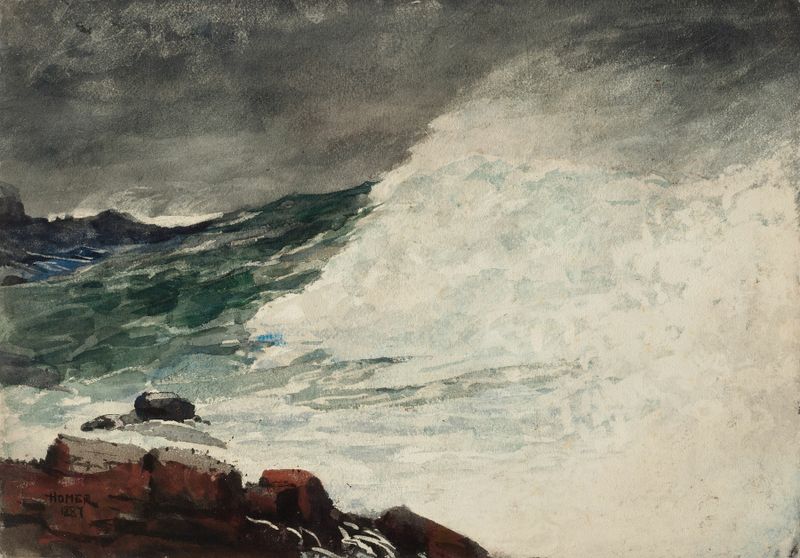
Prout’s Neck, Breaking Wave
Winslow Homer
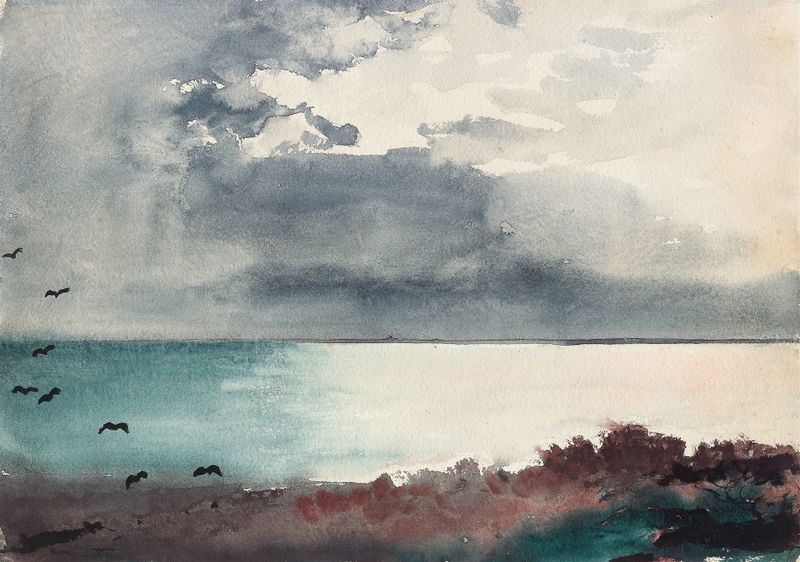
Breaking Storm, Coast of Maine
Winslow Homer
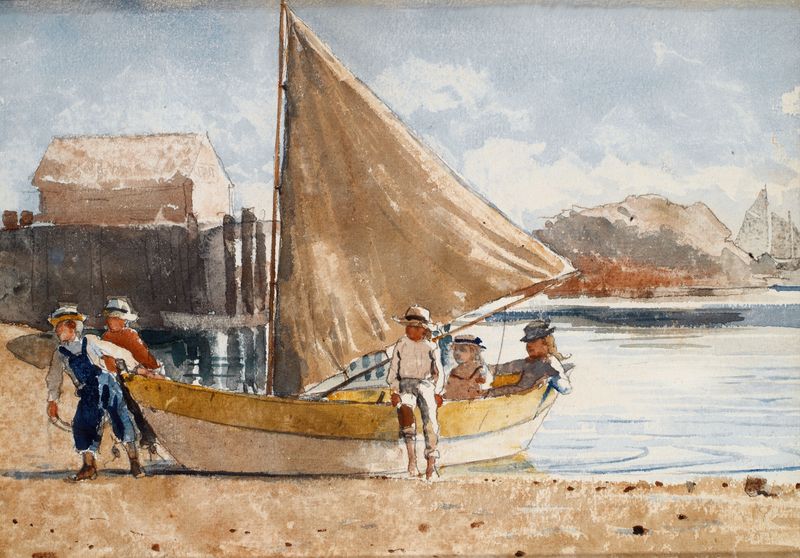
Summertime
Winslow Homer
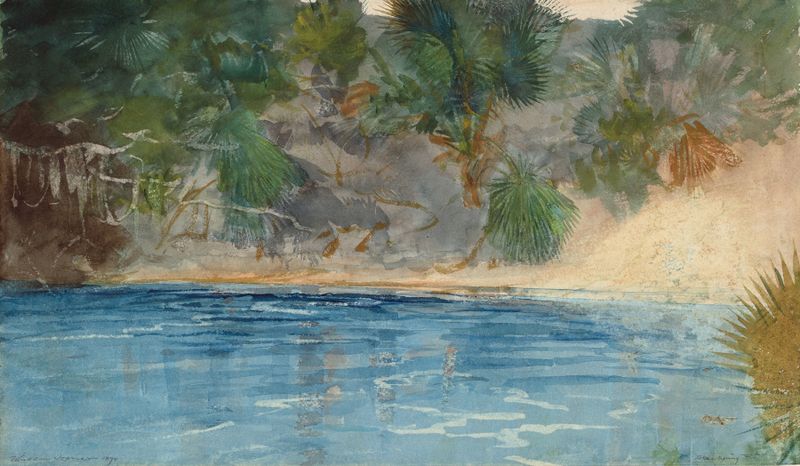
Blue Spring, Florida
Winslow Homer
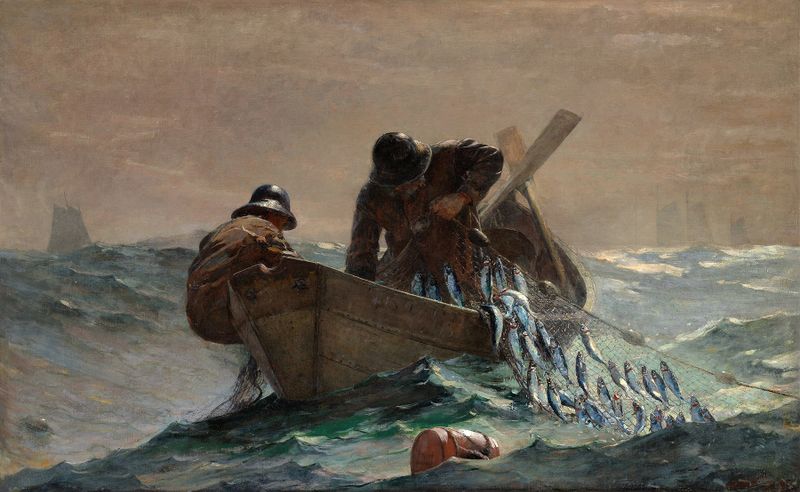
The Herring Net
Winslow Homer
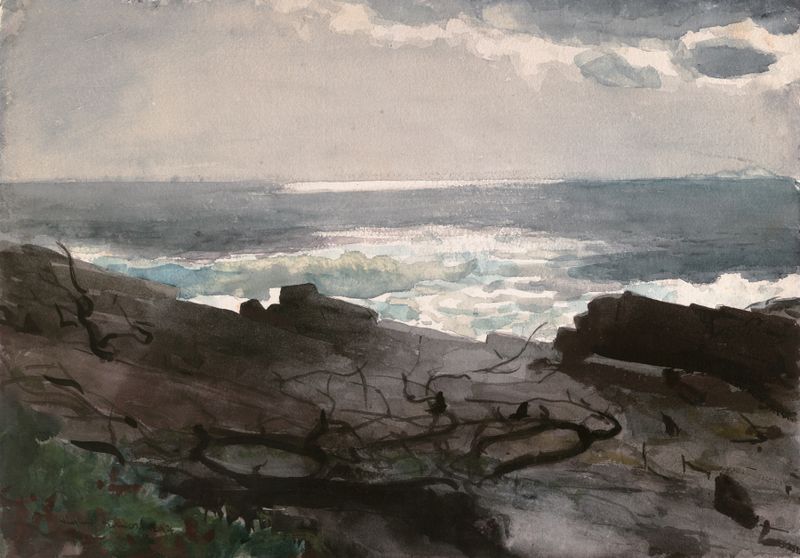
Sunshine and Shadow, Prout’s Neck
Winslow Homer
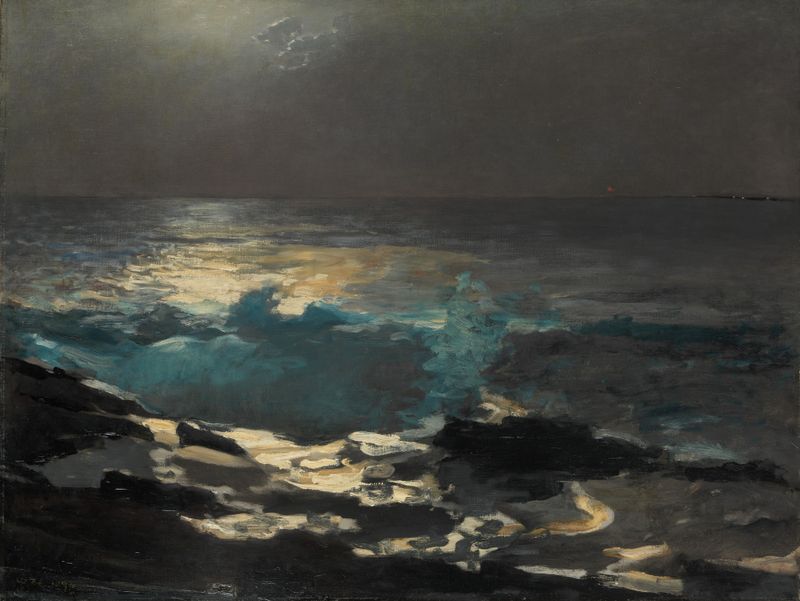
Moonlight, Wood Island Light
Winslow Homer
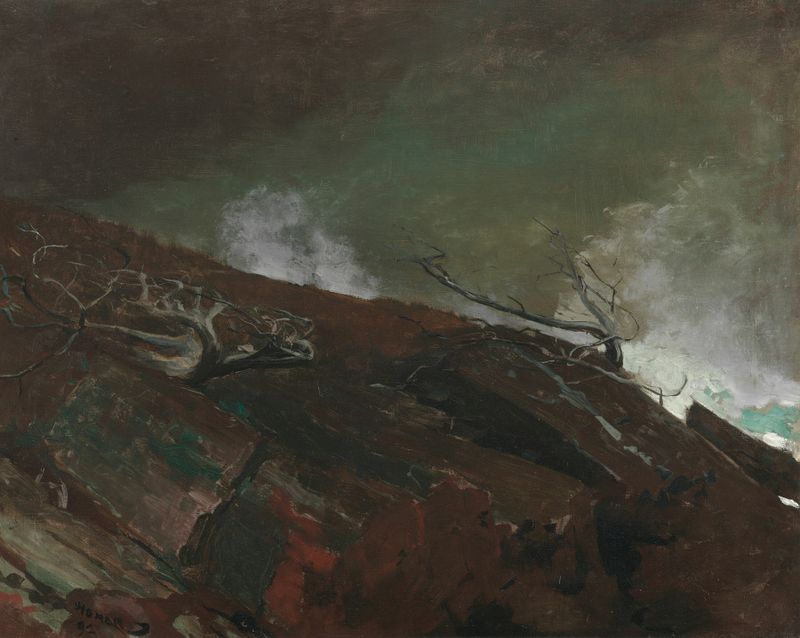
Coast of Maine
Winslow Homer
Bass Fishing – Florida
Winslow Homer





