
Sunset on the Mountain — History & Facts
A hush seems to fall over the valley as the last rays of the sun slip behind the distant mountains. In Sunset on the Mountain, Albert Bierstadt draws the viewer into a world where light is both a veil and a revelation. The eye is led from the glowing sky at the heart of the canvas, down through layers of misty blue and ochre mountains, to a winding river that catches the fading light.
The silhouette of a ruined castle commands a promontory, its broken towers a quiet witness to the passage of time. Foreground trees, sharply defined, anchor the viewer to the present moment, while the vastness beyond suggests stories both ancient and unspoken. Painted in 1859, this work belongs to a period when American and European artists alike were captivated by the grandeur of the landscape and the drama of nature’s transitions. Bierstadt was known for his sweeping views of the American West, but here, the mood is more intimate and reflective, with the ruins hinting at the romantic fascination with history and decay.
Such paintings found eager audiences among collectors who sought both the thrill of discovery and the comfort of nostalgia. Though history has kept few traces of this particular canvas beyond its recent appearance at Heritage Auctions in Dallas, its quiet drama invites the viewer to linger, tracing the light as it slips away behind the mountains.
More Artworks by Albert Bierstadt

A Storm in the Rocky Mountains, Mt. Rosalie
Albert Bierstadt
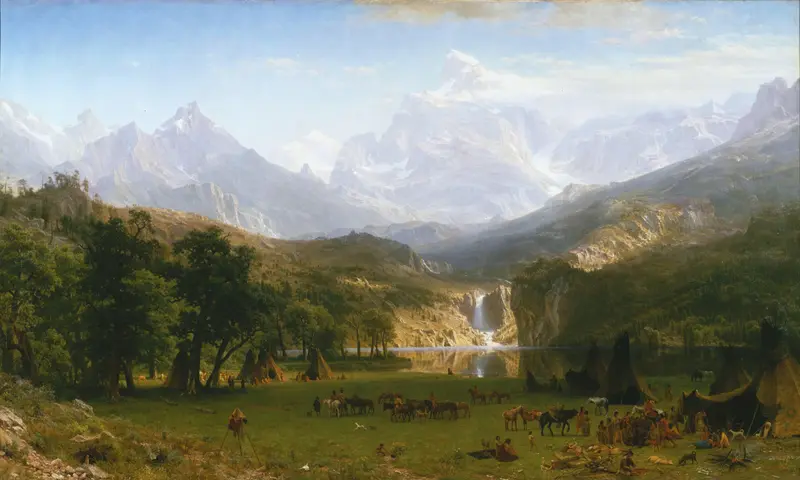
The Rocky Mountains, Lander's Peak
Albert Bierstadt
Niagara from the American Side
Albert Bierstadt
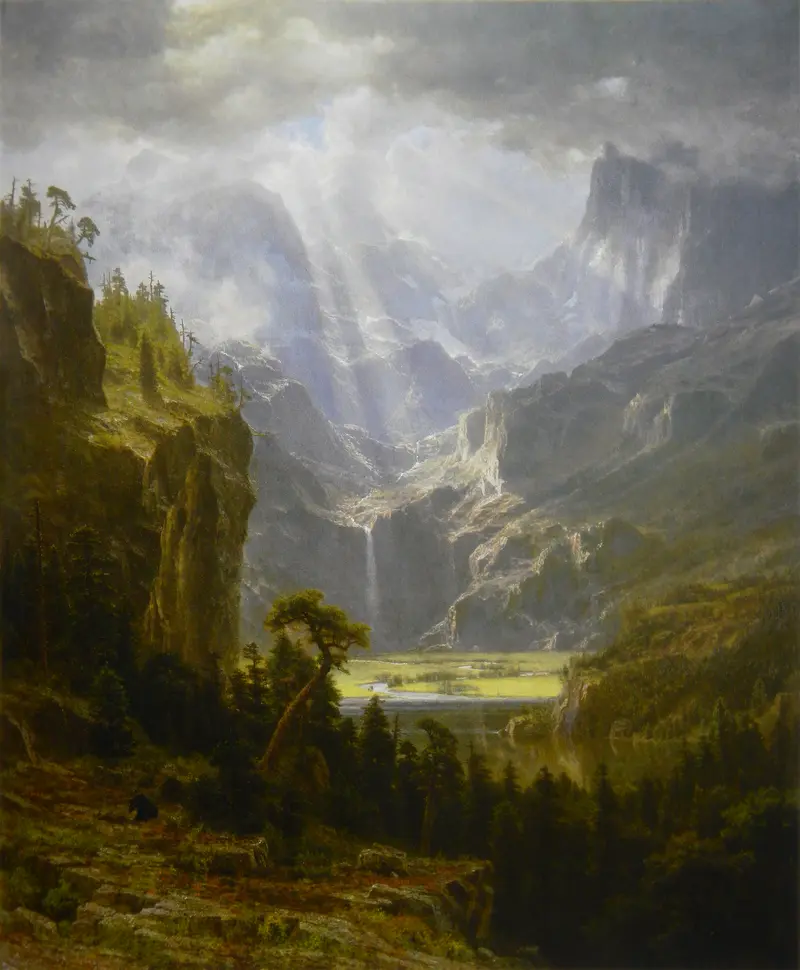
Rocky Mountains, Lander’s Peak
Albert Bierstadt

Valley of the Yosemite
Albert Bierstadt
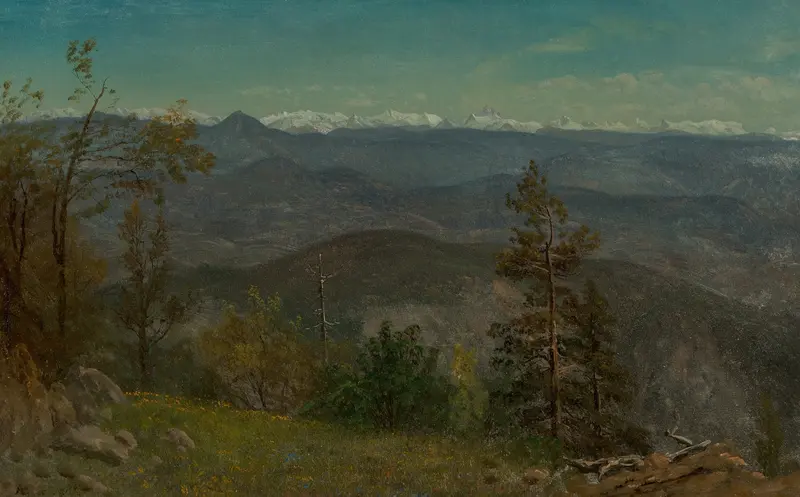
Yosemite Valley, California
Albert Bierstadt
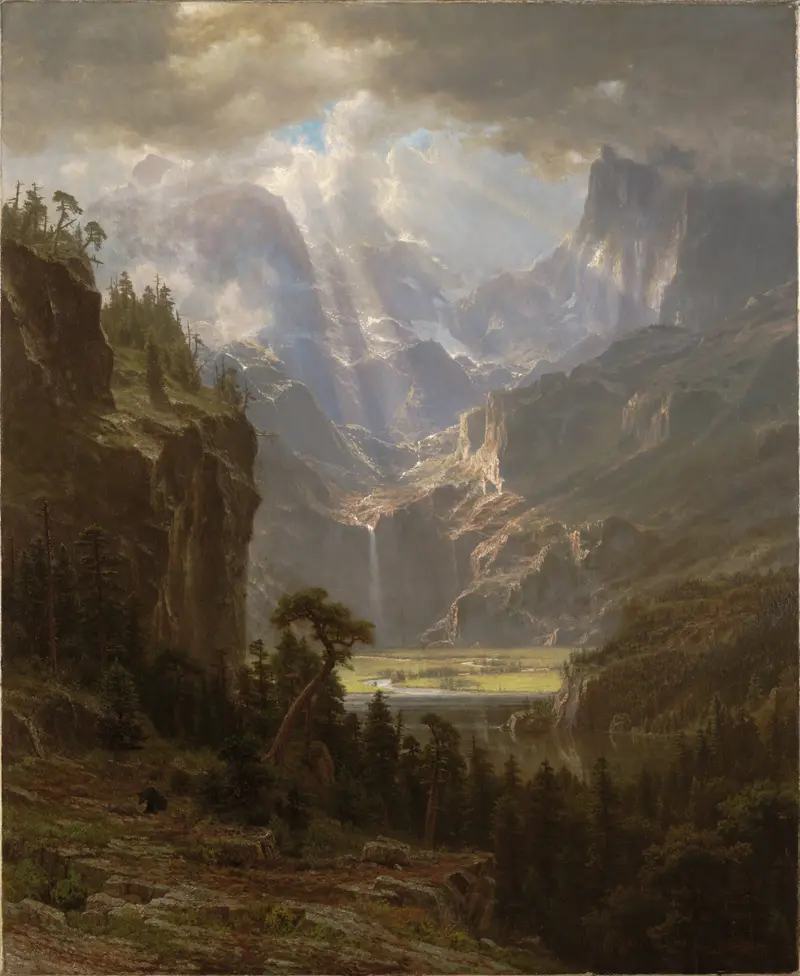
Rocky Mountains, "Lander's Peak"
Albert Bierstadt

Laramie Peak
Albert Bierstadt
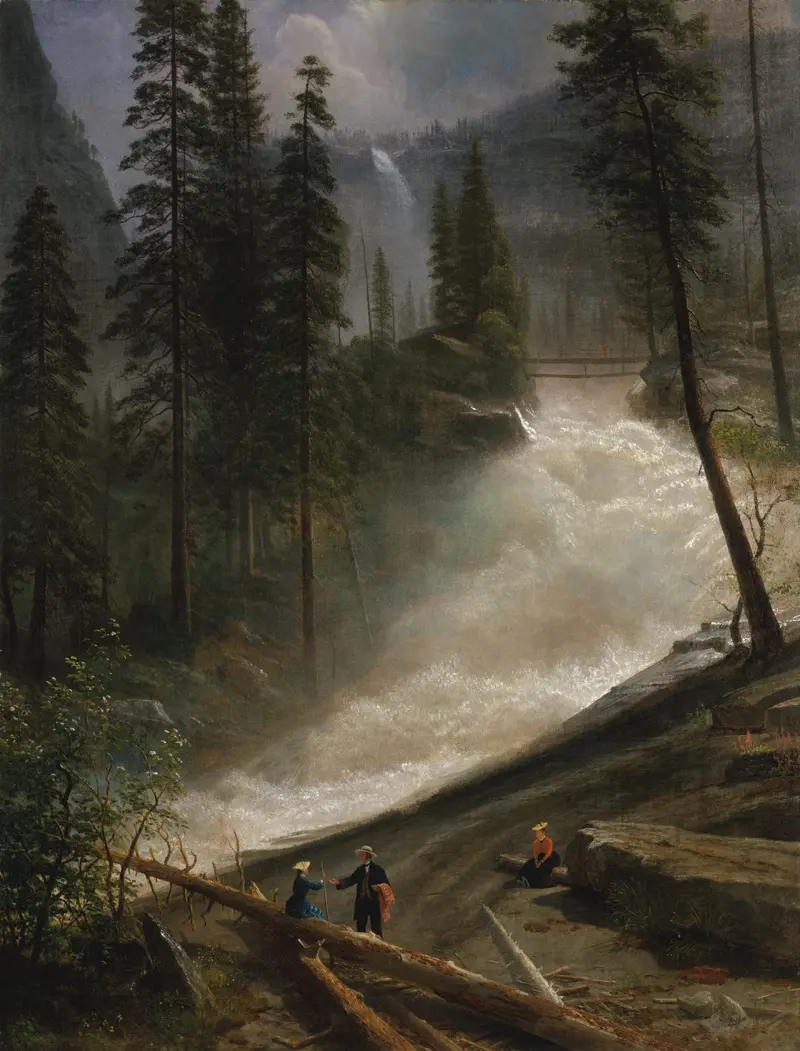
Nevada Falls, Yosemite
Albert Bierstadt
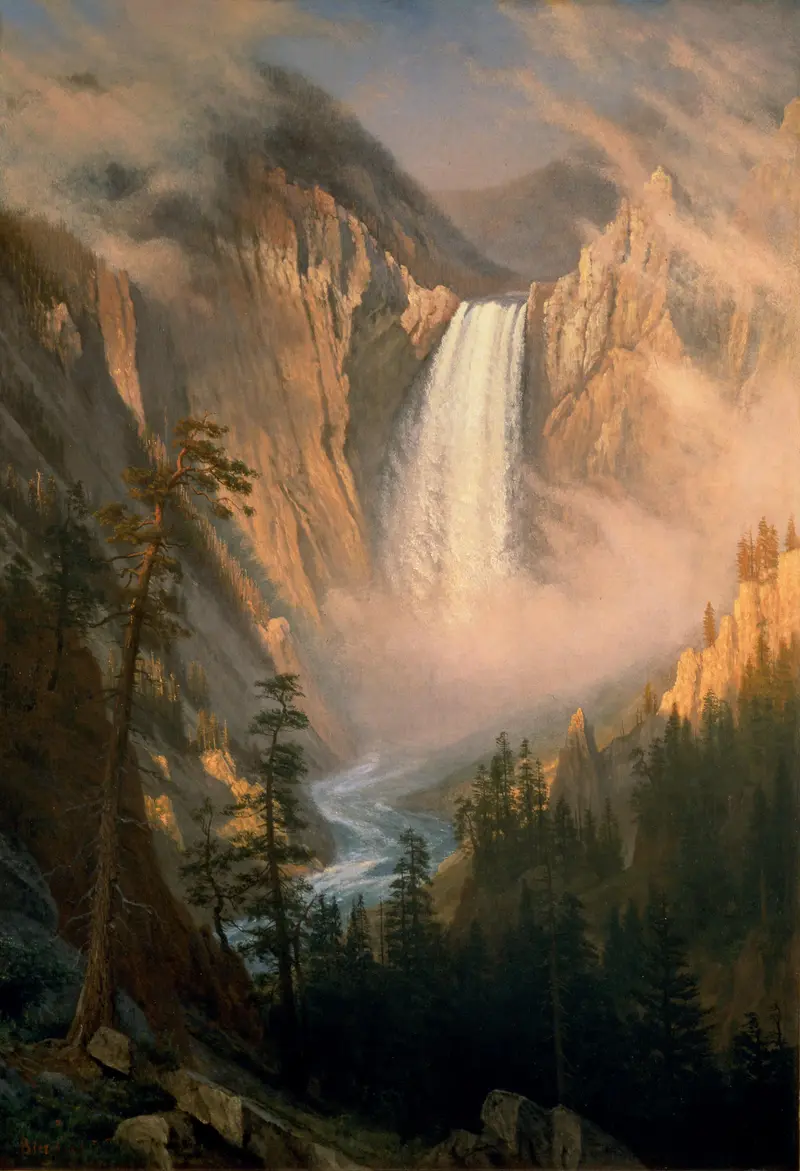
Yellowstone Falls
Albert Bierstadt
More Landscape Art

The Starry Night
Vincent van Gogh

View of Delft
Johannes Vermeer

Water Lilies
Claude Monet

The Grand Canal, Venice, looking north-west from the Ca' Corner to the Ca' Contarini degli Scrigni, with the campanile of Santa Maria della Carità
Canaletto

Windsor Castle
Canaletto

The Grand Canal looking North-East from the Palazzo Dolfin-Manin to the Rialto Bridge
Canaletto