Suprematist Drawings — History & Facts
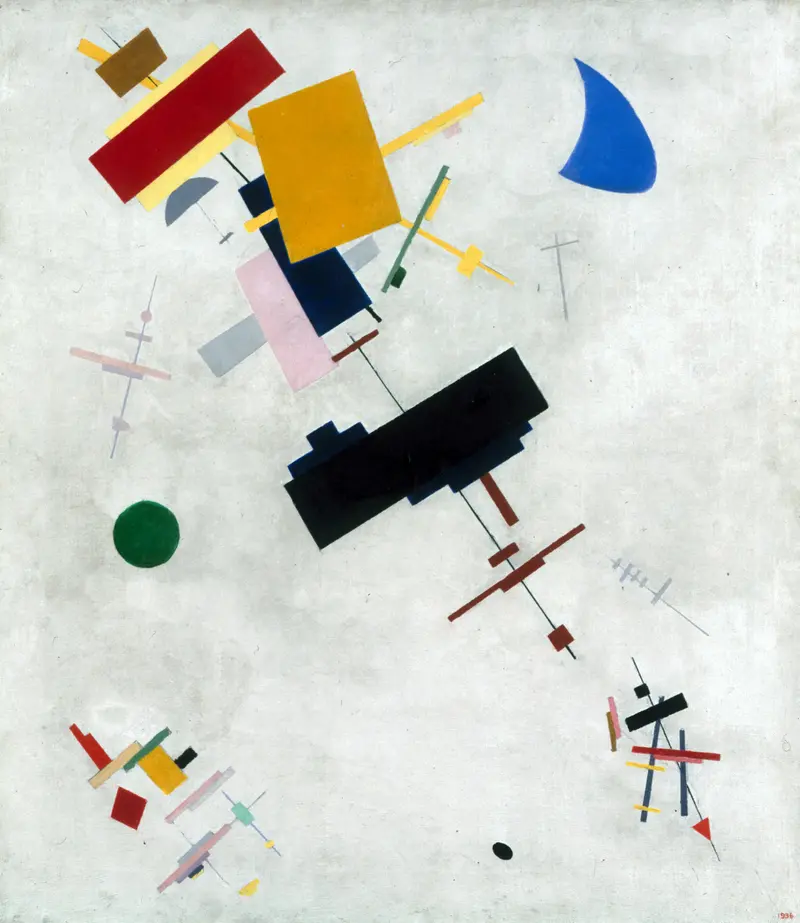
A single glance at Suprematist Drawings by Kazimir Malevich is enough to sense the quiet tension between order and freedom. Sparse, hand-drawn rectangles, lines, and circles hover within faintly sketched frames, each shape carefully placed yet resisting any obvious narrative. The eye is drawn first to the upper section, where a darkened circle and a shaded rectangle seem to orbit a long, horizontal bar—suggesting a kind of balance, or perhaps a collision.
Below, two smaller panels echo the same vocabulary, their forms tilting and crossing, as if the artist is searching for the right constellation. The rawness of the pencil on rough paper keeps everything provisional, a record of thought in motion rather than a finished design. This drawing belongs to the radical world of early twentieth-century Russia, when artists like Malevich broke with centuries of tradition to invent new visual languages. In 1919, the year this work was made, Suprematism was still a revolutionary idea: art reduced to pure geometry, freed from the need to represent anything but itself.
Such drawings were not made for wealthy patrons or grand salons, but for fellow artists and students, as blueprints for a new way of seeing. Now in the Thyssen-Bornemisza Museum, this modest sheet bears witness to a moment when the future of art seemed to hang on the placement of a single line. Look again, and you may find yourself tracing the artist’s hand, searching for meaning in the spaces between.
More Artworks by Kazimir Malevich

Red Square
Kazimir Malevich

Suprematist Composition: White on White
Kazimir Malevich

Black Square
Kazimir Malevich
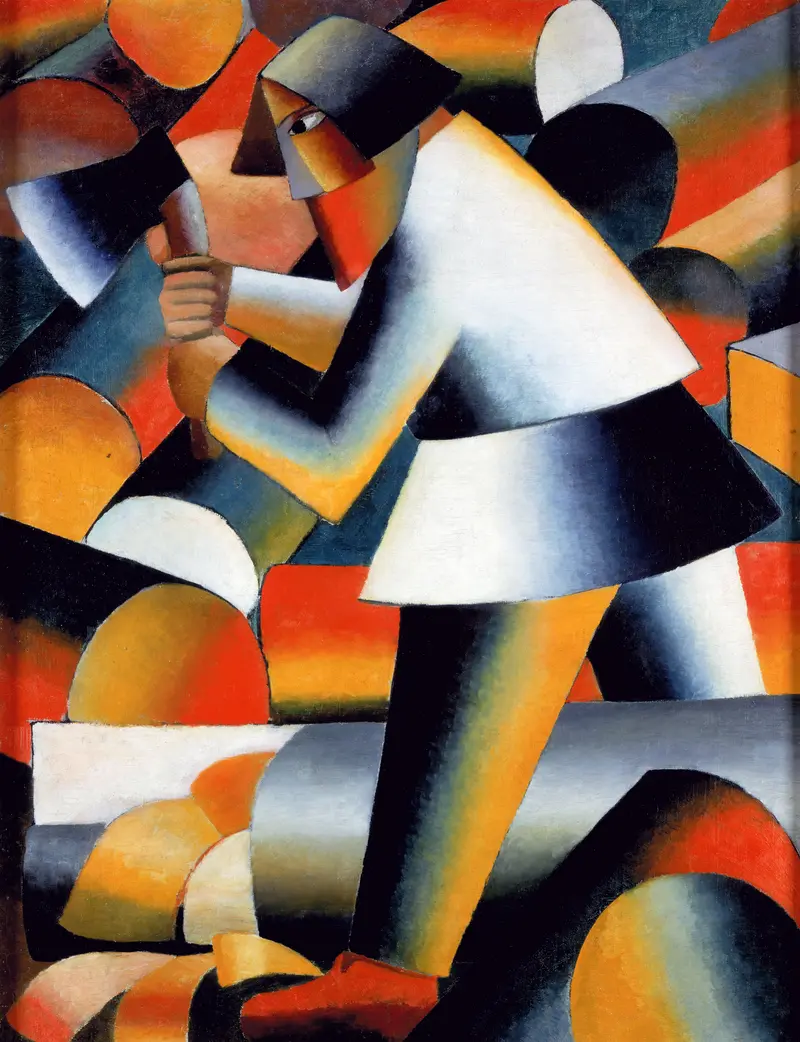
The Woodcutter
Kazimir Malevich

Untitled
Kazimir Malevich
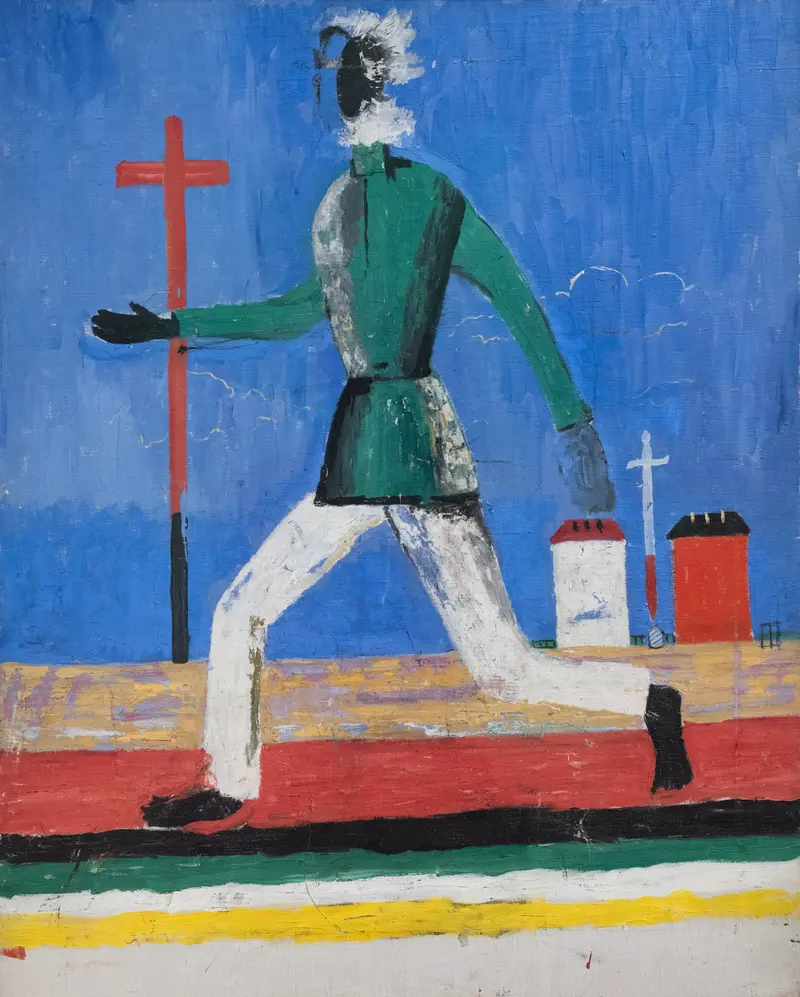
Sensation of danger
Kazimir Malevich
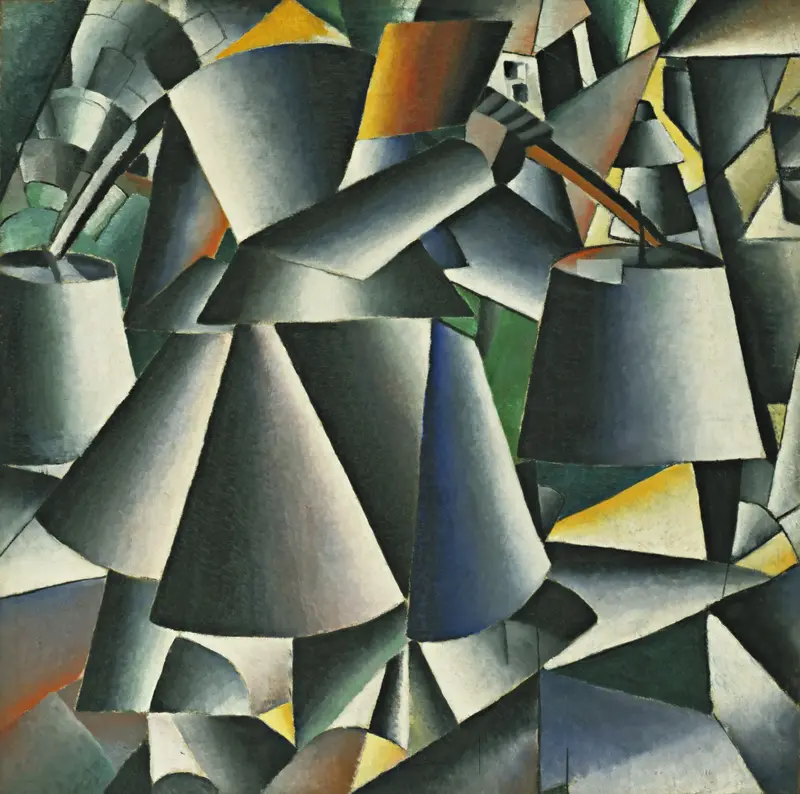
Woman with Pails: Dynamic Arrangement
Kazimir Malevich
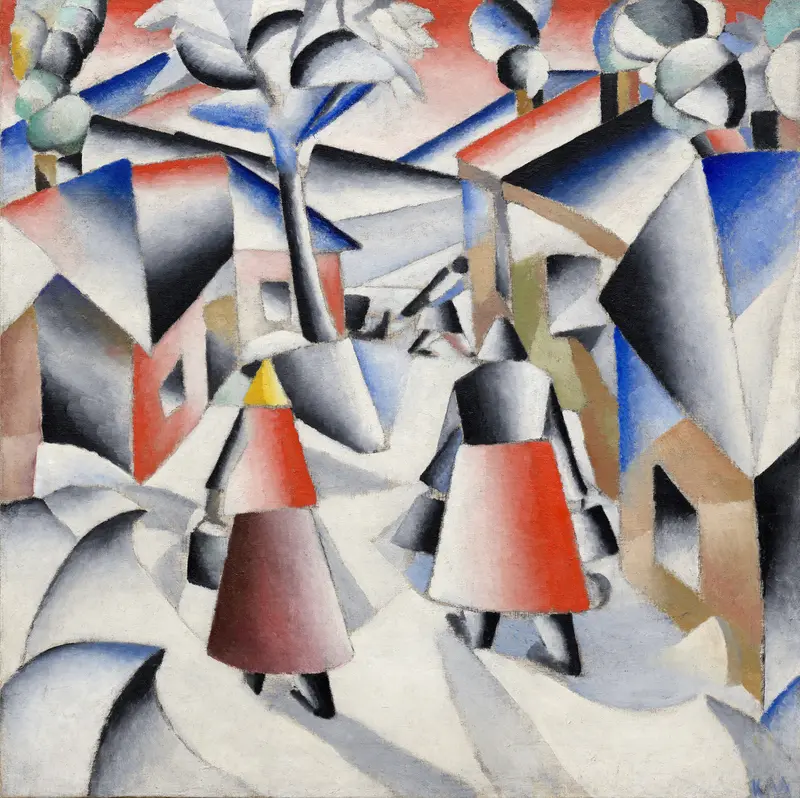
Morning in the Village after Snowstorm
Kazimir Malevich
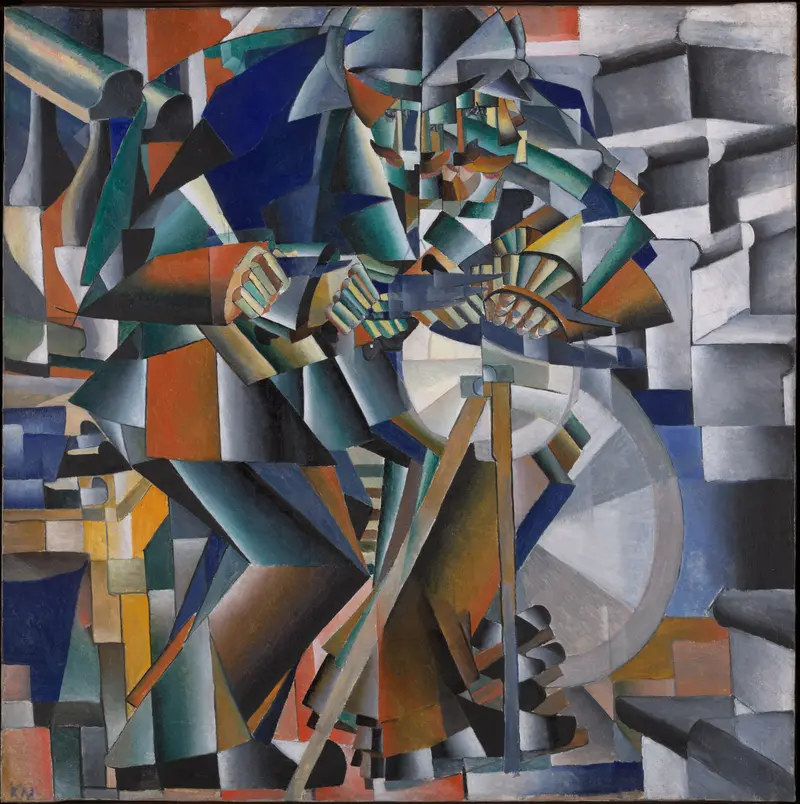
The Knife Grinder
Kazimir Malevich
Suprematism (Supremus no. 56)
Kazimir Malevich