Sur les talus (Gil Blas Illustré) — History & Facts
What draws the eye first in Sur les talus (Gil Blas Illustré) is the gentle, conspiratorial tilt of two figures’ heads—an intimate geometry that signals a private world within a public space. The man and woman, arm in arm, seem caught in a moment of shared amusement or secret, their bodies leaning together as if the landscape itself has faded into irrelevance. The artist uses a muted palette—earthy greens, soft reds, and the faintest blush of flesh—to keep the mood subdued and the focus on the couple’s subtle exchange.
Their clothing, sharply outlined and textured, sets them apart from the soft, almost dreamlike hills behind, while the sparse trees and distant train evoke a world that moves on, oblivious to this quiet encounter. Steinlen’s line is economical but expressive: the man’s downturned gaze, the woman’s sidelong glance, and the way their hands nearly touch all suggest a story just out of earshot. This work comes from the lively world of late nineteenth-century illustrated journals, where artists like Théophile Alexandre Steinlen brought everyday Parisian life to the printed page. Published in Gil Blas Illustré in 1892, the image belongs to a moment when art and mass media were converging, making images like this both accessible and immediate.
Such illustrations were often commissioned to accompany stories or poems, inviting readers to linger over a scene before turning the page. History has kept few traces of the individual journeys of these works, but their survival in collections like the Boston Public Library, and their documentation in early twentieth-century catalogues, speaks to their enduring appeal. Look again at the couple—how much of their story is told not by words, but by the delicate choreography of posture and glance?
More Artworks by Théophile Alexandre Steinlen

Village et charrette
Théophile Alexandre Steinlen
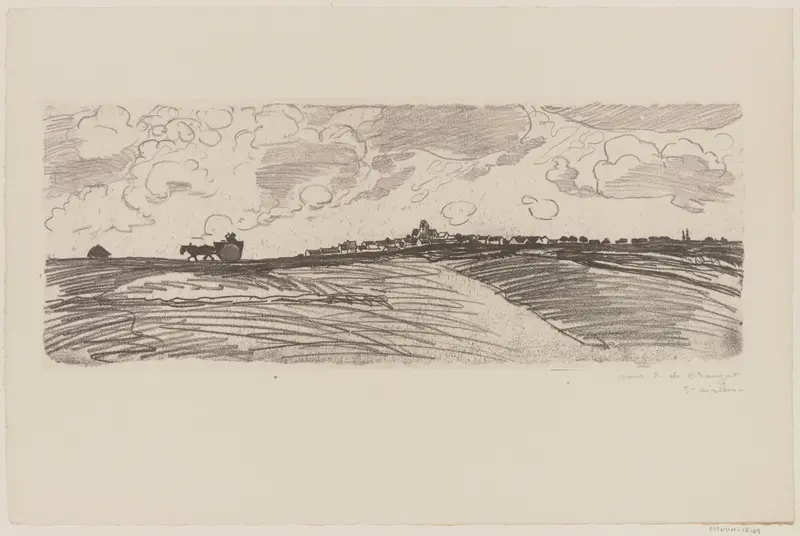
Village et charrette
Théophile Alexandre Steinlen
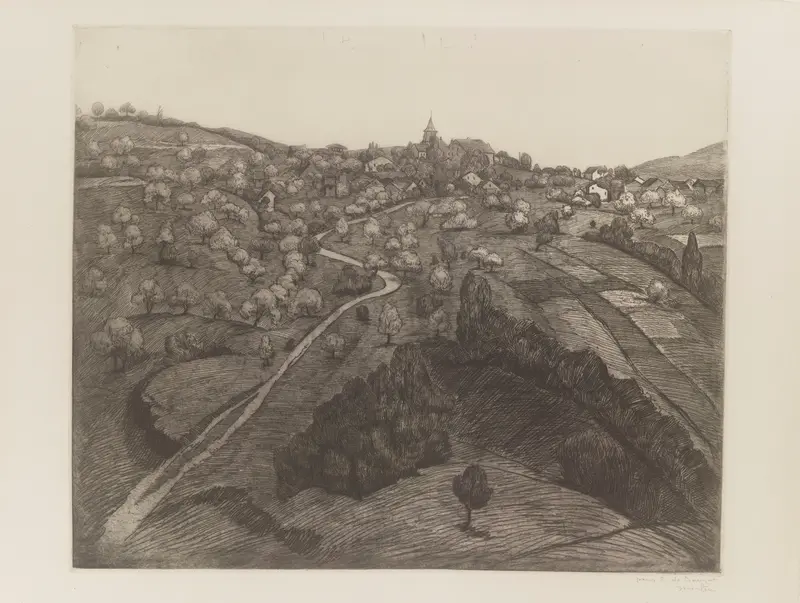
Vue de Belmont, près de Lausanne
Théophile Alexandre Steinlen
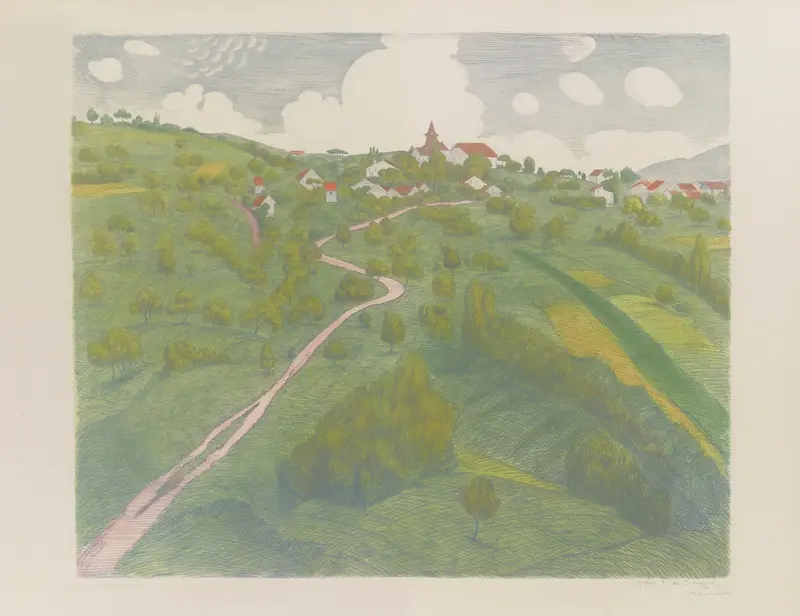
Vue de Belmont, près de Lausanne
Théophile Alexandre Steinlen
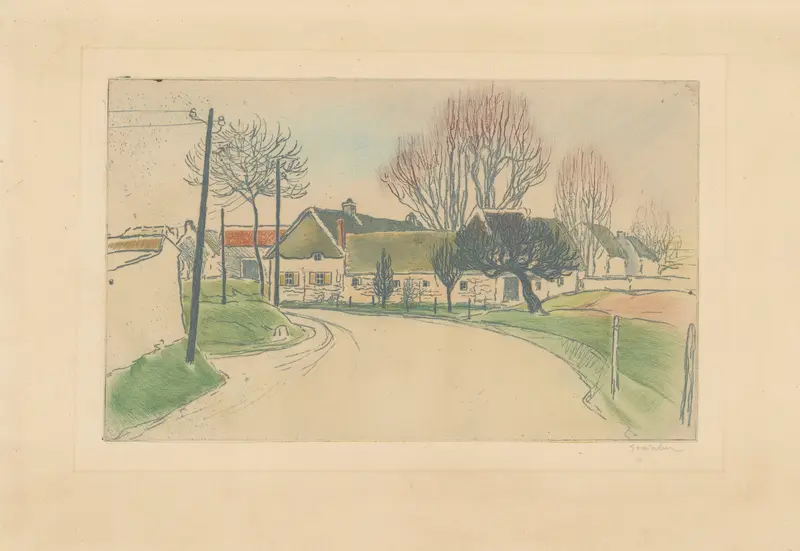
La maison à l’entrée du village
Théophile Alexandre Steinlen
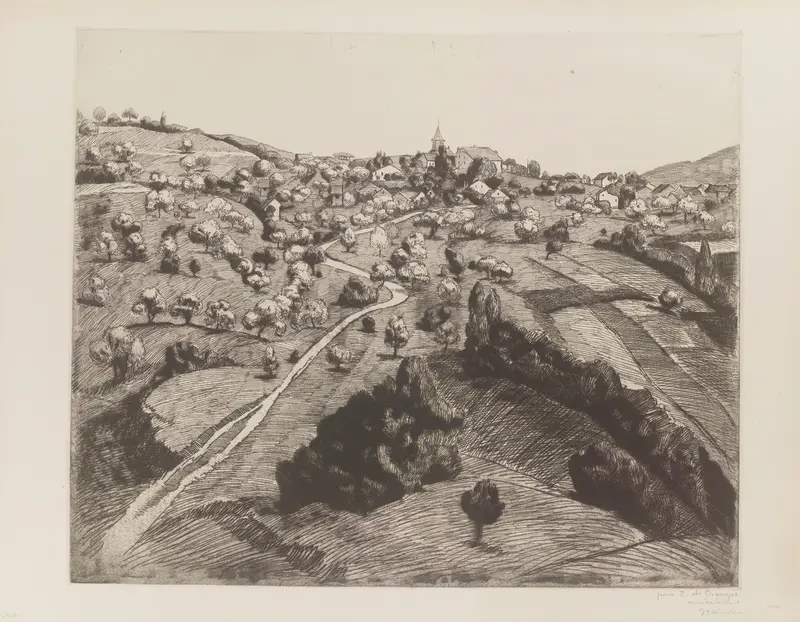
Vue de Belmont, près de Lausanne
Théophile Alexandre Steinlen
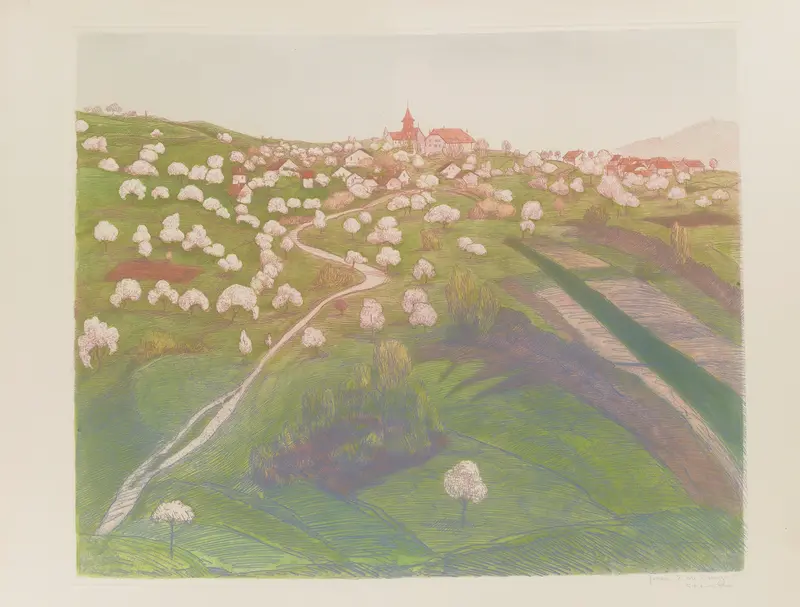
Vue de Belmont, près de Lausanne, n° 2
Théophile Alexandre Steinlen
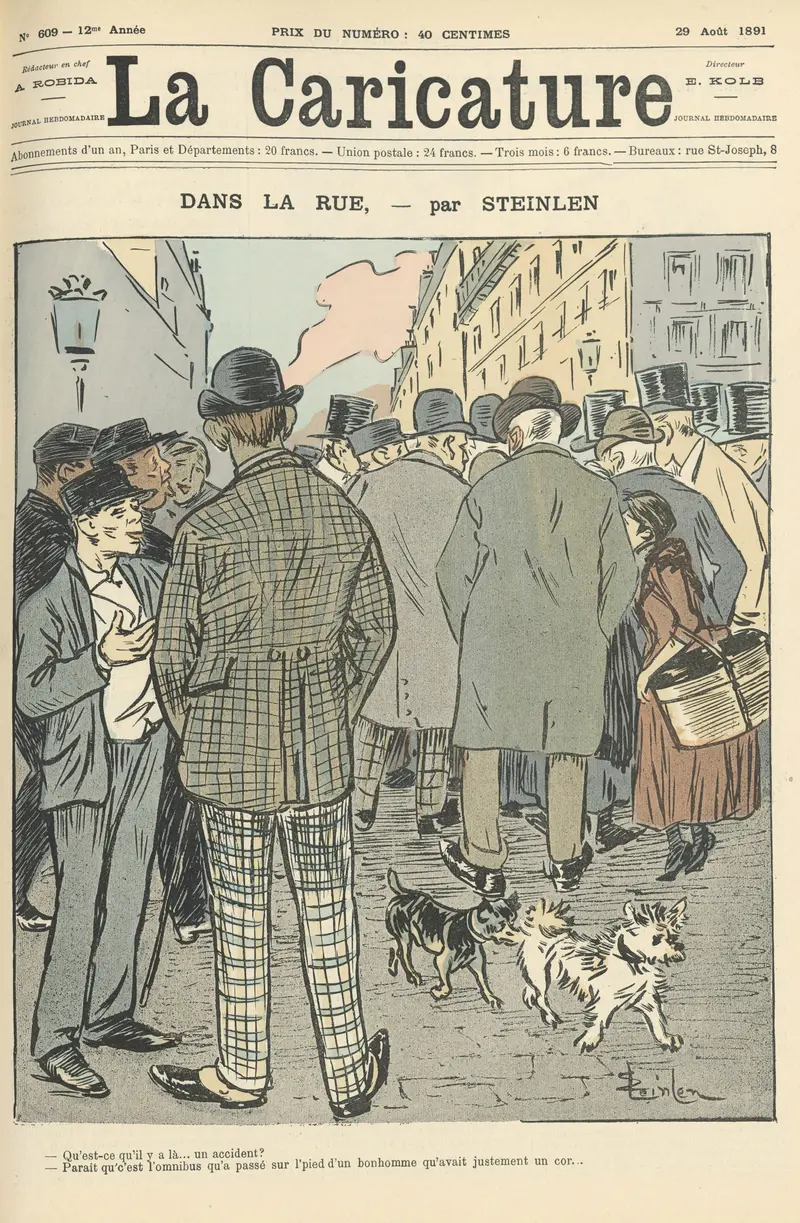
Dans la rue (La Caricature, 29 août 1891)
Théophile Alexandre Steinlen
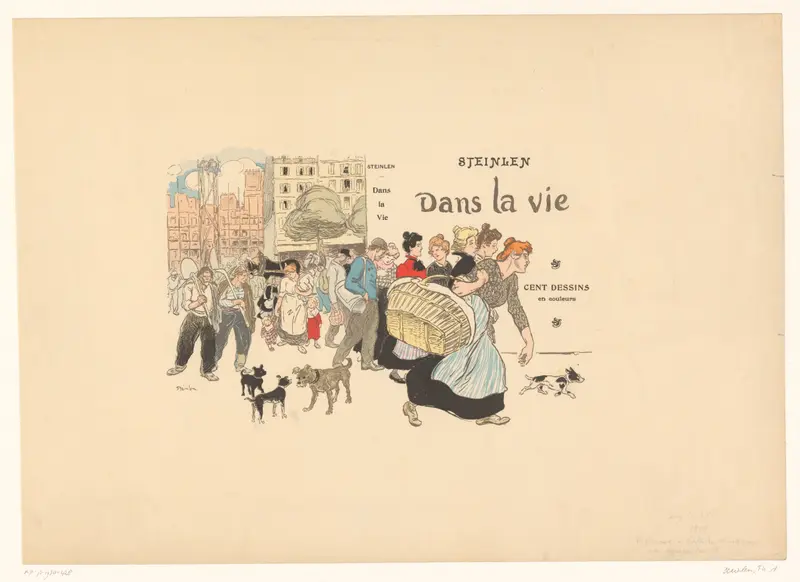
Dans la vie
Théophile Alexandre Steinlen
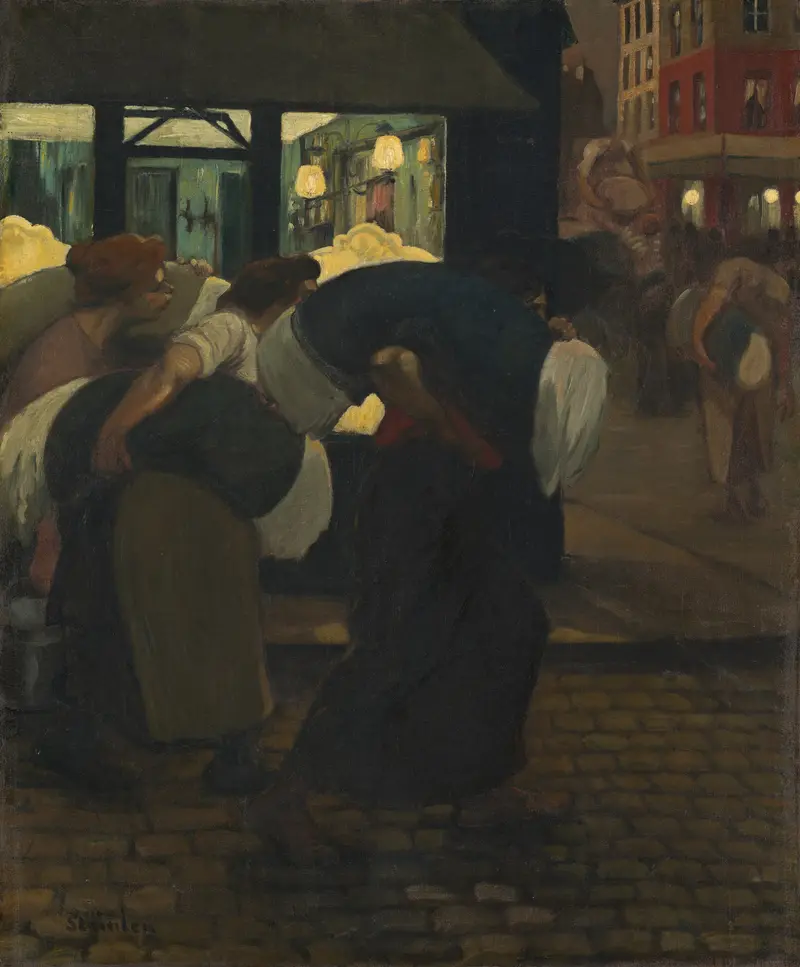
The Laundresses
Théophile Alexandre Steinlen