
Tabernacle of the Linaioli — History & Facts
When the powerful Florentine guild of linen merchants, the Linaioli, commissioned Fra Angelico in 1433 to create a public tabernacle for their headquarters, they were not just seeking beauty—they were making a statement of civic pride and religious devotion. This was no private altar but a monumental shrine, intended to stand on the bustling Via dei Servi and proclaim the guild’s piety to all of Florence. The structure’s vast marble frame, designed by Lorenzo Ghiberti, and the radiant painting within, marked one of the earliest collaborations between painter and sculptor in Renaissance Florence, signaling a new era of artistic ambition. At the heart of the Tabernacle of the Linaioli, the Virgin Mary sits enthroned, the Christ Child in her lap, surrounded by a gathering of saints and angels.
Fra Angelico chooses the moment of serene adoration: the saints—John the Baptist, Mark, Peter, and Dominic—stand in quiet conversation, their gestures and glances drawing the viewer into the sacred space. The gold background, a lingering echo of medieval tradition, shimmers behind the figures, while the painted marble throne and lush textiles hint at the guild’s trade. Every detail, from the lilies at Mary's feet (purity) to the careful rendering of the saints’ attributes, invites contemplation.
Compared to Masaccio’s more naturalistic Madonna and Child, Fra Angelico’s work remains rooted in spiritual symbolism, yet opens itself to Renaissance depth and harmony. As a physical object, the tabernacle is as much an architectural statement as a painting, with its grand marble frame still intact. After centuries on the street, it was eventually moved indoors for protection and now resides in the Museo di San Marco, Florence, where it is a centerpiece of Fra Angelico’s career. The work stands at a turning point in Florentine art, bridging Gothic tradition and Renaissance innovation.
While the original contract and payment records survive, little is known about the day-to-day life of the tabernacle in the fifteenth century, though its survival in near-complete form is remarkable. Today, it is celebrated not only for its beauty but for its role as a monument to civic faith and artistic collaboration in early Renaissance Florence.
More Artworks by Fra Angelico

Condemnation of St Lawrence by the Emperor Valerian
Fra Angelico
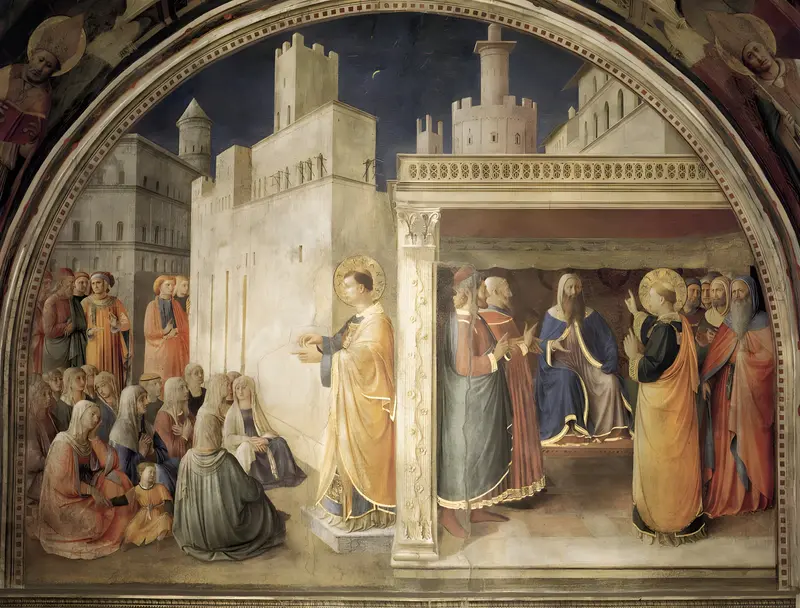
Lunette of the north wall
Fra Angelico
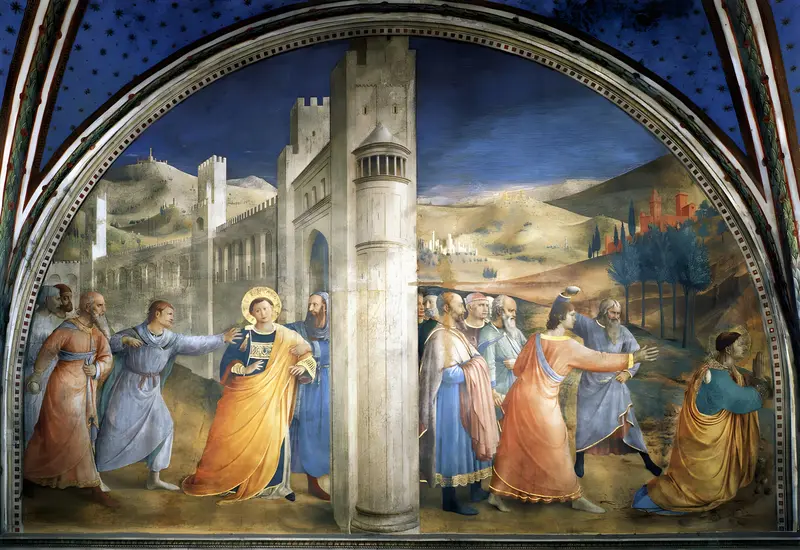
Lunette of the east wall in Niccoline Chapel
Fra Angelico
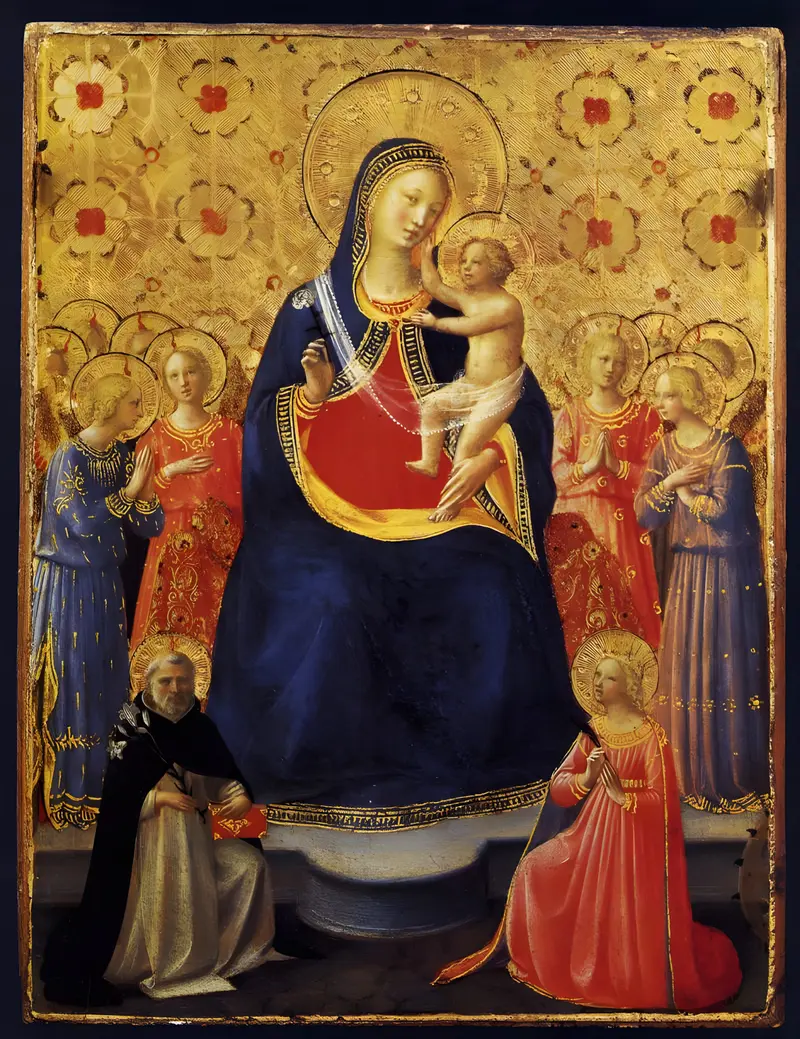
Madonna and Child Enthroned with Nine Angels and Saints Dominic and Catherine of Alexandria
Fra Angelico
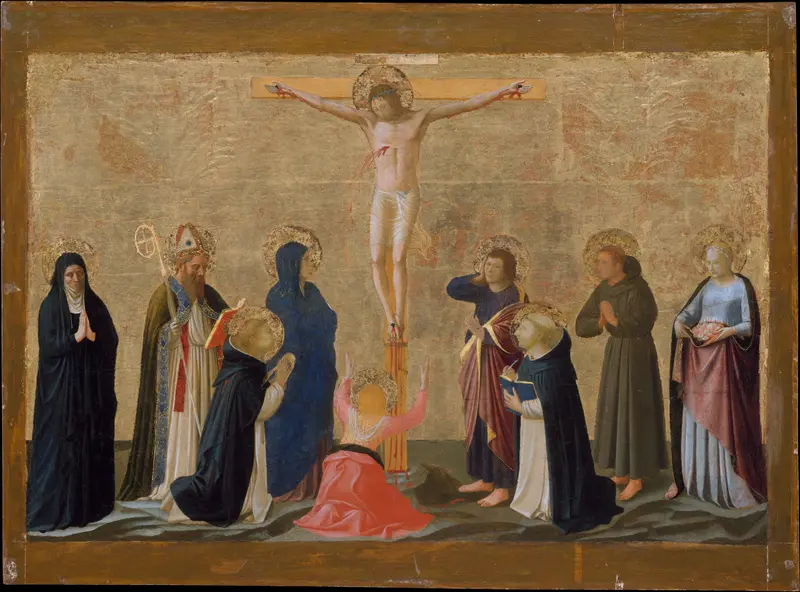
The Crucifixion
Fra Angelico
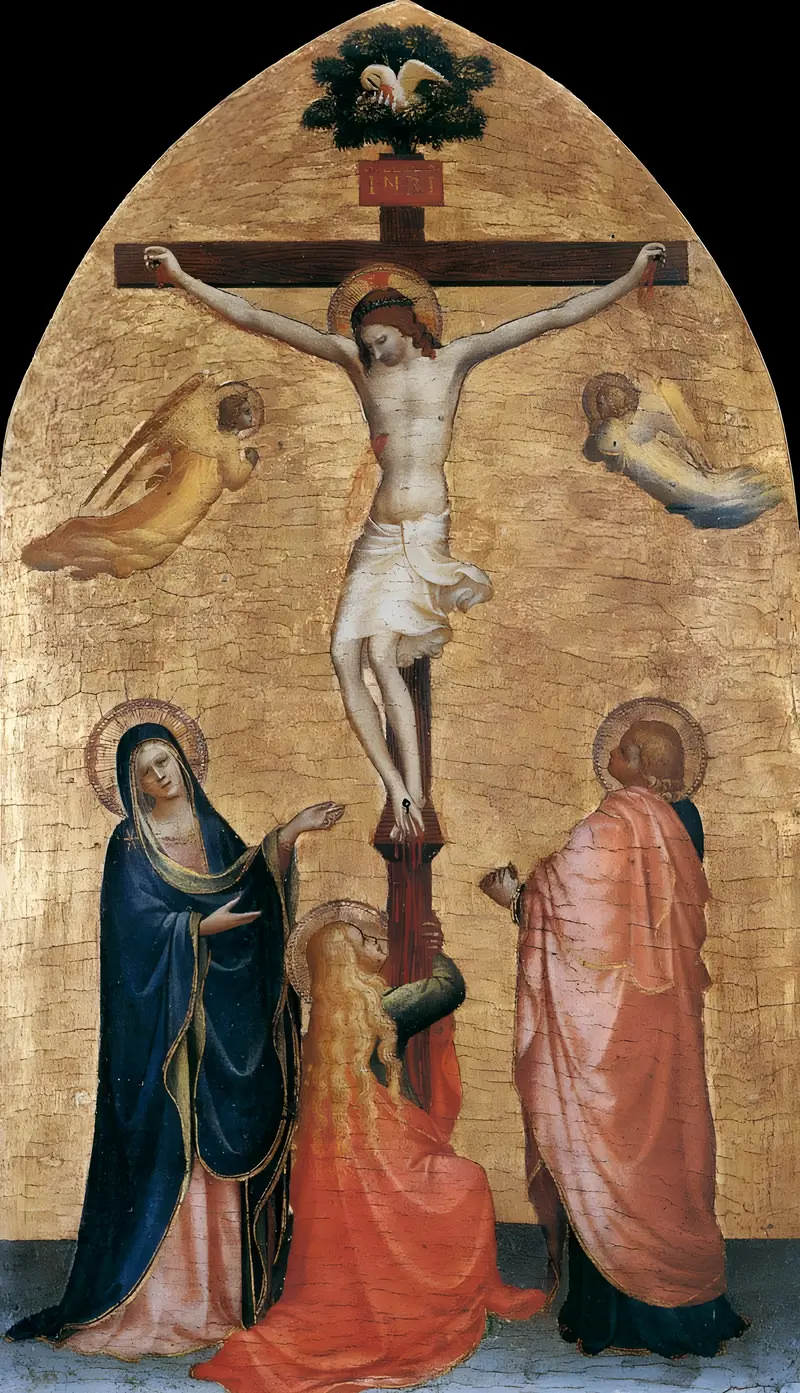
Crucifixion with the Virgin, John the Evangelist, and Mary Magdelene
Fra Angelico
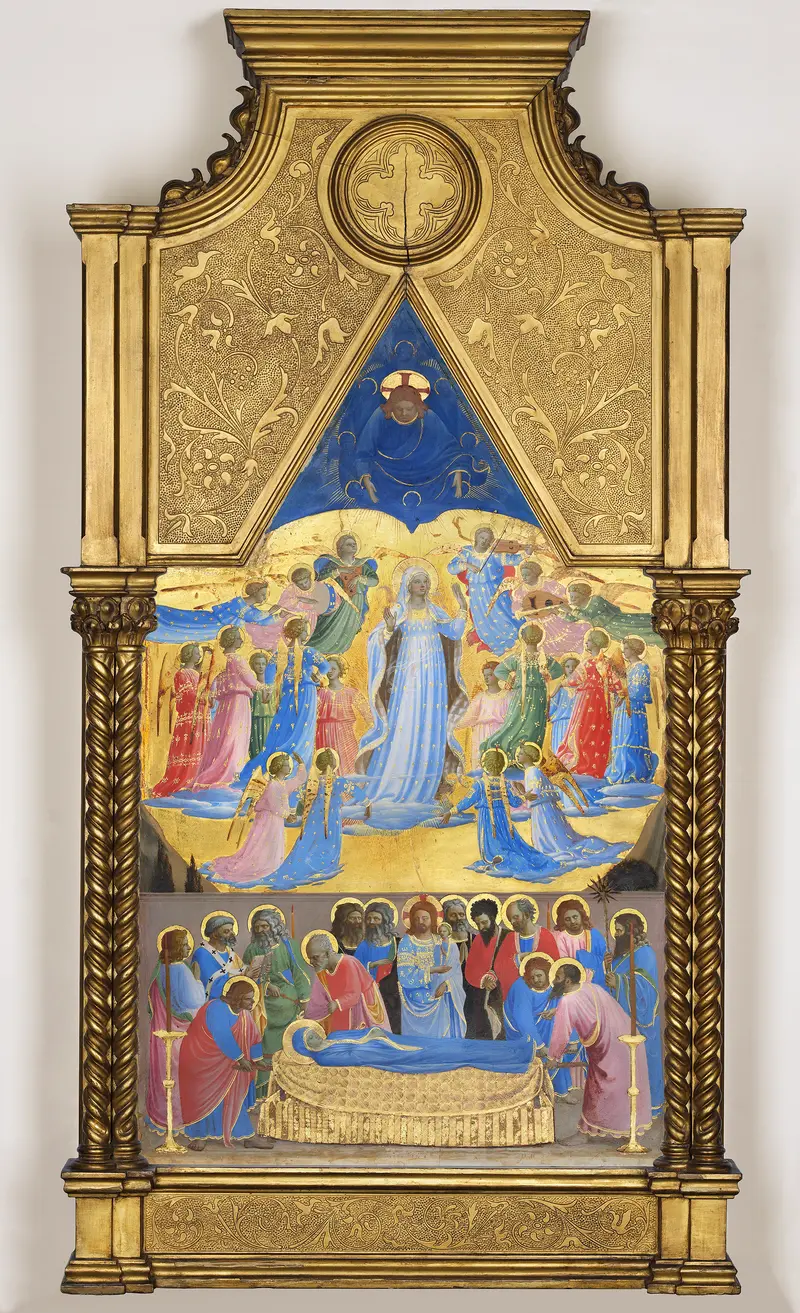
Dormition and Assumption of the Virgin
Fra Angelico
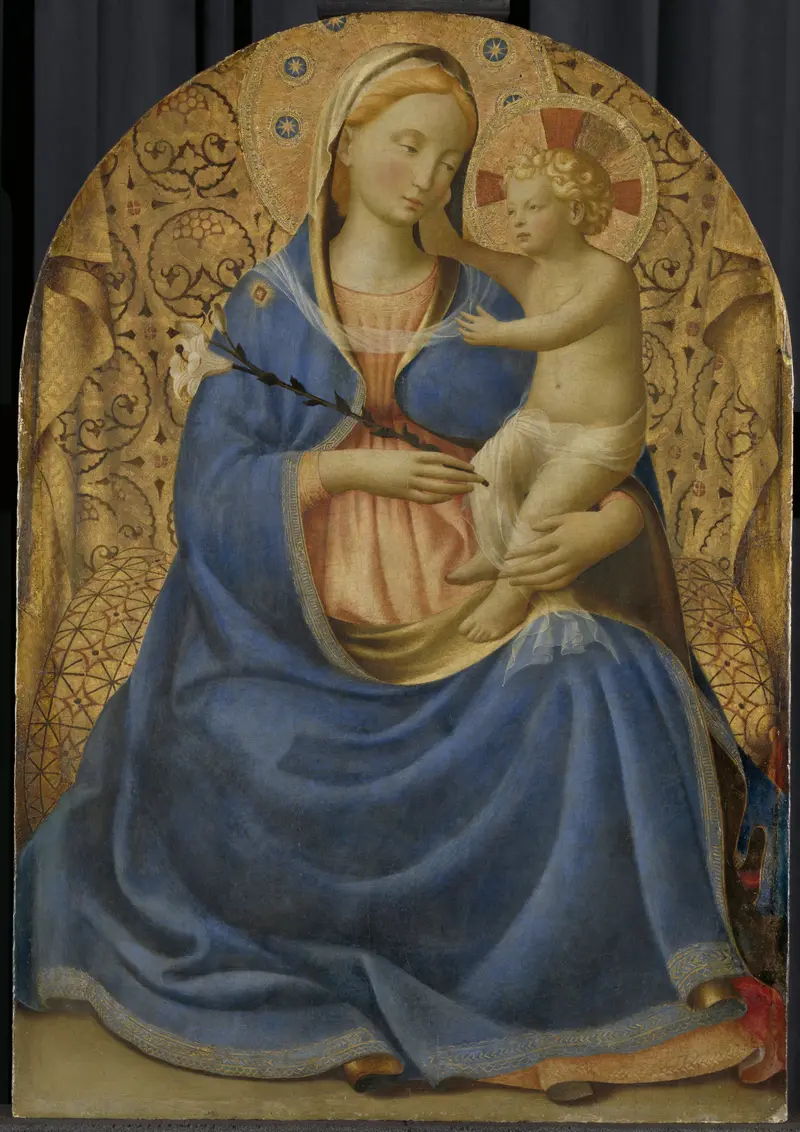
Madonna of Humility
Fra Angelico
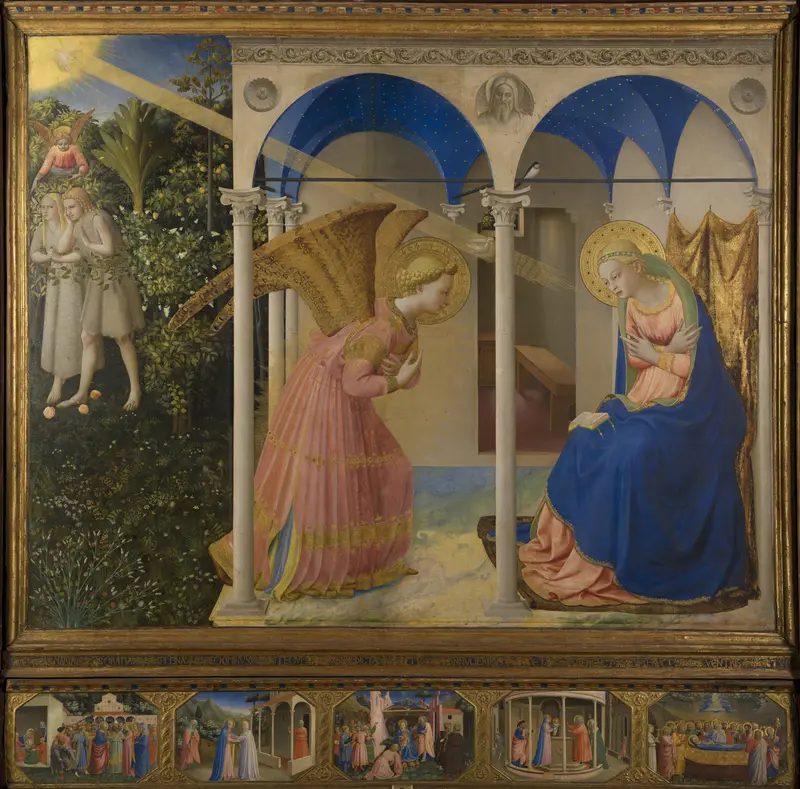
The Annunciation
Fra Angelico

Saint Anthony Abbot
Fra Angelico





